
Wavy hairstyle guide
Wavy Hairstyles: Types, Styling Methods, and Visual Preview
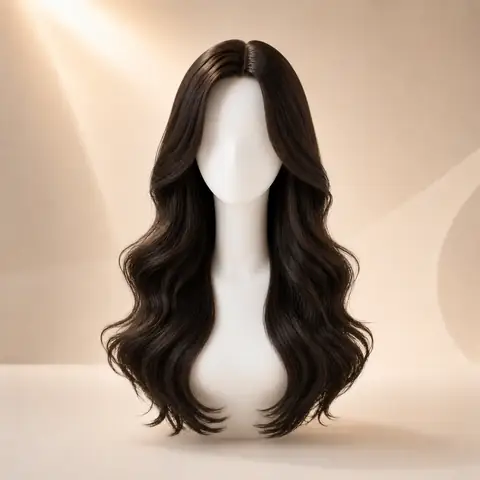
Wavy hairstyles run from broad, soft bends to defined repeating patterns. Compare the four wave families, learn the practical ways to get waves with or without heat, and preview the direction on your own photo before committing to a routine.
Wavy hairstylesWavy hair typesHow to get wavy hairWavy hair styling
6 min read
Quick answer
Look for open S-shaped bends
Wavy hairstyles form open S-shaped bends that travel down the hair rather than closing into ringlets. The pattern adds movement and some width without the outward expansion of curls. Four wave families cover most of the territory: body wave is broad and soft, loose wave separates into relaxed sections, deep wave repeats a stronger pattern, and water wave runs irregular and textured.
- Pattern
- Open S-shaped bends
- Volume
- Moderate width, not curl-level expansion
- Key variable
- Pattern scale and definition, before length
A wave is easiest to read through the mid-lengths. At the roots, many wavy styles lie fairly flat; at the ends, a bend can flip outward or thin into a straighter tip. When you compare references, check where the first full bend begins — near the cheek, the jaw, or below the shoulder — because that placement changes how the style frames the face more than the wave family label does.
Length matters second. More length gives a broad pattern room to repeat, which is why most wave references sit between the collarbone and the chest. A wavy lob is the shorter exception: the pattern compresses into one or two bends, and the outline reads closer to a bob with movement.
Wave styles accounted for 2,475 of 10,000 completed generation events (24.8%) in WigTryAI's 2026 AI Hairstyle Trends Report. The figure describes recorded activity within the available catalog; it does not mean waves are universally preferred.
The Four Wave Families
Same length, same color, four different patterns
These four catalog references keep the long length and dark shade consistent so the pattern is the only variable. Compare the scale of each bend, how much the sections separate, and the width of the outer edge.
Body wave
Large, soft bends with gentle definition and a smooth overall outline. The quietest of the four families.
Try this look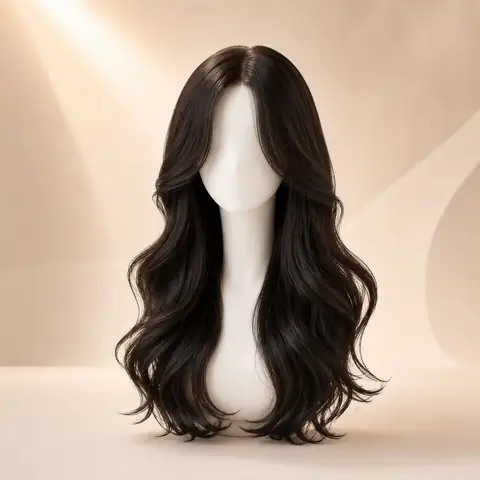
Loose wave
Relaxed wave sections with more visible separation than a broad body wave, without strong repetition.
Try this look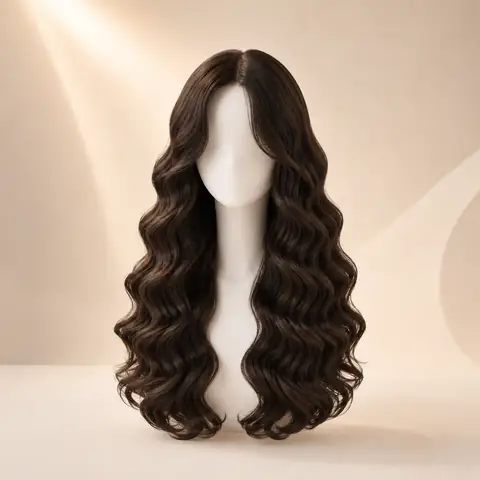
Deep wave
A stronger repeating pattern that creates more surface definition through the length.
Try this look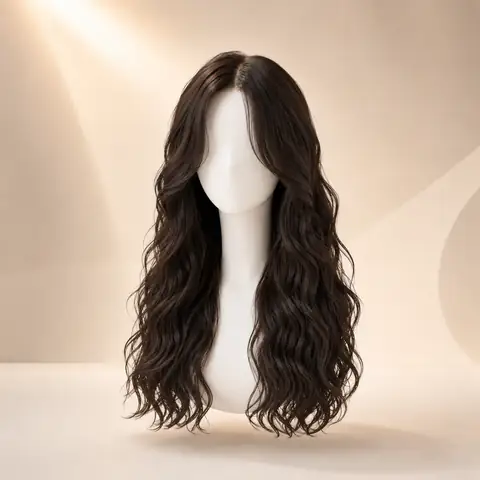
Water wave
An irregular, textured wave direction that sits between flowing waves and looser curls.
Try this lookChoosing between them comes down to three visible cues. First, pattern scale: body wave bends are the widest, deep wave the most repeated. Second, separation: loose wave sections read as individual strands of movement, while body wave flows as one surface. Third, outer width: deep and water wave push the silhouette outward more than body or loose wave at the same length. Keep the color stable while you compare — highlights make any pattern look more detailed than it is.
Wavy or Curly: Where the Line Sits
The practical dividing line is whether the pattern closes. Waves stay open: each bend reverses direction before completing a loop. Curls close into spirals, ringlets, or coils, and they pull the outline outward as they tighten. That single distinction changes surface texture, outer volume, and how much length appears to shrink.
Decision guide
Wavy vs curly at a glance
If you are deciding between the two directions, compare these five cues on the same photo.
| Cue | Wavy | Curly |
|---|---|---|
| Pattern | Open S-shaped bends | Spirals, ringlets, or coils |
| Definition | Sections flow together | Individual curl groups stand out |
| Outer volume | Usually moderate | Often more expanded |
| Length reading | Downward and flowing | More affected by curl shrinkage |
| Main comparison point | Wave scale and movement | Curl size and density |
For the full side-by-side with real photo examples, see Curly vs Wavy Hair. If curls are the direction you want, the curly hairstyle guide covers pattern types and lengths there.
How to Get Wavy Hair
Most routes to wavy hair fall into three groups: set the pattern overnight without heat, shape it with a hot tool, or bring out wave your hair already has. The right choice depends on your natural texture and how long you want the result to last — not on which method looks best in a tutorial.
Heatless Overnight Methods
Braiding damp hair is the most forgiving option. Two loose braids produce a soft, wide bend; four or more smaller braids push the pattern toward deep wave. Twists and rope braids work the same way with a slightly more defined S. A low sock bun or a headband wrap gives a looser, beach-leaning bend through the lengths. Whichever you choose, the hair should be barely damp with a light mousse or styling cream worked through, and fully dry before you unravel — taking braids out early is the most common reason heatless waves collapse by noon. Finger-comb only; a brush separates the sections into frizz.
Heat Styling Methods
A flat iron can press S-shaped bends into straight hair by alternating the direction of each bend down the section. A large-barrel curling wand gives a more uniform wave; leave the last inch of hair out of the clamp for a modern, less polished end. Larger sections always mean a looser wave. Use heat protectant, and let each section cool before touching it — the wave sets as it cools, not while it is hot. On hair that already has some natural wave, a diffuser on low heat does less damage than re-shaping with an iron and keeps the existing pattern intact.
What Changes Your Result
Fine, straight hair takes a soft bend that relaxes quickly, so heatless methods give it one day at most. Thicker or slightly textured hair holds a set for two to three days and needs less product. Long hair shows more pattern repeats but its weight pulls waves looser by evening. Product weight matters as much as method: heavy creams flatten fine hair, while light mousses disappear on coarse hair. Treat the first attempt as calibration, not failure.
Decision guide
Pick a method by effort and hold
Start with the row that matches your natural texture, then adjust section size to control how tight the pattern runs.
| Method | Effort | Typical hold | Best for |
|---|---|---|---|
| Overnight braids | Low | 1–2 days | A first heat-free attempt |
| Twists or rope braids | Low | 1–2 days | A more defined S pattern |
| Sock bun or headband | Low to medium | About 1 day | A loose, beach-leaning bend |
| Flat iron S-waves | Medium | Until the next wash | Straight hair wanting polish |
| Large-barrel wand | Medium | 1–3 days | Uniform, event-ready waves |
| Diffuser on natural wave | Medium | Day-long | Hair with existing 2A–2C texture |
How to Style and Define Wavy Hair
The Wash-Day Routine
Squeeze water out with a microfiber towel or a cotton T-shirt instead of rubbing — rough drying is where most frizz starts. Work a lightweight leave-in or mousse through damp hair with your palms, then scrunch upward from the ends to encourage the pattern. Air-dry for the softest result, or diffuse on low heat and low speed for more definition. The hardest part is leaving the hair alone while it dries: every touch breaks the forming sections. Once fully dry, scrunch out any gel cast with dry hands for softness.
Keeping Frizz Down
Frizz is usually a pattern problem, not a product shortage. Brushing dry wavy hair shatters the S-sections into fluff, so detangle only when wet with conditioner in. Humidity swells the hair cuticle and blurs the pattern, which is why waves look bigger and less defined on damp days. A small amount of light oil on the ends seals the surface without flattening the roots.
Refreshing Waves on Day Two
Mist the lengths with water, add a pea of leave-in, and re-scrunch the sections that fell flat overnight. Two or three targeted twists, clipped for ten minutes, restore the face-framing bends without a full re-style. Sleeping in a loose high ponytail or on a satin pillowcase keeps more of the pattern intact for the morning.
How to Tell If You Have Wavy Hair
Run a simple wet-dry test. Wash your hair, skip all product, do not brush it, and let it air-dry completely. If sections dry into S-shaped bends that were not visible when the hair was wet, you have natural wave. If it dries as straight as it looked wet, any wave you want will need to be set in with one of the methods above.
Within wavy hair, the standard shorthand runs 2A, 2B, and 2C. 2A is a loose, tousled bend that stays nearly straight at the roots and loses shape easily. 2B forms clearer S-waves through the mid-lengths with some frizz at the crown. 2C starts waving close to the root and sits on the border of loose curls. Knowing your number helps you pick methods and product weight, but treat the labels as a map, not a diagnosis — plenty of heads mix two patterns.
See the wave before the work
An overnight set or a heat routine is an hour of effort. Spend a minute first: upload one clear portrait and compare body, loose, deep, and water wave on your own face, then choose the method that builds the pattern you actually picked.
Preview wavy hairstyles on your photoFAQ
What defines a wavy hairstyle?
Wavy hair shows open S-shaped bends that create movement without consistently closing into ringlets. Pattern scale and definition separate the four families: body wave is broad and soft, loose wave is relaxed and separated, deep wave repeats more strongly, and water wave is irregular and textured.
What is the difference between body wave and deep wave?
Body wave uses broader, softer bends and a smoother outline. Deep wave shows a stronger repeating pattern with more visible surface definition and slightly more outer width at the same length.
How can I get wavy hair overnight?
Braid barely damp hair into two or more braids with a light mousse, sleep on it, and unravel only when fully dry. Twists, a sock bun, or a headband wrap work the same way with looser results. Finger-comb instead of brushing to keep the sections intact.
How do I style wavy hair without frizz?
Dry with a microfiber towel or T-shirt, apply lightweight product to damp hair, scrunch upward, and leave the hair untouched while it air-dries or diffuses. Never brush dry waves — detangle only when wet with conditioner.
How do I know if I have wavy hair?
Wash, skip product, and air-dry without brushing. If the hair dries into S-shaped bends it did not show while wet, you have natural wave. Loose bends at the ends suggest 2A, clear mid-length S-waves suggest 2B, and waves starting near the root suggest 2C.
How can I compare wavy and curly previews fairly?
Keep the same photo, length, and color. Compare whether the pattern stays open and flowing or forms more defined curl groups with added outer volume, and judge the silhouette as well as the surface texture.
What photo is useful for comparing wave movement?
Use a front-facing portrait with the shoulders visible and open space around the hair. Even lighting helps you read the pattern without highlights creating false definition.
Will an AI wave preview match real styled hair exactly?
No. Real wave hold, frizz, density, pattern consistency, and movement depend on your hair, the styling method, weather, and wig or extension construction. Use a preview to choose a direction, then expect the first real attempt to need calibration.