
Body wave hair guide
Body Wave Hair: Texture, Lengths, and Visual Examples
Body wave hair has broad, open S-shaped bends and a smooth flowing outline. It looks softer and less tightly defined than deep wave, while length changes where the bends, fullness, and ends sit around the face and shoulders.
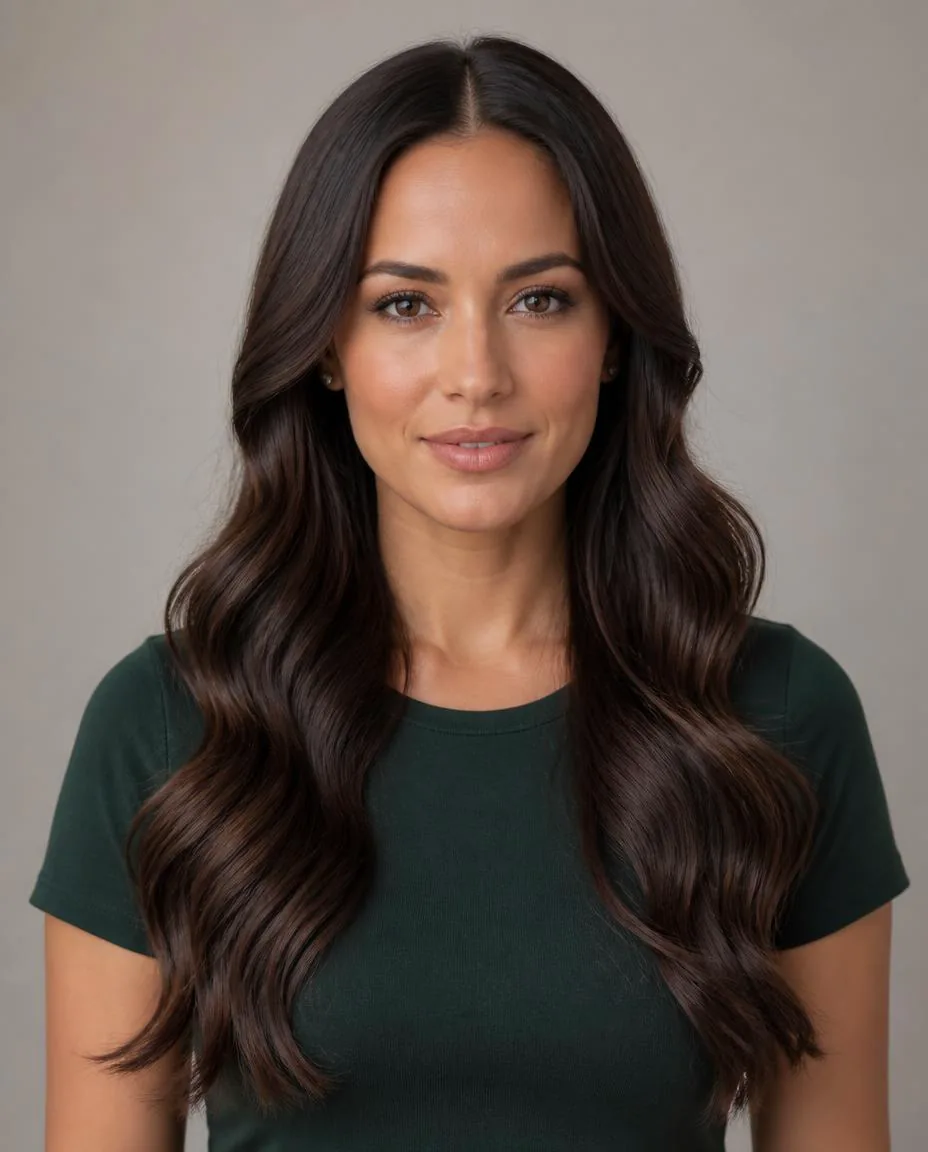
Body wave hairBody wave hairstyleBody wave textureBody wave wig
5 min read
Quick answer
Look for broad, open bends
Body wave hair forms large, open S-shaped bends rather than tight curls or small repeated ripples. The sections flow into one another, so the texture reads as smooth movement with gentle definition. The most useful visual clues are the scale of each bend, where the first bend begins, and whether the outside edge looks continuous or highly separated.
- Pattern
- Broad, open S-shaped bends
- Definition
- Visible but soft rather than tightly grouped
- Silhouette
- Flowing, with fullness distributed through the length
The phrase body wave describes a visible direction, not one universal specification. A wig maker, extension brand, stylist, and image generator may use the label for somewhat different bend sizes. Judge the reference in front of you: look through the mid-lengths, where the pattern is easier to read than at the roots or curled ends.
Body wave texture usually creates movement without closing into consistent ringlets. A center part can make the two sides look balanced; a side part can shift the first bend and volume to one side. Layers can also break up the outline. Those design choices are separate from the wave family itself.
In WigTryAI's 2026 AI Hairstyle Trends Report, Body Wave ranked first with 882 of 10,000 completed generation events (8.8%). That is a measure of recorded try-on activity inside WigTryAI—not a population-wide popularity claim or a recommendation for every person.
Medium, Long, and Extra-Long Body Wave
Compare length with the texture held steady
These three catalog references keep the dark color, center part, background, and display format consistent. Compare where the ends stop and how many broad bends remain visible.
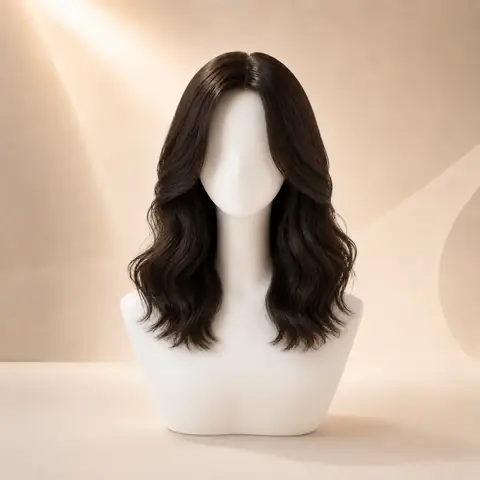
Medium body wave
The ends sit around the shoulders, so the first full bends and most of the visible width stay close to the face and neckline.
Try this look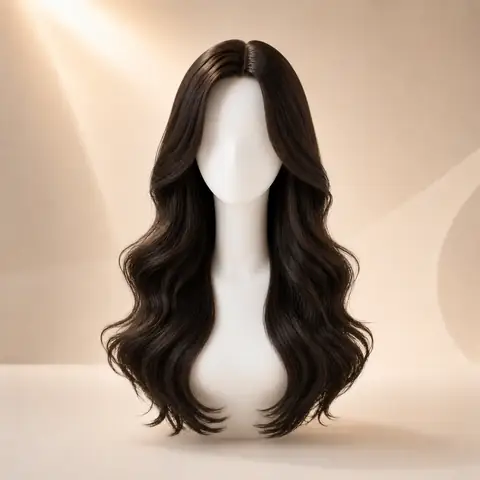
Long body wave
More length gives the pattern room to repeat below the shoulders while preserving a clear flowing endpoint.
Try this look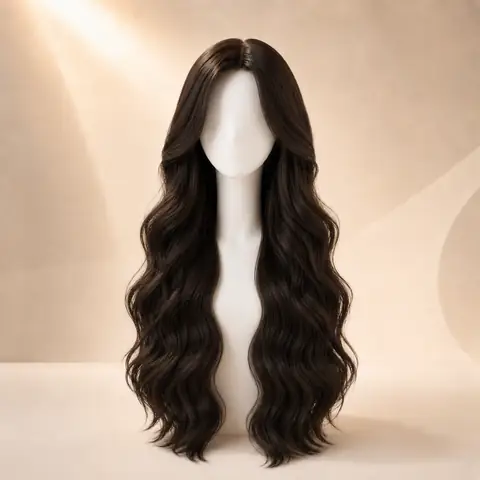
Extra-long body wave
The extended outline carries several bends farther down, making total length and lower-body fullness more prominent.
Try this lookMedium body wave
Medium length makes the placement of each bend especially noticeable. If the first full curve reaches its widest point beside the cheeks, the style can read wider near the face. If the movement begins below the jaw, the emphasis shifts toward the shoulders. Check the actual endpoint because “medium” can mean anything from just above the shoulders to the collarbone in different catalogs.
Long body wave
Long body wave provides enough space for several broad sections without making length the only thing you see. It is a useful baseline for comparing wave families because the mid-length pattern, face frame, and ends are all visible. Look for whether the front sections open away from the face or fall forward as two heavier panels.
Extra-long body wave
Extra-long hair extends the vertical outline and shows more repeated movement, but it may also dominate a portrait. Compare the lowest visible endpoint and the farthest side width, not just the number of waves. An AI image cannot tell you the weight, density, or daily handling of a physical extra-long wig or extension installation.
Choose the length before the shade
Try medium, long, and extra-long body wave in the same dark color. Once the endpoint and outer width feel right, compare color and parting.
Try long body waveBody Wave vs Loose, Deep, and Water Wave
Decision guide
Read the pattern instead of relying on the label
Wave names vary between catalogs and stylists. Use these as visual comparison cues, then inspect the actual reference.
| Wave direction | What to look for | How it differs from body wave | Useful next step |
|---|---|---|---|
| Body wave | Broad bends with a steady, smooth rhythm | The baseline: gentle definition and a continuous outer flow | Compare the first bend and endpoint across lengths |
| Loose wave | Relaxed sections with more separation or irregular spacing | Often reads less uniform and airier through the mid-lengths | Use the matched body wave vs loose wave comparison |
| Deep wave | A stronger, more frequent repeating pattern | Usually shows more surface definition and smaller intervals between bends | Hold length and apparent density steady |
| Water wave | A more irregular, rippled or curl-adjacent texture | Usually looks less polished into one continuous rhythm | Inspect several current references because labels vary |
Body wave and loose wave are the closest visual decision for many people. The matched body wave vs loose wave comparison keeps the model, angle, length, color, and background stable so the difference in pattern separation is easier to see.
Deep wave is a better comparison when the question is how much definition you want. Water wave is useful when you prefer a more irregular, textured surface. Neither name guarantees volume, maintenance, or how a physical product behaves; those depend on the actual hair or fiber, density, construction, and handling.
“Body Wave” Means Different Things in Different Contexts
Body wave wig or extension texture
For wigs and extensions, body wave usually names the pattern supplied by the maker. It does not tell you the fiber, density, cap or installation structure, pattern consistency, or how the texture changes after washing. Use the maker's current photos, specifications, and care instructions for those details. WigTryAI can preview the broad style direction, but it does not match or verify a physical product.
Body wave on styled natural hair
Natural hair can be styled into broad waves with heat, rollers, braids, or other methods. The visible result depends on starting texture, density, length, tools, technique, products, weather, and time. A reference image can communicate bend size and silhouette; it cannot predict how a person's hair will hold the style or change between wet and dry states.
Body-wave perm
A body-wave perm is a chemical salon service performed on natural hair, not another name for a body-wave wig or bundle. The result depends on hair condition, rod size, sectioning, processing, and professional technique. Use images to discuss the broad pattern you want, then ask a qualified stylist whether the service and expected result are appropriate for your hair.
Compare Body Wave on the Same Selfie
- Use a front-facing portrait that shows the hairline, both sides of the face, shoulders, and upper chest.
- Begin with medium, long, and extra-long body wave in one dark or medium shade.
- Compare where the first full bend begins relative to the cheeks and jaw.
- Check the farthest visible width at the shoulders and through the lower lengths.
- Compare the endpoint and how much of the upper body the hair covers.
- Keep the chosen length, part, and color steady when you test loose, deep, or water wave.
- Save two directions and use Compare Hairstyles to review them together.
Changing length, color, part, and texture in one pass makes it hard to know why one image feels better. A controlled comparison is more useful than generating many unrelated looks.
What AI Cannot Predict About Body Wave Hair
An AI preview can compare visible length, bend scale, parting, color, and overall silhouette. It cannot predict real density, pattern consistency, styling hold, wet-to-dry change, frizz, wig fiber, lace, cap construction, installation, movement during wear, or the result of a chemical service. It may also alter small hair or facial details between generations.
Use the preview to make the visual request more precise. Verify product details with the seller and discuss natural-hair styling or chemical services with an appropriate professional.
FAQ
What does a body wave look like?
Body wave looks like broad, open S-shaped bends flowing through the mid-lengths and ends. The pattern is visible but generally softer and more continuous than deep wave or defined curls. Because labels vary, inspect the actual bend size and spacing in the reference.
What is body wave texture?
Body wave texture is a soft wave direction with large bends and a flowing outer silhouette. It describes how the hair looks, not its fiber, density, quality, construction, or ability to hold the pattern.
Is body wave the same as loose wave?
No, although references can overlap. Body wave usually shows broader, more even bends, while loose wave usually shows more separation and irregular spacing. Compare both at the same length, color, and apparent density.
What is the difference between body wave and deep wave?
Body wave uses broader, gentler bends. Deep wave typically has a stronger repeating pattern with more visible surface definition. The exact labels are not standardized, so use photos rather than the name alone.
Which body wave length should I try first?
Long body wave is a useful first baseline because it shows several bends while keeping the endpoint visible. Then compare medium to see movement nearer the shoulders and extra-long to test a more extended silhouette.
Is body wave hair the same as a body-wave perm?
No. Body wave hair may refer to a visible wig, extension, or styled-hair texture. A body-wave perm is a chemical salon service on natural hair and requires advice based on the person's hair and the service being considered.
Will a body wave wig keep the same pattern after washing?
That cannot be answered from the texture label alone. The result depends on the actual fiber or hair, processing, construction, handling, and maker instructions. Check the specific product information rather than applying one rule to every body wave wig.
Can AI show exactly how body wave will look in real life?
No. AI can show a visual direction for bend size, length, color, and silhouette, but it cannot guarantee a wig, extension, styling, or perm result. Treat it as a comparison image, not a physical prediction.