
Hairstyles for a round face
Top 10 Hairstyles for Round Faces to Try Online
Useful hairstyles for a round face control where the eye meets length, width, and movement. Long layers, side parts, curtain pieces, textured bobs, and lifted pixies can all work; the deciding detail is where volume and the ends sit on your own face.
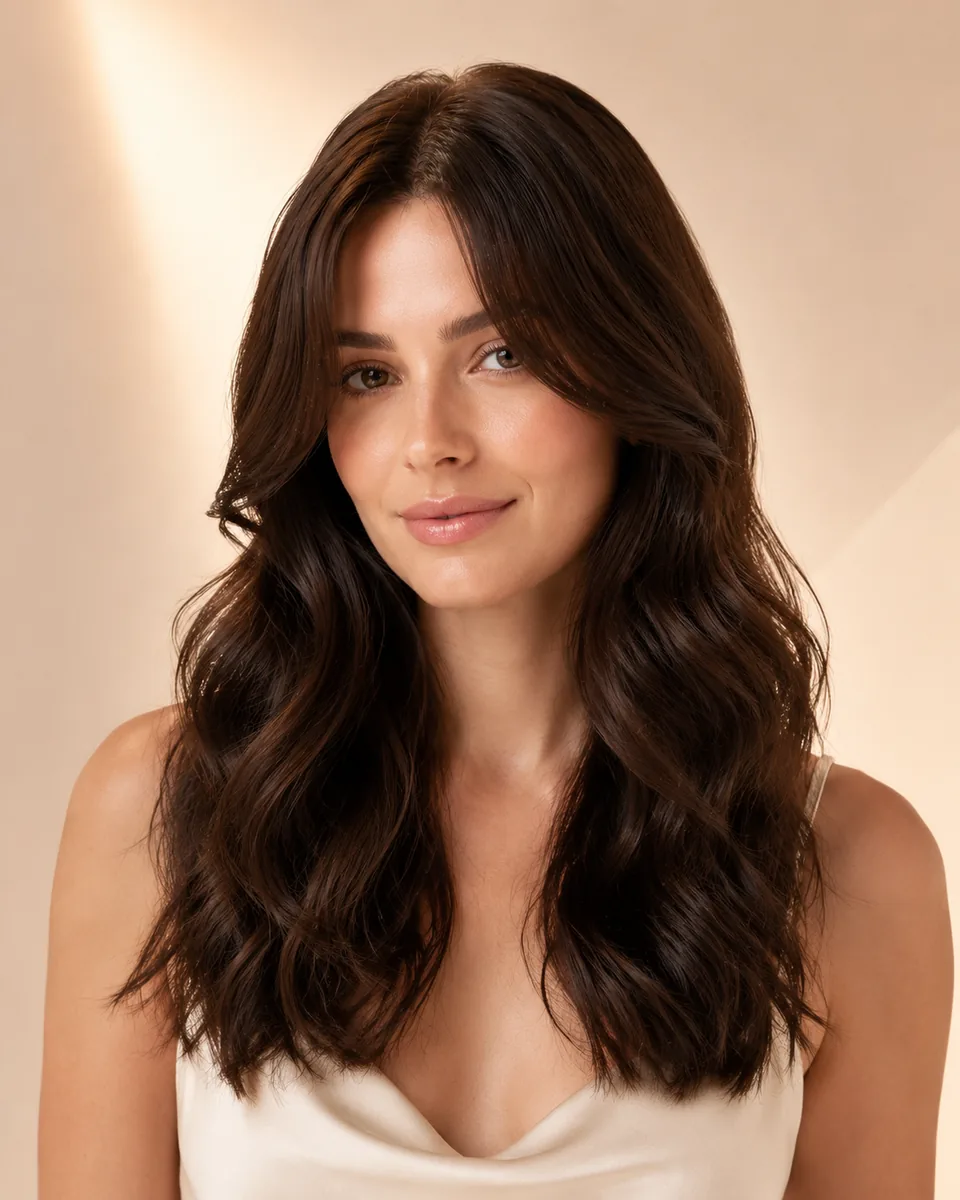
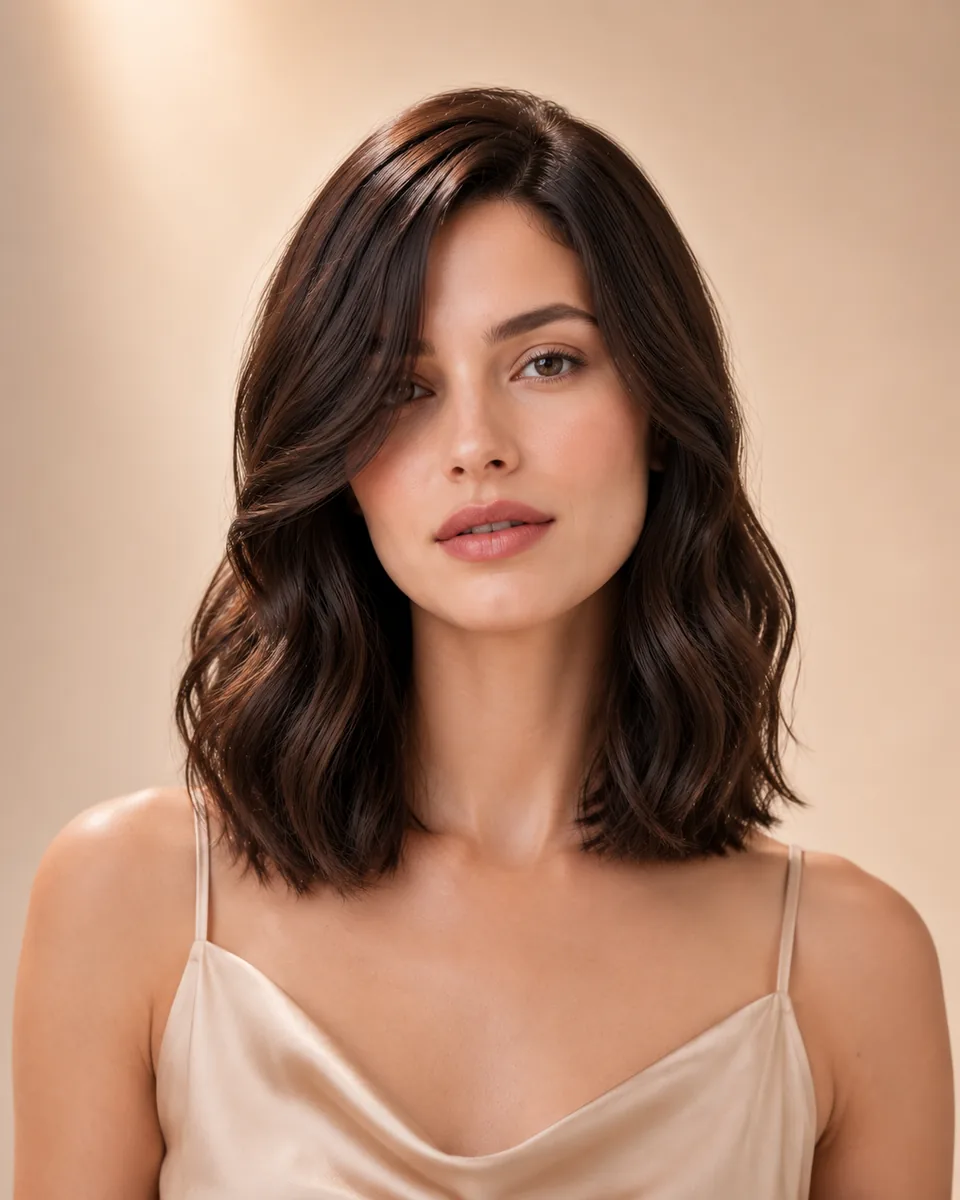
Hairstyles for round faceRound face womenFace framingHairstyle ranking
8 min read
Quick answer
Start with three different shapes
Try long layered waves for a continuous line below the cheeks, a side-parted lob for diagonal movement, and a textured bob or lifted pixie to test a genuinely short outline. Keep one selfie and one color across the comparison so you can see whether length, parting, or side volume is doing the useful work.
- Most flexible first test
- Long layered waves with front pieces below the cheekbone
- Medium-length test
- A side-parted lob ending below the widest cheek area
- Short-hair test
- A textured bob or pixie with a controlled side silhouette
A round face is usually read through curved outer lines, a softly shaped jaw, and visible width through the cheek area. The face may look close to equal in length and width in a straight-on photo, but no single measurement or hairstyle rule defines a person. The point of this guide is not to hide roundness. It is to compare where different cuts place visual weight.
Read Length, Width, Ends, and Parting First
Length changes how far the eye travels below the face. Hair that continues past the shoulders can create a longer overall line, while a short cut makes the crown, ears, jaw, and neckline more visible. Neither is automatically better; they answer different style goals.
Cheek-level width is the area to watch when a preview feels unexpectedly full. Waves that reach their widest point beside the cheeks can repeat the face's width. Moving the first full bend lower, breaking up the sides with layers, or keeping the area close to the head changes that relationship.
The endpoint matters as much as total length. A bob stopping at the widest part of the face creates a stronger horizontal line than a lob ending below the jaw. A shoulder-length cut can look compact or lengthening depending on whether the ends turn outward, sit flat, or continue into vertical pieces.
Part direction and front pieces decide how the forehead and cheeks open. A deep side part creates a diagonal line; curtain pieces create a center opening; long face-framing sections can guide attention below the jaw. For more fringe-specific comparisons, use the bangs hairstyle guide after you choose the broader silhouette.
Top 10 Hairstyles for Round Faces
Ranked shortlist
Ten shapes worth comparing
This order favors clear, varied comparison points rather than popularity data or a universal beauty rule. Every item uses its own reference image and try-on entry.
Look 1
Long Layered Waves
A long, softly moving baseline that lets you judge whether a continuous line below the cheeks suits your goal.
- Best for
- Goal: keep long hair while making the face frame more vertical and defined.
- Why it works
- Why: the length carries the eye past the jaw, while staggered front pieces prevent one heavy block of cheek-level volume.
Possible issue: waves that begin too high can collect fullness beside the cheeks. Adjustment: start the stronger bends below the cheekbone and keep the shortest front layer long enough to sweep away from the face.
Try this look
Look 2
Side-Parted Lob
A medium-length option that tests asymmetry and a below-jaw endpoint without moving into long hair.
- Best for
- Goal: create diagonal movement in a polished, everyday length.
- Why it works
- Why: the side part interrupts a centered outline, and the lob ends below the widest part of the cheeks.
Possible issue: a bulky bend at cheek height can make the cut feel wider. Adjustment: keep the fuller wave toward the ends, use a cleaner side near the part, and set the perimeter below the jaw.
Try this look
Look 3
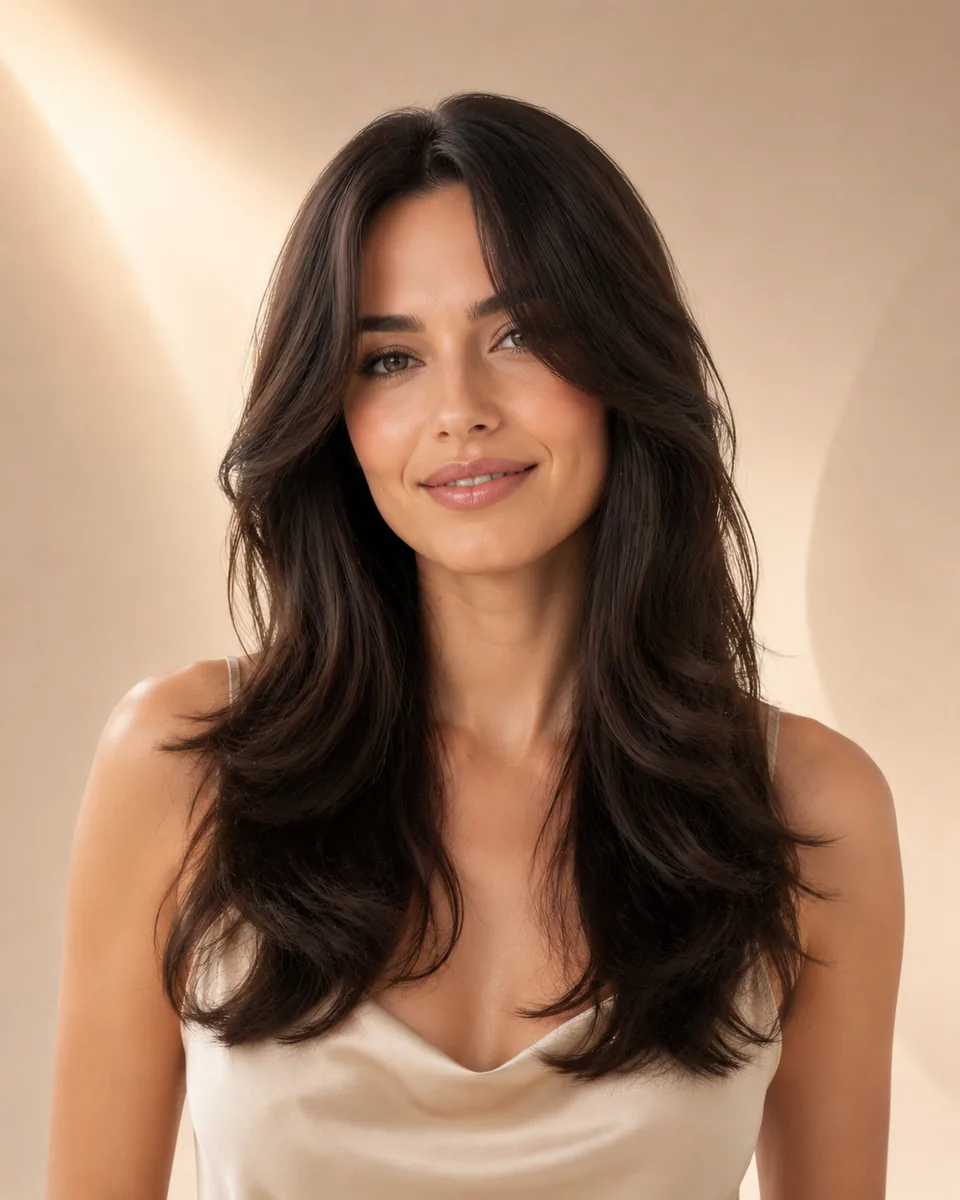
Curtain Bangs with Medium Layers
A front-piece test for people who want visible softness around the forehead without a solid fringe.
- Best for
- Goal: open the center of the face and move the frame from the forehead toward the jaw.
- Why it works
- Why: parted fringe creates two diagonal edges, and connected layers continue those lines through the length.
Possible issue: short, rounded curtain pieces can stop beside the fullest cheek area. Adjustment: lengthen the outer fringe, open the center, and connect it to layers that move below the jaw.
Try this look
Look 4
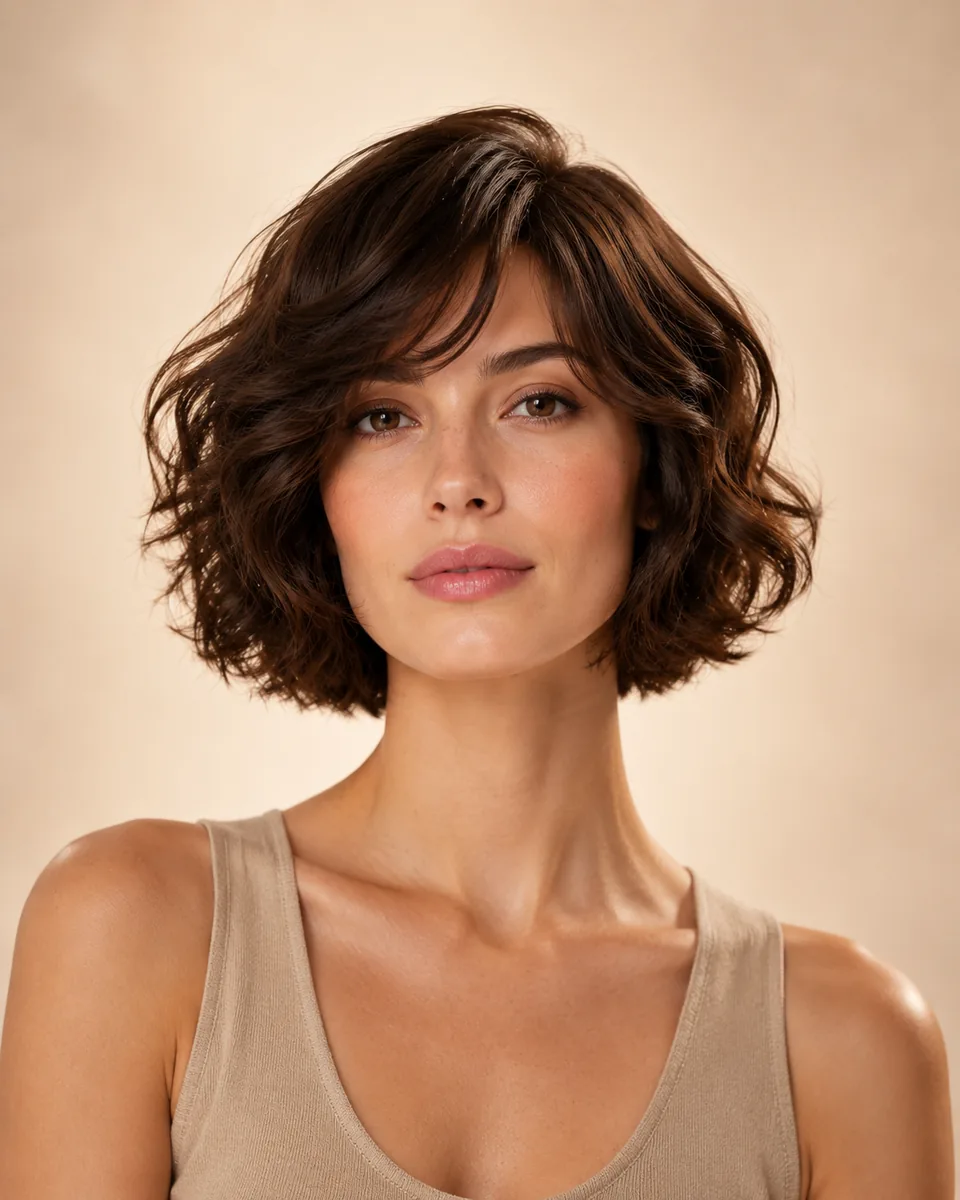
Textured Bob
A short option that uses broken edges and crown movement instead of relying on length.
- Best for
- Goal: make a bob feel lively and intentional while keeping the neck visible.
- Why it works
- Why: separated texture prevents the perimeter from reading as one solid round line, and slight lift can move attention upward.
Possible issue: a uniformly rounded bob can repeat width through the cheeks. Adjustment: vary the ends, keep the broadest section above or below the cheeks, and compare jaw-length with a slightly longer version.
Try this look
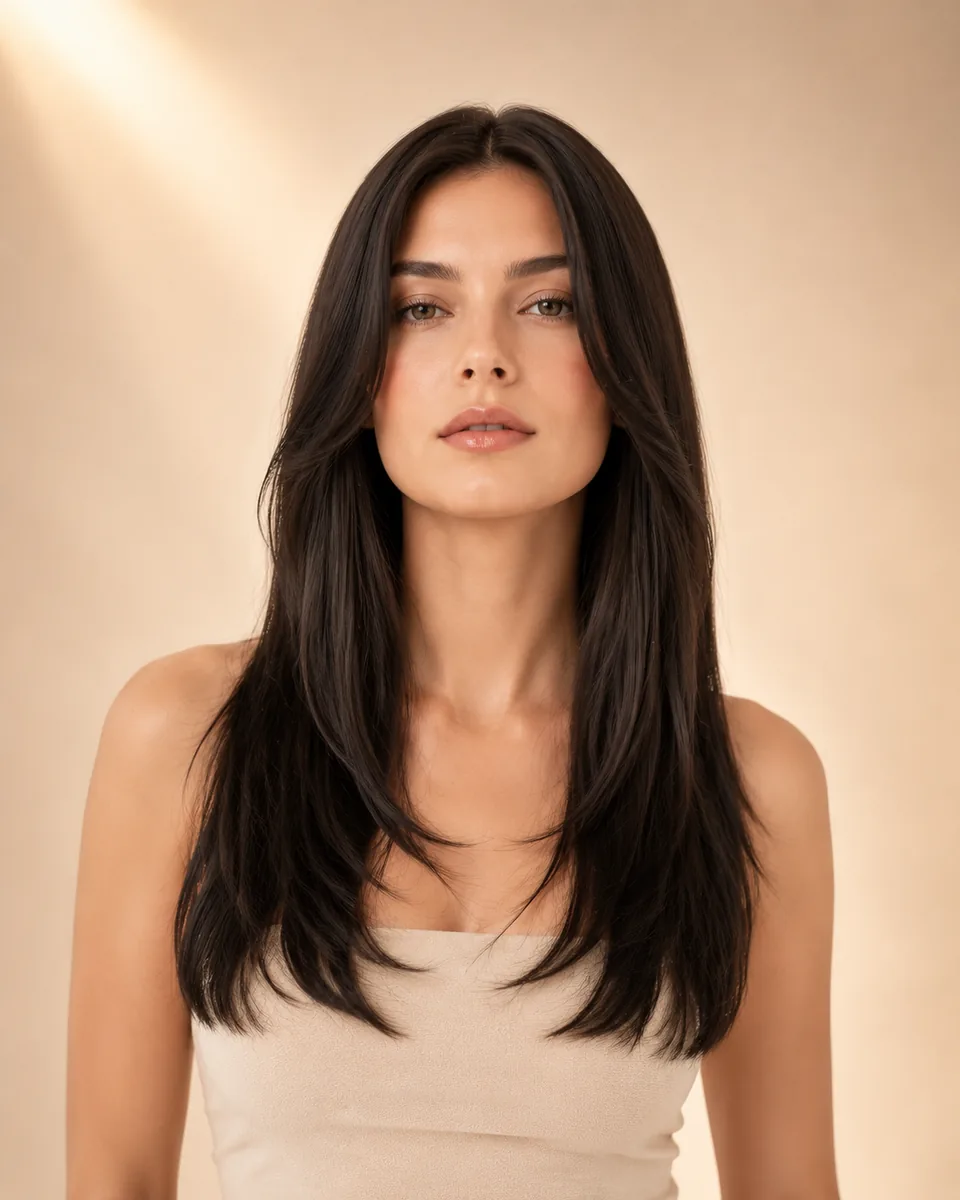
Look 5
Long Straight Layers
A clean comparison for people who prefer a straighter surface and want the outline to do most of the work.
- Best for
- Goal: keep the sides controlled while showing long, tapered movement below the jaw.
- Why it works
- Why: the straight lengths form a continuous downward line, while gentle layering keeps the lower half from becoming one blunt block.
Possible issue: flat roots and two rigid front panels can make the style feel severe. Adjustment: add light root direction, begin the front layers below the cheeks, and soften rather than thin the ends excessively.
Try this look
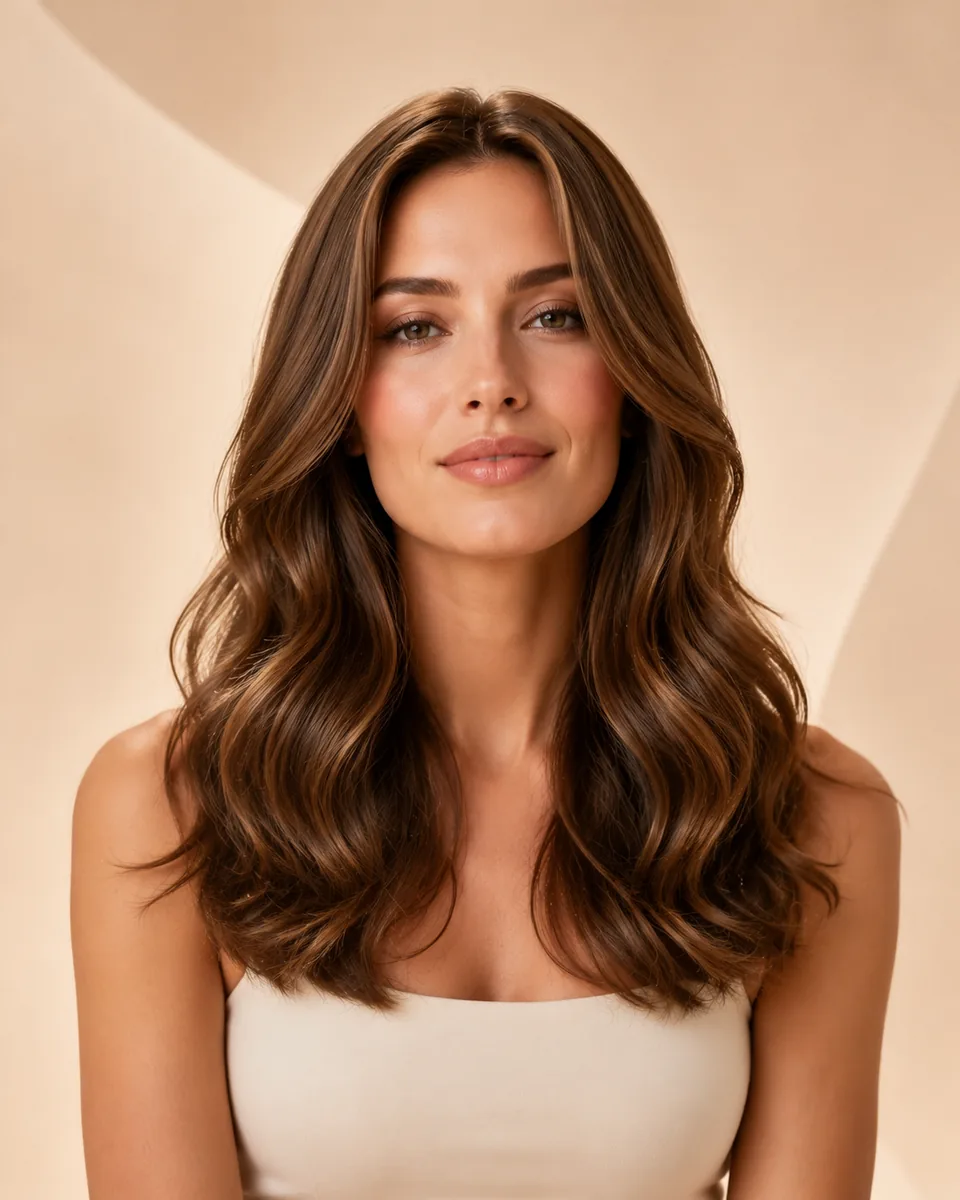
Look 6
Soft Body Wave
A smoother wave option for testing controlled movement with fullness placed through the lower lengths.
- Best for
- Goal: add softness and visible texture without concentrating all the volume beside the cheeks.
- Why it works
- Why: broad bends create direction through the mid-lengths and ends, especially when the first strong wave begins below the face.
Possible issue: even waves starting near the temples can widen the entire upper silhouette. Adjustment: keep the root quieter, lower the first bend, or compare a longer body-wave version with the same color.
Try this look
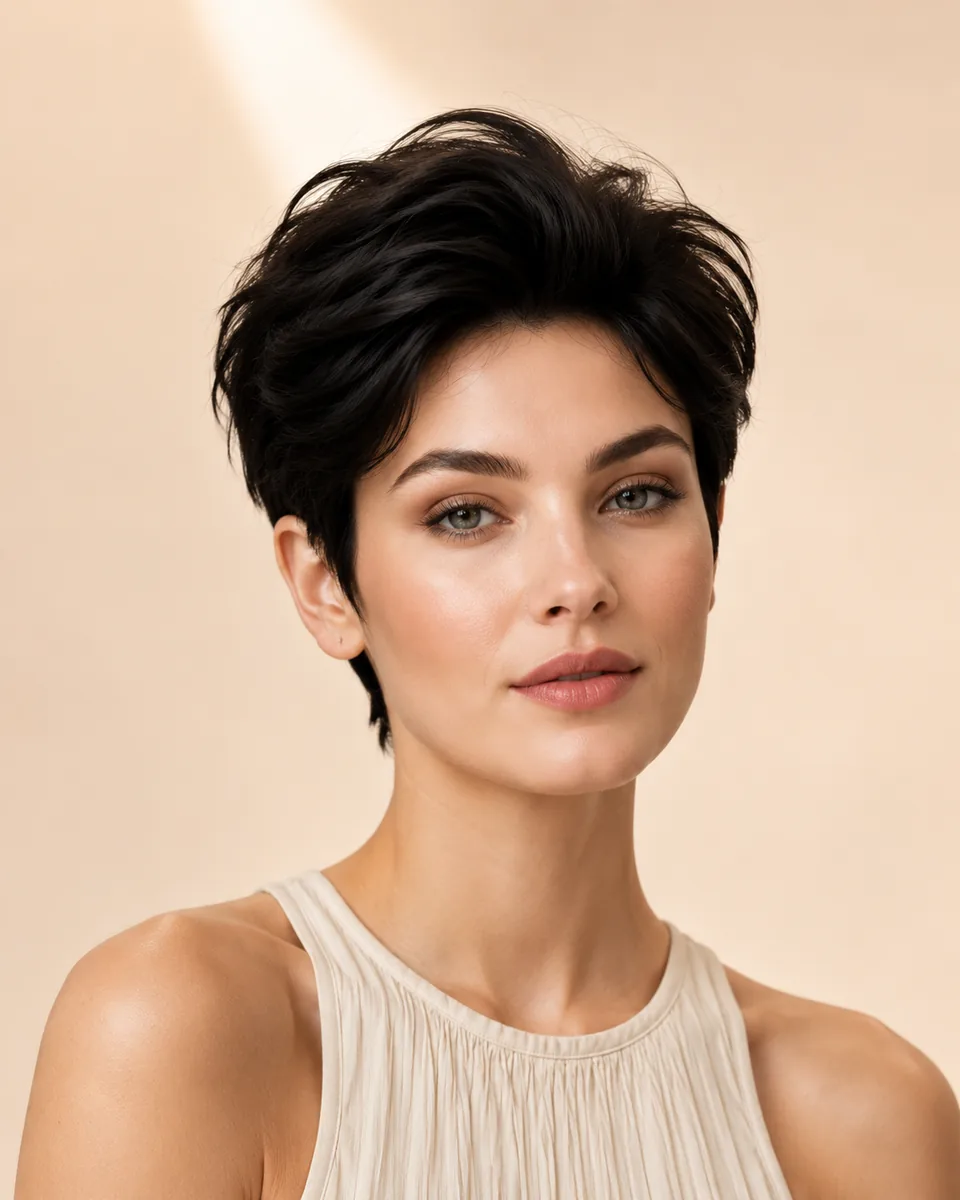
Look 7
Pixie with Volume
The clearest short-hair test because it exposes the face and shifts most of the design to the crown and fringe.
- Best for
- Goal: wear a bold short cut with upward movement and a compact side outline.
- Why it works
- Why: crown height can extend the overall silhouette, while tapered sides keep the cut from building a second wide curve around the cheeks.
Possible issue: equal volume on the top and sides can create a round cap shape. Adjustment: keep the sides closer, direct the fringe diagonally, and decide how much ear and forehead exposure feels right.
Try this look
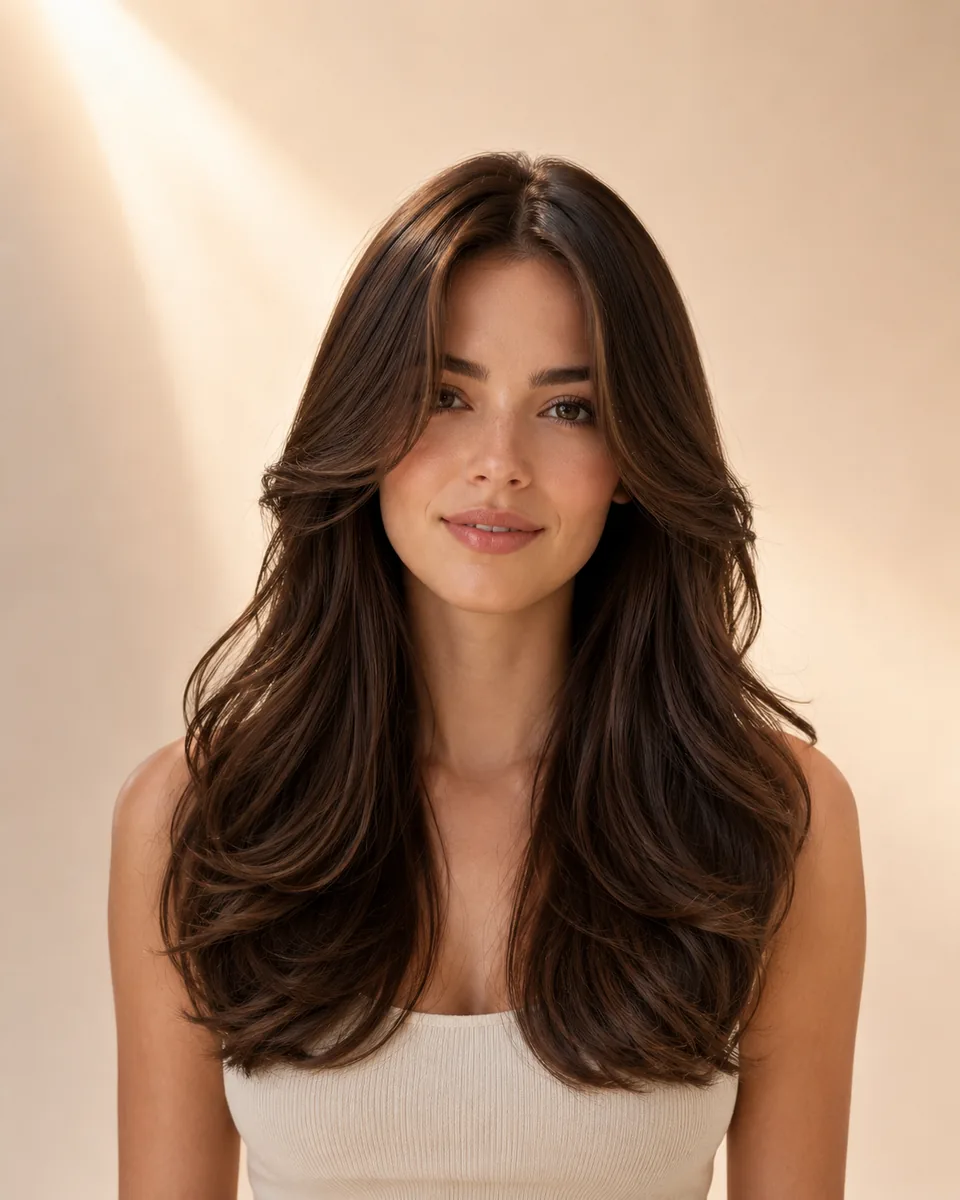
Look 8
Face-Framing Layers
An extra-long option focused on the exact starting and ending points of the pieces nearest the face.
- Best for
- Goal: keep substantial length while making the cheek and jaw frame more deliberate.
- Why it works
- Why: staggered front sections create several downward paths instead of one wide edge, and the longest pieces carry movement past the shoulders.
Possible issue: too many short layers can crowd the cheeks and hide the jawline. Adjustment: keep the shortest visible layer below the widest cheek area and ask for a gradual connection into the length.
Try this look
Look 9
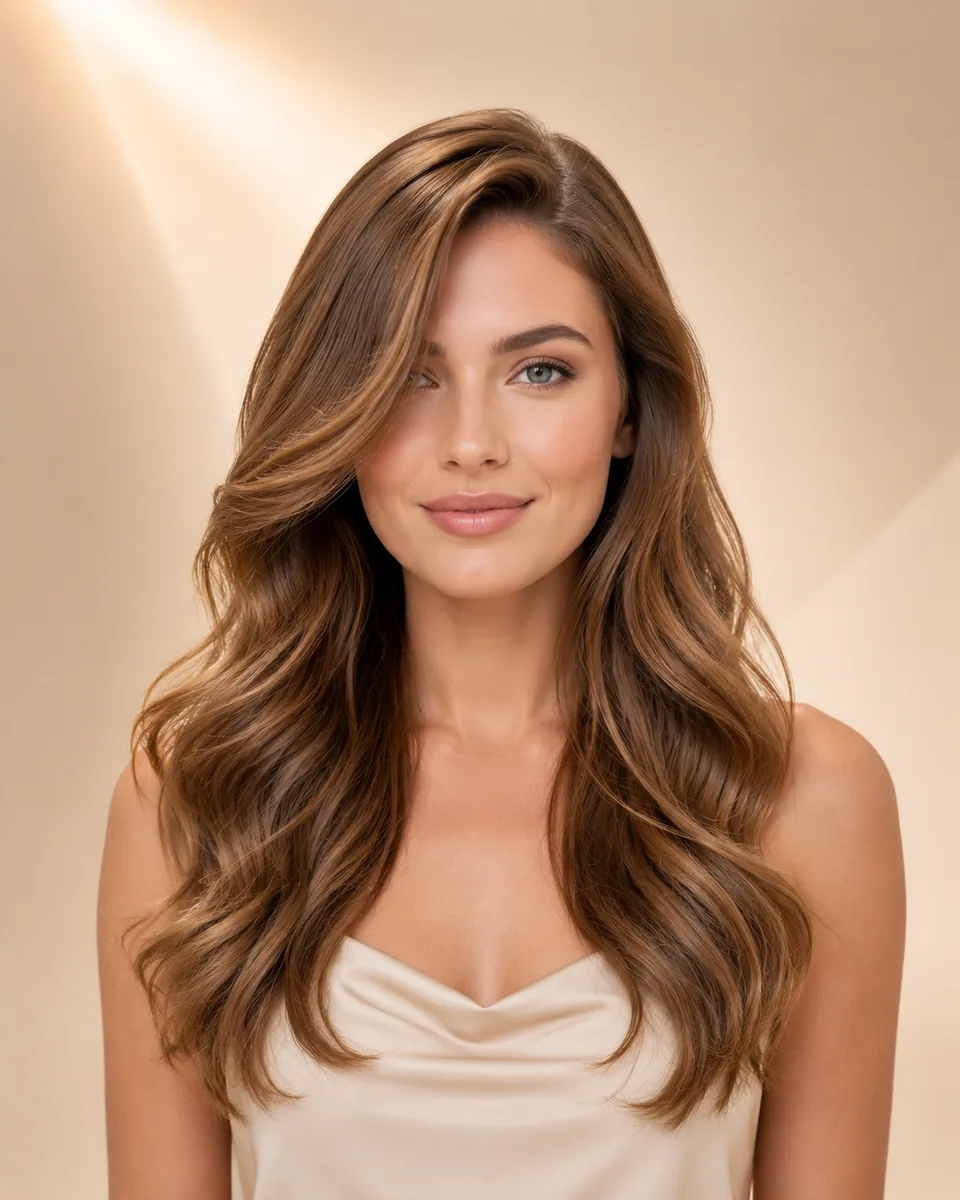
Deep Side Part
A low-commitment way to test asymmetry before changing the underlying length or texture.
- Best for
- Goal: shift the forehead frame and add a strong diagonal without choosing a new haircut first.
- Why it works
- Why: the heavier sweep and exposed side make the two halves of the outline read differently, reducing the effect of perfect symmetry.
Possible issue: the heavy side can collapse over one eye or create all the width on one cheek. Adjustment: keep the sweep lifted at the root, open the eye area, and move the fuller bend below the cheekbone.
Try this look
Look 10
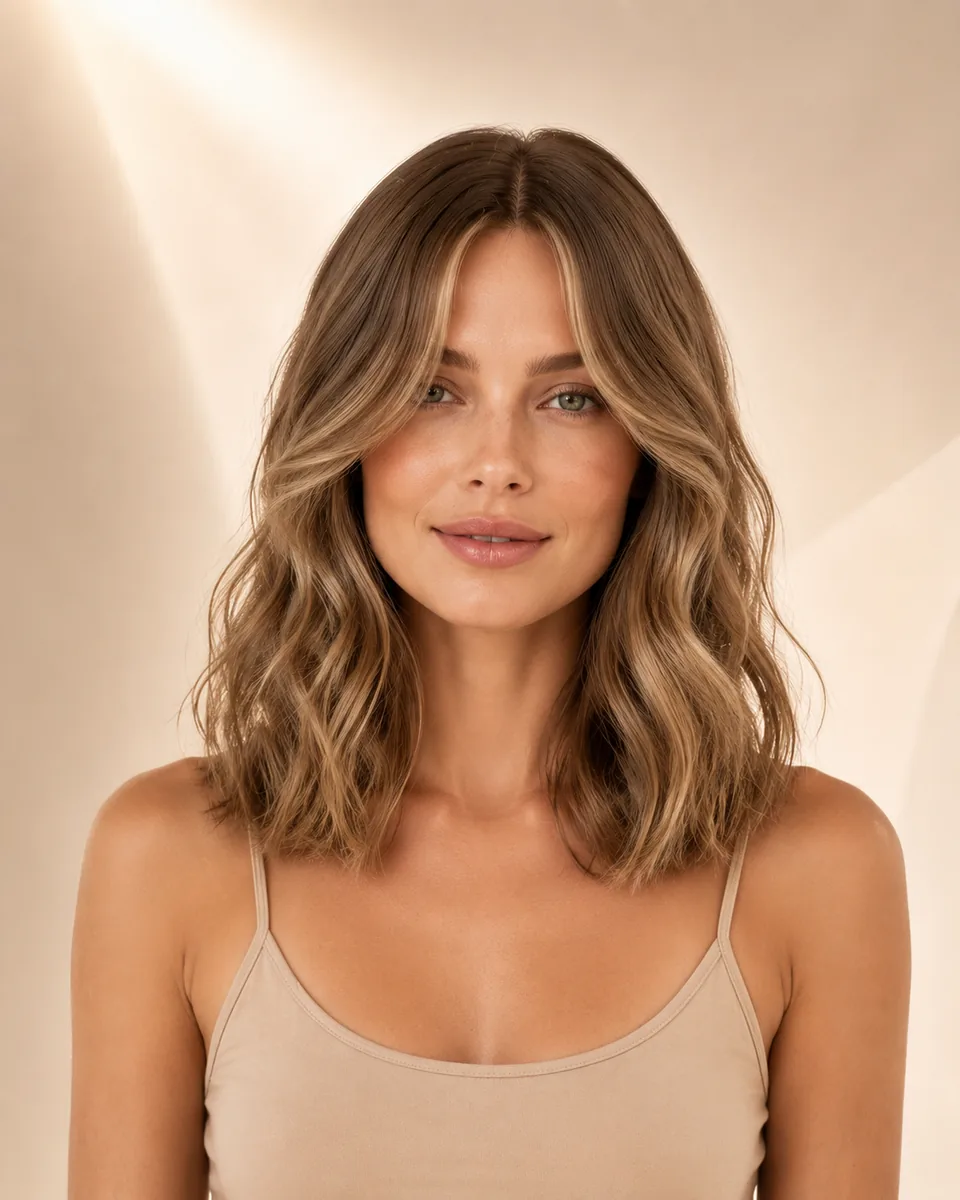
Shoulder-Length Waves
A practical medium-length control option between the sharper lob and the longer layered looks.
- Best for
- Goal: keep an easy shoulder-level endpoint with visible but relaxed movement.
- Why it works
- Why: the ends sit below the jaw and the loose wave breaks up a hard horizontal perimeter.
Possible issue: flipped or very full ends can create a wide shelf at the shoulders. Adjustment: soften the endpoint, keep the first wave below the cheeks, and compare it directly with the side-parted lob.
Try this look
How This Ranking Was Built
This is an editorial comparison order, not a measurement of popularity, user satisfaction, search volume, or stylist votes. The first positions offer broadly useful reference shapes: one long, one medium, and one front-framing direction. The remaining positions add short, straight, wave, parting, and endpoint alternatives so the list works as a comparison set rather than ten versions of the same haircut.
Each look was reviewed by four visible variables: how far the silhouette continues below the face, where it reaches maximum side width, where the ends stop, and how the part or front pieces divide the forehead and cheek area. The ranking does not judge facial features or tell anyone that roundness must be corrected.
Hairstyles for Women With Round Faces Are Not One Formula
Women searching for hairstyles for a round face may be comparing a haircut, a wig texture, a weave reference, or a temporary style. The same silhouette can behave differently across those contexts. A physical haircut depends on natural texture, density, shrinkage, growth patterns, and cutting technique. A wig or weave also depends on cap or installation structure, density, fiber or hair, and how the front is finished.
Use the list to identify visible preferences before narrowing the construction. You may discover that the deep side part matters more than the loose wave, or that a below-jaw endpoint matters more than whether the style is called a bob or lob. The bob hairstyle guide is useful when that endpoint becomes the main decision.
Compare Every Look on the Same Selfie
- Choose a recent, front-facing photo with the forehead, both cheeks, jaw, neck, and shoulders visible.
- Start with three different lengths: pixie or bob, lob or shoulder length, and long layers.
- Keep the hair color similar during the first pass so color does not overpower the silhouette.
- Compare where the first full bend or layer reaches maximum width relative to the cheeks.
- Compare the endpoint relative to the jaw and shoulders.
- Test part direction or bangs only after you identify the length and side outline you prefer.
- Save the strongest two and use Compare Hairstyles to review them together.
Try all ten with one consistent photo
Use the same portrait and change one major variable at a time. That makes it easier to tell whether length, cheek-level width, endpoint, or part direction changed your response.
Open Virtual Hairstyle Try-OnStylist Conversation Prompts
Bring the two or three reference directions that survived your photo comparison. A useful conversation is specific about placement rather than asking whether a style is simply "good for round faces."
- "Where will the widest part of this shape sit on my hair?"
- "Can the shortest front pieces begin below my cheekbone?"
- "Where will the perimeter land relative to my jaw and shoulders?"
- "Will my natural texture make this endpoint rise, expand, or shrink?"
- "How would you keep the side volume controlled without flattening the crown?"
- "Can we compare a center part and side part before changing the fringe?"
- "What will this shape look like when I air-dry it and when it grows out?"
A stylist can translate the visible direction into sectioning, cutting, styling, or installation choices that fit the actual hair. A generated image cannot supply that technical plan.
What AI Cannot Decide From a Photo
An AI preview can compare broad length, texture, color, parting, and face-frame directions. It cannot measure hair density, predict shrinkage or hold, locate cowlicks, assess scalp or hair condition, guarantee a wig fit, or reproduce a stylist's exact technique. It may also change small facial or hair details between results.
Treat the ranking and previews as a way to make your questions more precise. The final decision should account for the real hair or wig, daily routine, comfort, and the professional who will create or fit the look.
FAQ
What hairstyles are best for a round face?
Long layers, side-parted lobs, curtain pieces, textured bobs, lifted pixies, and shoulder-length waves are all useful directions to compare. The deciding detail is not the name alone; check where each style adds width, where the ends stop, and how the front opens around your features.
How can I tell if my face is round?
A round face is often read as having curved outer lines, a softly shaped jaw, fuller cheek width, and similar visible face length and width in a straight-on view. Real faces combine traits, so use the description as a visual starting point rather than a diagnosis or strict category.
Is short hair a bad choice for a round face?
No. A textured bob or lifted pixie can create a strong short silhouette. Compare crown height, side width, ear exposure, and the endpoint instead of assuming every short cut produces the same result.
Do bangs work with a round face?
Yes, depending on their length, opening, and outer connection. Side-swept or curtain pieces create diagonal or divided lines, while a heavy rounded fringe changes the forehead frame more completely. Preview the fringe with the same underlying length before deciding.
Where should face-framing layers start on a round face?
There is no required starting point, but pieces beginning below the widest cheek area are a useful comparison when your goal is downward movement. A stylist may move that point higher or lower based on texture, density, jawline, and the finished silhouette you want.
Is a center part or side part better for a round face?
Neither is universally better. A center part emphasizes symmetry and can pair well with long curtain pieces; a side part creates a stronger diagonal and uneven weight. Test both on the same length and texture so the part is the main change.
How should women compare hairstyles for a round face online?
Use one clear selfie, keep the first previews in a similar color, and compare short, medium, and long silhouettes before changing bangs or texture. Look at cheek-level width, the jaw and shoulder endpoints, and how the part opens the face.
Can AI predict the exact haircut, wig, or weave result?
No. AI provides visual direction, not an exact physical outcome. It cannot predict natural texture behavior, density, installation, cap fit, construction, maintenance, or how a professional will execute the reference.