
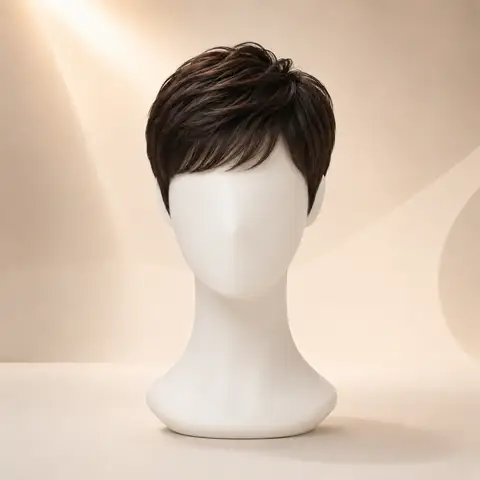
Classic pixie direction
A close short outline with visible ears and concentrated shape at the crown and front.
pixie cut guide
Judge the open outline, crown shape, and fringe before comparing a pixie with longer short cuts.
No app required · Style preview only · Not a wig store
Pixie cut hairstyles expose more of the ears, neck, forehead, and jaw than a bob. The most useful preview compares crown height, fringe direction, and side length, then places a bob or textured short cut beside it to test whether you prefer short hair generally or a pixie specifically.
Entity definition
A pixie cut is a very short hairstyle that keeps the neck and much of the ear area visible, often with more shape through the crown or fringe. Small changes in top length, side length, and front pieces can make one pixie feel sleek while another feels soft or textured.
| Attribute | Typical direction | What it changes visually |
|---|---|---|
| Typical endpoint | Above the ears to nape | The short outline exposes more of the neck and side profile than a bob. |
| Silhouette | Close and crown focused | The top can stay smooth or carry visible lift while the sides remain compact. |
| Fringe | Optional focal point | A longer fringe changes forehead coverage and can shift the apparent direction of the cut. |
| Volume | Low to medium | Most visual volume sits at the crown or front rather than through the lower face. |
| Movement | Short and localized | Texture is read through small sections instead of long lengths or large waves. |
| Face framing | Open | The cut reveals more of the forehead, ears, cheek area, jaw, and neck. |
| Maintenance perception | Frequent shape checks | Because the outline is short, growth can change the crown, side, and fringe proportions quickly. |
Visual examples
Keep the same portrait and start with one stable color. The labels below describe the visible direction, not a guaranteed salon or product result.
A close short outline with visible ears and concentrated shape at the crown and front.
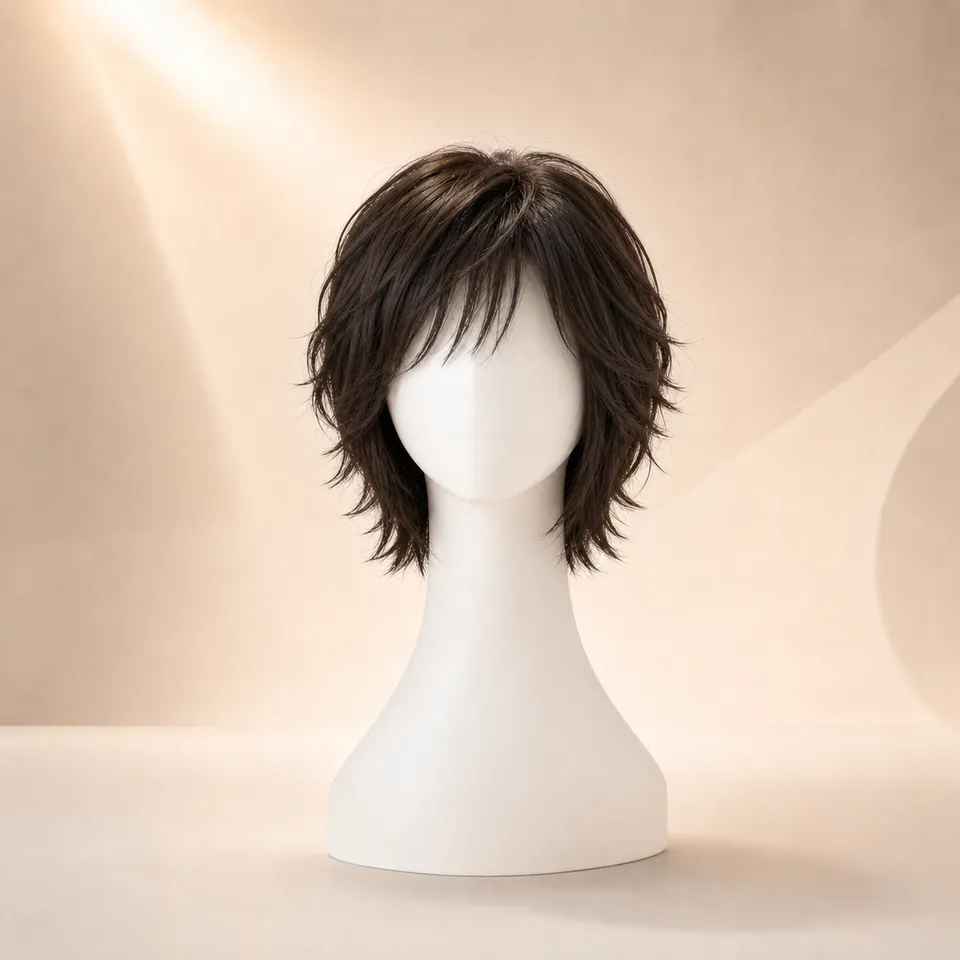
A comparison option with more broken texture and slightly more length around the outline.
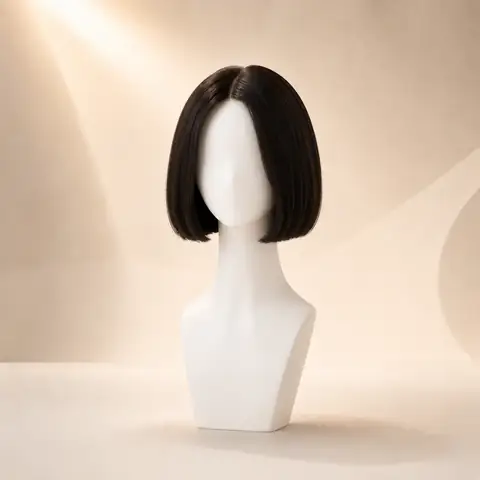
A longer short cut that restores a visible perimeter around the jaw and covers more of the neck.
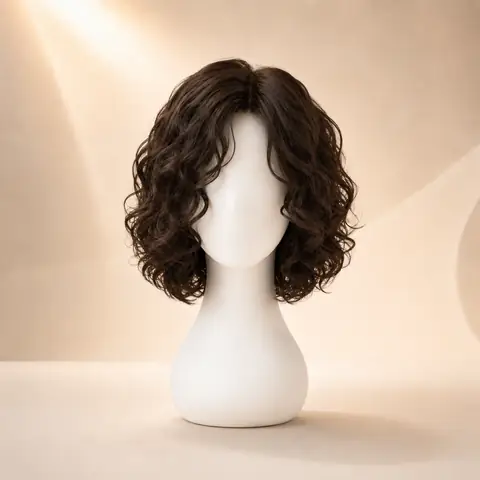
A short shape with more outward volume, useful for separating length preference from texture preference.
A short pixie makes ear, neck, and jaw exposure the main decision. Texture can soften that open outline or add crown height, but it cannot hide a shape that feels too short around the sides.
A long pixie keeps more fringe or side length than a close-cropped version. Compare it with a bob on the same photo to see whether the extra coverage changes your comfort with short hair.
Bangs move attention toward the forehead and eyes, while an undercut direction removes visual weight at the sides or nape. An AI preview can compare those silhouettes, but it cannot predict growth patterns, clipper work, or daily styling effort.
Color options
Compare color after choosing a silhouette so contrast, warmth, and dimension stay easy to judge on the same photo.
Preview soft black or natural black hair directions.
Try this colorCompare dark brown, chocolate, chestnut, and warm brown ideas.
Try this colorTry honey blonde, golden blonde, beige blonde, or platinum tones.
Try this colorExplore a richer red-purple shade without changing your real hair.
Try this colorPreview darker roots fading into lighter ends.
Try this colorClosest comparison
Both are short directions, but they frame the face differently. Compare exposed neck and ear area first, then look at crown shape and the line of the ends.
Open the full comparison| Compare | Pixie | Bob |
|---|---|---|
| Typical endpoint | Above ears to nape | Jaw or chin area |
| Ear and neck exposure | High | Moderate |
| Main visual weight | Crown and fringe | Perimeter and ends |
| Texture visibility | Small sections and separation | Surface, ends, and overall width |
| Grow-out change | Shape changes quickly | Endpoint moves gradually downward |
What changes visually
Look at the visible ears, neck, forehead, and jaw rather than judging only the top of the hair.
A little lift at the crown can change the overall vertical balance more than it would on a longer cut.
Compare a swept or longer front with a more open forehead before deciding on the whole pixie direction.
A bob shows whether you want short hair generally or specifically want the openness of a pixie.
Realistic limits
An AI preview cannot predict clipper work, graduation, or the exact blend a stylist will use around the ears and nape.
It cannot show cowlicks, growth direction, or how your natural texture will hold crown lift and fringe placement.
The preview does not estimate trim frequency or daily styling effort for your hair.
Use it to judge openness and silhouette, not as a technical cutting plan.
Start with a clear front-facing selfie. Good light and a visible hairline help the preview feel more natural.
Choose hairstyle families, lengths, textures, and color directions that you want to try.
Create an AI result from your selected look, then review how the shape and color frame your face.
Use the result for personal style comparison, or share one favorite look for quick feedback.
Why use this tool
Start with a clear portrait, compare one variable at a time, and use the result as a visual reference for your next style decision.
No app required
Multiple styles
Quick preview
Style inspiration only
Privacy note
WigTryAI is built for personal visualization and style inspiration. It does not sell physical wigs, beauty products, or salon services, and it does not provide commerce matching. Your generated look is meant for exploration, comparison, and optional friend feedback.
A pixie is a very short cut that usually exposes the ears and neck, with shape concentrated through the crown, sides, or fringe. Those proportions can vary while the overall outline stays distinctly short.
Yes. A bob restores a visible jaw-level perimeter and covers more of the neck, making it easier to see whether you want a short cut or specifically want the openness of a pixie.
Check ear and neck exposure, crown height, side width, forehead coverage, and fringe direction. These small areas carry more visual weight when the overall length is short.
Use a front-facing portrait with visible ears, jaw, neck, and hairline. Pull scarves and hands away from the lower face so the short outline is easy to inspect.
No. A preview cannot account for cowlicks, growth direction, natural texture, clipper work, or how your hair will hold crown lift and fringe placement.