
Quick Answer
The practical difference in the pixie cut vs bob decision is not just a few inches. A pixie cut removes more hair from around the ears and neck, so your face, crown shape, fringe, and profile become the focus. A bob keeps a visible perimeter around the jaw or chin, which gives you more coverage, more movement through the sides, and usually more options when you style it.
Choose a pixie when you want the haircut to feel openly short and you like the idea of showing your ears, neck, and bone structure. Choose a bob when you still want a short, deliberate haircut but prefer a frame around the jaw and a little more room to tuck, bend, or grow it out. Choose a long pixie when the pixie idea appeals to you but the shortest version feels like too large a first step.
The best test is visual, not theoretical. Put a textured pixie and a chin-length bob on the same photo. Then look beyond whether either result is pretty: notice where the hair stops, what becomes visible, and which outline still feels like you.
Choose a pixie for openness and a stronger change. Choose a bob for a defined outline with more coverage and flexibility.
What Actually Changes Between a Pixie and a Bob?
A pixie moves the visual weight upward. Most of the haircut sits around the crown, fringe, temples, and upper nape. With less hair at the sides, the eyes, cheekbones, ears, jaw, and neck are more exposed. Small decisions carry a lot of weight: a longer fringe, a soft temple piece, or an extra bit of crown height can change the whole result.
A bob moves the visual weight outward and lower. Its defining feature is the perimeter, usually somewhere from the jaw to the chin. That line frames the lower face and gives the hair a clear silhouette even when it is worn simply. A bob can be sleek, wavy, blunt, layered, tucked, or slightly angled, but it still gives the sides and nape more coverage than a pixie.
This is why a pixie vs bob comparison is really a decision about exposure versus perimeter. If you want your haircut to reveal your face and neck, the pixie direction is more honest. If you want the cut itself to draw a line around your jaw, the bob direction does that better. The detailed pixie cut guide and bob hairstyles guide can help once you know which side of that choice you prefer.
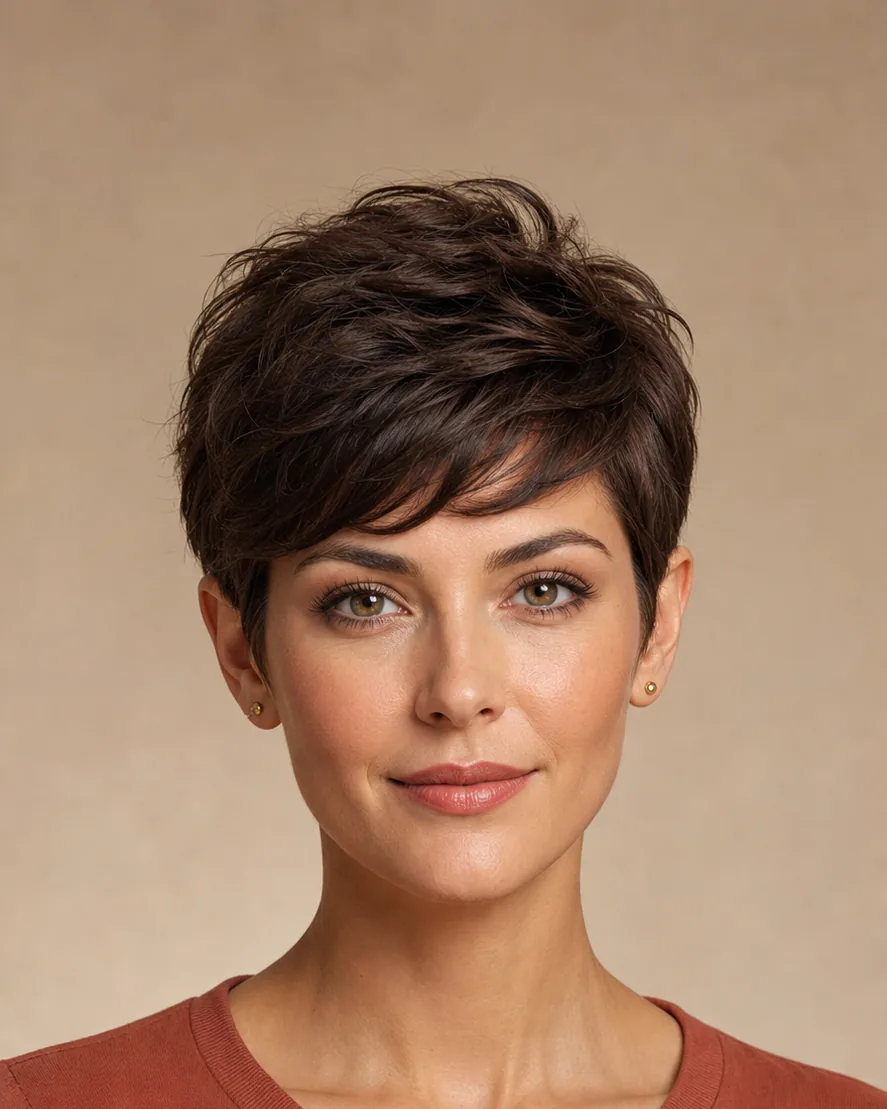 The short side lengths and open neckline are what make this look read immediately as a pixie.
Pixie Cut vs Bob Comparison Table
| Factor | Pixie | Bob |
|---|---|---|
| Typical length | Close around the ears and nape, with shape concentrated at the crown or fringe | Usually ends around the jaw or chin, with a visible outer perimeter |
| Ear and neck exposure | High; both often become part of the look | Moderate; side lengths and back sections cover more of both areas |
| Main visual weight | Crown height, fringe direction, temples, and small textured sections | The jaw-level line, surface texture, ends, and width through the sides |
| Face framing | Open and direct; the face is less hidden | Stronger lower-face frame; the ends can soften or emphasize the jaw |
| Helpful adjustments | Longer fringe, soft sideburns, texture, crown lift, tapered nape | Part placement, blunt or broken ends, soft waves, front angle, internal layers |
| Daily styling | Often fast once the shape works, but short sections can need deliberate direction | Usually offers more variation, but the perimeter may need smoothing or bending |
| Trim rhythm | Short shapes can lose their intention quickly as the sides and nape grow | A precise bob also needs trims, though the extra length is usually more forgiving |
| Grow-out | Can pass through uneven side and nape stages | Usually transitions more gradually into a longer bob or medium length |
| Styling flexibility | Limited by the short outline; little ability to tie back | More tuck, clip, wave, half-up, and low-ponytail potential depending on length |
| Commitment | Higher if you are unsure about exposed ears and neck | Lower if you want a short change without giving up as much coverage |
| Watch out for | Cowlicks, crown direction, and side length become very visible | A blunt endpoint can add width if it lands at an unhelpful spot on the jaw |
The table is a way to separate the real tradeoffs. It is not a rule that one face shape or texture belongs to one haircut. A stylist can change the fringe, endpoint, part, volume, and texture. What cannot be removed is the basic difference between a very open silhouette and a jaw-framing one.
Compare the Same Face, Not Two Different Reference Photos
Haircut inspiration can be misleading when each reference has a different person, makeup look, pose, color, and lighting. A pixie may look daring in one photo because the model has a high crown and strong cheekbones. A bob may look softer in another because the camera angle hides the jaw. That does not tell you which cut is better for you.
The useful comparison keeps the person, expression, clothing, camera distance, hair color, and base texture the same. In the two portraits here, the key difference is the haircut outline: the pixie exposes the ears and nape, while the bob creates a chin-level frame. That makes it easier to judge the real change in face exposure and width.
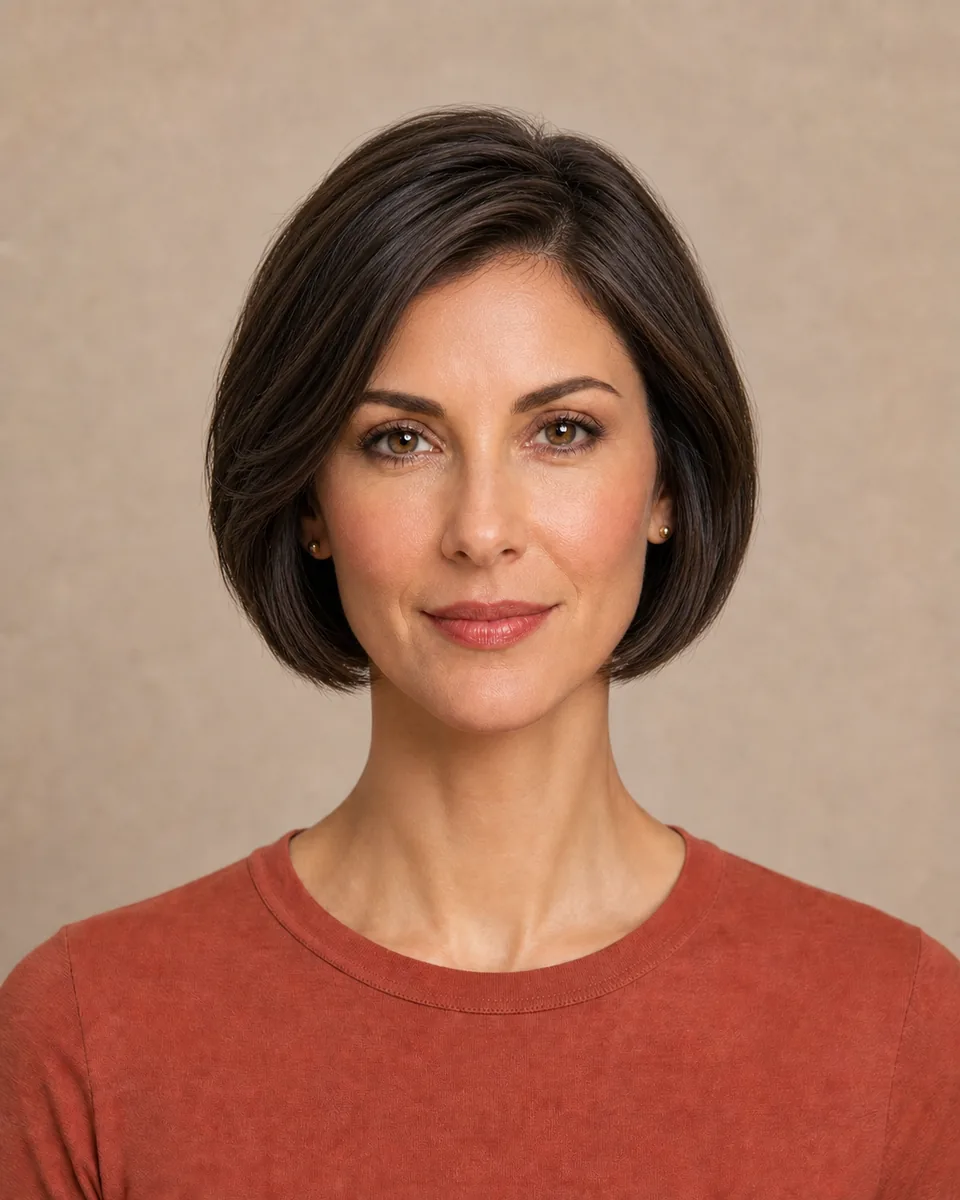 The bob changes the visual balance by moving hair weight down to the jawline instead of concentrating it at the crown.
When you compare your own previews, start with five questions. Do you like seeing the ears? Does the jaw-level endpoint feel balanced or too wide? Does the pixie make the crown feel lively or too exposed? Would you miss the ability to tuck the sides back? And which result still makes sense on an ordinary morning, not only in a polished reference photo?
Face Shape: What Should You Pay Attention To?
Face-shape advice should explain what to inspect, not lock you out of a haircut. For a round face, a pixie with crown lift, a longer fringe, or soft height can keep the silhouette from feeling overly compact. A bob can work well too, but a blunt endpoint exactly at the widest part of the cheeks may add apparent width. A slightly lower chin line, a side part, or broken texture can change that effect.
For a square face, a pixie can emphasize strong structure in a confident way, especially when the fringe is soft rather than sharply geometric. A bob gives more tools for softening the lower face: waves, a longer front, and ends that land below the strongest point of the jaw. Neither choice is automatically more flattering; it depends on whether you want to echo your bone structure or soften it.
Heart-shaped faces often have room to test either direction. A pixie can make the eyes and cheekbones the focus, while a bob can add width closer to a narrower chin. On oval faces, proportion is usually less restrictive, so comfort with exposure and maintenance tends to decide the answer. Long faces may prefer a fringe or some side width rather than excessive crown height, but a pixie can still work when its shape is adjusted deliberately.
Your forehead, ear shape, neck length, glasses, usual part, and profile can matter as much as a face-shape label. Use a clear visual preview first, then bring those observations to a stylist instead of asking for a generic "best haircut for my face" answer.
Hair Texture, Density, and Growth Direction Matter
Straight hair makes the difference between a pixie and bob very obvious. A pixie's short pieces reveal every bend at the crown and fringe, while a bob's perimeter reads cleanly. Wavy hair can make a pixie softer and a bob less geometric, but it can also change where the hair sits from one wash day to the next. Curly hair adds shrinkage and side volume, so a cut that looks chin-length when wet may sit much higher when dry.
Density brings a different set of tradeoffs. Thick hair can create a strong pixie crown, but it may need internal weight removal so the sides do not expand. In a bob, thick hair may need shaping to avoid a triangle outline around the jaw. Fine hair can look fuller in a bob because the ends collect into a clean line. A fine-haired pixie can also work beautifully, but it often depends more on strategic texture and a crown shape that does not fall flat.
Natural growth direction is especially important with a pixie. A cowlick at the front can decide where the fringe wants to go; a strong swirl at the crown can change whether lift is easy or frustrating. A bob does not eliminate those factors, but the added length gives more ways to redirect them. An AI image can show you the silhouette you like. It cannot predict how your individual cowlick, curl pattern, density, or humidity will behave after the cut.
Styling, Maintenance, and Grow-Out
Do not assume pixie means low maintenance and bob means high maintenance. A pixie can be quick to wash and dry, but the shorter it is, the more obvious every extra week of growth can become. The sides, nape, and fringe may need shaping to avoid looking accidental. A textured pixie also needs the right amount of product and direction; too much product can make fine sections look flat or separated in a way you did not intend.
A bob usually takes longer to dry and may need heat styling when you want a crisp line, a soft bend, or controlled volume. In exchange, it gives you more ways to change the result. You may be able to tuck it, make a half-up style, add waves, use clips, or pull it into a small low tie once it has enough length. That versatility is valuable if you do not want one silhouette every day.
Grow-out is another practical difference. A bob tends to become a longer bob and then medium hair in a fairly understandable sequence. A pixie can go through more distinct stages as the top, sides, and nape catch up with each other. That does not make it a bad choice, but it makes a trim plan worth discussing before the first cut. If you like the openness of a pixie but want a softer entry point, a long pixie can be the most useful middle option.
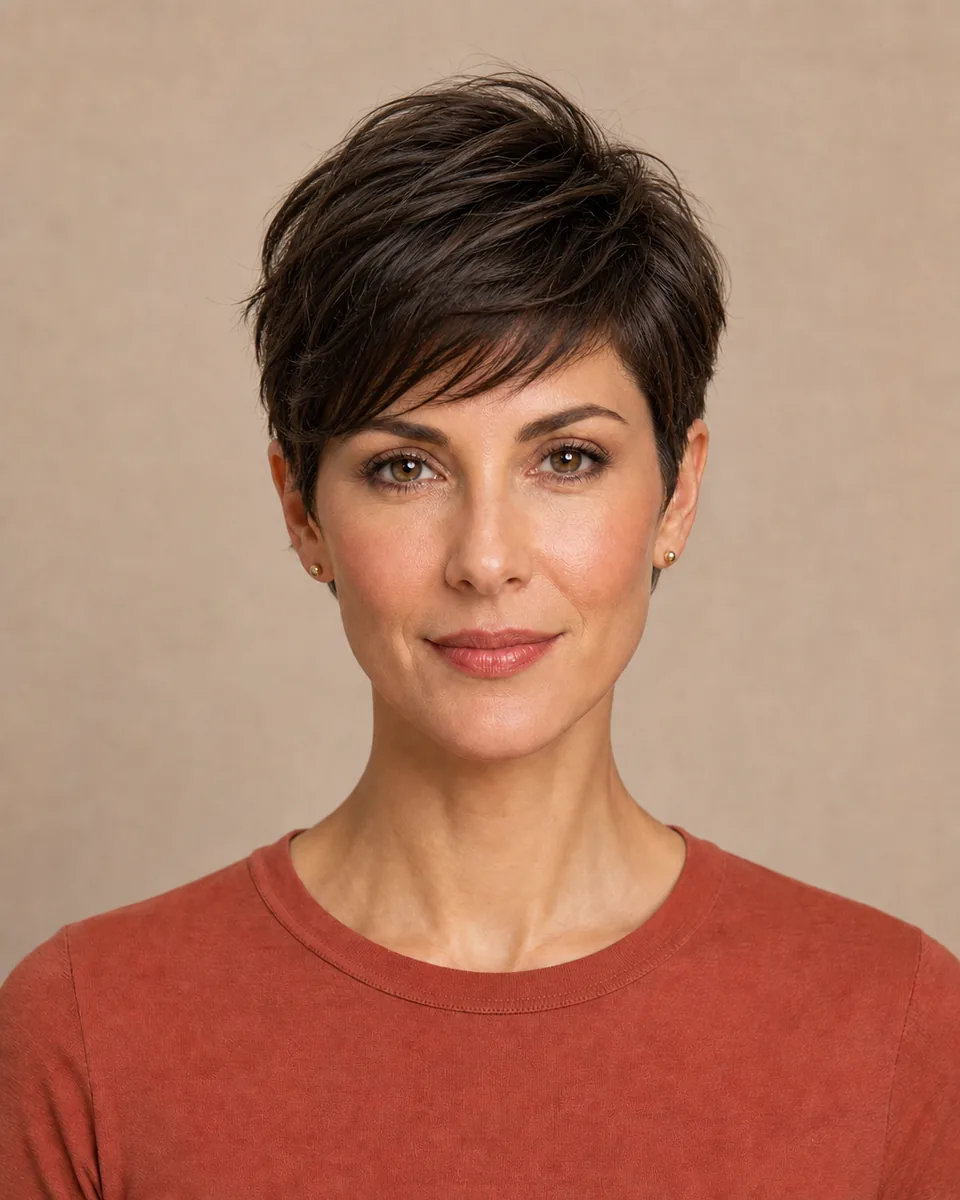 A long pixie keeps the short, open feeling while leaving more fringe and temple length than a classic pixie.
How to Preview a Pixie and Bob on Your Photo
Start with one recent, front-facing portrait. Keep the hairline, ears, jaw, neck, and shoulders visible. Use even light and avoid hats, sunglasses, hands, heavy filters, or shadows that hide the sides of the face. Those details matter more here than they do in a long-hair preview because the short outline sits so close to your features.
Preview a textured pixie first. Inspect the ears, crown, fringe direction, and open neckline. Then preview a chin-length bob on the exact same photo, with a similar color and overall texture. Look at the jawline, the added side coverage, and the width created by the ends. Finally, test a long pixie if the classic version feels exciting but a little too exposed.
Keep your comparison disciplined. Changing color, curl pattern, length, and bangs all at once makes it impossible to know which feature you are reacting to. Compare hairstyles on the same photo so the main variable stays the haircut. WigTryAI is a visual decision aid, not a salon guarantee: it cannot predict cutting technique, natural shrinkage, cowlicks, or whether you will enjoy the real maintenance routine.
When to Choose a Pixie
Choose a pixie when you want the haircut to feel visibly short and are comfortable making your face, ears, neck, and crown part of the style. It is a strong option if you like texture, enjoy a deliberate silhouette, and do not need to pull your hair back often. A pixie can make the eyes and cheekbones feel prominent, but it asks you to be comfortable with less coverage.
If you are on the fence, do not treat all pixies as the same. A longer fringe, softer temple pieces, or more crown texture can make the haircut less severe without turning it into a bob. The question is whether you want to keep the open outline, not whether you want the shortest possible version.
When to Choose a Bob
Choose a bob when you want short hair with a visible perimeter around the lower face. It is usually the better choice if you like a jaw-framing line, want a little more styling freedom, or are unsure how you will feel with exposed ears and neck. A bob can be clean and precise, soft and wavy, or lightly textured, so it allows more variation while still making a clear short-hair change.
Be specific about the endpoint. Ask where it will land relative to your chin and jaw, whether the front will be longer, and how much weight will sit at the sides. The word "bob" alone does not tell a stylist whether you mean blunt, layered, French, angled, or softly textured.
When to Choose a Long Pixie
Choose a long pixie when the pixie silhouette attracts you but the classic version feels too abrupt. It keeps more fringe and temple length, which can make the transition from longer hair feel less exposed. It also gives your stylist more material to work with when adjusting a cowlick, softening a forehead, or building texture around the crown.
A long pixie is not simply a short bob. The ears and nape should still feel open, and the shape should remain concentrated through the top and fringe. Preview it as a third option only after you have compared the true pixie and bob, so it helps you understand your comfort level instead of blurring the main decision.
What to Tell Your Stylist
Bring the winning visual direction plus a short list of the features you liked. For a pixie, say whether you want the ears exposed, how long you want the fringe, how much crown height feels right, and whether you prefer a tapered or softer nape. For a bob, identify the endpoint, part, texture, front angle, and how often you want to style it.
Also mention your natural part, cowlicks, texture when air-dried, hair density, exercise routine, glasses, and how often you are willing to schedule trims. A photo preview can start the conversation, while a stylist can translate the idea into a real cut that works with your hair. When you want to test more than these three directions, the AI hairstyle changer is the broader place to explore them.