
Braids hairstyle guide
Braids Hairstyle Guide: Shape, Length, and Face Framing
A braids hairstyle is shaped by more than the braid name. Braid size, parting, length, placement, and loose pieces decide whether the outline looks precise, soft, compact, long, open, or full around the face.
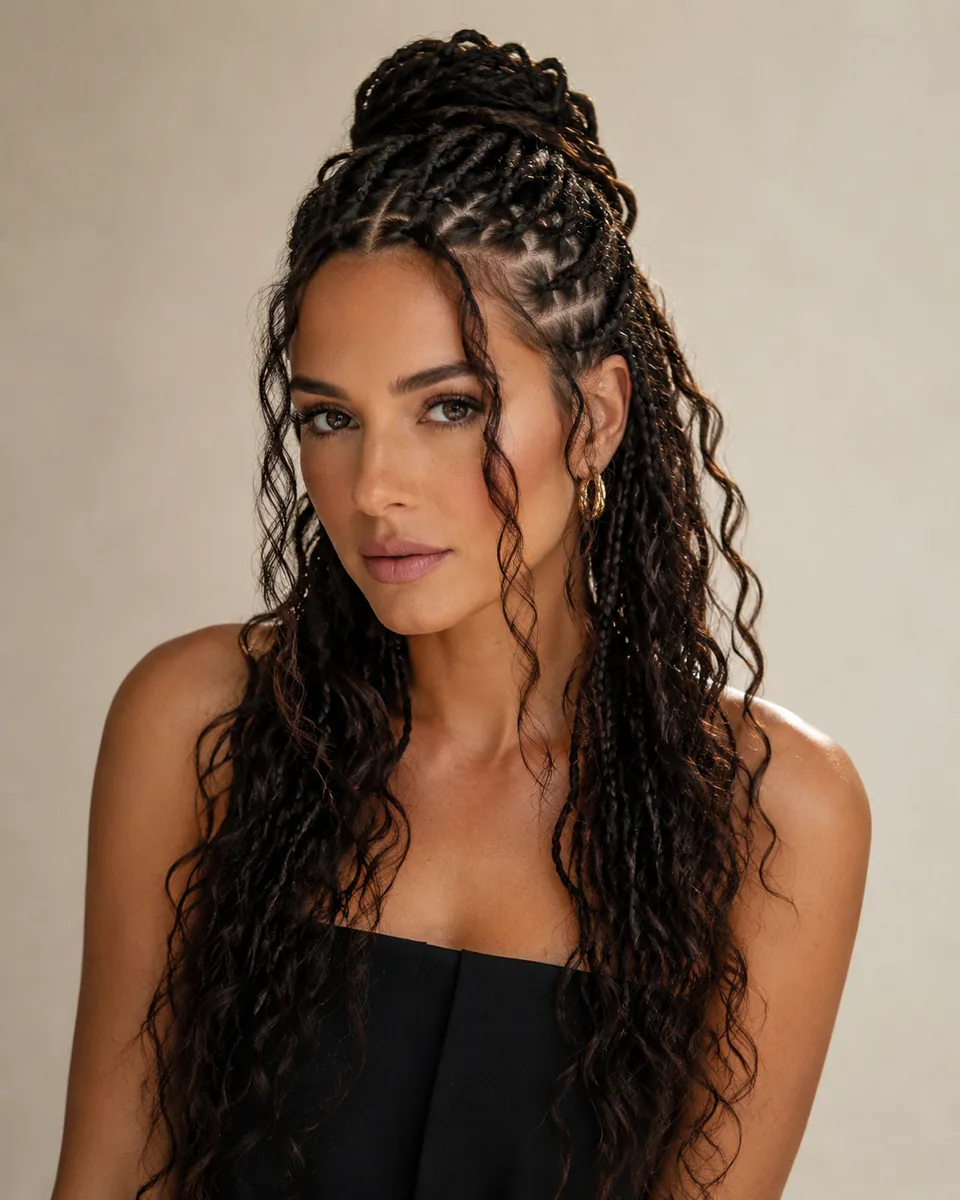
Braids hairstyleBox braidsGoddess braidsBraided hairstyles
5 min read
Quick answer
Box braids and goddess braids answer different visual goals
Box braids emphasize repeated, defined braids and a cleaner sectioned surface. Goddess braids mix braided sections with loose or curled pieces, creating more variation and movement. After choosing that structure, compare braid size, parting, length, and the pieces nearest the face before you test color.
- Box braids
- More uniform braided sections and a precise repeated outline
- Goddess braids
- Braided structure plus loose curled pieces and softer movement
- Best first comparison
- Hold length and color steady, then change only the braid family
The broad search for a braids hairstyle can lead to hundreds of names, tutorials, and inspiration photos. For a useful visual decision, begin with variables you can actually compare in one portrait. Ask whether you want every visible length to read as braid, how much scalp parting you want visible in the reference, where the ends should stop, and whether loose pieces should frame the face or continue throughout the style.
Box Braids vs Goddess Braids
Visual comparison
Compare structure with length and color held steady
Both catalog references use a long dark style on the same display format. The meaningful change is the uniform box-braid surface versus the loose curled pieces woven through the goddess-braid direction.
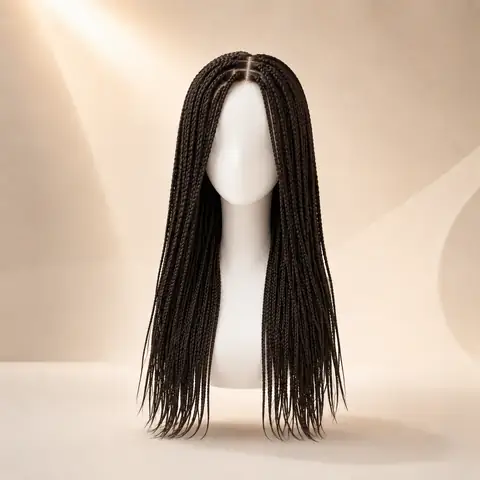
Long box braids
Individual braids remain visually consistent from the parting area through most of the length, creating a clean vertical rhythm.
Try Long box braids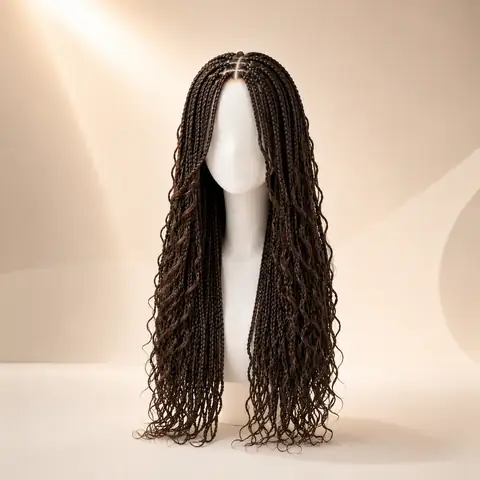
Long goddess braids
Loose curled strands interrupt the repeated braid pattern, adding surface variation and a softer outer edge.
Try Long goddess braidsBox braids
Box braids make the braid count, thickness, parting grid, and endpoint easy to read. Smaller braids create more repeated lines and finer surface detail; larger braids create fewer, bolder sections. The name does not promise a particular installation method, weight, or tension. Use the image to describe the visible scale you want, then discuss technical choices separately.
Goddess braids
In the references on this page, goddess braids combine individual braids with loose curled pieces. The amount and placement of loose hair can change the look more than length alone. A few face-framing tendrils keep most of the silhouette structured; loose pieces throughout the lengths create a more textured outer edge. Catalog names vary, so point to the exact mix you mean.
Braid Size, Parting, and Face Framing
Decision guide
Decide the visible architecture of the style
These choices affect the portrait independently. Compare one variable at a time instead of treating every braided reference as interchangeable.
| Decision | What changes visually | Compare in the photo | What AI cannot tell you |
|---|---|---|---|
| Braid size | Small braids create more repeated lines; larger braids create fewer, bolder sections | Detail at the hairline, side width, and how dense the lower lengths appear | Tension, braid weight, section strength, or installation method |
| Parting | Center, side, and off-center placement change symmetry and forehead framing | How the first rows open around the forehead and temples | Whether the real parting plan suits scalp or hair condition |
| Length | Medium, long, and extra-long endpoints change the vertical silhouette and body coverage | Where the ends stop relative to shoulders, chest, and torso | Actual weight, movement, installation time, or daily handling |
| Loose pieces | Curled strands add softness, separation, and irregular movement | Whether they stay near the face or continue through the full length | How the loose hair will tangle, hold curl, or respond to weather |
| Face framing | Forward braids or tendrils can narrow or open the visible face area | Forehead opening, cheek coverage, and the space around the jaw | Comfort, hairline stress, or how sections will be anchored |
Parting is easiest to judge near the forehead, but the full layout matters. A center part creates a balanced opening; a side part makes one front section visually heavier. The braid direction can also be swept back, forward, or into a half-up shape. Choose the placement you want to see before deciding that one part is universally better for a face shape.
Face framing can come from the first braids, separate curled tendrils, or both. Check whether those pieces stop near the cheek, jaw, shoulder, or lower. A generated preview may change exact section placement between results, so use it to choose the broad frame rather than count or map individual braids.
Compare Medium and Extra-Long Braids
Hold the braid family steady while the endpoint changes
The two rows separate structured box braids from goddess braids with loose pieces. Within each family, compare the shorter and extended silhouette before choosing color.
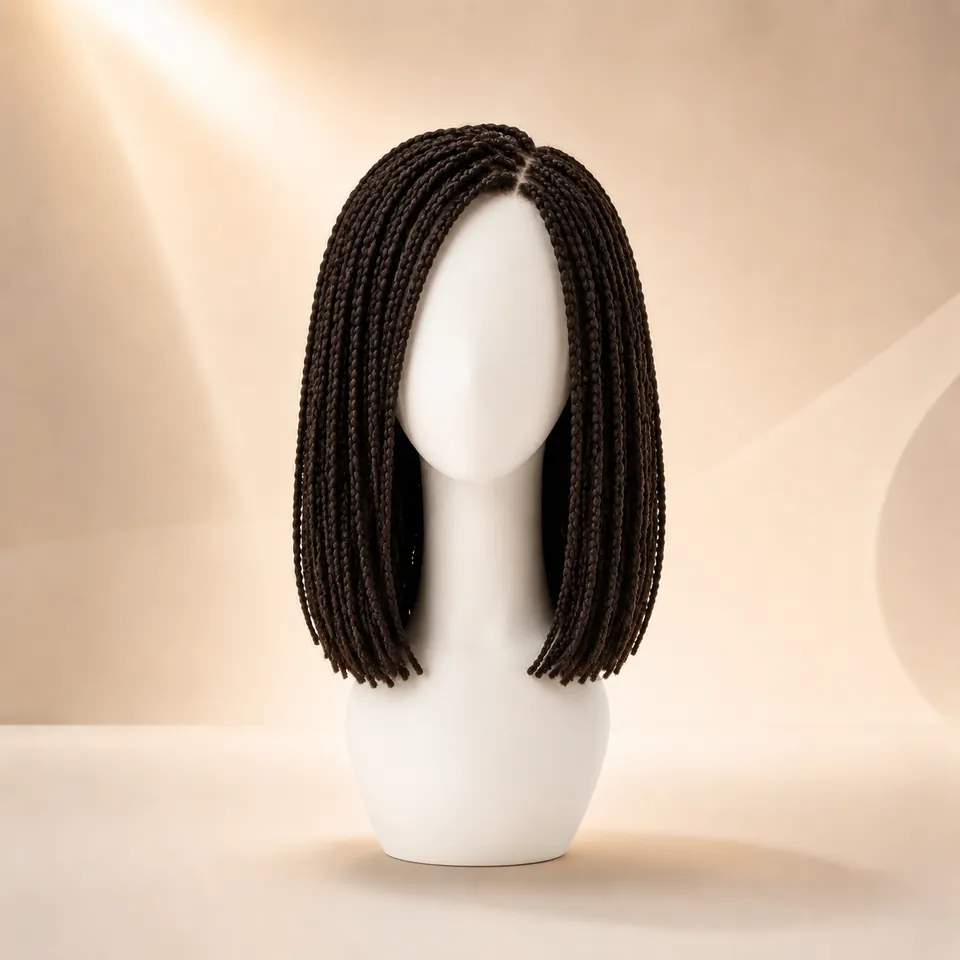
Medium box braids
A compact endpoint keeps the repeated braid lines near the jaw, neck, and shoulders.
Try this look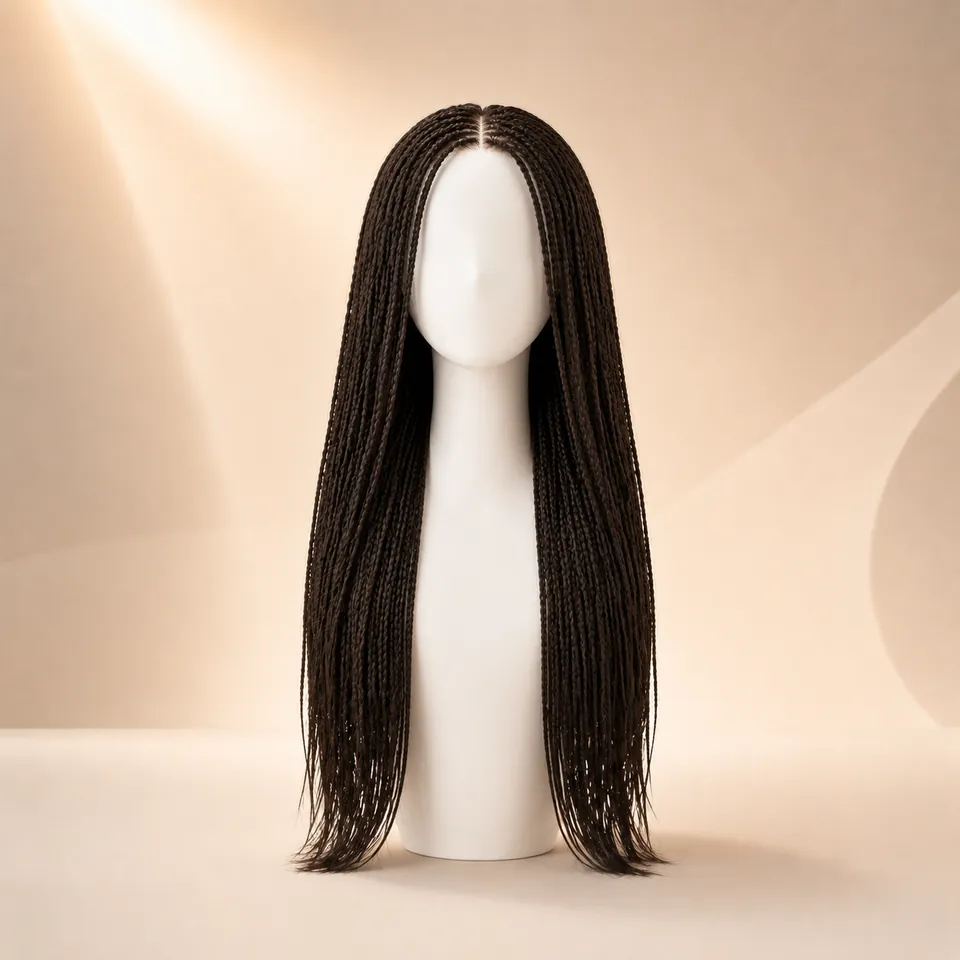
Extra-long box braids
The clean braided lines continue much farther down, making length the dominant part of the outline.
Try this look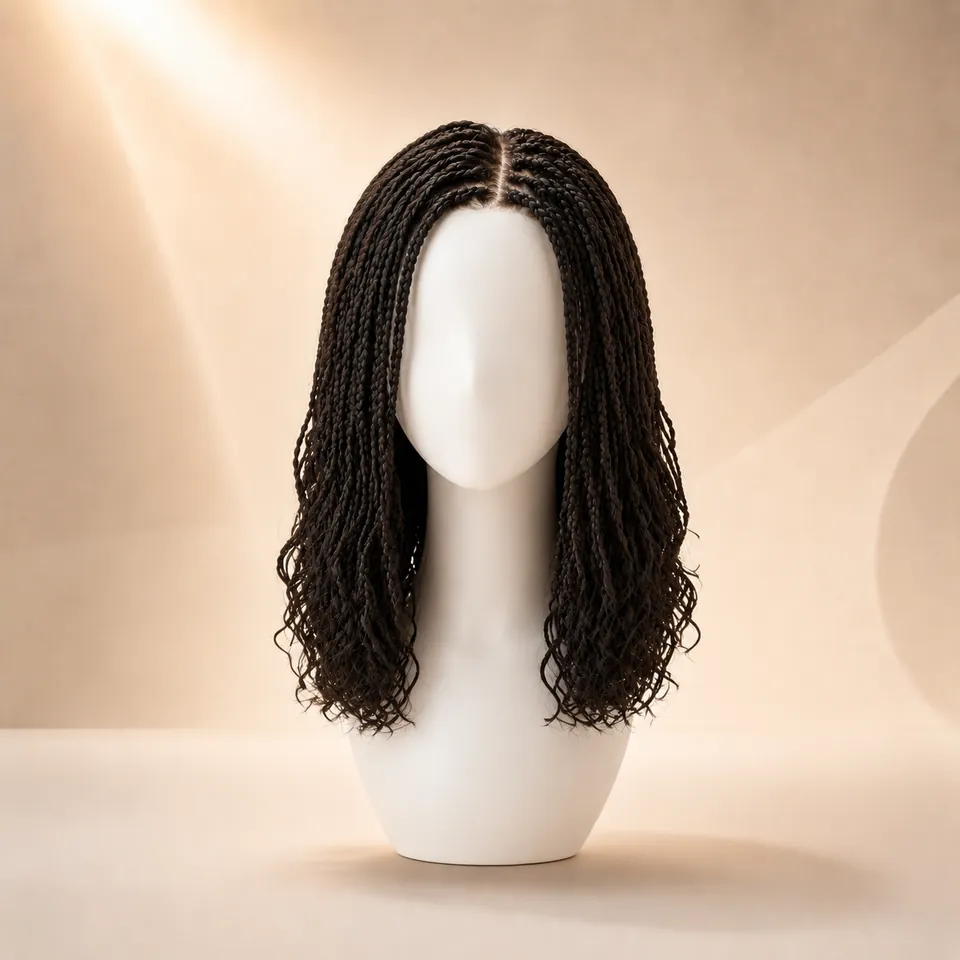
Medium goddess braids
Loose curled ends and side pieces create visible softness within a shoulder-area silhouette.
Try this look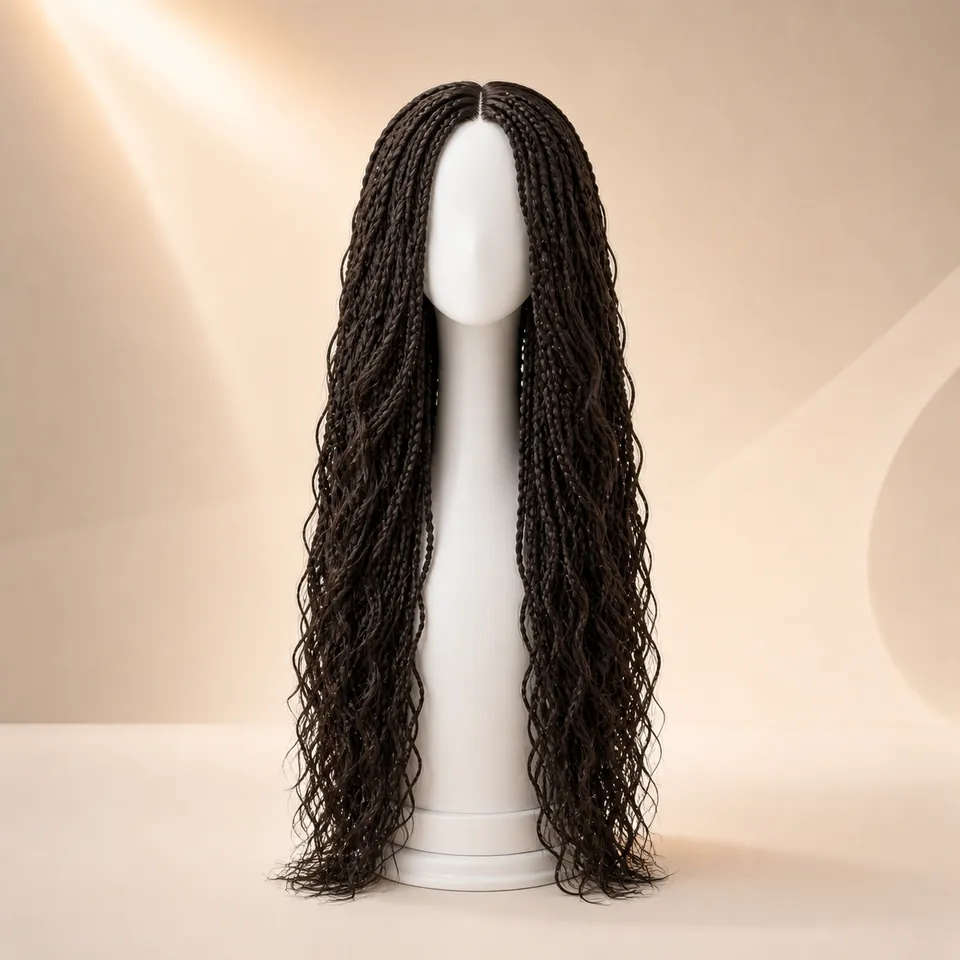
Extra-long goddess braids
Braids and loose curls extend together, creating a long textured edge rather than one uniform curtain.
Try this lookMedium braids keep the endpoint nearer the shoulders, so braid size and face framing carry more of the visual decision. Long and extra-long braids add a strong vertical element and cover more of the upper body in a portrait. That does not mean they will feel heavy or light in real life; an image cannot calculate the materials, braid count, or installation.
See which braid structure belongs in your shortlist
Try long box braids and long goddess braids on the same portrait. Keep the color steady, then compare parting, face framing, loose pieces, and the endpoint.
Try long goddess braidsChoose Color After the Silhouette
Color changes contrast at the parting, the visibility of individual braids, and how clearly loose pieces separate from braided sections. It can easily overpower a structure comparison. Begin with natural black or dark brown across both braid families and the lengths you are considering. Once one structure and endpoint stands out, test the same choice in a lighter brown, blonde, red, or dimensional direction.
A color preview is still an approximation. Lighting, screen display, braid material, loose hair, and the starting hair all affect how a real shade appears. Use color to choose a direction, not to match a physical product or guarantee an installation result.
Compare Braids on the Same Selfie
- Choose a front-facing portrait with the forehead, temples, jaw, shoulders, and open space around the head visible.
- Compare long box braids and long goddess braids in the same dark color.
- Decide whether you prefer a uniform braided surface or visible loose pieces.
- Keep that braid family and compare medium, long, and extra-long endpoints.
- Compare center and side parting without changing the length.
- Check how much of the forehead, cheeks, jaw, neck, and upper body the style covers.
- Test color only after the structure, length, and face frame are clear.
- Save two results and review them in Compare Hairstyles.
This controlled process answers “what would I look like with braids?” more clearly than a set of unrelated generated images. Small facial or hair details may still change between previews, so judge the broad silhouette rather than pixel-level consistency.
What AI Cannot Assess About Braids
AI can preview braid family, approximate size, parting direction, length, color, loose pieces, and face framing. It cannot assess scalp tension, total weight, installation time, technique, maintenance cost, durability, takedown, scalp or hair condition, or how much stress a person's natural hair can tolerate. It also cannot confirm that a reference is feasible with a particular braid count, section size, material, or density.
Use the preview to make a visual brief. Bring that brief to a braider or stylist who can evaluate the real hair, scalp, materials, installation plan, comfort, and care requirements.
FAQ
What is the visual difference between box braids and goddess braids?
Box braids usually read as a more uniform set of individual braids. Goddess braid references often add loose or curled pieces between the braids, creating more texture and movement. Because naming varies, show the exact reference rather than relying only on the label.
Which braid size should I preview?
Start with a clearly small or medium braid and compare it with a larger, bolder section size at the same length. Look at surface detail near the face and the apparent density through the ends. AI cannot tell you which physical size is safest or most comfortable.
How do I choose between medium, long, and extra-long braids?
Compare where the ends stop and how much of the neck, shoulders, chest, or torso the braids cover. Medium length keeps more attention near the face and shoulders; extra-long length makes the vertical outline more prominent. Real weight and handling cannot be judged from the preview.
Does parting change how braids frame the face?
Yes. A center part creates a balanced forehead opening, while a side or off-center part shifts more visible weight to one side. Also check whether the first braids or loose pieces fall forward, sweep back, or join a half-up section.
Should I choose braid color before length?
Usually, compare structure and length first so color does not distract from the silhouette. Once you prefer one braid family, size, and endpoint, keep them fixed while testing shades.
Can AI tell whether braids will be too tight or heavy?
No. A preview cannot assess scalp tension, weight, comfort, installation technique, materials, or the condition and tolerance of natural hair. Those decisions require an appropriate professional and the real installation plan.
What photo works best for trying braids online?
Use a clear, front-facing portrait with the forehead, temples, both cheeks, jaw, shoulders, and space around the head visible. Keep the same photo for every result so braid size, parting, length, and face framing are easier to compare.
Can a braids filter predict the exact installed result?
No. A braids filter can show a visual direction, but it cannot reproduce an exact braid count, parting map, density, loose-piece behavior, color, or installation. Treat the result as a planning reference rather than a guarantee.