
Curly hairstyle guide
Curly Hairstyles: Reading the Pattern Before You Choose
Curly hairstyles are a family, not one shape: loose bends, defined ringlets, and tight coils each change visible length and volume in a different way. The useful move is to read the pattern in a reference — how much it closes, where the volume sits, and how long the hair looks when dry — then compare those directions on your own photo.
Curly hairstylesCurly hair typesCurl patternCurly hair volumeCurly hair length
4 min read
Quick answer
Judge the pattern, then the silhouette
Curly hair shows repeating bends, spirals, ringlets, or coils instead of a smooth line or open wave. The two numbers that matter are curl size — loose bends, defined ringlets, or tight coils — and density. Tighter, denser patterns usually read shorter and wider: the hair shrinks toward the head while the outline expands. Loose curls keep more visible length and narrower width. Compare the pattern first, then length and volume on the same photo.
- Curl size
- Loose bends → ringlets → tight coils
- Density
- More strands = fuller, wider outline
- Visible length
- Shrinks as the pattern tightens
- Surface
- Three-dimensional, not one smooth line
The word curly covers a broad family. Two curly styles can look completely different because the pattern closes differently: loose bends stay open like a softened wave, ringlets loop back on themselves, and tight coils pack into compact shapes. Reading which one a reference shows is the first step; comparing it on your face is the second.
Curl Types at a Glance
Four curly directions to compare
Same model, same outfit, same lighting — only the pattern and length change. Use this grid to see how the silhouette moves from compact to extended.
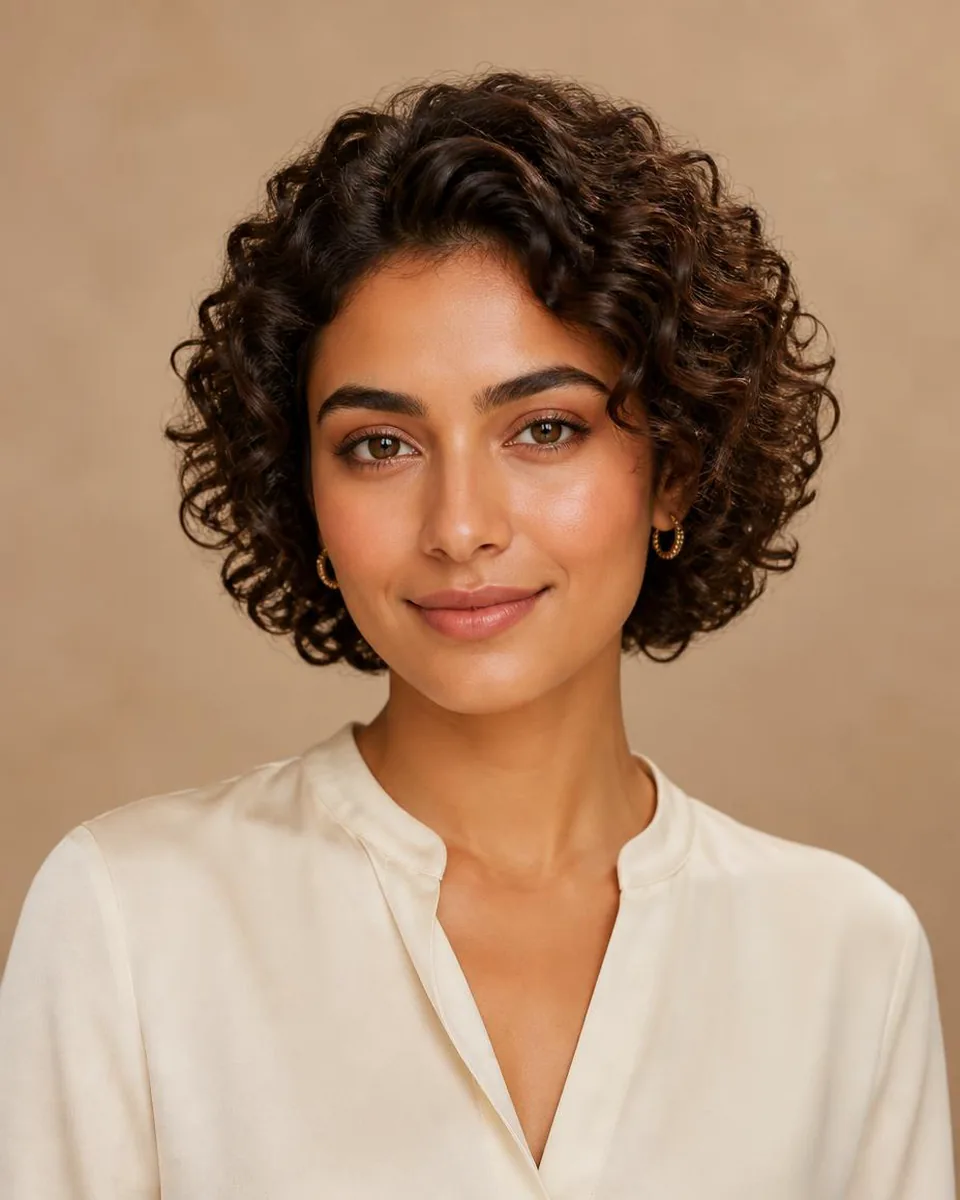
Short curls
A rounded silhouette that stays close to the face and neck, with texture concentrated around the jaw and cheeks.
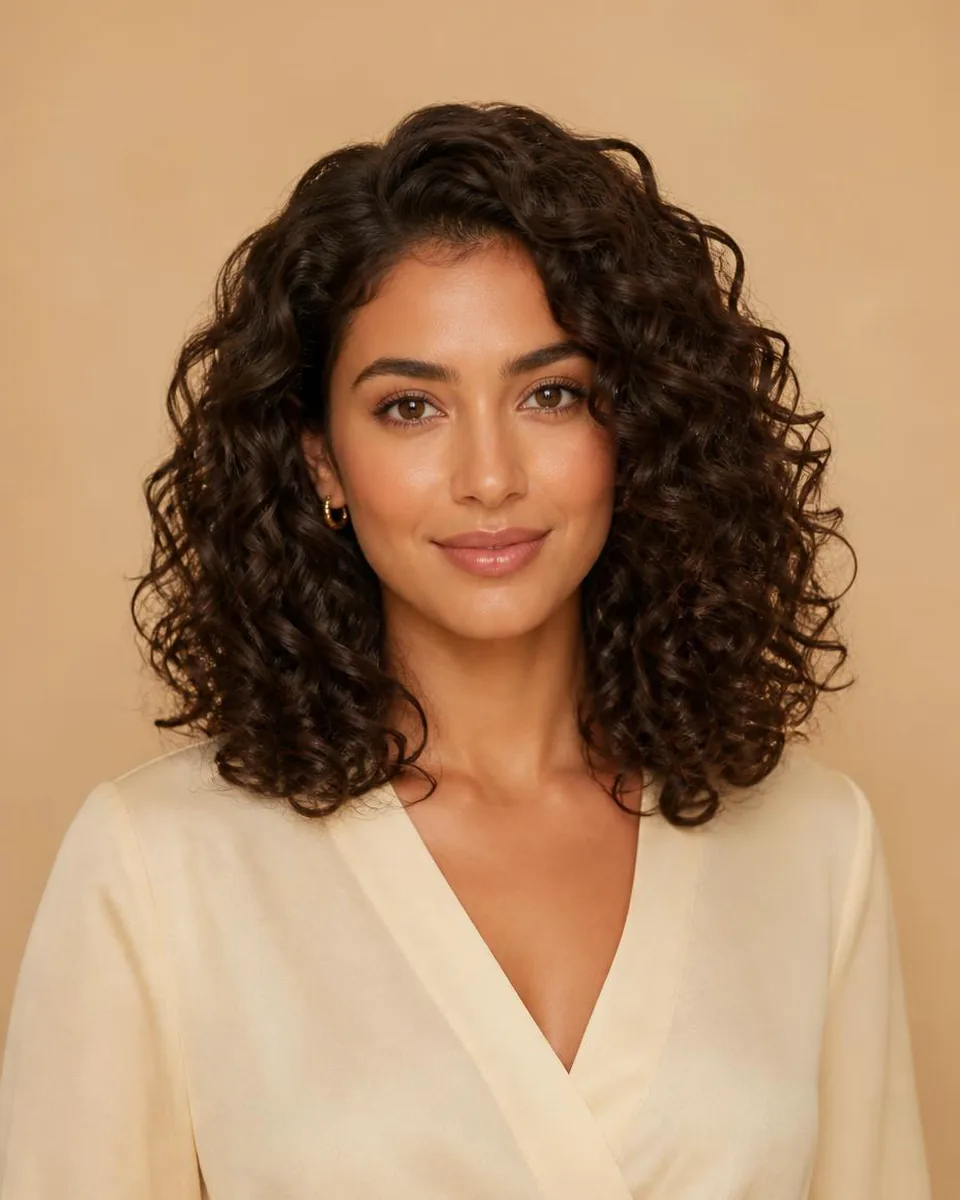
Try this lookMedium curls
Curly volume around the shoulders with moderate width — the most balanced starting point for most people.
Try this look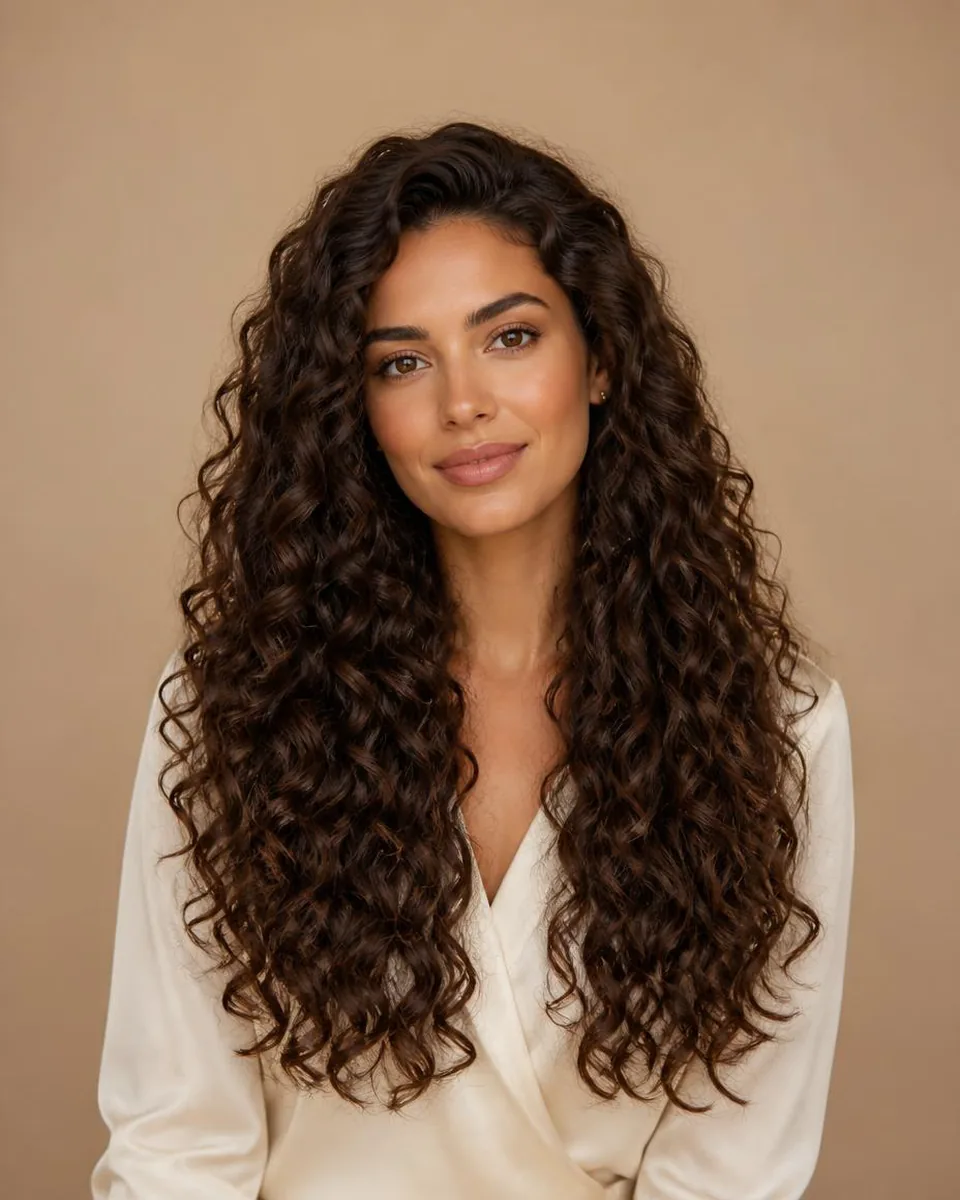
Long curls
Length and curl together produce a full, extended outline that repeats the pattern below the shoulders.
Try this look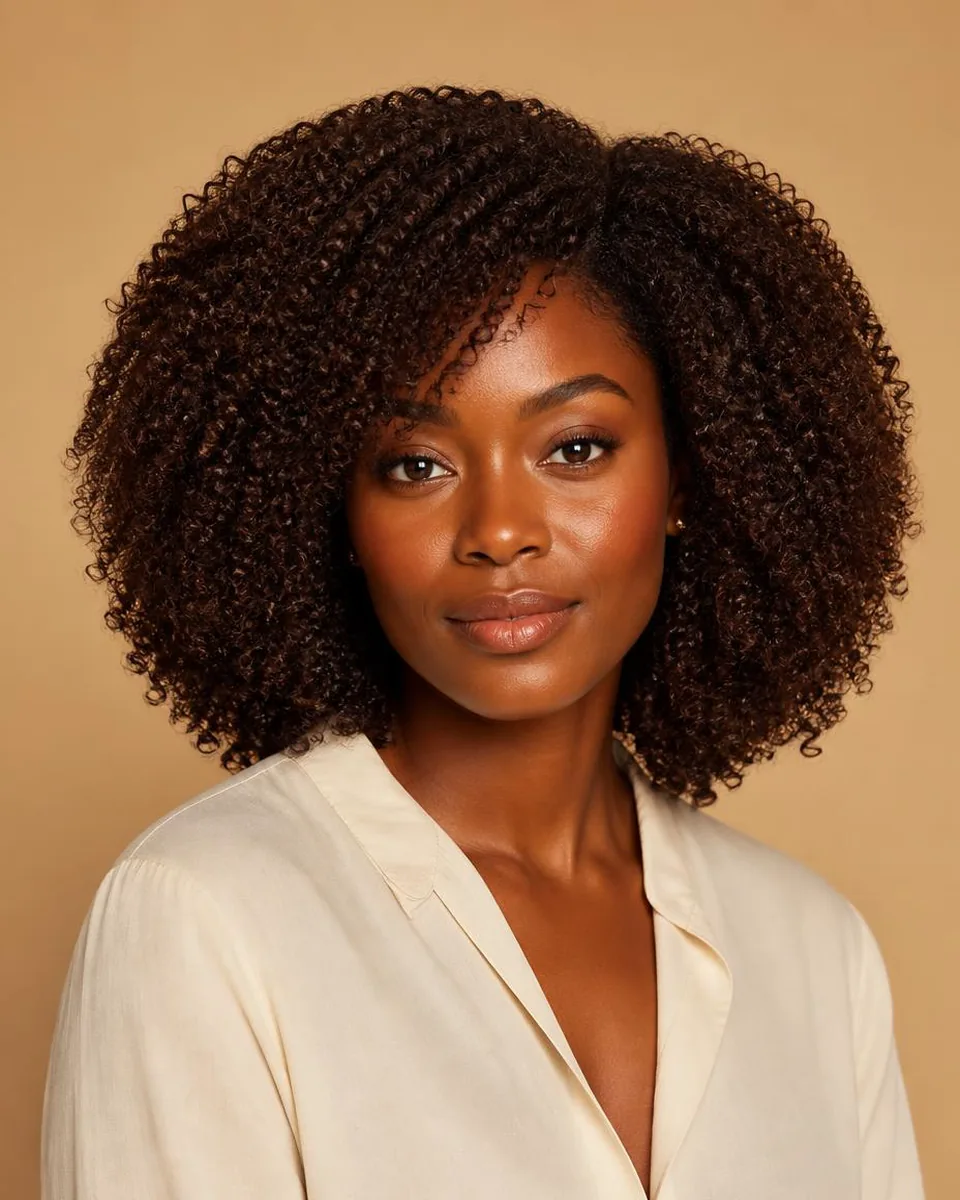
Kinky curly
Tighter coils with more expansion and visible surface texture, reading shorter and wider than loose curls.
Try this lookHow to Read a Curly Reference
Not every "curly" photo shows the same pattern, and the label alone does not tell you what you will get. Use these checks on any reference:
- Read the mid-lengths, not the ends. The ends can thin, flip, or straighten; the mid-lengths show the true pattern.
- Ask how much the pattern closes. Loose bends stay open, ringlets loop back, and coils pack tightly. The more it closes, the shorter and wider the outline reads.
- Find where the volume sits. Volume at the crown adds height; volume at the sides adds width; volume at the jaw changes the face frame.
- Remember shrinkage. The same stretched length looks different when dry. A dry curly reference is the honest one.
Short, Medium, Long, and Kinky Curly
Short curls
A short curly outline concentrates visible texture around the forehead, cheeks, and jaw. It reads rounded and compact, and it is the fastest way to see whether the shape of curls suits your face before committing to more length.
Medium curls
Medium curls land around the shoulders and keep moderate width — enough pattern to read clearly, with visible neck and shoulder space. This is the practical starting point for most comparisons because it balances volume and manageability.
Long curls
Long curls repeat the pattern below the shoulders and widen the silhouette through the length. The tradeoff is weight: longer curls pull the pattern down, so the outline can look more relaxed than the same pattern at medium length.
Kinky curly
Kinky curly hair packs into tighter coils with denser visible texture. The same stretched length reads shorter and the silhouette expands more. It is the right comparison when you want maximum definition and a fuller outline rather than flowing length.
Volume, Shrinkage, and Face Framing
The two invisible forces behind every curly look are volume and shrinkage:
- Volume changes where the outline sits. Curls add width, height, or both depending on where the pattern expands. A curly bob widens the cheek area; crown-heavy curls add height; long curls add both.
- Shrinkage changes the visible length. Tighter patterns can read dramatically shorter than their stretched length. When you compare curly with wavy or straight, compare the dry outline, not the labeled length.
- Face framing is volume-led. Short curls place width at the jaw and cheeks, medium curls at the sides, and long curls through the shoulders. Choose the frame you want rather than a face-shape rule.
For a full face-shape starting point, see Best Hairstyle for My Face.
Curly vs Wavy: Where the Boundary Is
The practical line between the two families is whether the pattern closes. Wavy hair forms open S-shaped bends that flow downward; curly hair forms spirals, ringlets, or coils that close and push the outline outward. If you are deciding between the two, compare them on the same photo at the same length and color — the difference in outer width is the decision. See Curly vs Wavy.
How to Care for Curly Hair
- Detangle with your fingers or a wide-tooth comb, working from ends to roots. Dry curls are fragile; wet detangling needs conditioner.
- Refresh, do not re-wash. A spray of water or leave-in conditioner can revive the pattern between washes.
- Respect humidity. Curls expand and frizz with moisture; the pattern you style in the morning is not the pattern at the end of the day.
- Shrinkage is normal. The dry outline is the real outline — judge length decisions against it.
What the Curly Label Doesn't Tell You
"Curly" does not specify pattern size, density, porosity, or how the hair behaves when wet and dry. Two products with the same label can look very different, and an AI preview cannot measure your pattern, shrinkage, frizz, or daily behavior. Use the preview for visual direction, then confirm the physical details with a stylist or product documentation.
Compare Curly on the Same Selfie
- Upload a centered portrait with the hairline, shoulders, and upper chest visible.
- Compare curl size first: short, medium, long, and kinky curly at the same dark shade.
- Keep the part and color steady while you compare, so the pattern and silhouette are the variables.
- Save two favorites and review them side by side with Compare Hairstyles.
Preview the curly direction on your face
Compare curl size and length on your own photo before deciding. The pattern that keeps you looking twice is the one to discuss with a stylist.
Try curly on your photoFAQ
What counts as a curly hairstyle?
Curly hairstyles show repeating bends, spirals, ringlets, or coils rather than a mostly straight line or open wave. Curl size, density, and length make two curly styles look very different.
How is this page different from the curly hair filter?
This page explains curly style families and what to compare. The curly hair filter is the direct transformation page for uploading a photo and generating a curly look.
Should I compare curly and wavy hair first?
It can help. Use the same photo and color to see whether you prefer open S-shaped movement or more defined curl groups and outward volume.
What photo helps show curl volume clearly?
Choose a centered portrait with open space around the head and shoulders. Even light and an uncluttered background make changes in outer width and visible length easier to judge.
Can an AI preview predict my natural curl pattern?
No. It cannot measure your pattern, density, porosity, shrinkage, frizz, or how curls behave when wet and dry. Use the result for visual direction only.