Hairstyles for a diamond face
Top 10 Hairstyles for Diamond Face Shapes to Try Online
Diamond faces have wide cheekbones that taper to a narrower forehead and chin. The goal is balance: add fullness at the forehead and jaw while softening the cheekbone area, so the widest point of the face stops being the only thing you notice.
Hairstyles for diamond faceDiamond face shapeCheekbone framingHairstyle ranking
4 min read
Quick answer
Balance the cheekbones from both sides
Start with a chin-length bob with side bangs for the most complete single solution, layered waves with curtain bangs if you want to keep length, or a shoulder-length shag for a low-maintenance textured option. Keep one selfie and one color across the comparison.
- Best overall
- Chin-length bob with side bangs
- Best long option
- Layered waves with curtain bangs
- Best low-maintenance
- Shoulder-length shag
Diamond faces have wide cheekbones that taper to a narrower forehead and chin — the cheekbones are the widest point of the face. The most flattering hairstyles add width at the forehead and jaw while softening the cheekbone area, effectively making the face read more oval.
Read the Balance Before You Pick
Three variables do the balancing:
- Forehead width: curtain bangs, side-swept fringe, and wispy bangs fill the narrow forehead.
- Jaw width: endpoints at the chin or shoulders add lower-face width.
- Cheekbone softness: layered movement and texture break up the widest point instead of following it.
Every look in this list works on at least two of these three variables.
The Ten Looks
Ranked shortlist
Ten directions worth comparing
This order favors clear, varied comparison points rather than popularity data or a universal beauty rule. Every item uses its own reference image and try-on entry.
Look 1
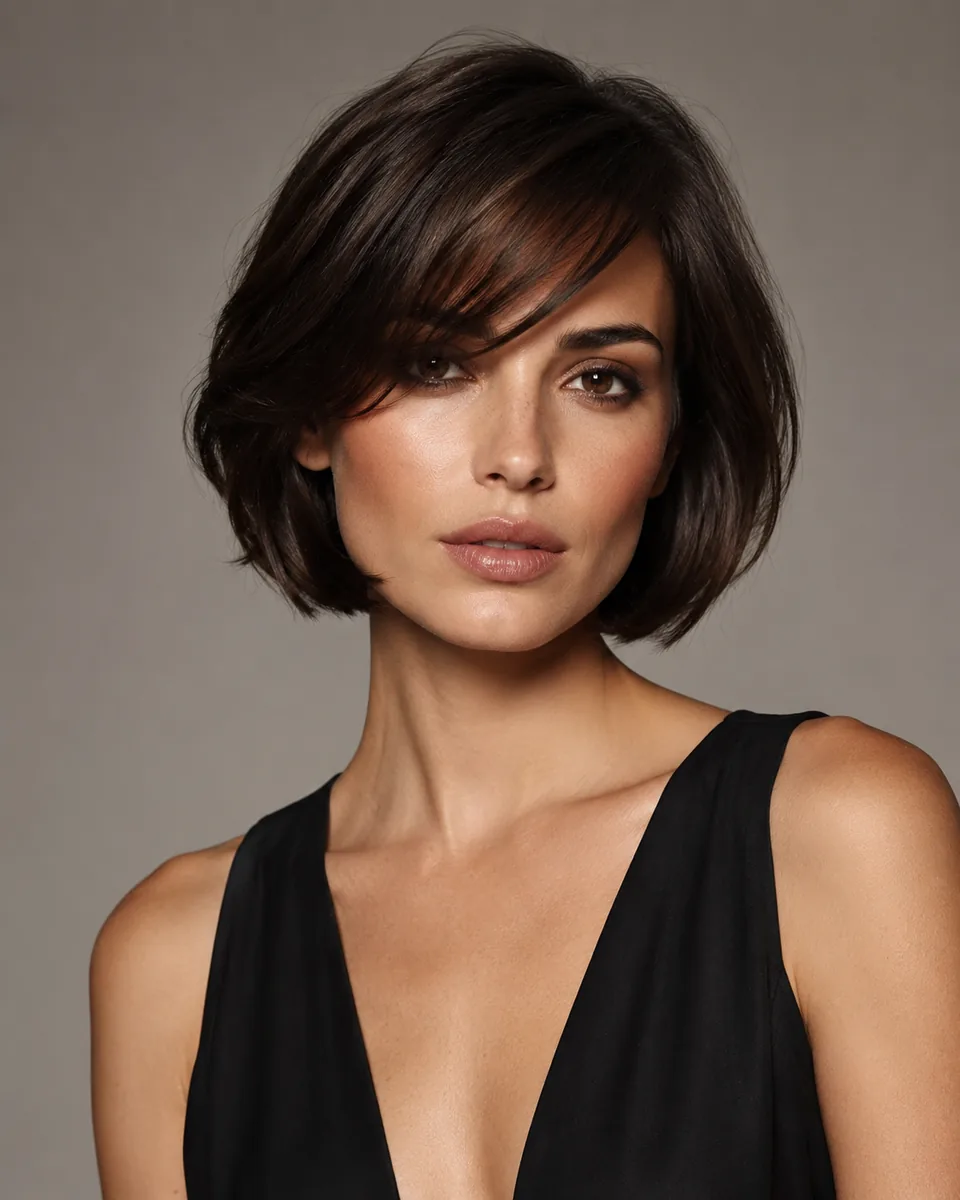
Chin-Length Bob with Side Bangs
The most complete single solution: jaw width from the bob, forehead coverage from the side bangs.
- Best for
- Diamond faces with prominent cheekbones.
- Why it works
- Why: the chin-length endpoint adds width at the jaw to balance prominent cheekbones, while side bangs fill the narrow forehead.
Possible issue: bobs ending above the chin lose the jaw-widening effect, and styles without bangs leave the forehead exposed.
Try this look
Look 2
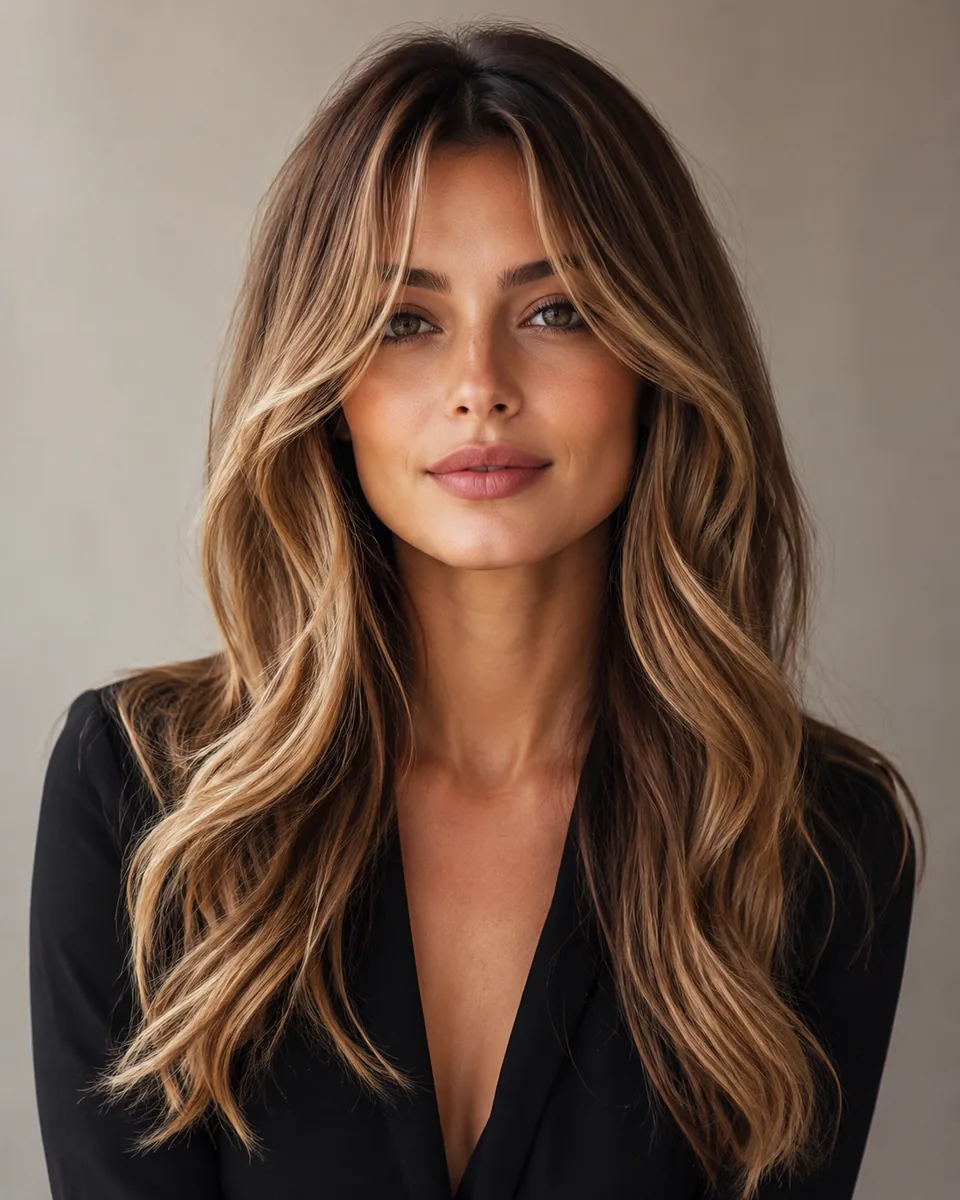
Layered Waves with Curtain Bangs
The long-hair solution: curtain bangs fill the forehead, chin-level waves add jaw width.
- Best for
- Diamond faces wanting long, flowing hair with balanced forehead coverage.
- Why it works
- Why: curtain bangs add width to the forehead while layered waves that flare at chin level add jaw width.
Possible issue: one-length long hair falls flat against the cheekbones and emphasizes the widest point.
Try this look
Look 3
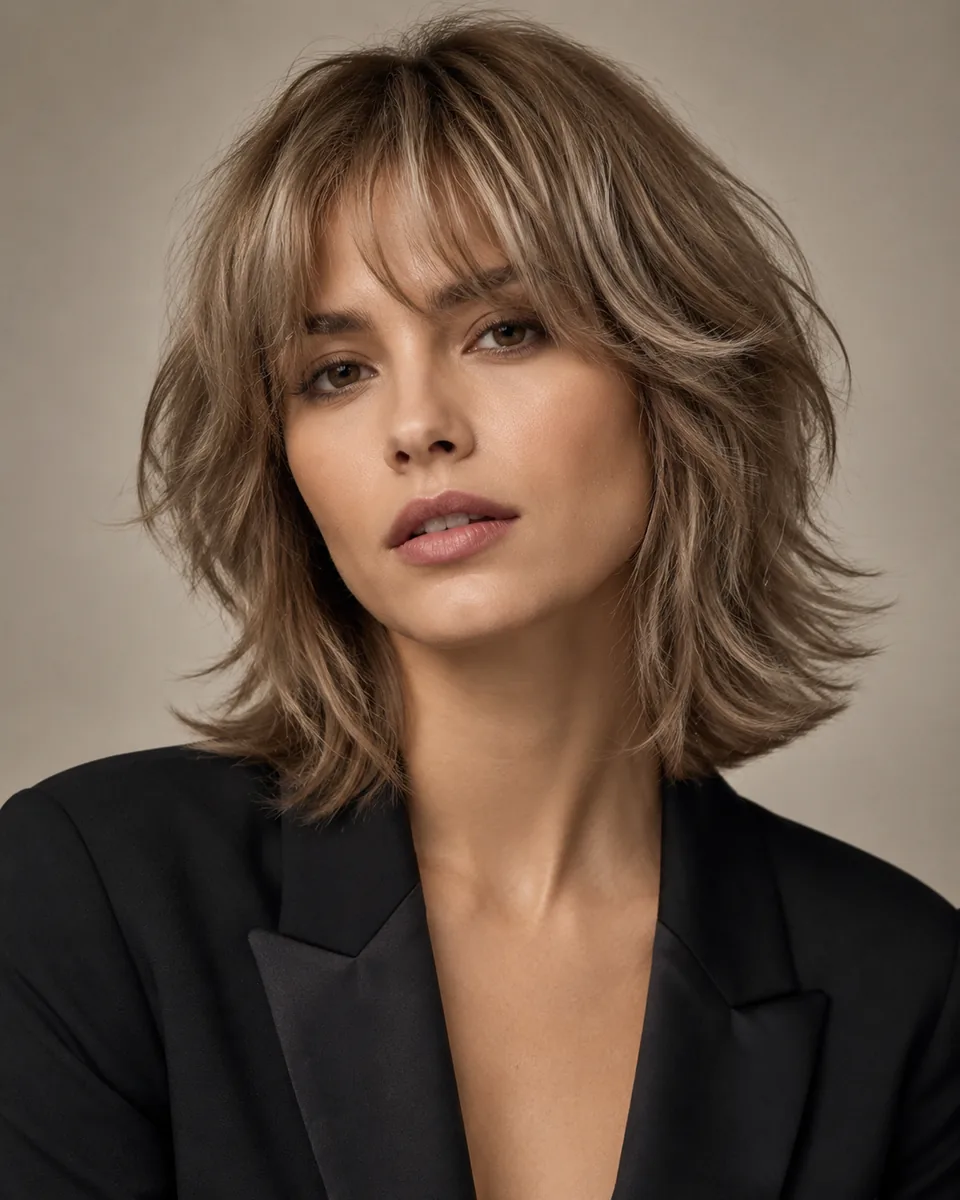
Shoulder-Length Shag with Feathered Layers
A textured, effortless option where volume at multiple heights does the balancing.
- Best for
- Diamond faces wanting a textured, effortless look.
- Why it works
- Why: the shag's feathered layers create volume at multiple heights — filling the forehead, softening the cheekbones, and widening the jaw area.
Possible issue: precision-cut shags that are too structured lose the irregularity that does the work.
Try this look
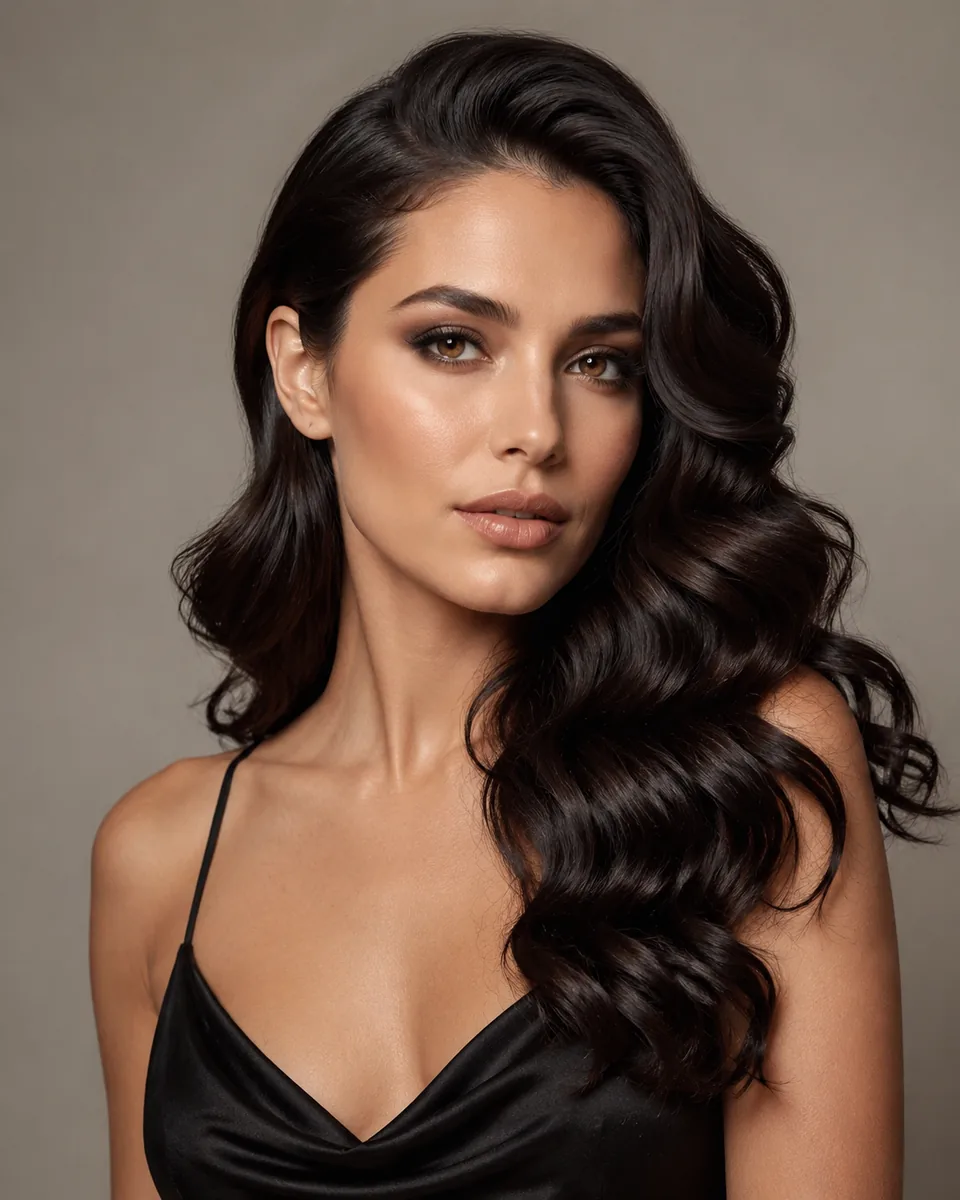
Look 4
Side-Swept Deep Wave
A polished, evening-ready option that uses a diagonal sweep instead of added volume.
- Best for
- Diamond faces wanting polished, evening-ready hair.
- Why it works
- Why: the deep side part creates a diagonal sweep across the forehead while the defined wave adds lower-face fullness.
Possible issue: center-parted deep wave eliminates the diagonal sweep and can make the cheekbones the sole focal point.
Try this look
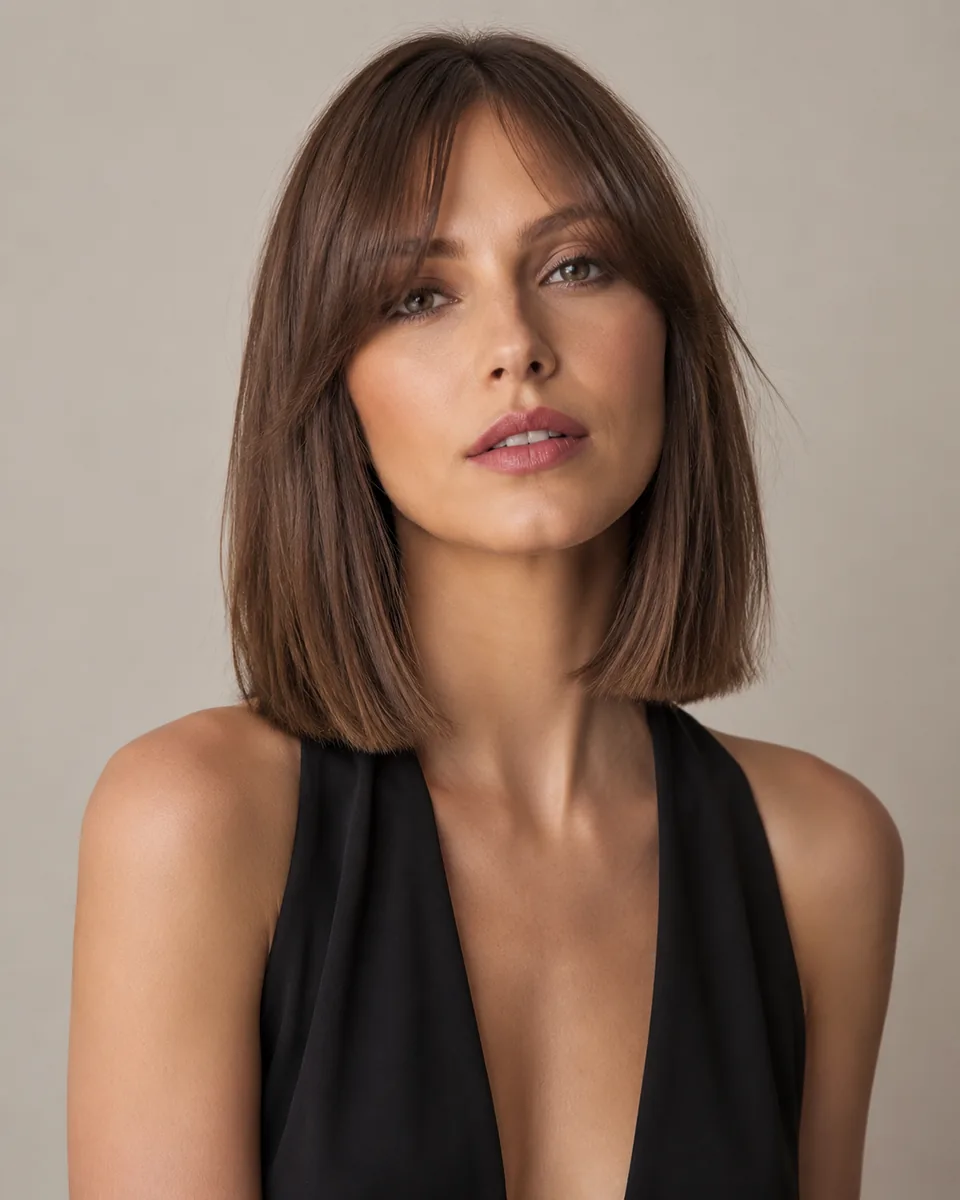
Look 5
Blunt Lob with Curtain Bangs
Precision engineering: a strong shoulder-level line plus forehead coverage.
- Best for
- Diamond faces wanting a sleek, modern mid-length cut.
- Why it works
- Why: the blunt lob creates a strong horizontal line at shoulder level that adds jaw-area width, while curtain bangs fill the forehead.
Possible issue: texturizing or thinning the ends removes the bluntness that creates the jaw-widening effect.
Try this look
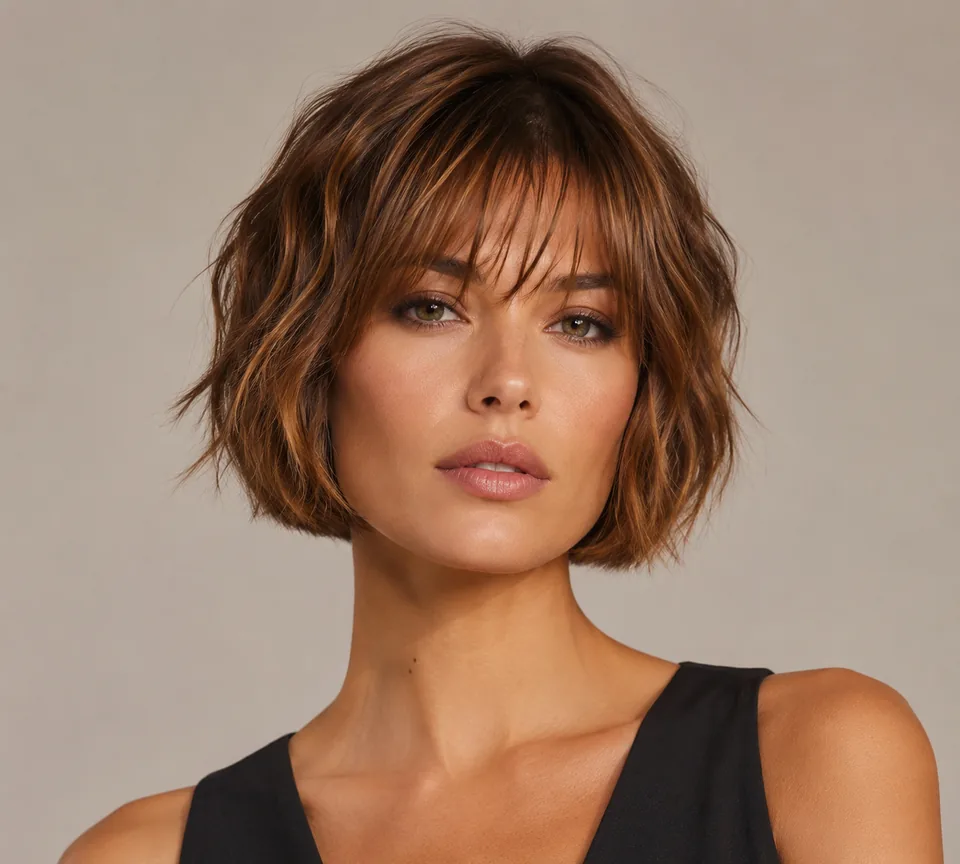
Look 6
Textured Bob with Wispy Bangs
A softer version of the classic bob that trades geometry for irregularity.
- Best for
- Diamond faces wanting a softer version of the classic bob.
- Why it works
- Why: the textured bob softens the cheekbones with broken edges while wispy bangs keep forehead coverage without a heavy line.
Possible issue: making the texture too uniform or symmetrical removes the cheekbone-softening irregularity.
Try this look
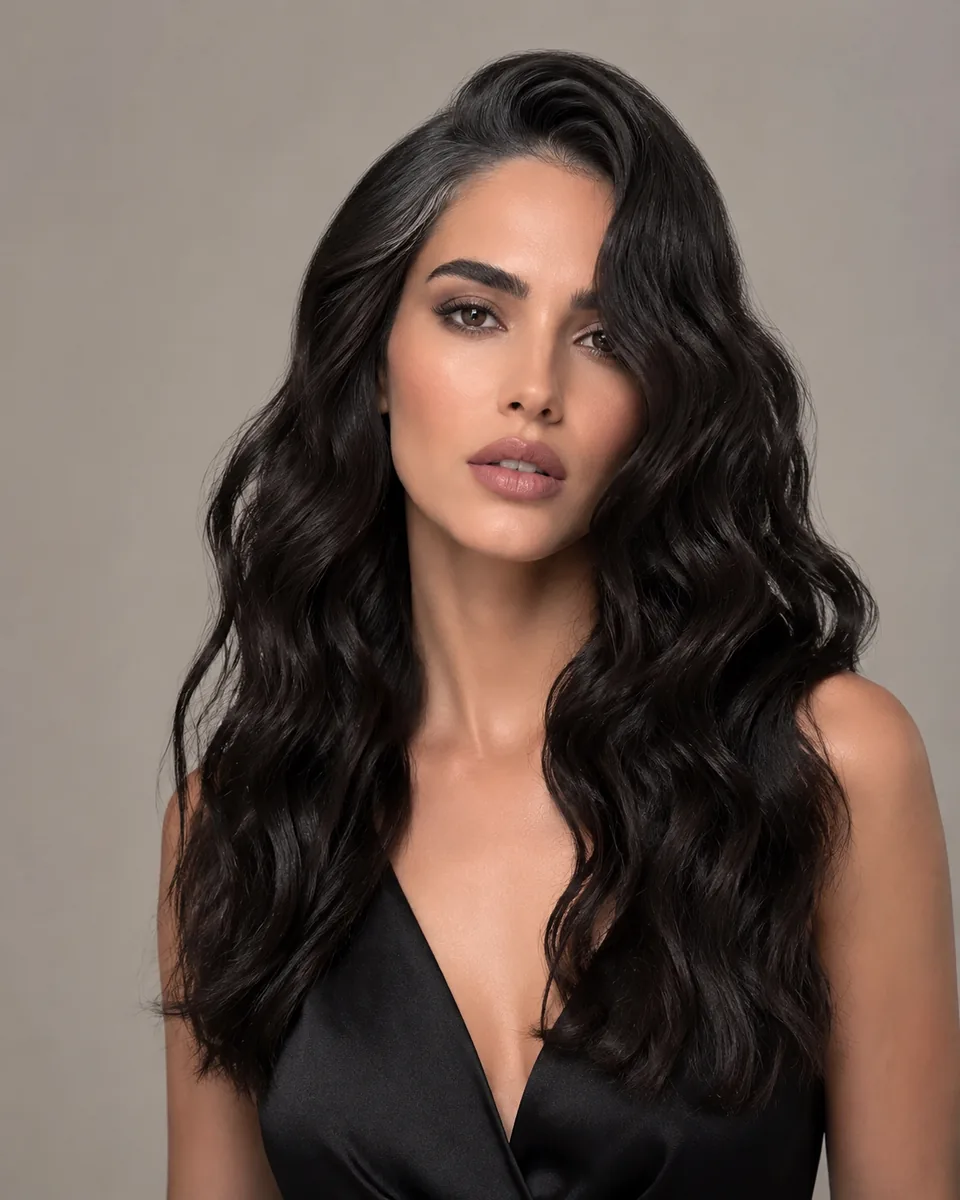
Look 7
Water Wave with Side Part and Volume at Ends
Uniform softness top to bottom, with a side part for the forehead.
- Best for
- Diamond faces wanting luxurious, glossy hair with balanced volume.
- Why it works
- Why: water wave's consistent pattern creates uniform softness from top to bottom, while the side part adds forehead width.
Possible issue: center parts reduce the forehead-filling benefit and can make the cheekbones the focal point.
Try this look
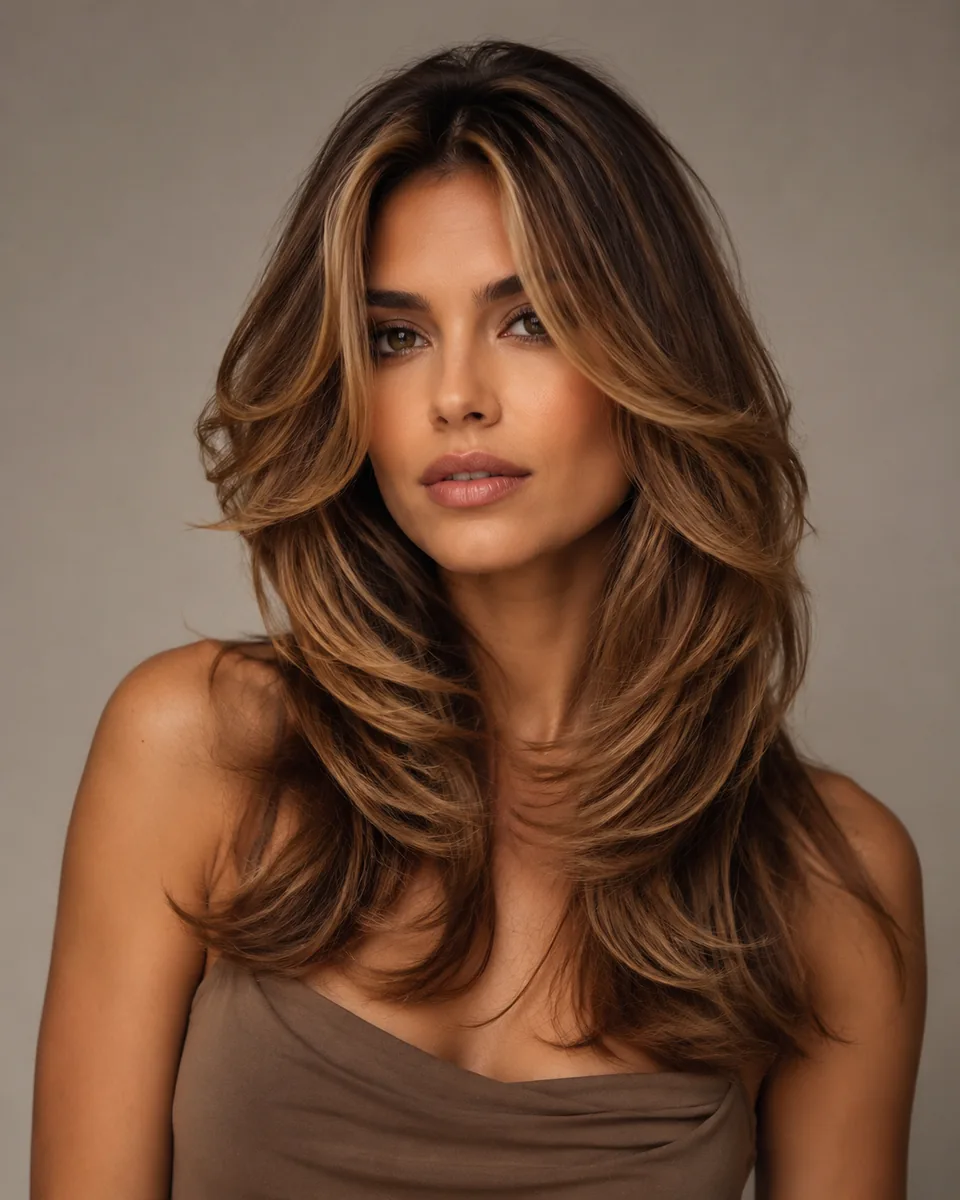
Look 8
Butterfly Cut with Face-Framing Layers
Layer density does the work: short front pieces hit cheekbone and jaw level together.
- Best for
- Diamond faces wanting aggressive face-framing at multiple height levels.
- Why it works
- Why: the butterfly cut's short face-framing layers hit at cheekbone and jaw level simultaneously, breaking up the widest point.
Possible issue: layers of all the same length remove the multi-height effect that the cut depends on.
Try this look
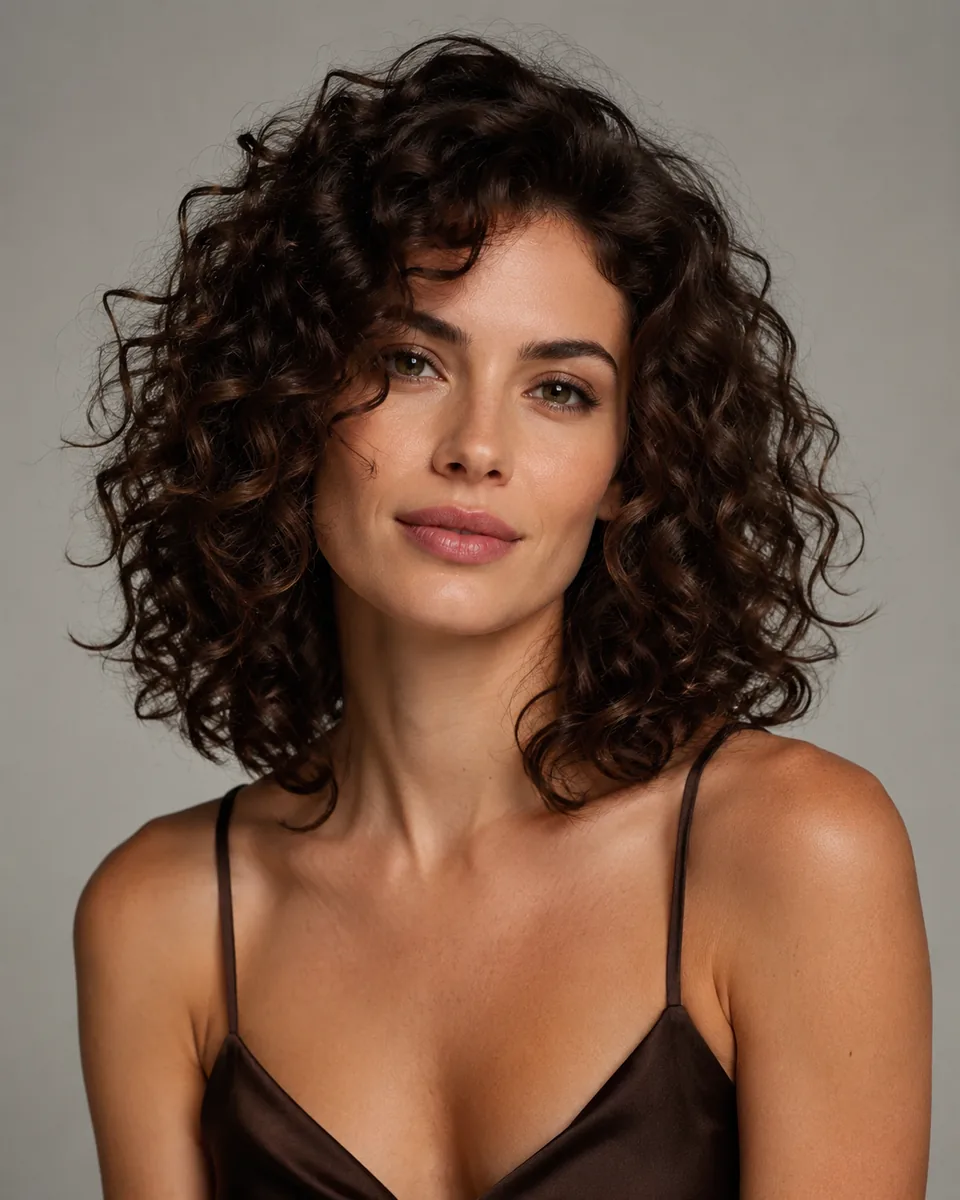
Look 9
Curly Medium with Root Volume
A natural pairing: curls distribute volume to the forehead and jaw together.
- Best for
- Diamond faces with natural curl or wave who want balanced volume.
- Why it works
- Why: curly medium-length hair with root volume adds width at the forehead and jaw simultaneously while softening the cheekbones.
Possible issue: flat roots and flat-ironed curls remove the texture that does the balancing.
Try this look
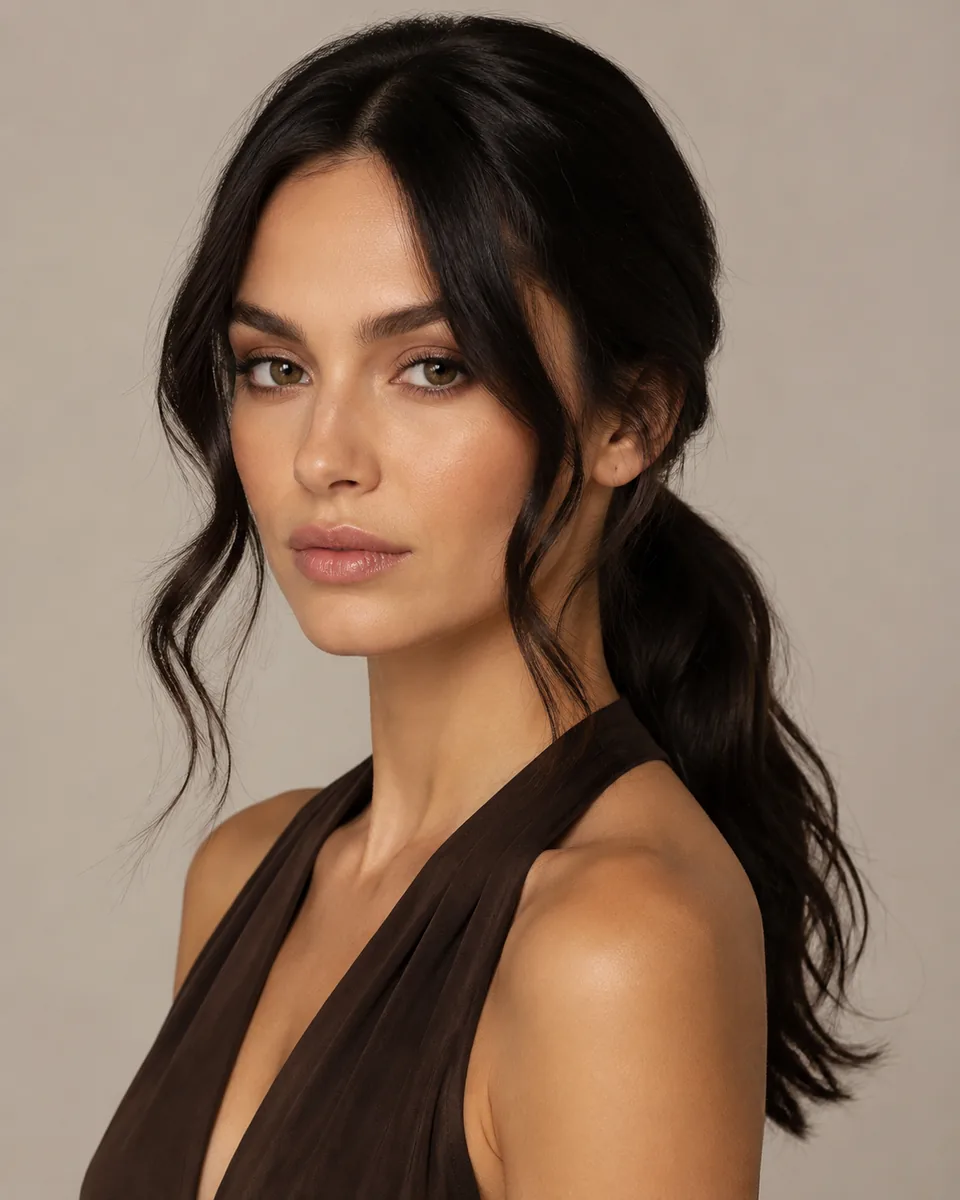
Look 10
Sleek Low Ponytail with Face-Framing Pieces
The elegant tied-back option: low placement plus soft face-framing pieces.
- Best for
- Diamond faces seeking an elegant tied-back style.
- Why it works
- Why: a low ponytail avoids adding height at the crown, and face-framing pieces soften the cheekbones and narrow forehead.
Possible issue: high ponytails and buns emphasize the narrow forehead, and pulling everything back leaves the cheekbones exposed.
Try this look
How to Choose
Diamond faces benefit from styles that add width at both the forehead and jaw while softening the cheekbone area. The chin-length bob with side bangs is the most complete single-style solution. If you want length, layered waves with curtain bangs; if you want low maintenance, the shoulder-length shag; if you want elegance, the side-swept deep wave.
For Men with Diamond Face Shapes
The same balancing principle applies to shorter men's cuts: keep some forehead coverage (side-swept fringe or textured top), avoid adding height at the crown, and let the sides sit soft rather than shaved tight at the widest cheekbone point. A textured crop with a swept fringe or a longer textured top both fill the forehead without drawing attention to the cheekbones. The preview works the same way for any gender — upload a clear selfie and compare how each direction changes the frame.
Compare the Shortlist on Your Photo
- Use a front-facing portrait that shows the hairline, both sides of the face, shoulders, and upper chest.
- Begin with the chin-length bob with side bangs, layered waves with curtain bangs, and one bold option in the same color.
- Compare where each style adds width: forehead, jaw, or both.
- Check how much of the cheekbone area stays softened by movement or layers.
- Compare the endpoint and how the sides frame the face.
- Keep color and part steady while you test two or three directions.
- Save two favorites and use Compare Hairstyles to review them together.
FAQ
What is the best hairstyle for a diamond face shape?
A chin-length bob with side bangs consistently flatters diamond faces by adding jaw width and forehead coverage at the same time. Layered waves with curtain bangs are the strongest long-hair alternative.
What hairstyles should diamond faces avoid?
Avoid styles that expose the full forehead without bangs or a side part, high ponytails and high buns that add crown height, and one-length hair that falls flat against the cheekbones.
Do bangs work for diamond face shapes?
Yes — bangs are excellent for diamond faces. Side-swept, curtain, or wispy bangs fill the narrow forehead and soften the widest cheekbone point.
Do these principles work for men with diamond face shapes?
Yes. Shorter men's cuts can apply the same balance: side-swept fringe or a textured top for forehead coverage, soft sides rather than tight shaves at the cheekbones, and no extra crown height.
Can I preview these hairstyles on my photo?
Yes. Use WigTryAI to upload a clear front-facing selfie and preview each of these recommended styles on your own face before choosing.
How many diamond-face styles should I compare at once?
Two or three is enough if they differ in approach: one that adds jaw width (bob), one that adds forehead coverage (curtain bangs with waves), and one textured option. That spread tests all three balancing variables.