
Hairstyles for a square face
Top 10 Hairstyles for Square Faces to Try Online
Square faces have strong angular jawlines and balanced forehead-to-jaw proportions. The goal is not to hide the jawline but to create soft visual pathways that lead the eye diagonally — layered movement, side-swept shapes, and wavy textures do that work.

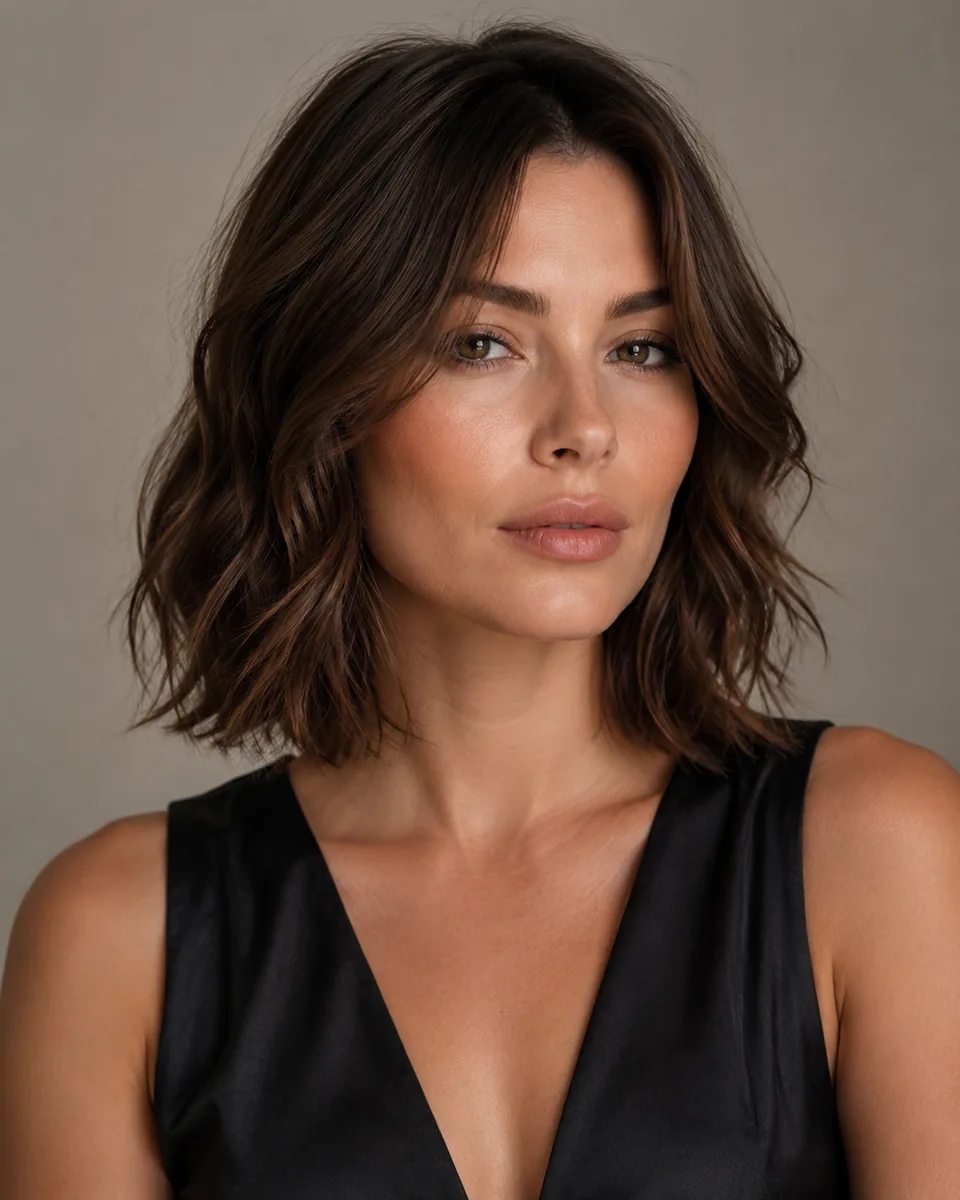
Hairstyles for square faceSquare face haircutsJawline framingHairstyle ranking
4 min read
Quick answer
Prioritize diagonal movement
Square faces benefit most from styles that create diagonal visual paths instead of horizontal lines: long soft waves for an easy lengthening frame, a wavy lob with face-framing layers for medium length, or a textured pixie with side bangs for a bold short option. Keep one selfie and one color across the comparison.
- Best overall
- Long soft waves
- Best short option
- Textured pixie with side bangs
- Best low-maintenance
- Shoulder-length loose wave
Square faces have strong angular jawlines and a balanced forehead-to-jaw proportion. The most flattering hairstyles soften the jawline with layered movement, side-swept shapes, and wavy textures — not by hiding the jaw, but by creating pathways that lead the eye diagonally.
Read the Angle Before You Pick
The principle is simple: diagonal lines soften, horizontal lines emphasize. When you preview, check:
- Whether the sides create diagonal movement — side parts, curtain bangs, and face-framing layers all do.
- Whether any hard line sits at jaw level — a blunt one-length cut or a center part with straight hair reads the most square.
- Whether the shortest layer stays above the chin or below it — layers that stop at the jaw add a shelf; layers below the jaw keep the line moving.
These three checks tell you more than the style name.
The Ten Looks
Ranked shortlist
Ten directions worth comparing
This order favors clear, varied comparison points rather than popularity data or a universal beauty rule. Every item uses its own reference image and try-on entry.
Look 1
Long Soft Waves
The quiet workhorse: flowing vertical movement that softens a strong jaw.
- Best for
- Square faces, strong jawlines, medium to long hair.
- Why it works
- Why: soft body waves create flowing vertical movement that visually elongates the face while keeping the jaw covered with movement rather than a hard line.
Possible issue: center parts and blunt horizontal cuts at jaw level both emphasize squareness.
Try this look
Look 2
Wavy Lob with Face-Framing Layers
Medium length with minimal effort: below-jaw endpoint, diagonal frame.
- Best for
- Square faces that want medium-length style with minimal daily effort.
- Why it works
- Why: the wavy lob ends just below the jawline and the face-framing layers break up the horizontal line.
Possible issue: a blunt one-length lob with no layers creates a shelf effect at the jawline.
Try this look
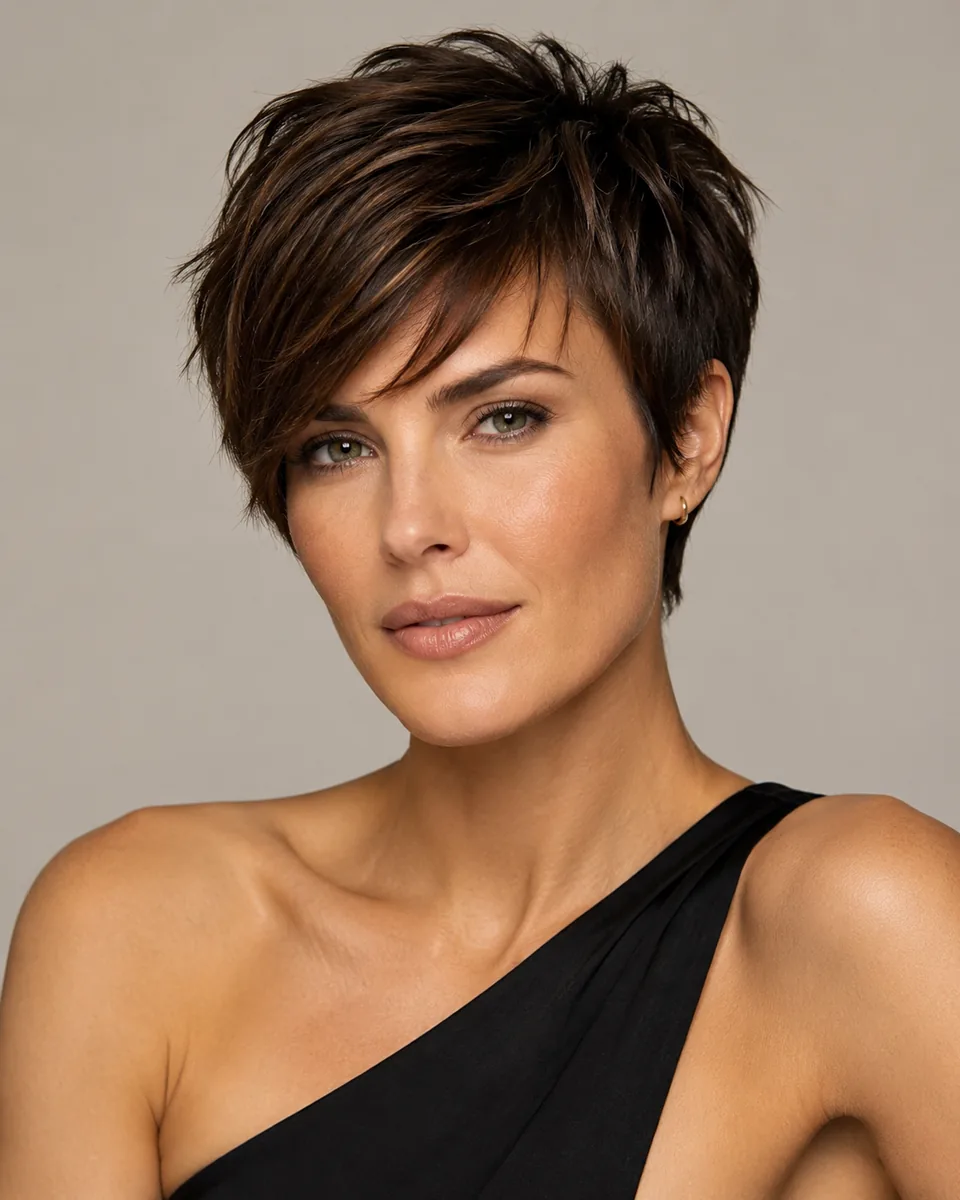
Look 3
Textured Pixie with Side Bangs
A confident short option that uses diagonal bangs instead of a hard helmet line.
- Best for
- Square faces that want to go short and confident.
- Why it works
- Why: long side bangs create diagonal lines across the forehead and temples, softening the strong jaw.
Possible issue: a super-short even-length pixie with no bangs can look helmet-like and emphasize the jaw.
Try this look
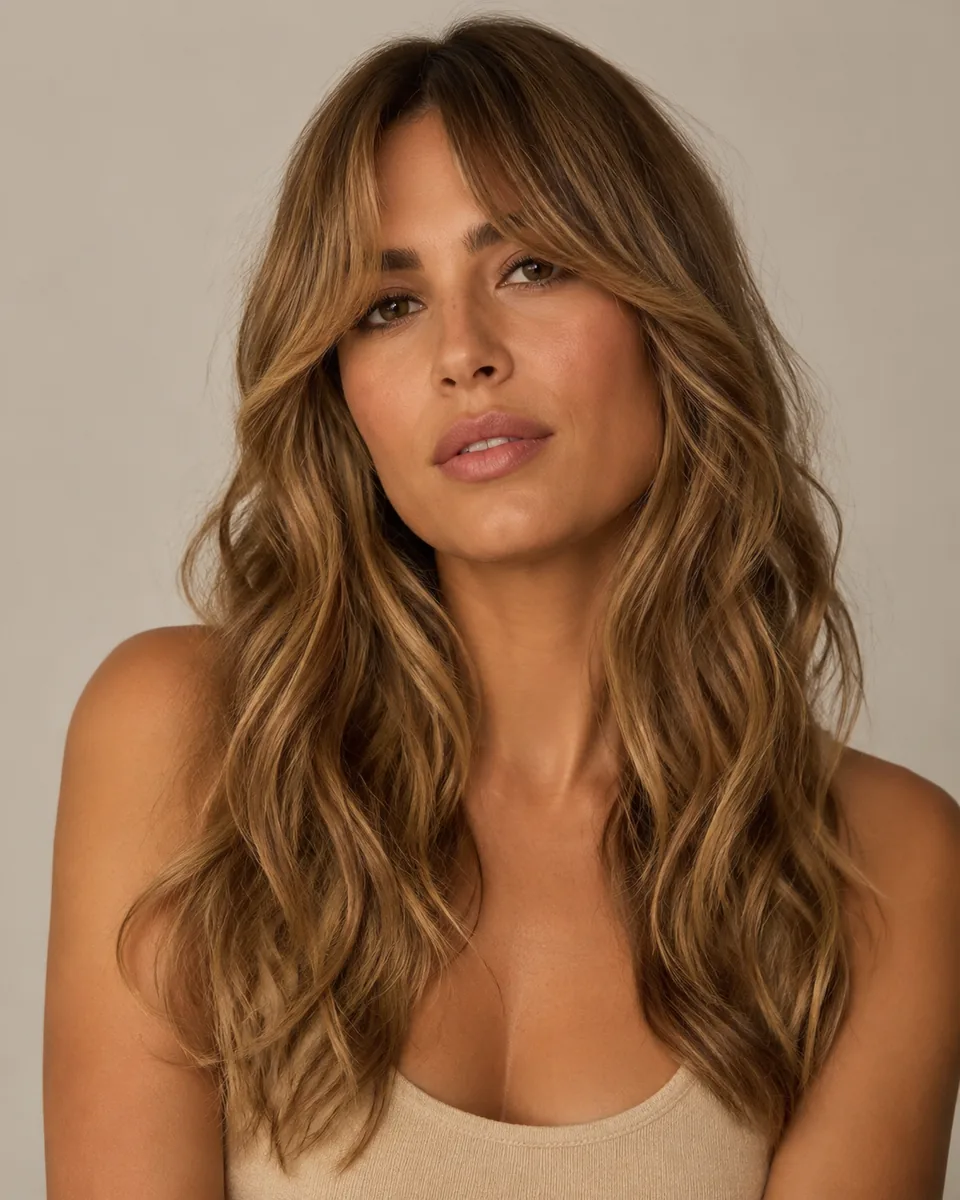
Look 4
Loose Wave with Curtain Bangs
A face-framing combination: curtain bangs taper the forehead and curve outward.
- Best for
- Square faces wanting face-framing softness with medium-long length.
- Why it works
- Why: curtain bangs split at the center and curve outward, creating a frame that tapers the forehead and meets the jaw at an angle.
Possible issue: cutting curtain bangs too short or too thick removes the diagonal effect.
Try this look
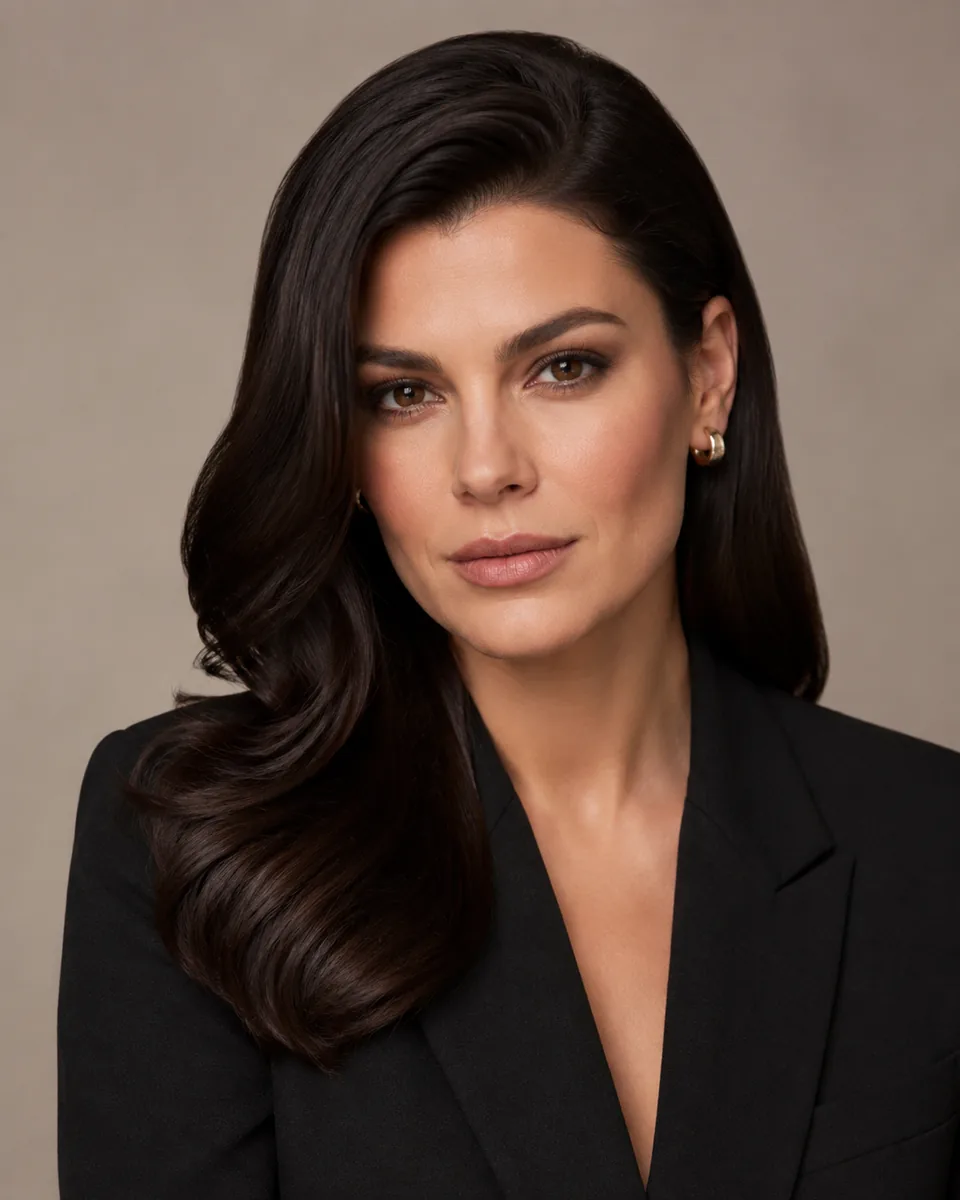
Look 5
Deep Side Part with Sleek Waves
Asymmetry for formal and professional settings: one side full, one side quiet.
- Best for
- Square faces in formal or professional settings.
- Why it works
- Why: a deep side part creates dramatic asymmetry — volume and movement on one side, a cleaner line on the other.
Possible issue: a deep part with stick-straight hair can read severe on square faces — keep some wave.
Try this look
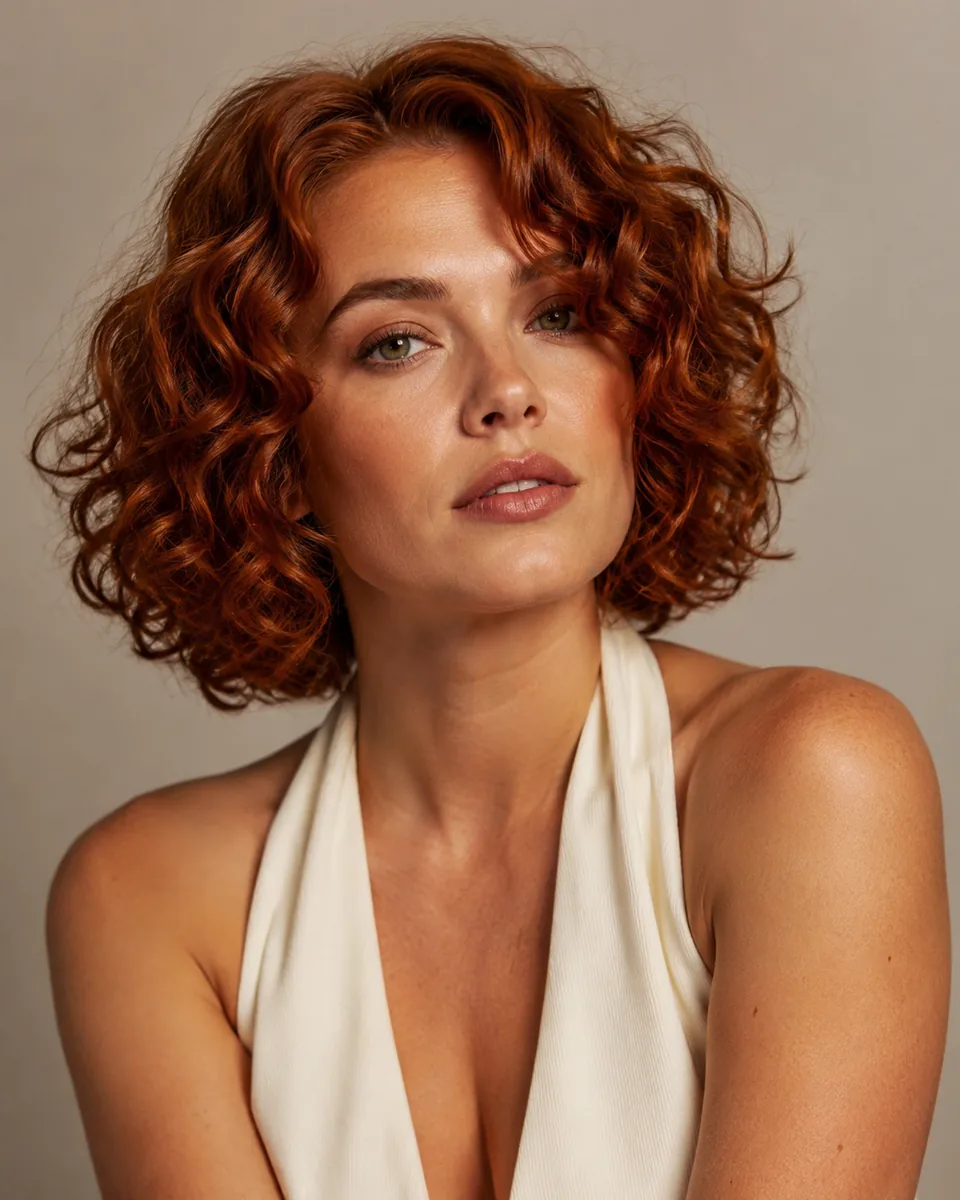
Look 6
Shoulder-Length Curly Bob
A rounded silhouette that naturally counteracts an angular jaw.
- Best for
- Square faces with natural curl or wave texture.
- Why it works
- Why: curly texture at shoulder length creates a rounded cloud shape that softens the strong jawline.
Possible issue: cutting curly hair into a blunt one-length shape removes the rounded silhouette that does the work.
Try this look
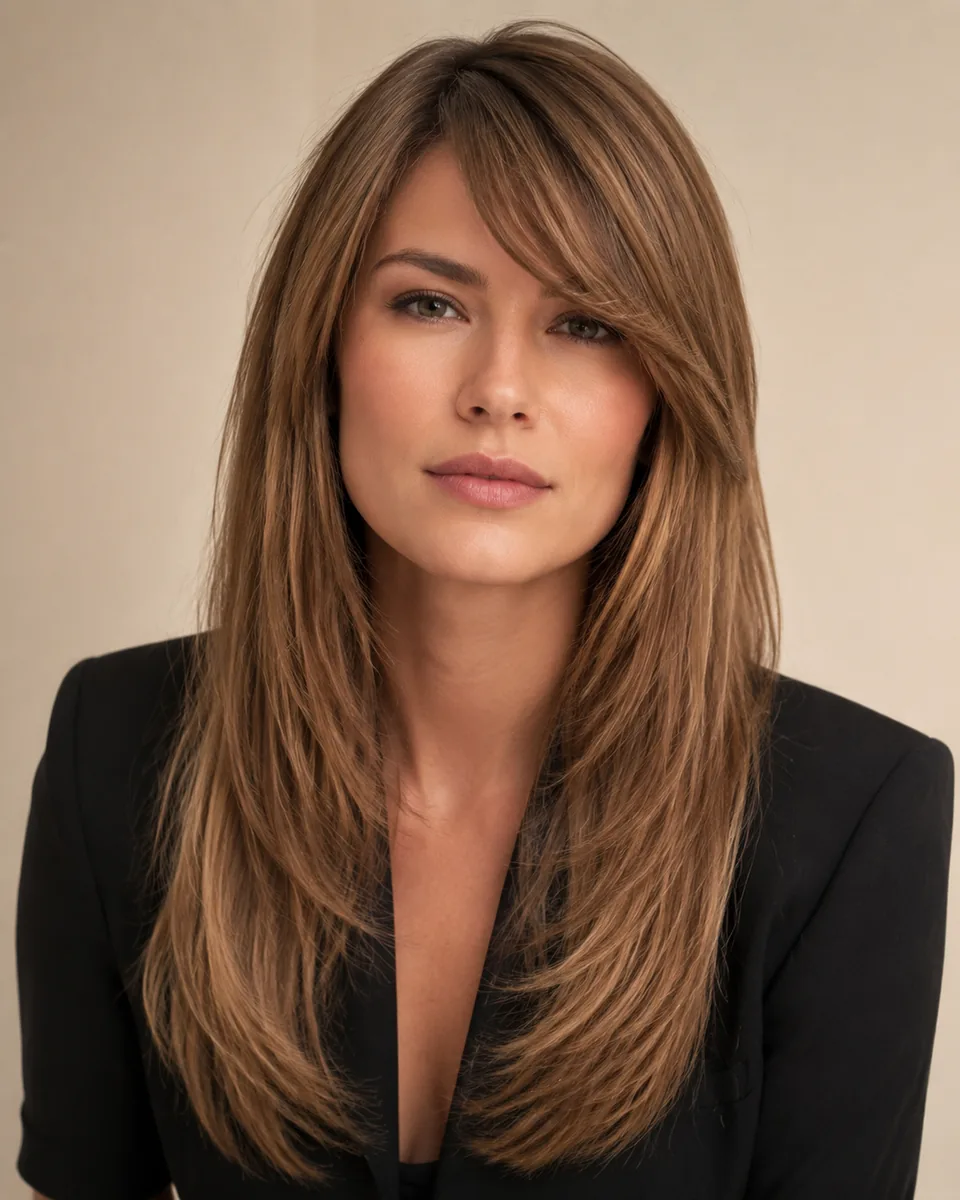
Look 7
Layered Straight with Side Bangs
Straight texture made square-friendly: diagonal layers and a side sweep.
- Best for
- Square faces that prefer straight texture.
- Why it works
- Why: diagonal layers cut into straight hair create movement lines that break up the horizontal jaw.
Possible issue: a one-length blunt cut with a center part is the least flattering combination for square faces.
Try this look
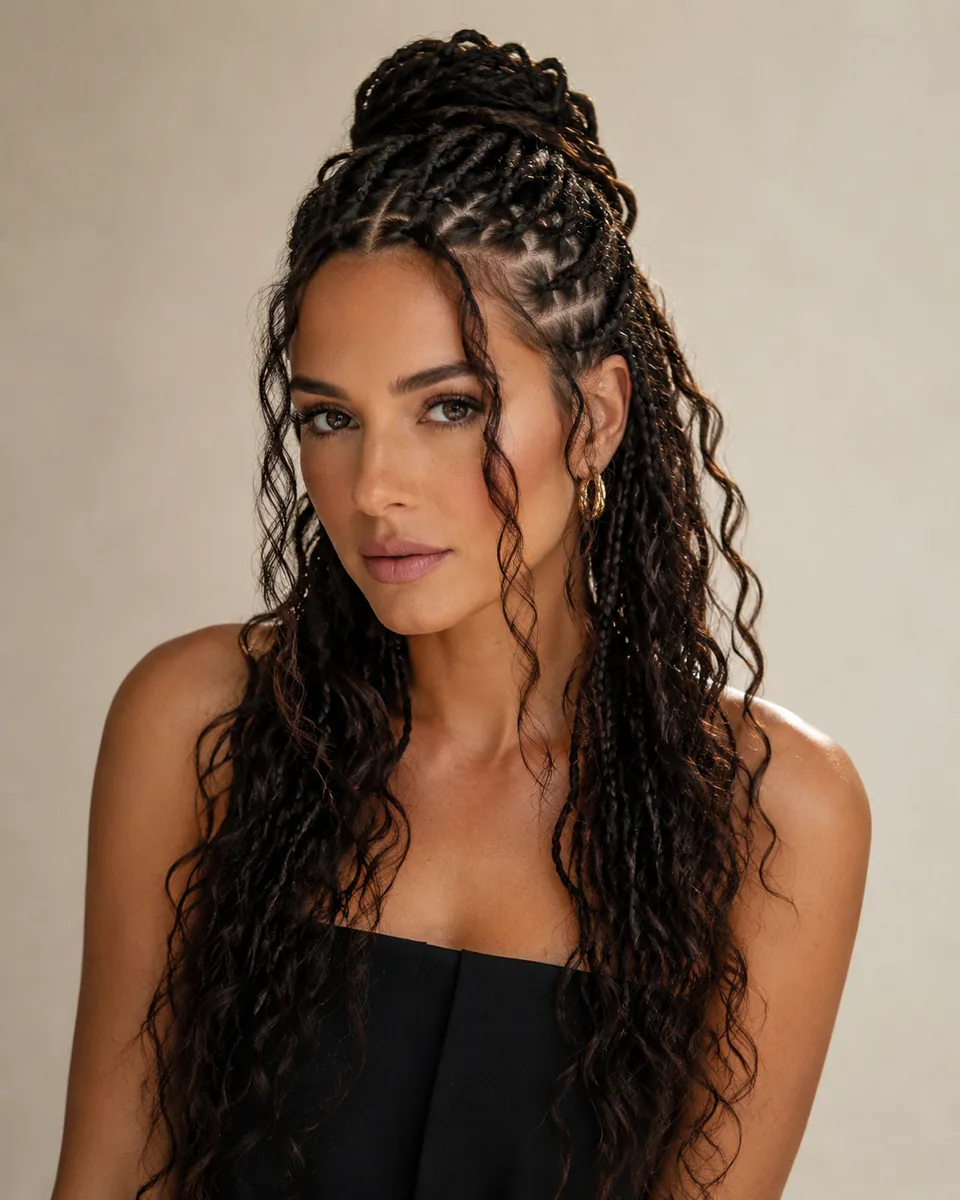
Look 8
Goddess Braids Half-Up
A protective or statement style that softens the temples with curved lines.
- Best for
- Square faces wanting a protective or statement style.
- Why it works
- Why: goddess braids with face-framing tendrils create soft curved lines around the temples and jaw instead of a tight outline.
Possible issue: pulling all the hair back tightly with no face-framing pieces exposes the full jaw.
Try this look
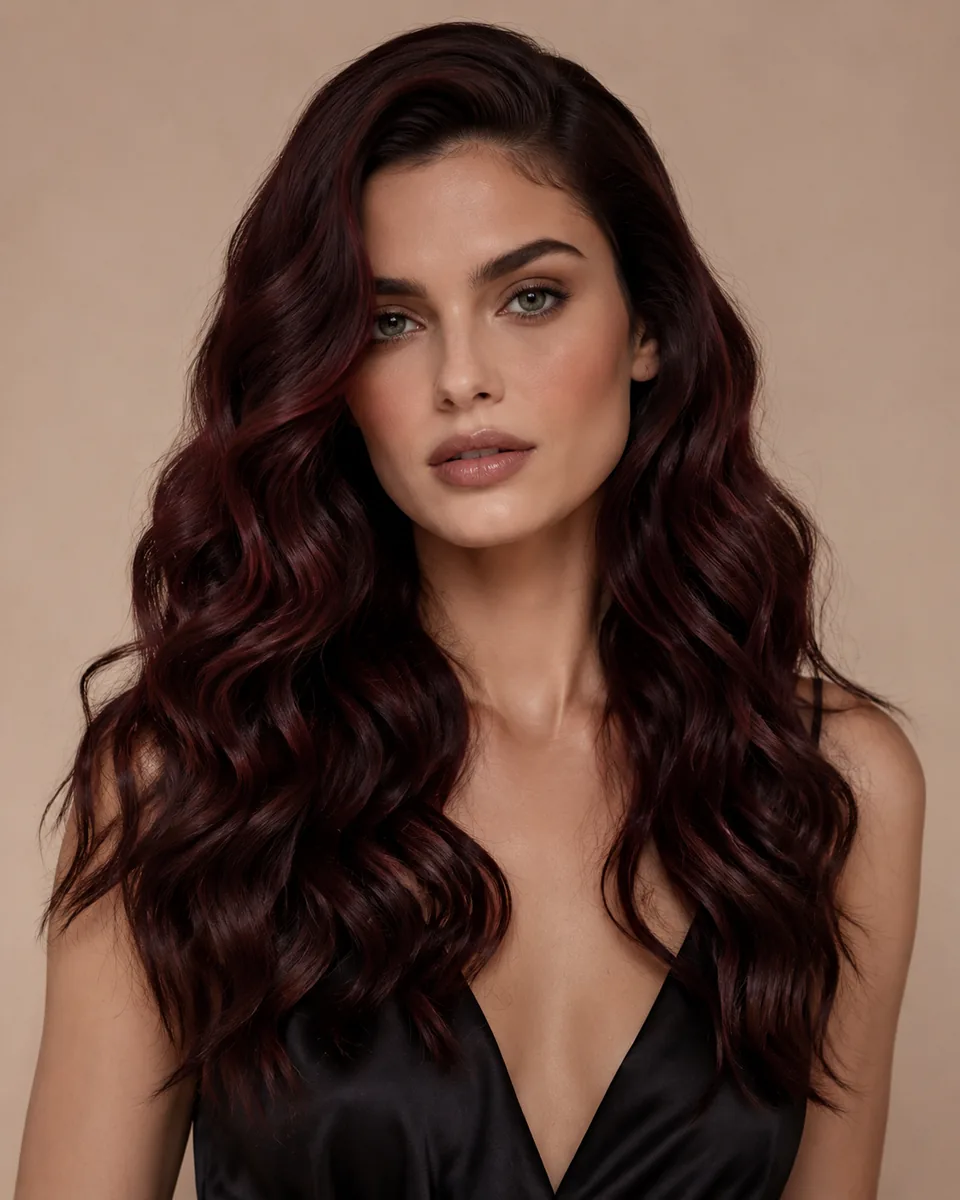
Look 9
Water Wave with Off-Center Part
Glossy, defined waves with an off-center part for evening elegance.
- Best for
- Square faces wanting glossy, defined waves with evening elegance.
- Why it works
- Why: the off-center part breaks the symmetry while the glossy wave texture frames the jaw with movement.
Possible issue: a precise center part with water wave can create a frame effect around the face.
Try this look
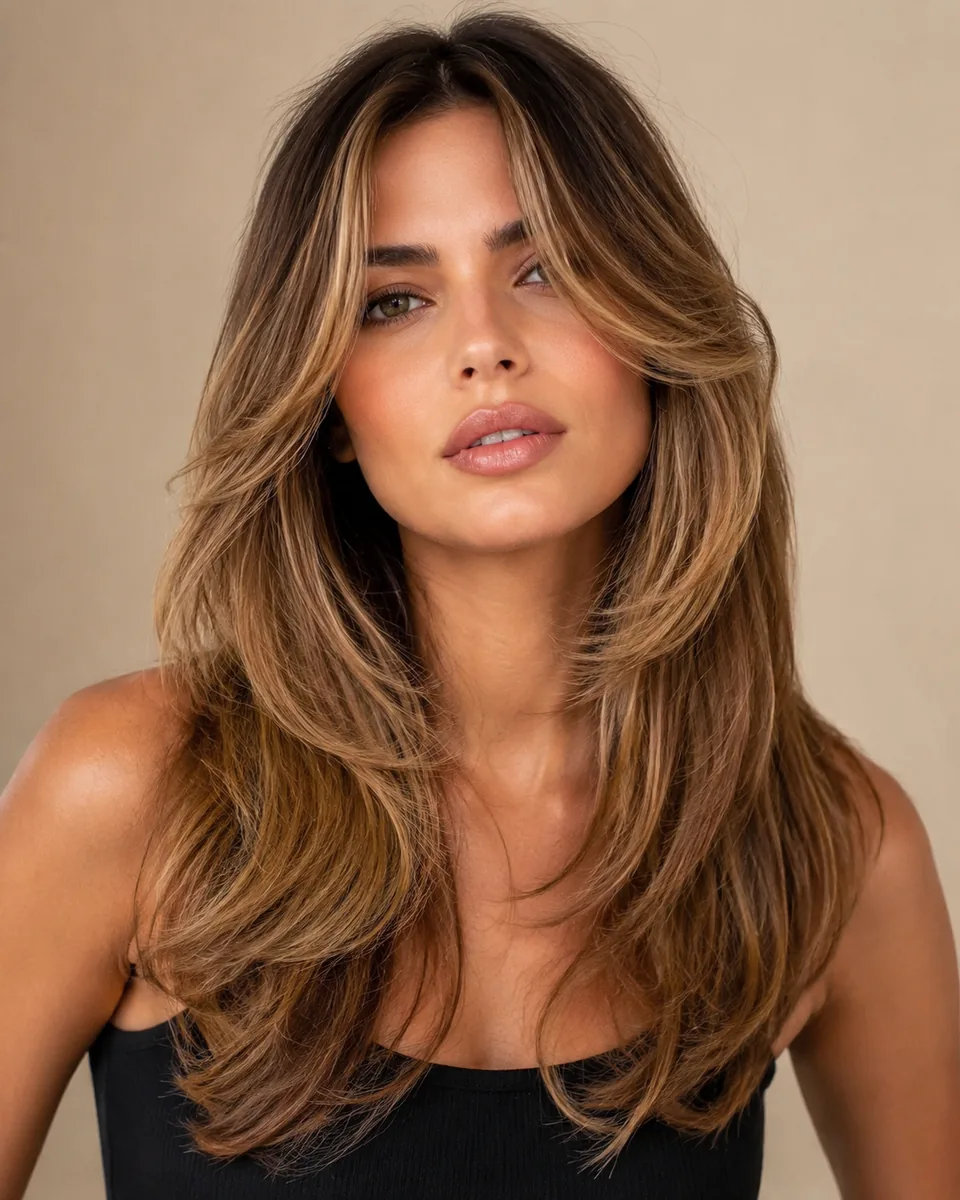
Look 10
Butterfly Cut with Balayage
The most dramatic face-framing effect: short front layers that aggressively soften.
- Best for
- Square faces wanting the most dramatic face-framing effect.
- Why it works
- Why: the butterfly cut's short face-framing layers create strong diagonal lines around the face.
Possible issue: if the shortest layers stop above the chin, they can create a disconnected frame — keep them long enough to sweep past the jaw.
Try this look
How to Choose
Prioritize diagonal movement over horizontal lines. Long soft waves are the easiest overall choice; a wavy lob with face-framing layers gives the same softening at medium length; a textured pixie with side bangs is the confident short option. If you prefer straight texture, layered straight with side bangs keeps the softening without abandoning straight hair.
Compare the Shortlist on Your Photo
- Use a front-facing portrait that shows the hairline, both sides of the face, shoulders, and upper chest.
- Begin with long soft waves, a wavy lob, and one short option like the textured pixie in the same color.
- Compare whether the sides create diagonal movement or horizontal lines at the jaw.
- Check where the shortest layer lands relative to the chin.
- Compare how much of the jaw stays visible with each direction.
- Keep color and part steady while you test two or three directions.
- Save two favorites and use Compare Hairstyles to review them together.
FAQ
What hairstyle suits a square face best?
Long soft waves, wavy lobs, and textured pixie cuts with side bangs consistently soften the jawline. The common principle is diagonal movement: side parts, face-framing layers, and wavy textures.
Should square faces avoid short hair?
No. A textured pixie with long side bangs can be very flattering. The key is avoiding a super-short even cut with no bangs, which can emphasize the jaw.
Are bangs good for square faces?
Yes, especially side-swept or curtain bangs that cross the forehead at an angle. Straight-across blunt bangs add a horizontal line that works against the shape.
What hair color works best for square faces?
Warm tones like caramel, honey, and auburn add softness to angular features, and face-framing highlights draw the eye diagonally. Color is a secondary tool — the cut does the main work.
Can I try these hairstyles on my own photo?
Yes. Use WigTryAI to upload a clear front-facing selfie and preview each of these recommended styles on your own face before choosing.
Why do diagonal lines matter for square faces?
Square faces have a strong horizontal jawline. Diagonal lines — side parts, curtain bangs, layered movement — break that horizontal emphasis and lead the eye across the face instead of along the jaw.