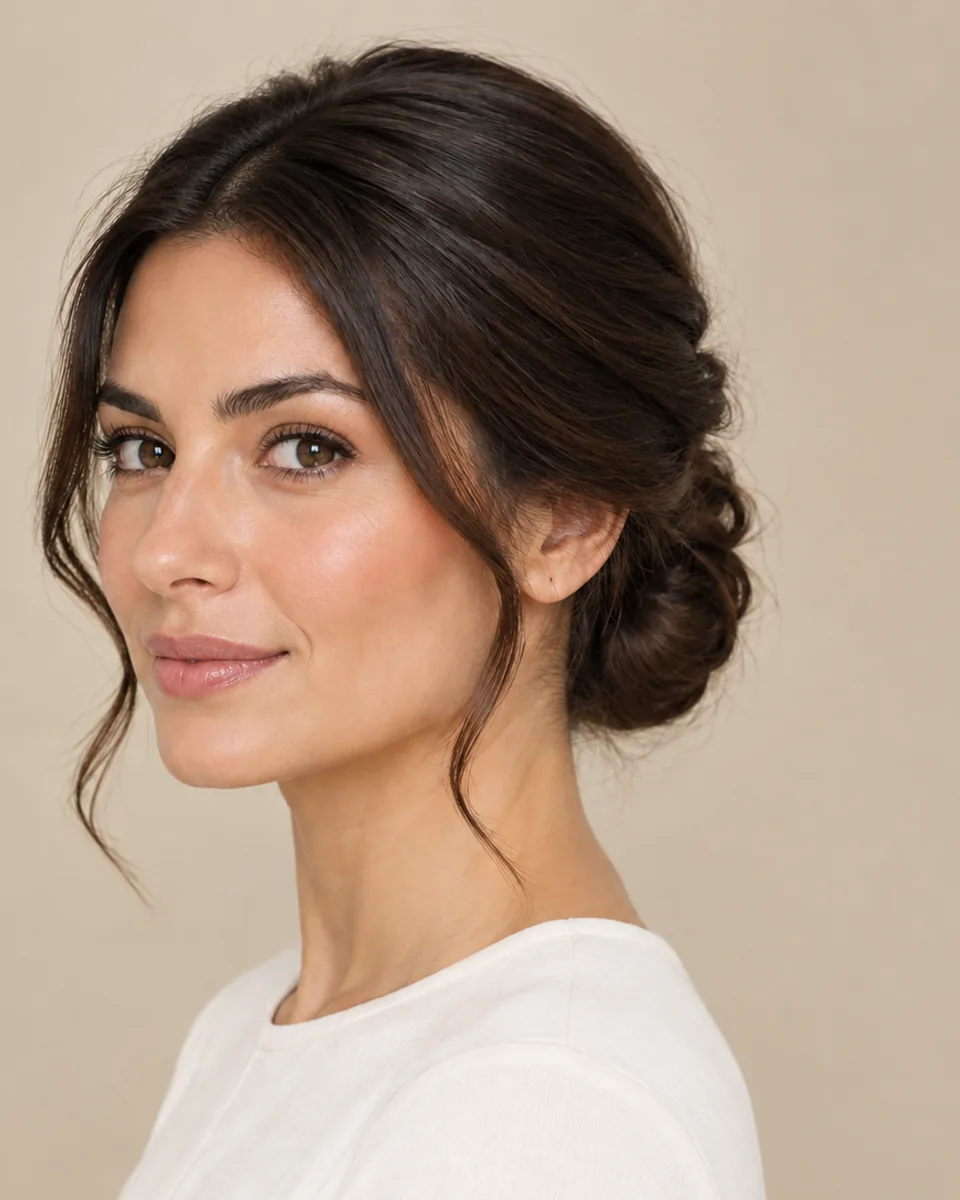
Low Bridal Chignon
Soft folds gathered at the nape leave the shoulders clear. Compare it with the sleek bun if you want a gentler front; ask your stylist what length and volume the folds need.
Try this lookWedding hair guide
Hair up, half-up, or down? Compare wedding hairstyles by face framing and neckline, then try your favorites on the same photo before your hair trial.
Quick answer
Compare gathered styles such as buns, twists and braided updos for an open neckline. Half-up looks and ponytails keep some length visible while holding the front back. Hair-down waves frame the shoulders; bob and pixie references let you compare a shorter outline. Start with two contrasting silhouettes on the same photo, then refine the details.
Compare where the gathered shape sits: at the nape, along the back of the head, around the crown, or above it. Choose a reference to preview that outline on your photo.
Soft folds gathered at the nape leave the shoulders clear. Compare it with the sleek bun if you want a gentler front; ask your stylist what length and volume the folds need.
Try this look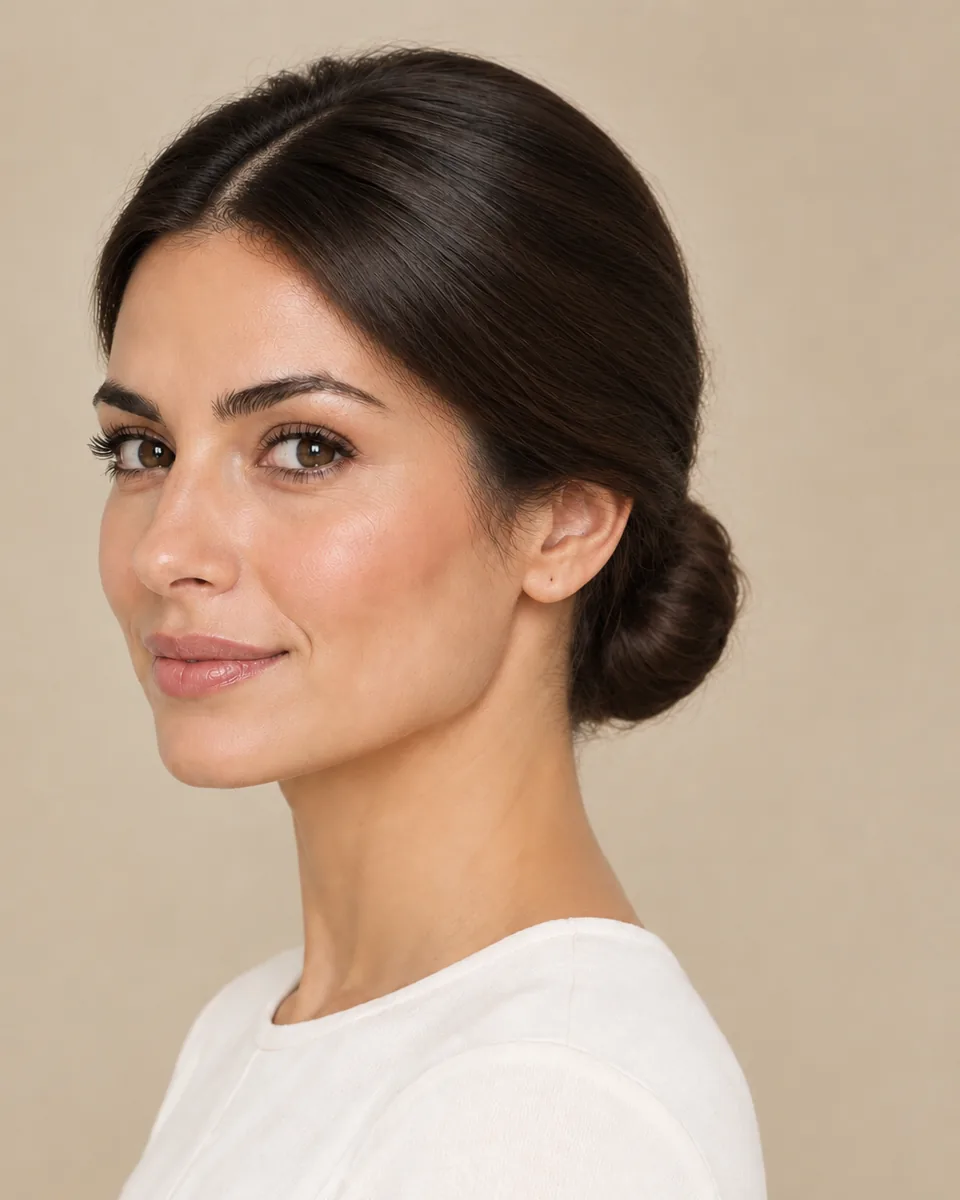
A smooth front and compact low bun give a clean outline. Try it beside the chignon to compare sleekness with softness; check how much of the hairline you want exposed.
Try this look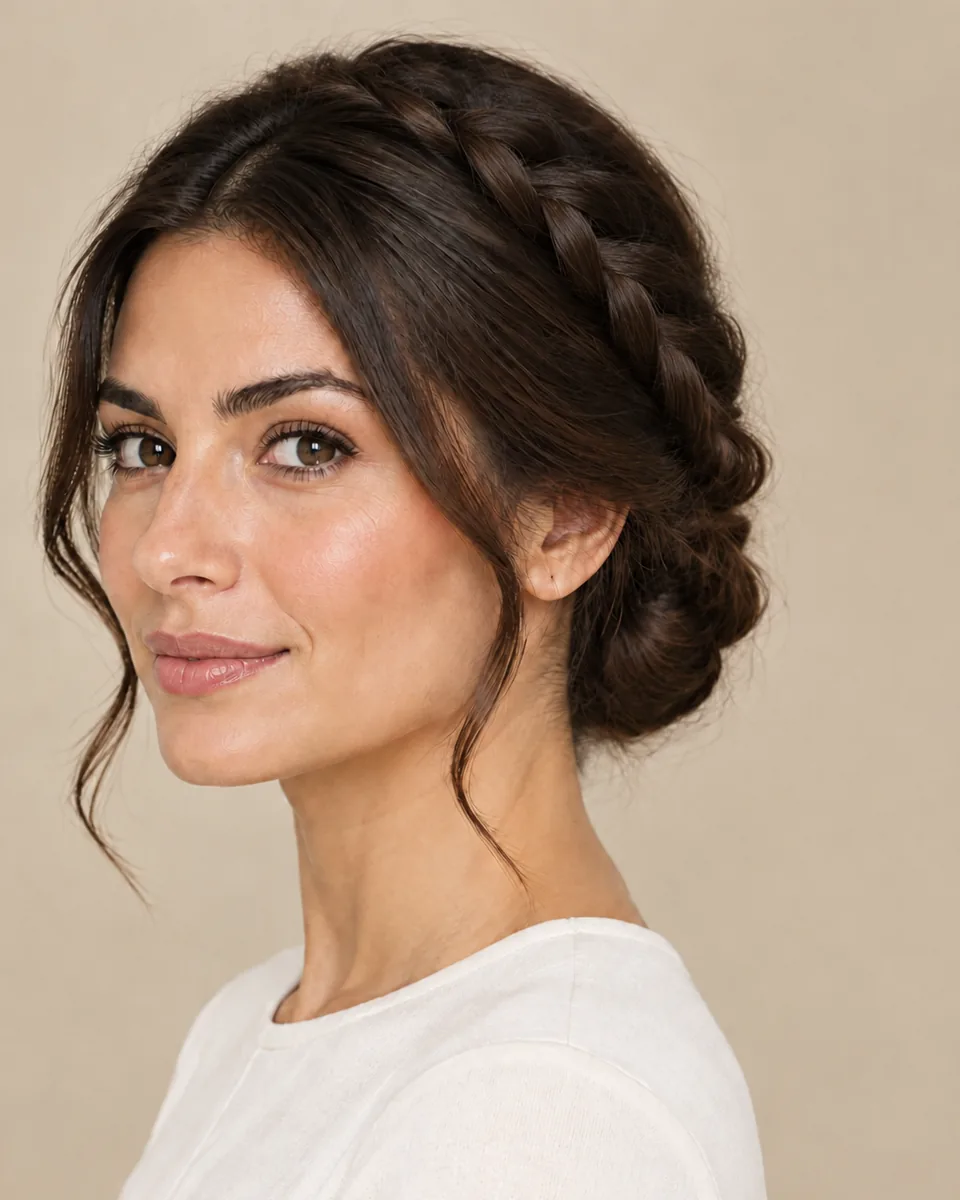
Braided sections add texture while gathering the length away from the shoulders. Try it for detail in an updo; the braid pattern and fullness depend on your real hair.
Try this look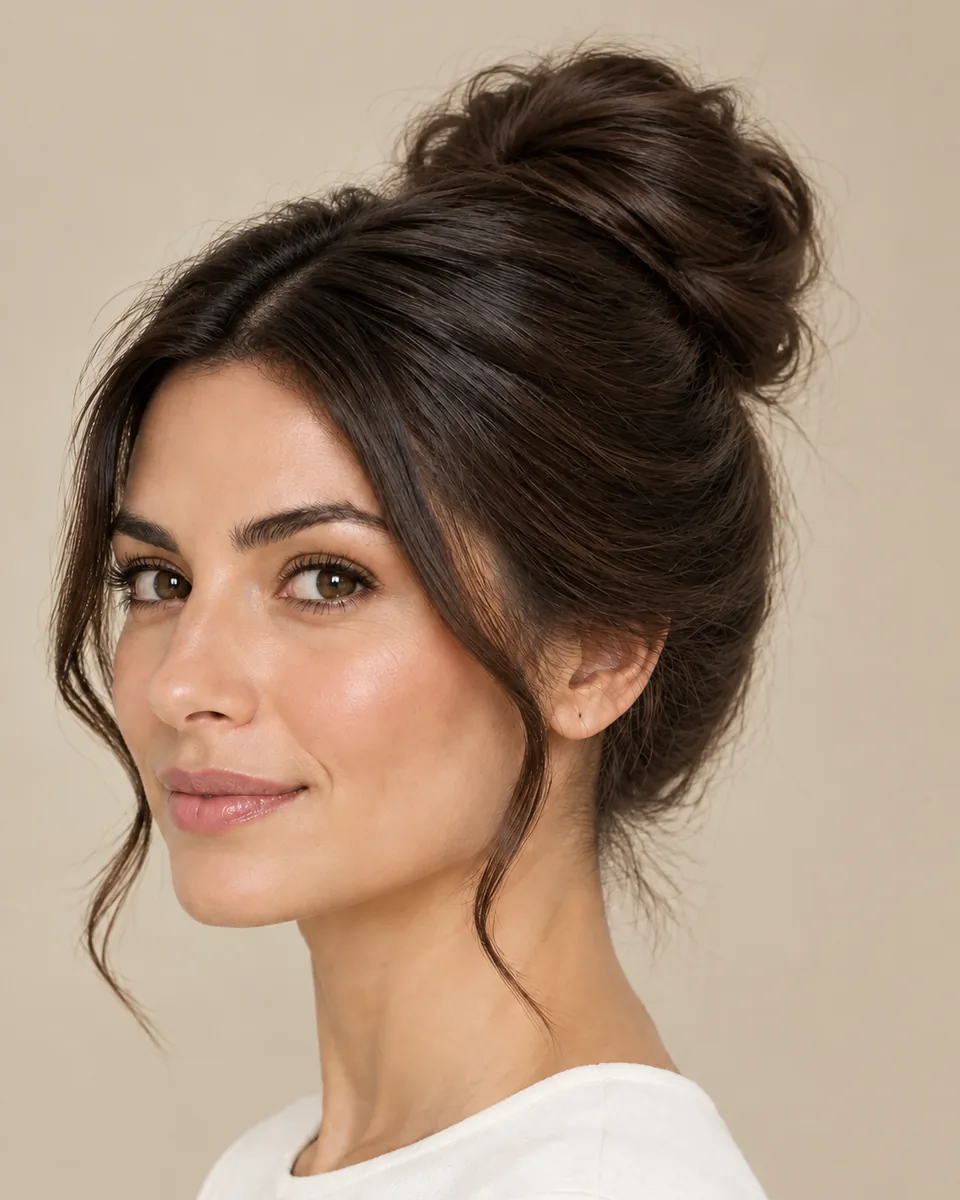
A high gathered shape adds height above the crown and leaves the shoulders open. Compare it with a low bun; ask your stylist where the bun and veil would sit.
Try this look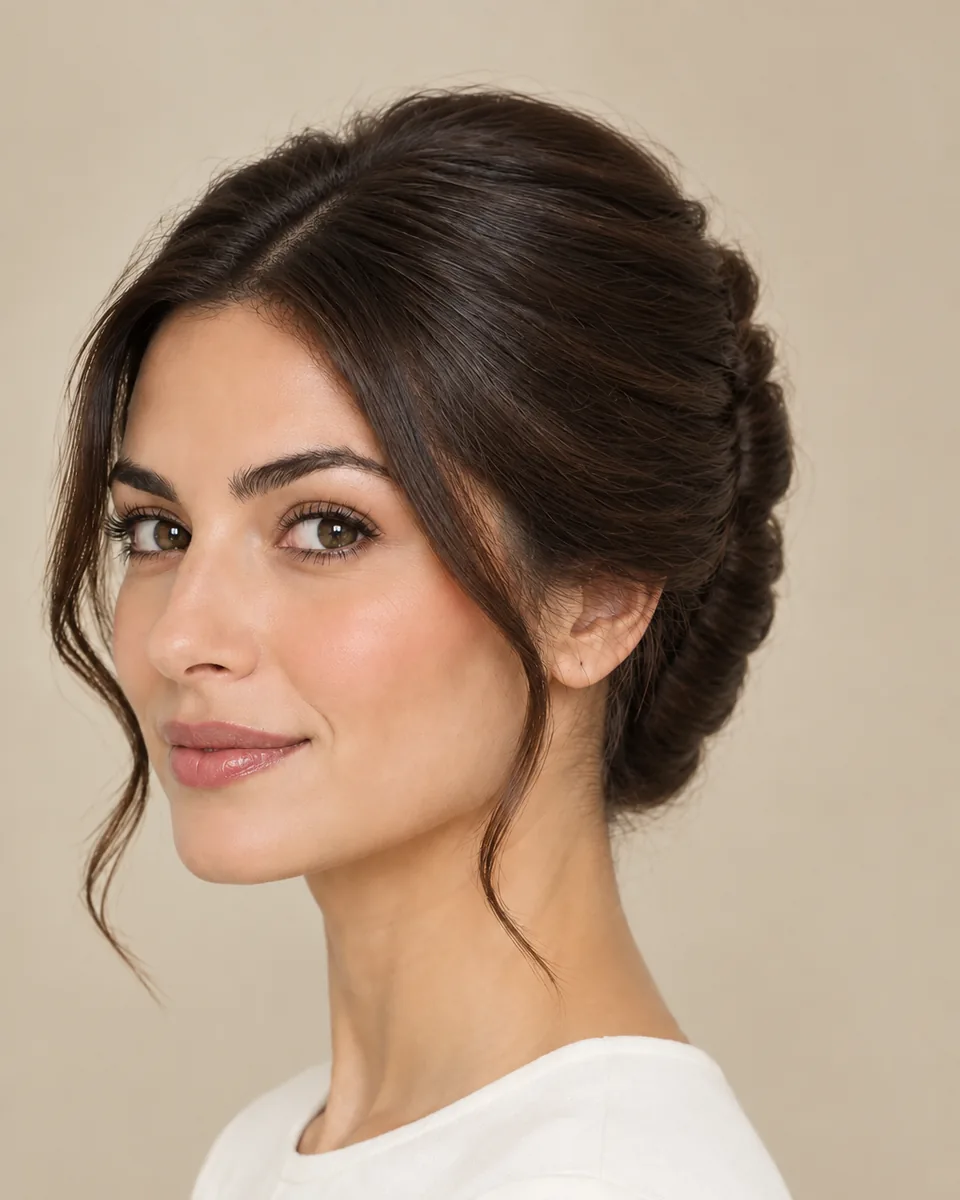
A vertical roll gathers the hair along the back of the head. Compare its taller outline with a low chignon; bring a back reference so your stylist can assess the construction.
Try this look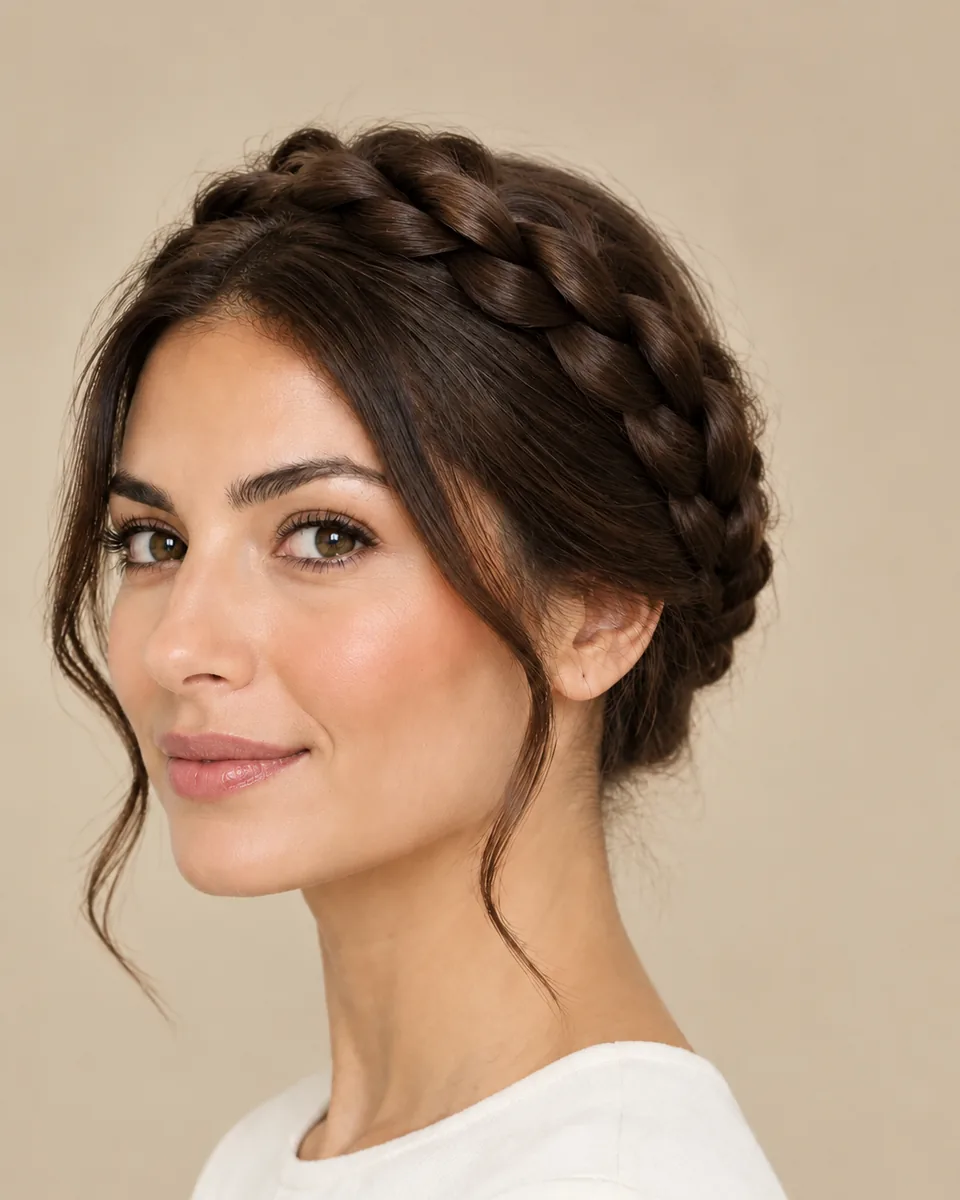
A braid frames the crown while the ends are tucked away. Try it beside a bun to compare head shape and surface detail; the braid needs suitable length and fullness.
Try this look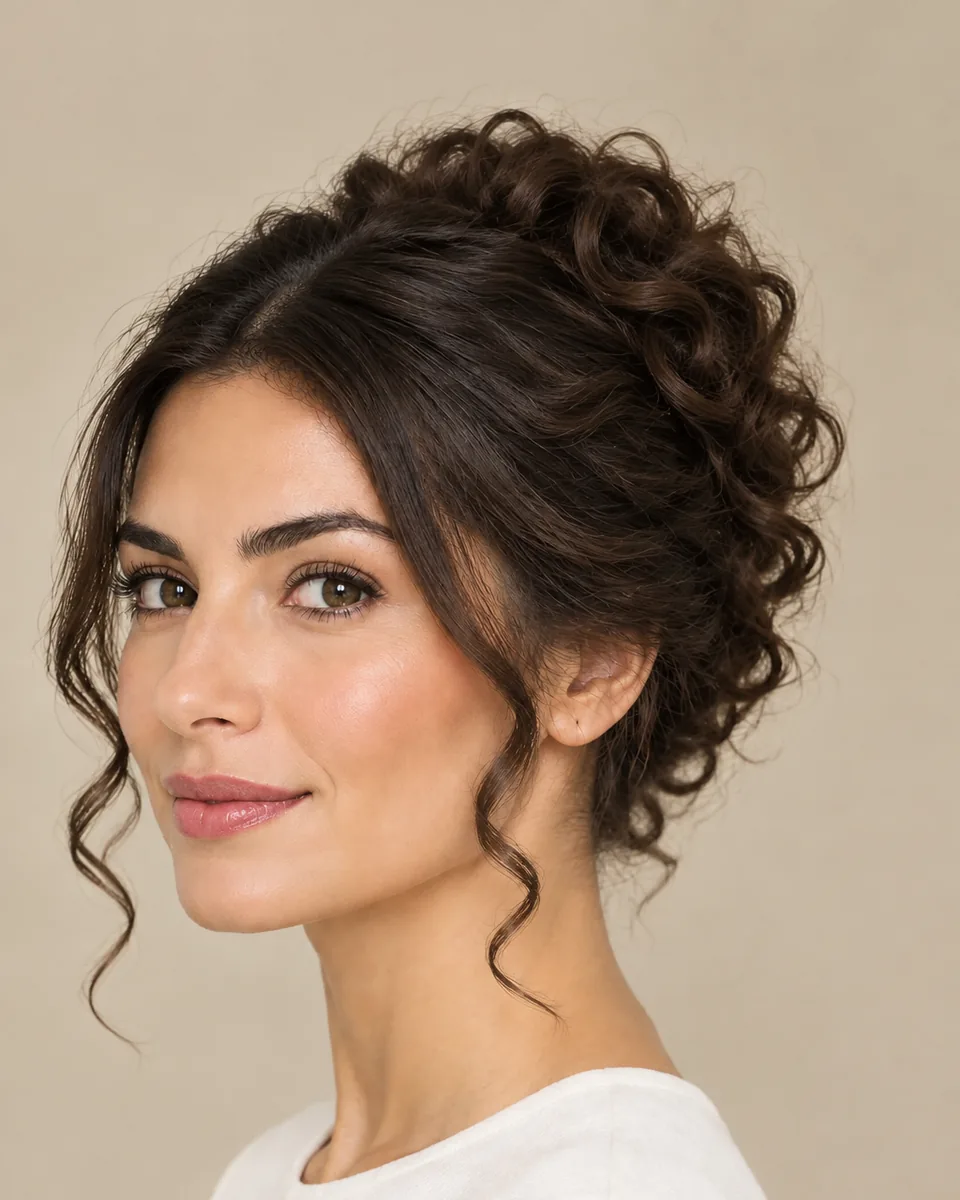
Defined ringlets add texture to a gathered shape. Compare the curl size and crown height; discuss how much of your own curl pattern you want to retain.
Try this look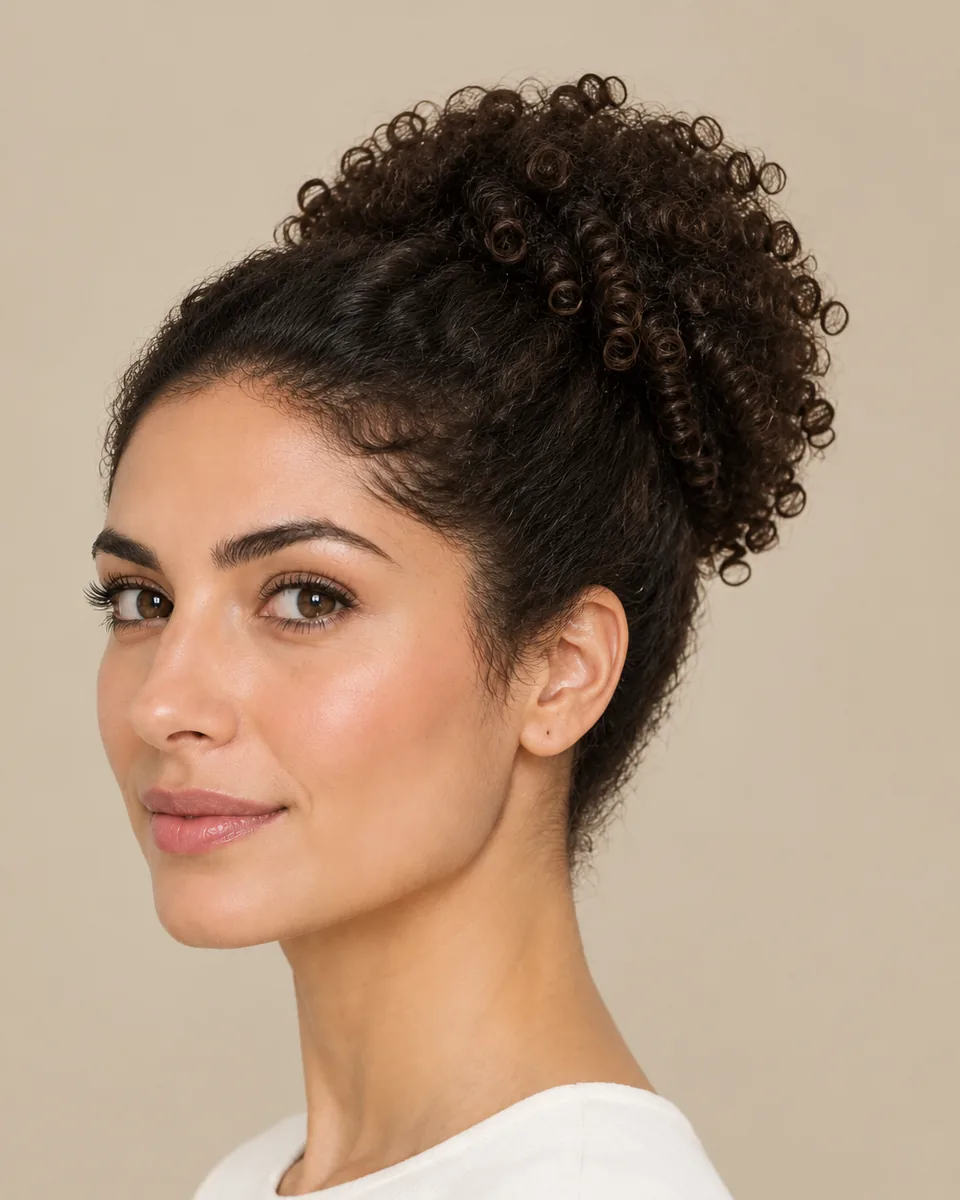
A rounded puff concentrates coily texture above the crown. Compare the height and exposed neckline; your natural pattern, shrinkage, and gathered length will affect the real shape.
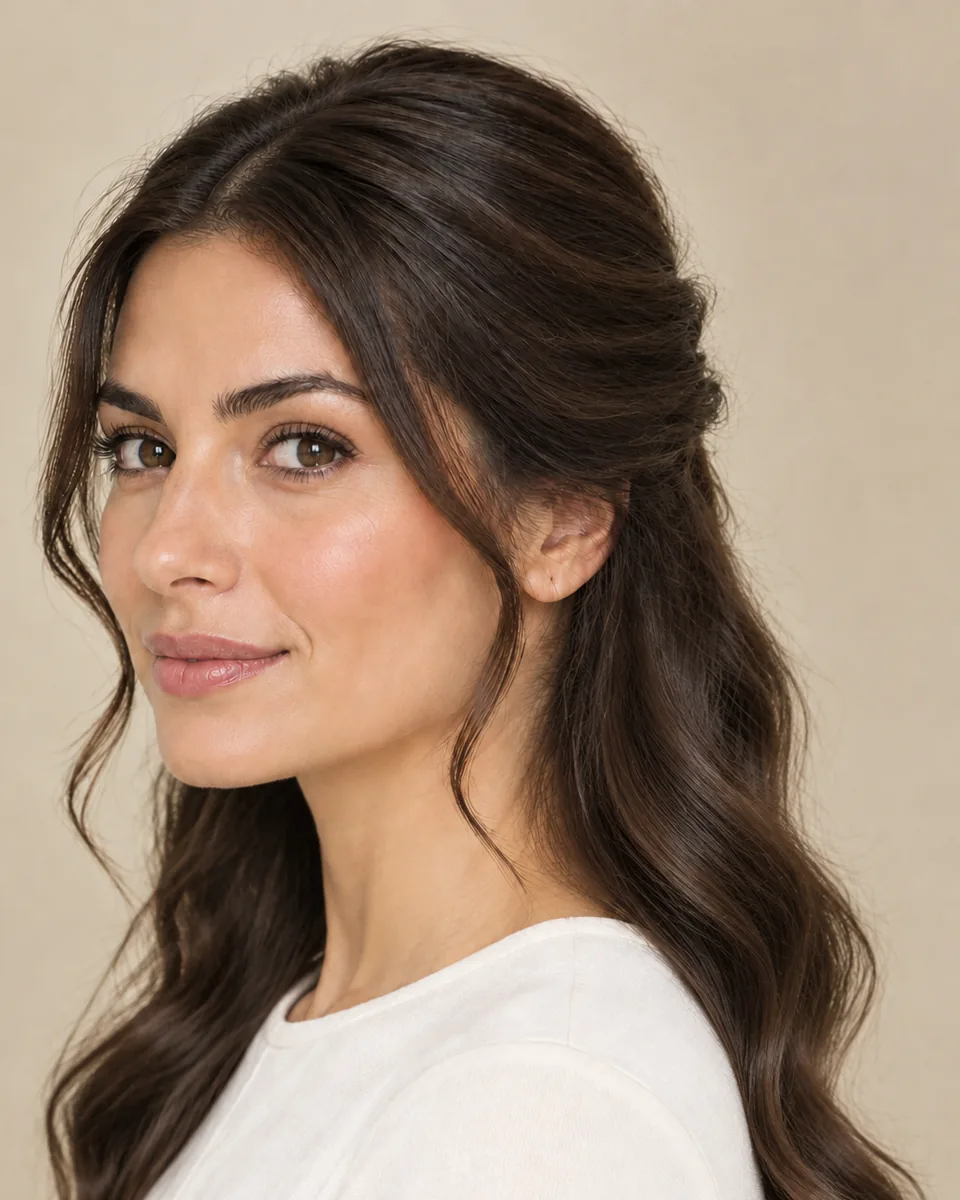
Try this lookKeep some length visible while holding the front back. Compare loose waves, twisted sections, a sleek tail, or a more segmented ponytail.
This half-up, half-down wedding style draws the top back while loose waves stay over the shoulders. Try it if you want visible length with an open face; check whether the hair covers a neckline detail.
Try this look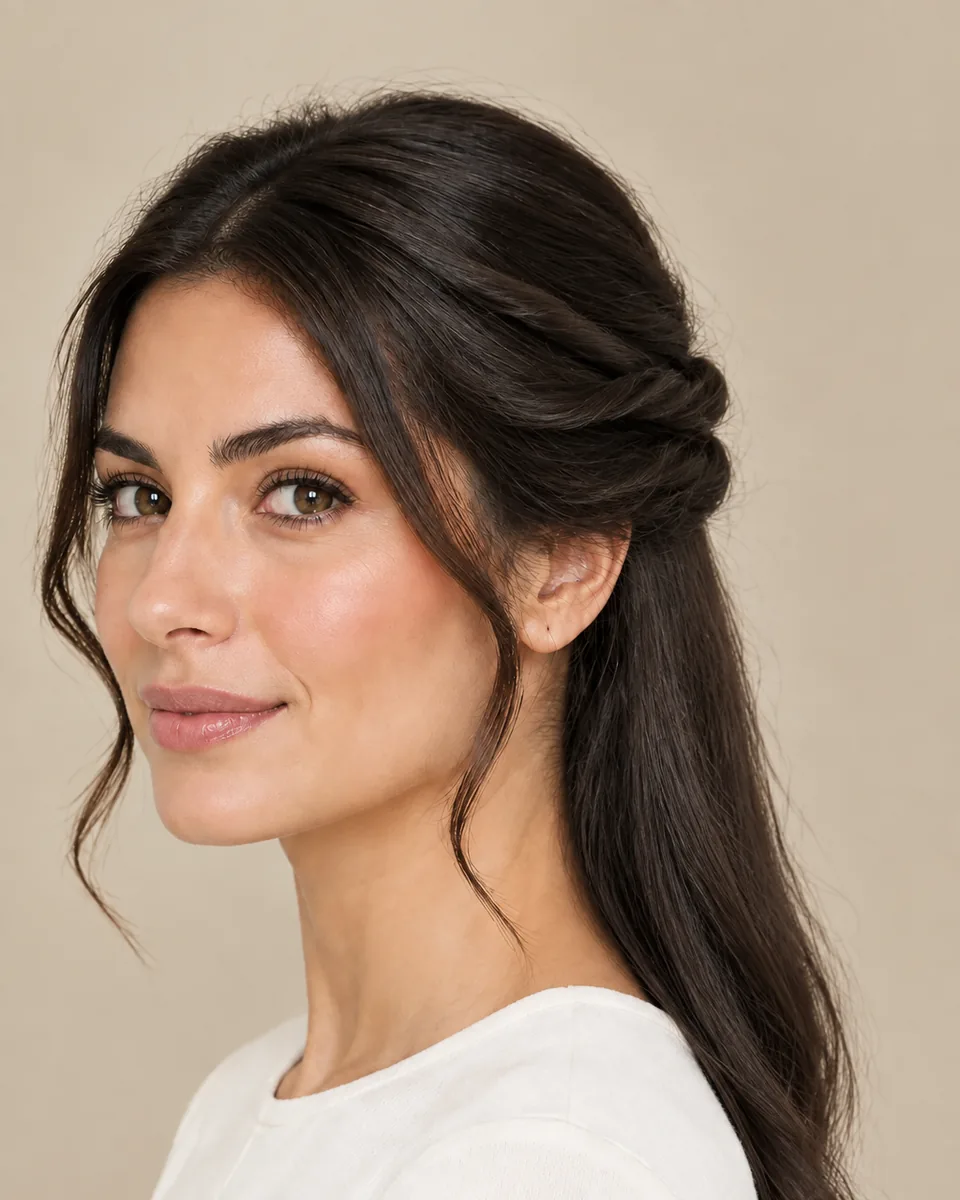
Twisted side sections hold the front back while the lower length stays down. Compare it with half-up waves when you want quieter texture; check whether your layers reach the join.
Try this look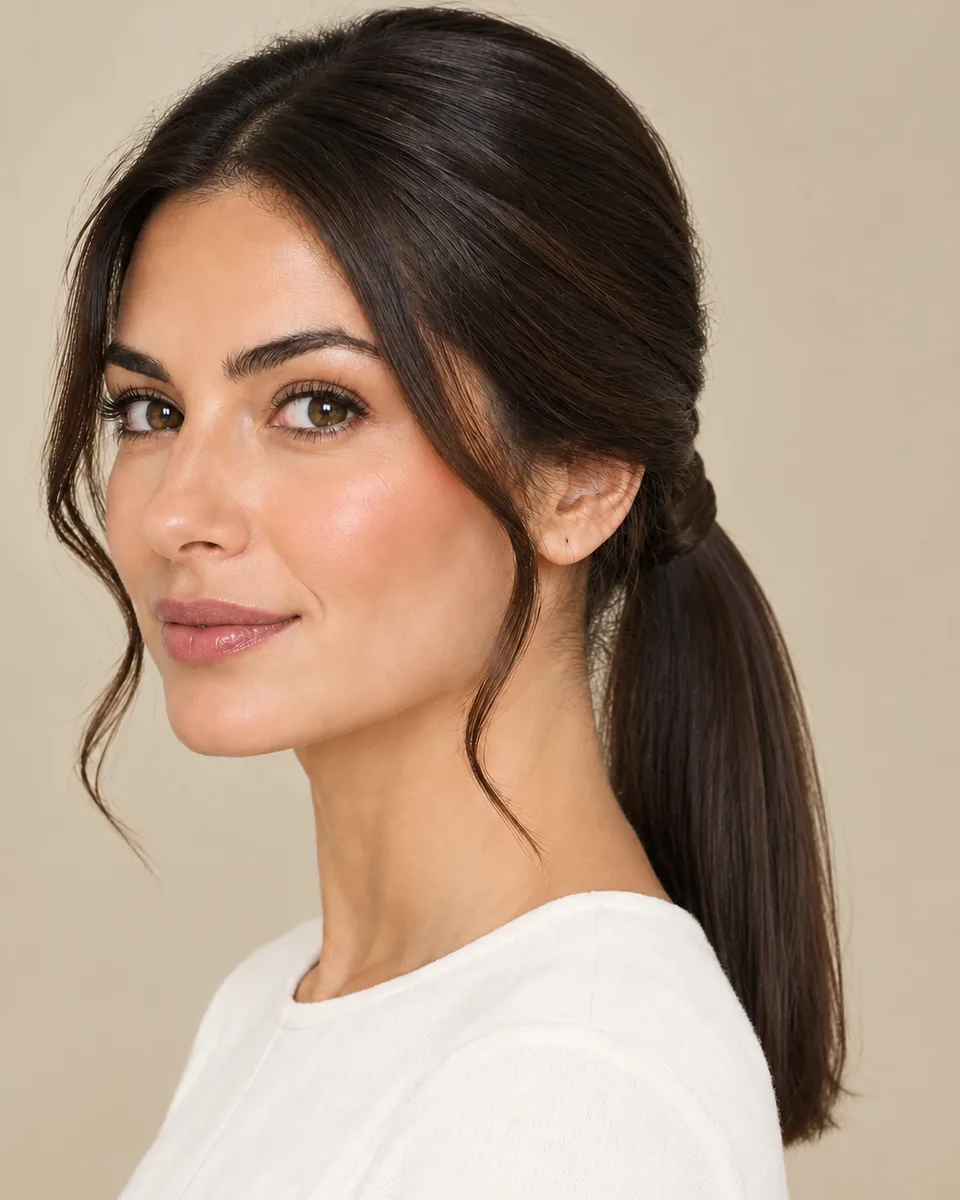
A smooth ponytail creates a clean front with a separate tail behind the head. Compare its height with a low gathered style; ask how the base and tail would be secured.
Try this look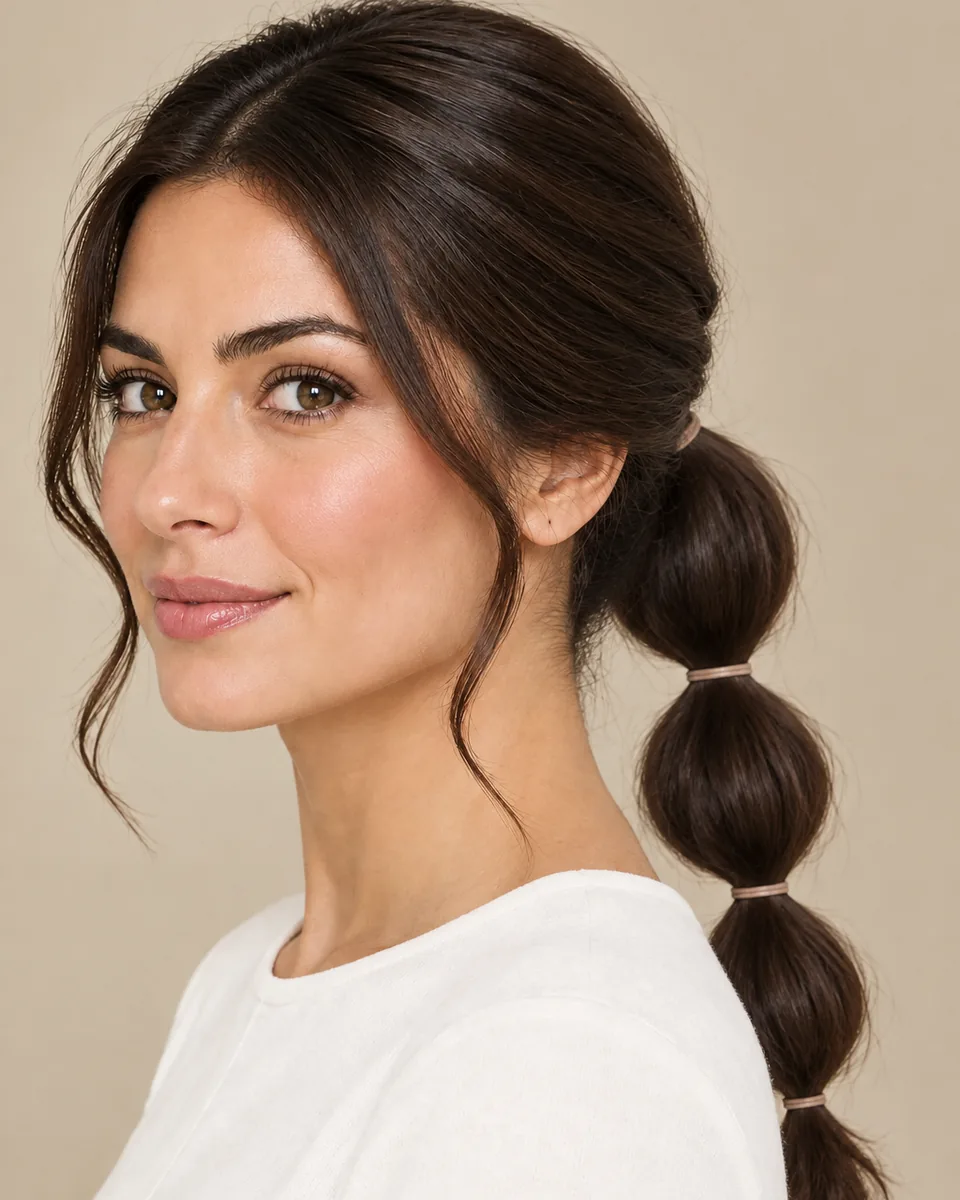
Rounded sections give a ponytail a segmented outline. Compare the tail length and volume behind the shoulder; ask whether your hair can support the sections without added length.
Try this lookCompare hair framing the shoulders with a shorter bob or pixie outline. The portraits keep the model and studio setting consistent so the hairstyle is easier to read.
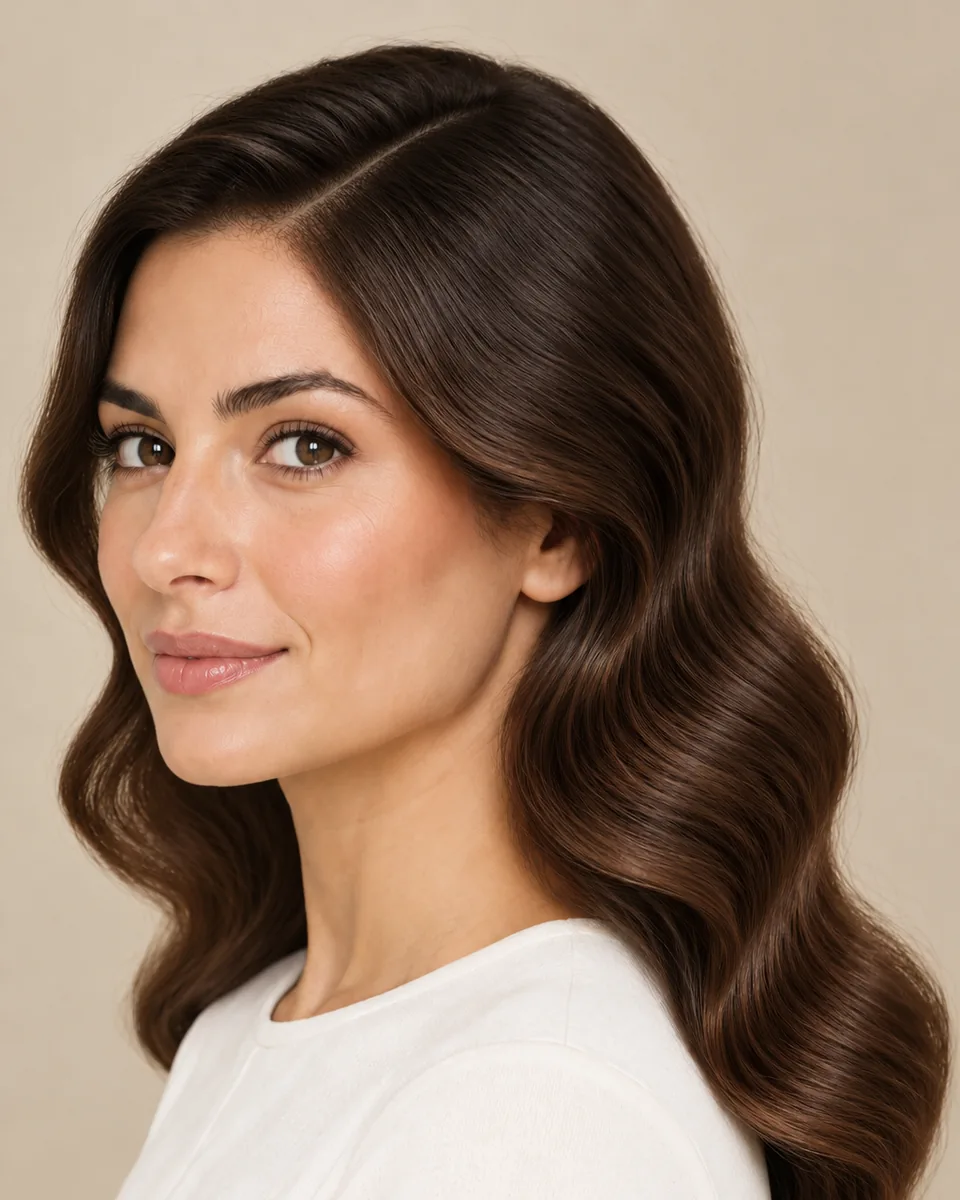
A side part and sculpted waves create a polished hair-down shape. Compare the fullness beside each cheek; ask your stylist how the waves would hold in your hair.
Try this look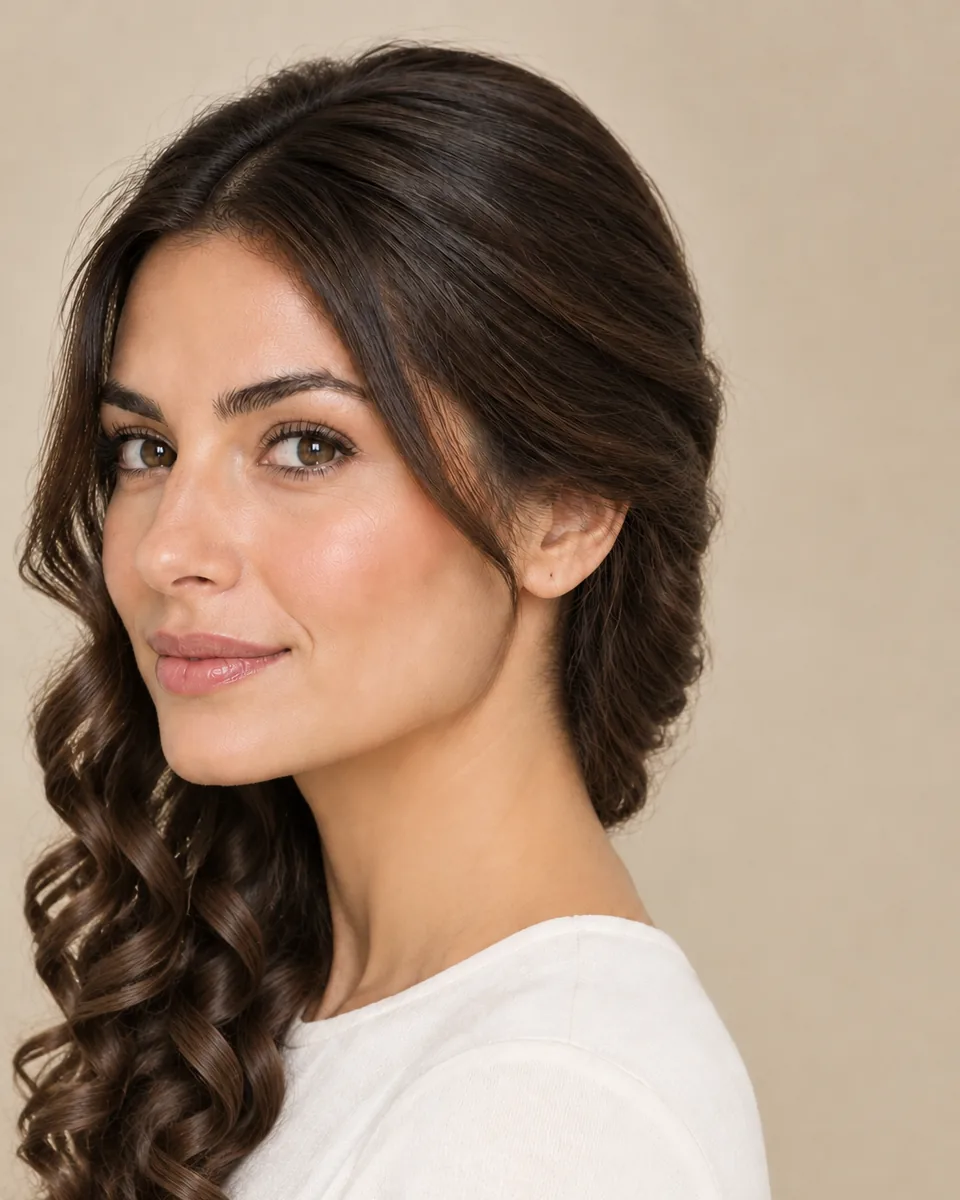
Curls gathered over one shoulder create an asymmetric frame. Compare which side you want open for photos and earrings; ask how the sweep would be secured.
Try this look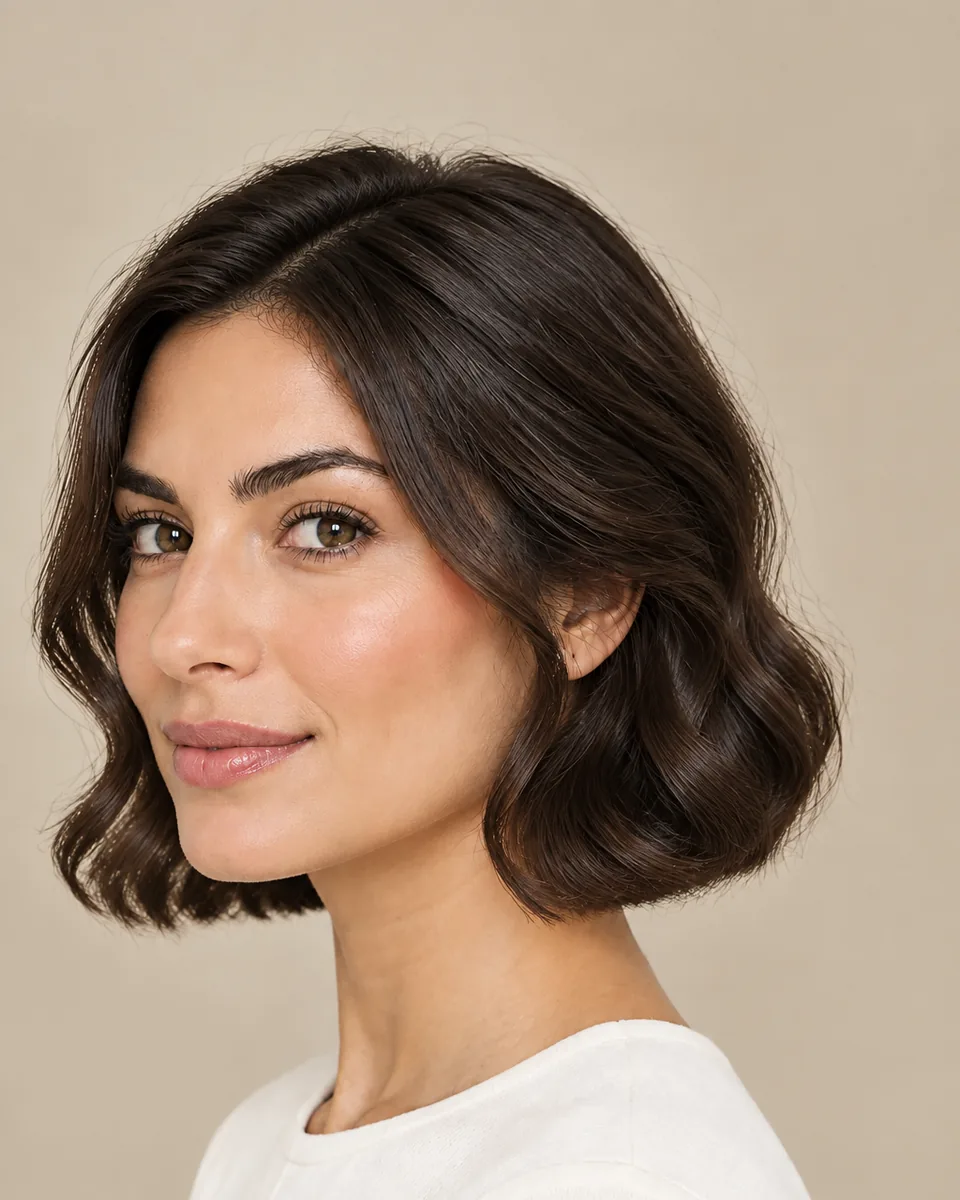
A jaw-length wave keeps the short outline visible while adding shape beside the cheeks. Try it if you want to keep your bob; ask your stylist how the wave would be set.
Try this look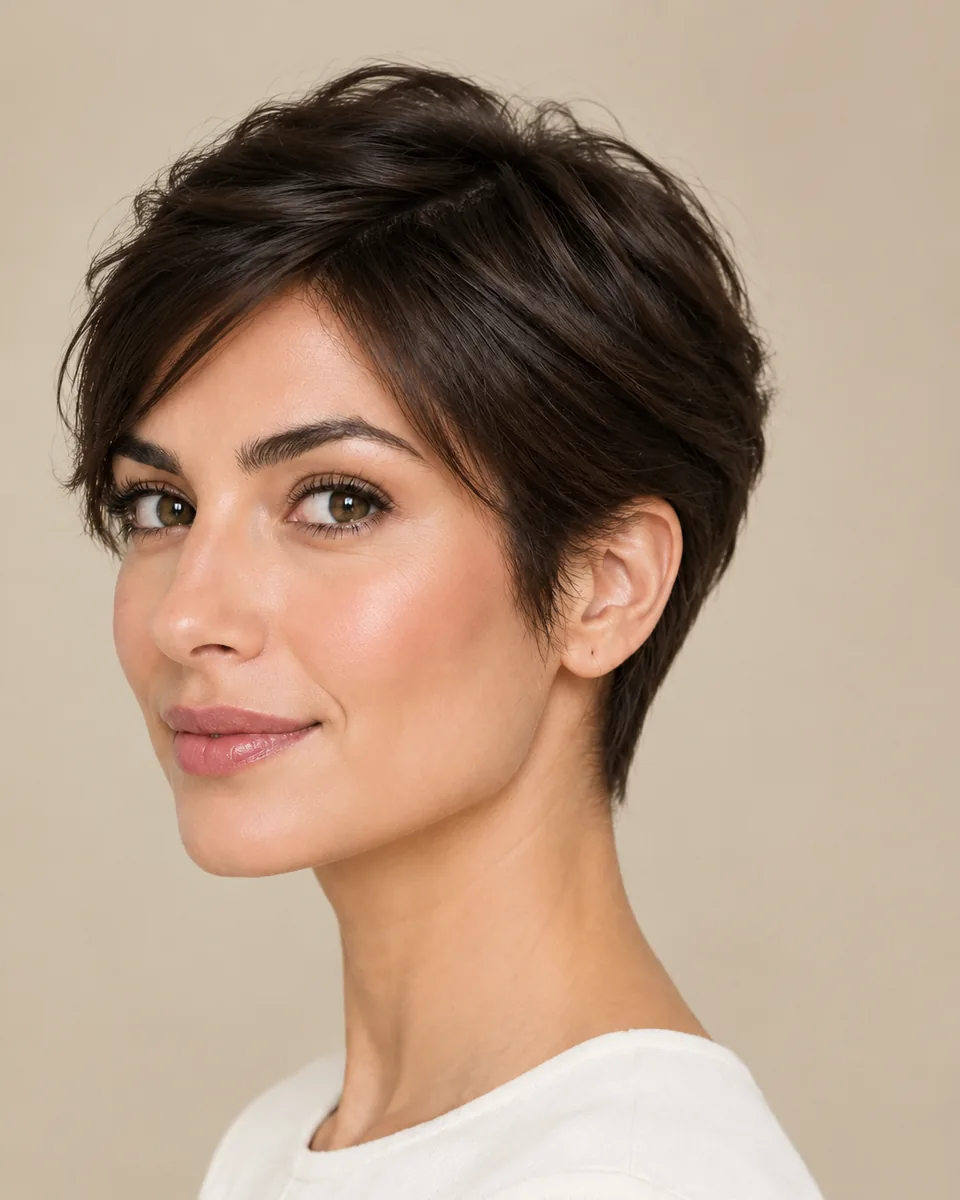
A cropped outline and swept fringe keep attention on the face and neckline. Compare the fringe direction and exposed ears; confirm how the shape works with your current cut.
Try this lookStart with the shape you already have. Compare a side part, softly waved bob, tucked sides, or an accessory placed above one ear. A compact pinned shape may be possible if your sections reach, but a long-hair reference does not prove that a bun or long wave can be built with your length. Use the bob and pixie references to compare a short outline first. Explore short hairstyle directions, and ask your stylist which parts of a bridal reference can be adapted without adding length.
Compare a low gathered shape with half-up waves. Look at whether you want the shoulders clear or the lower lengths visible. Ask your stylist whether your nape and front sections can reach the intended position, and whether the shape needs pins, padding, or added hair. Your actual section lengths matter more than the label “medium.”
Start with three outlines: all down, partly down, or gathered. Half-up waves leave length on both shoulders; side-swept curls collect it on one side; an updo moves it away from the neckline. Compare that coverage before choosing braid or curl details. Our wavy hairstyle guide helps distinguish wave patterns if you want to refine a hair-down direction.
Fine hair describes strand thickness, not how many strands you have. Ask your stylist about the visible fullness you want rather than assuming every fine-haired bride needs added hair. A smaller bun and a fuller chignon can be different goals. Compare the curly updo and high puff by where the visible texture sits. Curly or coily hair also changes preparation; bring a current hair photo and discuss how much of your natural pattern you want to keep. An AI preview cannot assess density, shrinkage, or hold.
Decision guide
Pick a starting pair rather than browsing unrelated photos. Keep your selfie steady so the hairstyle is the main change.
| What you want to compare | Start with | Look closely at |
|---|---|---|
| Soft or sleek face framing | Low chignon vs sleek low bun | Loose pieces at the temples, parting, and exposed hairline. |
| An open neckline or visible length | Low chignon vs half-up waves | How much hair sits on the shoulders and over the dress. |
| Balanced or one-sided hair down | Hollywood waves vs side-swept curls | Width beside each cheek and which earring stays visible. |
| Smooth or textured hair up | Sleek low bun vs braided updo | Surface detail and where the gathered shape sits. |
A dress neckline gives you a useful comparison point, not a rule. Try an updo and a down style with a similar neckline visible in your selfie, then look at what each covers. If you plan to wear a veil, check its attachment and removal with your stylist. Pronovias's veil hairstyle guide shows veil placement ideas for updos, half-up styles, and hair worn down.
Open the Wedding collection, choose a reference, and upload a clear selfie. Use the same photo for a second look, then save the previews you want to discuss.
Try wedding hairstylesAn AI preview helps compare appearance. It cannot test pins, comfort, hair density, weather resistance, or all-day hold. Use Virtual Hairstyle Try-On to explore the visual differences; use the in-person trial to check construction.
Compare them with the same neckline visible. An updo leaves more of the shoulders and dress open; hair down adds length and coverage around them. Start with a low chignon and half-up waves if you are undecided, then ask your stylist about comfort and hold.
Yes. Select Try this look under a reference, upload a clear selfie, and generate a preview. Or open the Wedding collection on the homepage. Keep the same selfie for each style so you can compare the face frame more easily.
Consider a softly waved bob, a side part with one side tucked back, or an accessory that works with your existing crop. A small pinned shape depends on whether your sections reach the placement. Bring a short-hair reference to your stylist rather than treating a long-hair preview as proof that the same updo is possible.
It can, if the upper sections can be secured and enough lower length remains for the shape you want. Compare a half-up reference with a low gathered style, then ask your stylist how your layers and shortest sections affect placement. You do not need to assume that extensions are required.
Start by comparing a compact low bun with a soft half-up shape, then decide how much fullness you want. Fine strands and low density are different things, so a photo cannot tell you whether padding or added hair is needed. Your stylist can assess preparation and structure at the trial.
The Wedding collection previews the hairstyle direction; it does not offer a dedicated veil fitting. Bring your veil or accessory to the hair trial so your stylist can check attachment, placement, and removal.
Bring both. The reference communicates the intended hairstyle details, while the preview shows the face framing you liked on yourself. Add a side or back reference if the bun or braid construction matters.


