
Two short haircut directions
Bixie vs French Bob: Follow the Hair Behind the Ears
A bixie builds the shape with short, overlapping layers. A French bob keeps a compact bob outline around the jaw, often with fringe. Compare the sides and nape before deciding from the bangs alone.

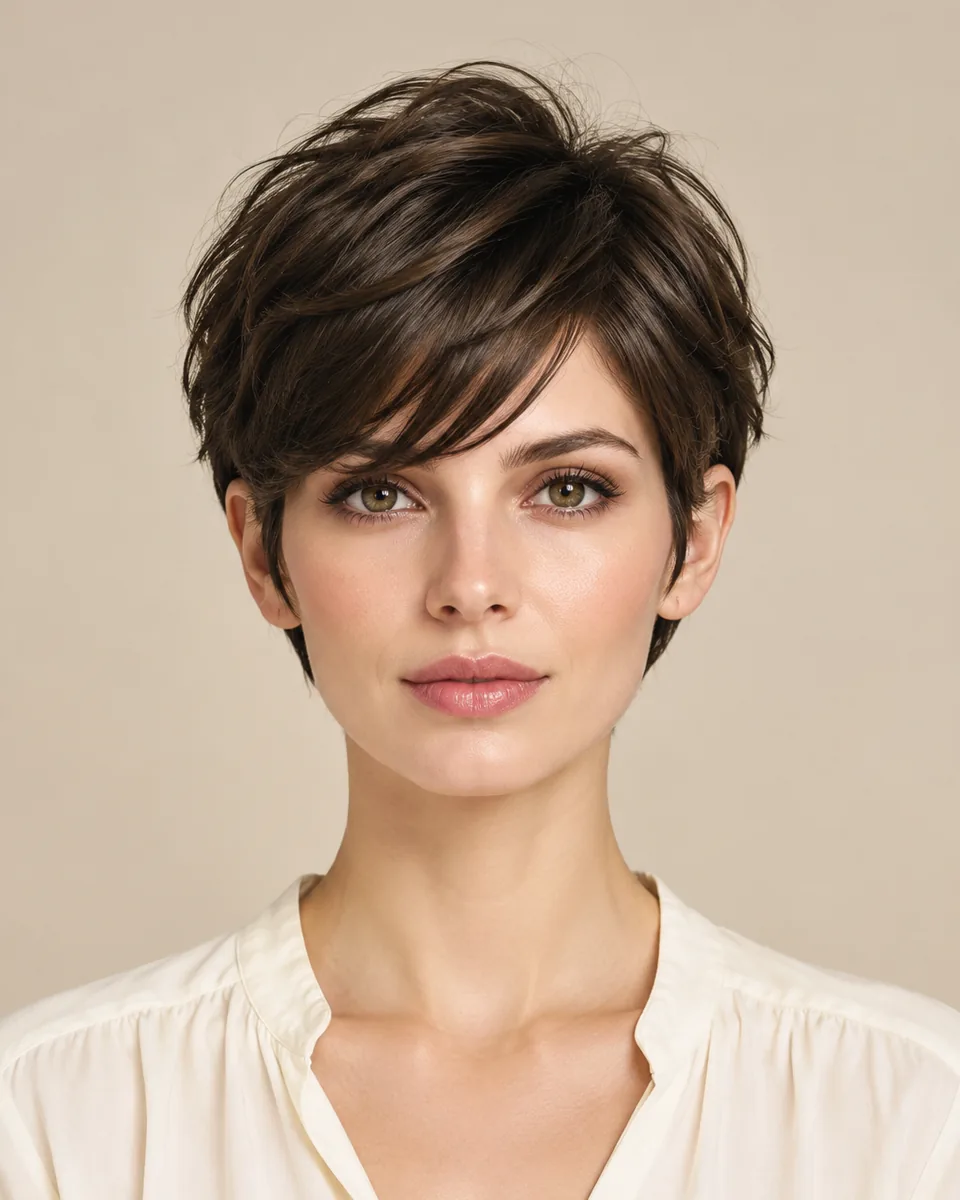
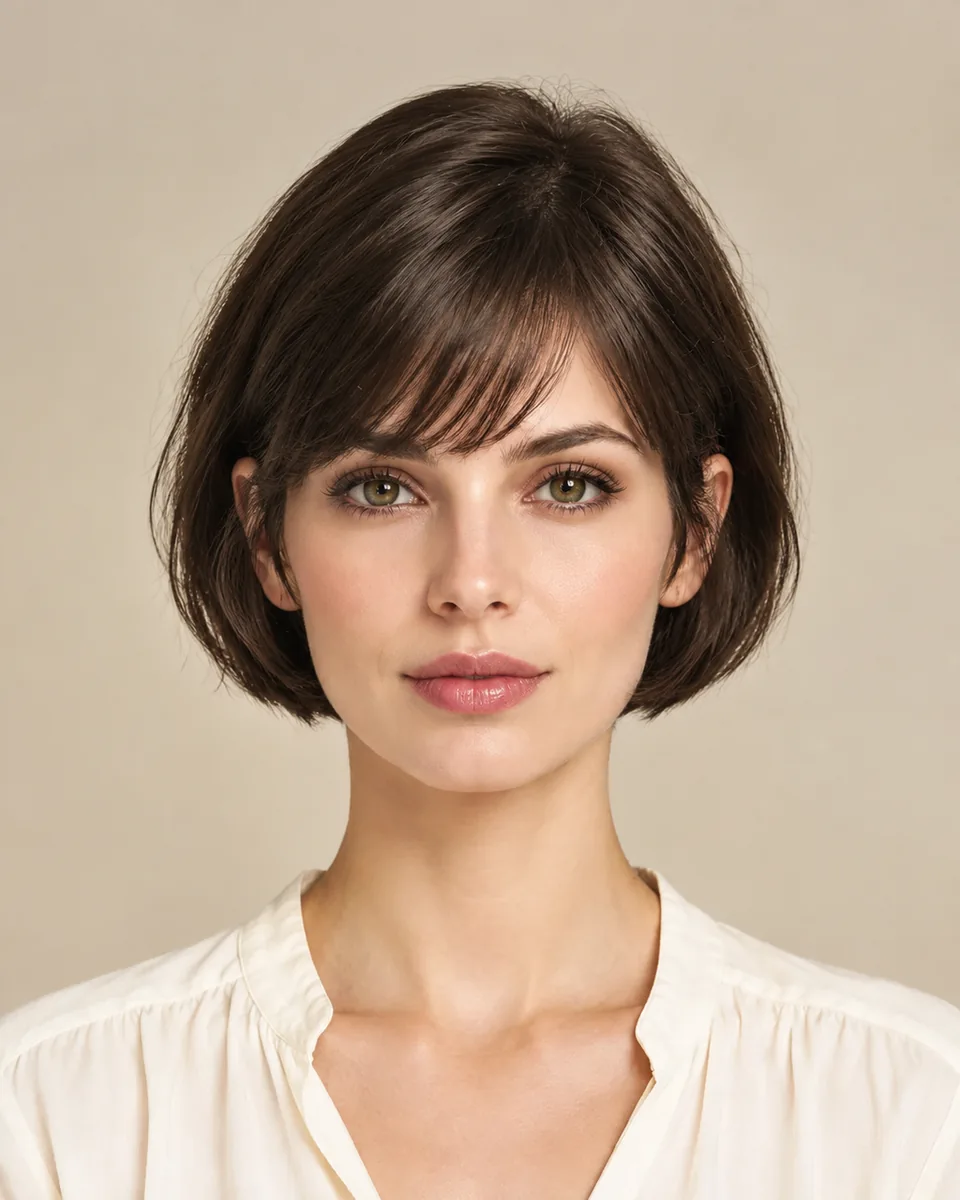
Bixie vs French bobShort hairFrench bob
4 min read
Quick answer
Short layers or a short perimeter?
Choose a bixie reference when you want the sides and nape shaped into shorter layers. Choose a French bob reference when you want a small bob silhouette around the jaw. Both can have texture and bangs; fringe alone does not distinguish them, and a very layered French bob can overlap with a longer bixie.
The most useful question is what happens behind the front section. Does the hair continue around the head as a bob edge, or break into shorter pieces near the ear and nape? That check is more reliable than a label, especially if both photos show a tousled finish.
See the Ear Coverage and Jaw-Level Edge
Visual comparison
Where does each short shape hold its length?
AI-generated editorial illustrations use the same model, outfit and comparable framing. They illustrate the shape difference, not a measured before-and-after result; use the same photo for your own two previews.
Bixie
The selected example has open ears, a short neckline and a longer side-swept front. Other bixies can leave more ear coverage.
Try BixieFrench bob
The side sections fall toward the jaw and keep a compact outline beneath a short fringe. Notice the edge as well as the bangs.
Try French bob
What is a bixie?
A bixie sits between pixie and bob proportions, with layers carrying much of the shape. It can be closer to a grown-out pixie or a cropped, textured bob. The longer front piece in this reference is one version, not a compulsory feature. The bixie vs pixie comparison isolates how much length a bixie keeps.
What is a French bob?
A French bob is a compact bob, usually around the jaw or chin, commonly paired with fringe and a soft finish. It may have subtle layers or a more substantial edge. L'Oréal's bob guide describes subtle layering in its French-bob example. The label therefore does not mean every strand has to be one length.
Decision guide
Follow the cut from crown to nape
| Feature | Selected bixie direction | Selected French-bob direction |
|---|---|---|
| Crown | Short, overlapping pieces are conspicuous | A compact bob surface with subtler internal movement |
| Sides | Shorter around the ears | Hanging sections retain a jaw-level outline |
| Nape | Cropped close to the neckline | Bob edge continues around the back |
| Fringe | Long diagonal sweep in this example | Short forward fringe in this example |
| What can overlap | Bangs, wave and a soft finish | Bangs, wave and internal layering |
| Main styling question | Will the short side and crown pieces sit as intended? | Will the perimeter and fringe sit at the intended dry length? |
Which Direction Fits Your Hair?
Fine hair: With a bixie, keep enough substance in the front and avoid removing so much hair at the crown that the part becomes more visible. With a French bob, a compact edge can look full, while an overly heavy fringe may borrow hair you wanted at the sides. Ask a stylist to balance the fringe section against the rest of the cut.
Thick hair: A bixie can take away hanging length, but its short layers may spring outward. A French bob keeps more hair around the jaw, where unwanted bulk can be conspicuous. The useful consultation is about where to remove weight while preserving the silhouette, rather than asking for thinning everywhere.
Straight hair makes layer transitions and perimeter irregularities easy to see. Wavy hair can soften either shape, but a bend landing at ear height creates a different width from one landing below the cheek. Curly hair can suit either direction with a texture-specific cut; decide the dry fringe and side lengths rather than expecting these illustrated proportions to transfer exactly.
Face Framing: Open Sides or a Frame Around the Jaw?
In the selected bixie, the long front piece crosses the forehead diagonally while the ears remain visible. The French-bob example places a fringe above the eyes and side panels near the jaw. Those are two different framing choices, but they can be mixed: a French bob can have a side part, and a bixie can have forward bangs.
To avoid choosing only the fringe, cover the top of each illustration and look at the cheeks, ears and jaw. Then compare the fringe separately. The broader bixie vs bob guide explains the same difference without focusing on the French-bob proportions.
Maintenance and Growing Toward a Bob
The bixie's short pieces can change direction as they grow, especially around the ear and nape. Keeping it compact may mean reshaping those areas while preserving the front length. Its shorter drying length does not guarantee a routine without styling.
A French bob shifts downward as its perimeter grows. If the fringe is short, it may need attention before the rest of the outline does. Growing out the fringe and growing out the bob are separate tasks; ask whether you want to keep one while extending the other. The French bob vs Italian bob comparison is useful if you like the bob structure but want more lower-edge weight.
Compare Both on Your Own Face
Open the bixie reference, upload a portrait with visible ears, neck and shoulders, and generate a preview. Then return to the French-bob reference and use the same portrait for a second generation. Compare ear coverage and the jaw edge before looking at fringe. Reference mode also carries the image's color direction, so choose references with comparable colors if you want to isolate shape.
The reference hairstyle tool can show how the two outlines might frame your face. It cannot predict how short layers respond to a cowlick, how curls shrink, or whether a particular fringe will separate in your daily routine. Use virtual hairstyle try-on if you want to explore a wider range after this decision.

Which Should You Choose?
Choose the bixie when you like a visibly layered short structure and are comfortable showing more of the ears or nape. Choose the French bob when the compact bob edge is what you want to keep, with fringe and texture adjusted around it. If the two reference photos look almost identical, describe the side length, nape and shortest layer to your stylist instead of arguing over the name.
FAQ
Is a French bob the same as a bixie?
No, although the names overlap at the margins. A French bob generally retains a compact bob outline; a bixie emphasizes pixie-like short layering within bob-like length. A very short layered bob can reasonably be described either way, so bring an image.
Must a French bob have bangs?
Bangs are common but do not define every French bob. You can keep the short perimeter and change the fringe or part. Judge the outline and forehead coverage as two choices.
Does a bixie always expose the ears?
No. Some cropped versions expose the ears, while longer bixies cover part of them or tuck behind them. The amount of side coverage is a useful detail to specify in a consultation.
Which cut is easier to grow out?
A French bob already has a more continuous edge to extend downward, while a bixie's shorter internal layers may need time to catch up. Fringe, texture and the exact nape shape can change the grow-out plan for either cut.
Can I preview the two styles without getting a haircut?
Yes. Use each reference with the same portrait to create two separate AI previews. They can help compare framing, but they do not establish how the cut will sit on your actual hair.