
Hairstyle comparison
French Bob vs Italian Bob: Where Should the Weight Sit?
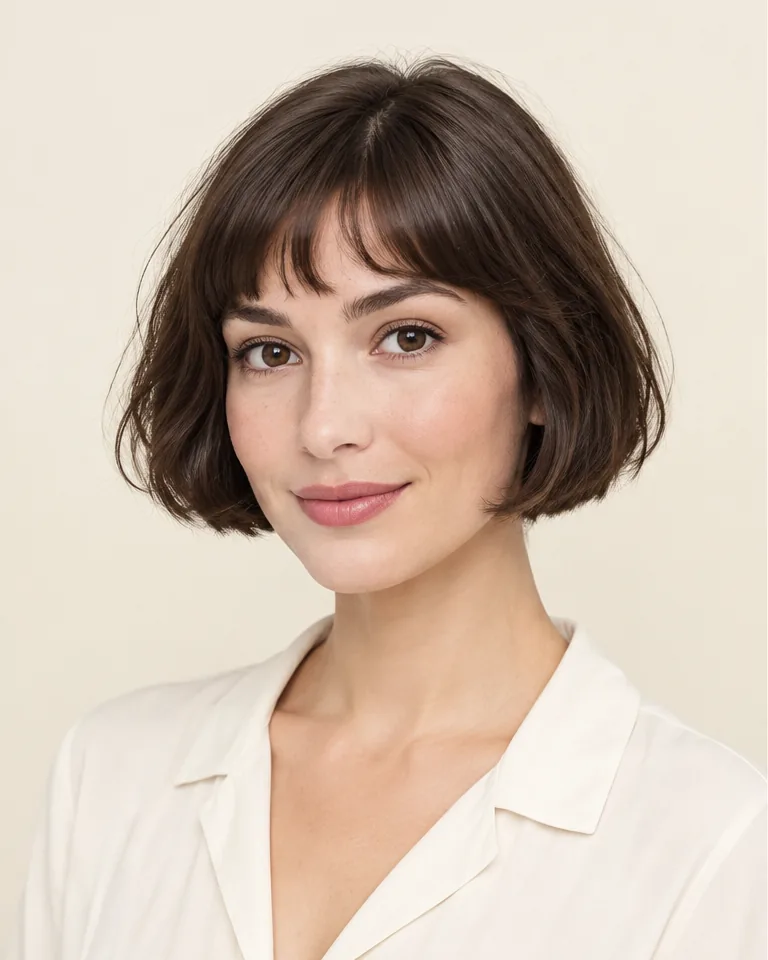
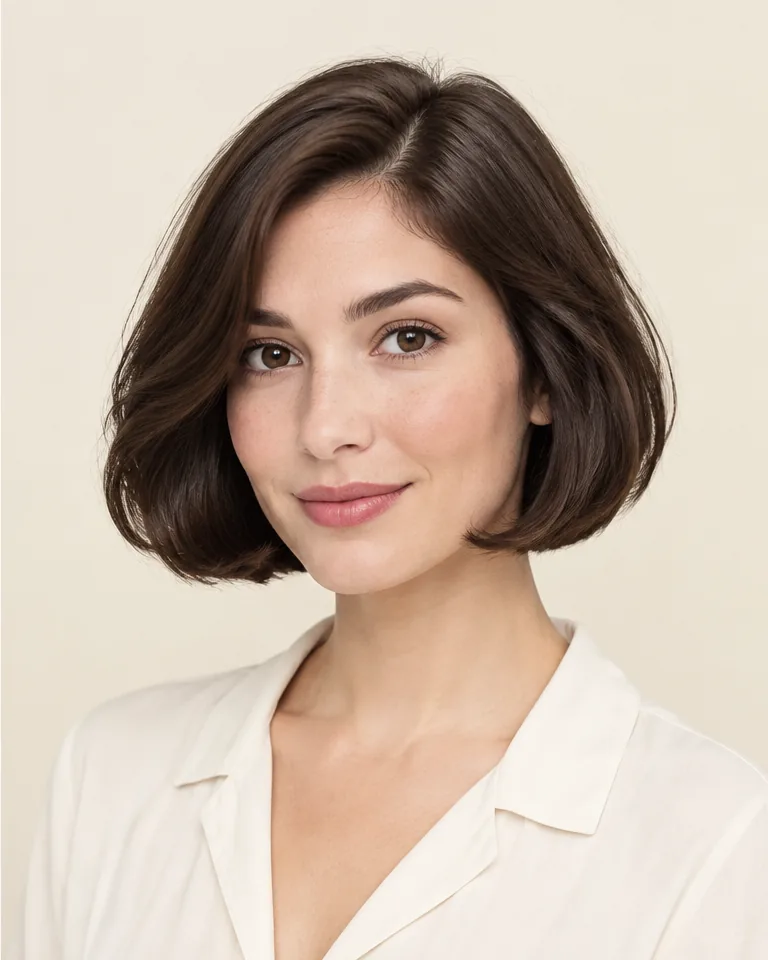
Compare a compact, often fringed bob with a fuller chin-level perimeter. Judge the endpoint and the fringe separately before choosing a reference.
French bobItalian bobHaircut decision
3 min read
Visual comparison
French bob vs Italian bob: read the outline
AI-generated editorial illustrations show the same model and framing. The catalog buttons open representative presets; generated previews can vary from these references.
Quick answer
The practical difference
A French bob usually sits near the jaw or above the chin, often with a fringe and a compact, slightly undone outline. An Italian bob usually keeps a fuller perimeter at the chin or below it. These are reference families, not standardized cutting specifications: agree on the endpoint, weight and fringe instead of relying on the country name.
Sam Villa's comparison of the two bobs describes the French version as shorter and more textured, and the Italian version as heavier through the ends. Our decision framework is to judge those features separately, because a full fringe can change the face frame as much as the bob length does.
French bob vs Italian bob: compare the endpoint first
Cover the fringe in each reference with your finger and look at where the sides finish. A higher endpoint exposes more neck and leaves the chin below the hairline; a lower, heavier perimeter keeps a fuller edge beside it. Then uncover the fringe. If that changes your preference, your decision may be forehead coverage rather than a different bob length.
Choose the bob endpoint and the fringe as two decisions. A country name cannot tell a stylist how much jaw or forehead you want visible.
The bob hairstyle guide covers the broader family. If you are keeping length constant and only deciding whether to remove interior weight, use blunt bob vs layered bob instead.
Decision guide
Choose by the change you want
| Decision | French bob | Italian bob |
|---|---|---|
| Visible outline | Compact jaw-level outline, often with full fringe | Fuller chin-level or slightly lower perimeter |
| You want more neck exposure | Use a higher endpoint as a reference | Ask whether the lower edge still clears the nape |
| You prefer weight at the bottom | Keep enough perimeter despite texture | Start with the full, substantial edge |
| You want forehead coverage | Check the fringe length and density separately | A fringe can be added; the name does not forbid it |
| You air-dry most days | Check whether short pieces and fringe settle naturally | Check whether the desired bend needs styling |
Density and texture change the same reference
For finer or lower-density hair, inspect the bottom edge before asking for airy texture. A French-inspired short shape can still keep a substantial perimeter; it does not require thinning the ends. An Italian-inspired finish can keep that edge full without promising extra hair or root lift. Ask which pieces would remain one length and which, if any, would be shortened.
For dense hair, a heavy chin-level outline may be the point of the Italian direction. If it becomes wider than you want, discuss where weight can be adjusted while retaining that edge. A French bob is not automatically lighter to style: short pieces can spring up, and a brow-length fringe adds a separate drying task. On waves or curls, agree on the endpoint in its usual dry state rather than copying the stretched length of a straight reference.
The upkeep question is about the finish
A polished bevel needs a different routine from an air-dried outline, even if both are called an Italian bob. Likewise, an undone French bob can still need fringe direction and a deliberate perimeter. Ask the stylist to show the finish you expect on an ordinary day, then explain whether you normally air-dry, diffuse or blow-dry. Neither name guarantees a low-maintenance haircut.
If your bob includes a full fringe, compare its density separately with wispy bangs vs blunt bangs. If you decide you want a much more broken-up layered outline instead of a bob perimeter, wolf cut vs shag explains that different choice.
Preview the bob without turning a preset into a promise
Use one clear portrait in Virtual Hairstyle Try-On, select the French and Italian catalog directions, and choose the same dark brown shade for each. The French preset includes full bangs, while the Italian preset has a different front frame, so this compares two complete directions rather than isolating length alone.
Look first at jaw exposure, then forehead coverage, then the width near the ends. AI can change unrelated details, so compare each generated face with the input before judging the hair. It cannot predict your density, shrinkage, nape growth pattern or the exact salon result. These page portraits are AI-generated editorial illustrations, not a measured try-on test.
Bring front and side references to the salon, marking the endpoint you want, whether the fringe is optional and whether the ends should curve in or sit more freely. The bob haircut try-on page offers more bob directions if neither of this pair fits.
Want suggestions beyond these two options?
Use the hairstyle recommendation tool to explore directions, then judge the visible frame on your own photo. A preview is a starting point for a stylist conversation.
Find hairstyle suggestions for my faceFAQ
Does a French bob have to have bangs?
No. A fringe is common in French-bob references, but it is not a compulsory rule. Show the bob endpoint and your preferred forehead coverage separately; the French preset illustrated here includes full bangs.
Is an Italian bob just a longer French bob?
Length is one difference, but weight matters too. Italian-bob references often keep a fuller, heavier perimeter, while French references often emphasize a compact, textured outline. Those features can be combined or adjusted.
Which bob is better for fine hair?
Neither name is enough to choose. Look for a perimeter that preserves the density you have, and ask how much interior texture would be removed. An AI image cannot establish how your own ends will behave after cutting.
Can either bob work with curly hair?
Both directions can be adapted to curls. Agree on where the cut should sit when dry and how much width you want at the sides; a straight-haired reference does not predict shrinkage or curl shape.
Which bob is easier to grow out?
The fringe and the starting endpoint determine the awkward stages more than the label does. A brow-length fringe grows toward the eyes, while a short bob changes its relationship to the jaw and nape. Discuss an intermediate shape rather than assuming either needs no reshaping.
Can I compare the two bobs on my own photo?
Yes. Choose the French and Italian presets using one portrait and the same shade. They represent complete directions with different front framing, so judge endpoint and fringe separately; the result is visual guidance rather than a salon prediction.