
Hairstyle comparison
Wolf Cut vs Shag: How Much Layer Contrast Do You Want?
Judge the jump from crown to ends, the fullness beside your face and the outline at the back. The labels overlap, so the reference details matter.
Wolf cutShagHaircut decision
4 min read
Visual comparison
Wolf cut vs Shag: read the outline
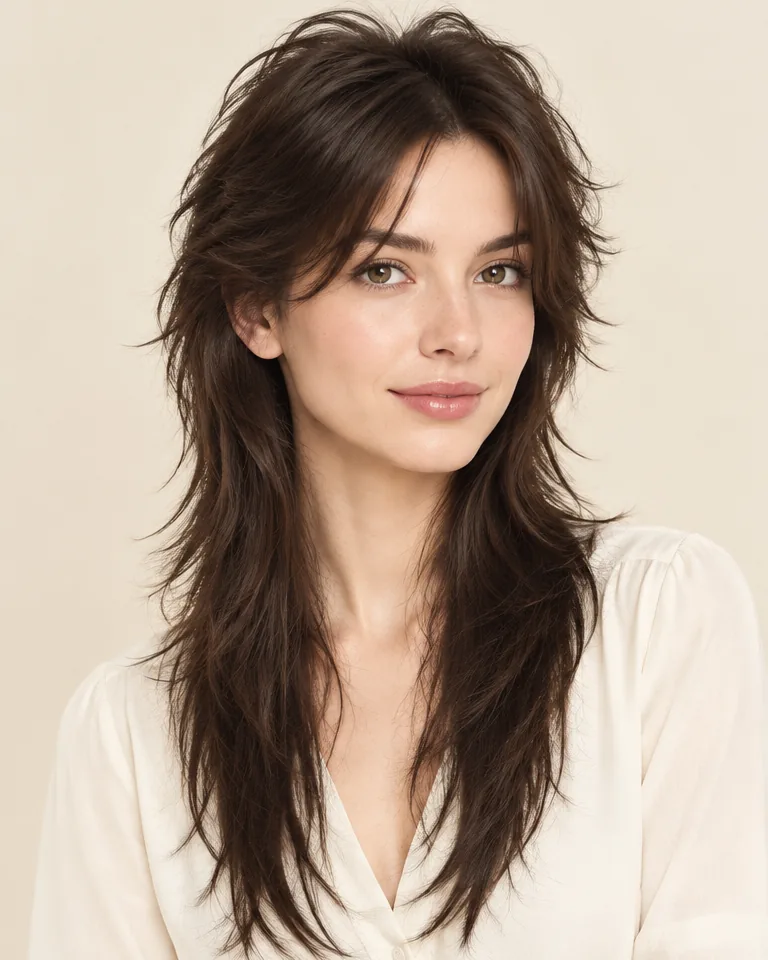
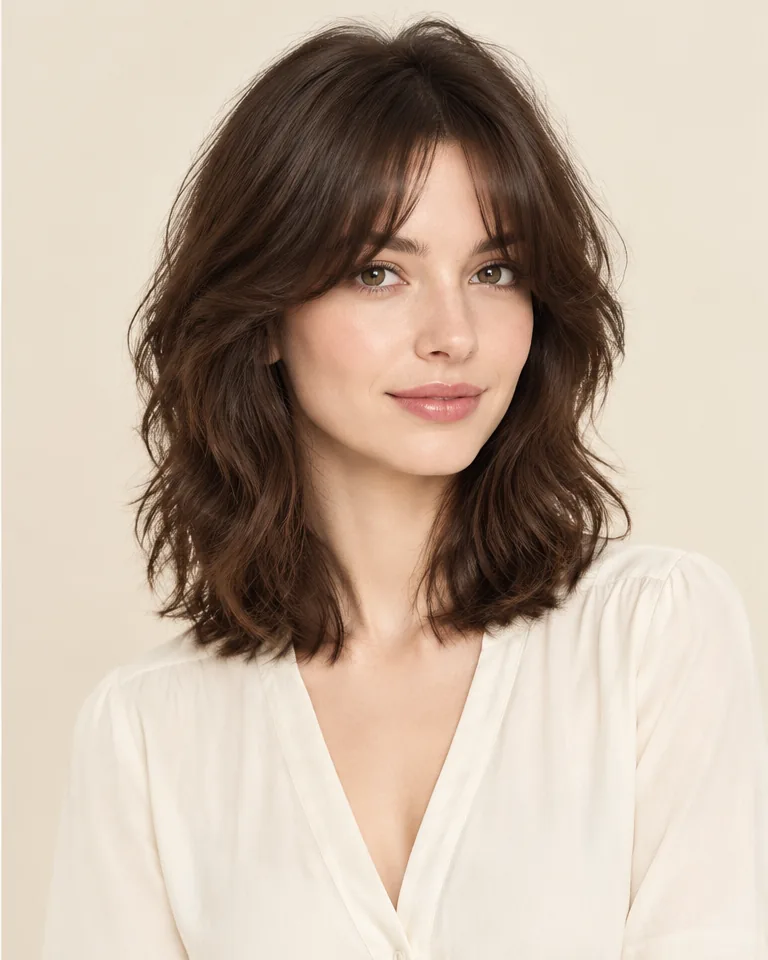
AI-generated editorial illustrations show the same model and framing. The catalog buttons open representative presets; generated previews can vary from these references. The illustrated shag also ends higher than the wolf cut, so these examples compare whole silhouettes rather than isolating layering at one length.
Quick answer
The practical difference
A wolf cut commonly uses a stronger jump from short, full crown layers to longer, narrower ends; a shag often connects its choppy layers more gradually. Both belong to the layered-hair family, and salon labels overlap. Compare the actual outline rather than treating them as mutually exclusive categories.
Davines' shag haircut guide distinguishes a wolf cut's shorter, more disconnected layers from a more subtly blended shag. We use that as a starting vocabulary, not a fixed rule: a soft wolf and a dramatic shag can resemble each other.
Wolf cut vs shag: look below the crown
The top is not enough to identify the difference. Both references may have lift and fringe. Trace the shape down past the ears: does it narrow sharply into a tail, or do the layers keep connecting around the sides? A wolf-inspired direction often makes that upper-to-lower contrast conspicuous. A shag can distribute movement across the silhouette without the same narrow finish.
The useful question is not how messy the hair looks. It is how far the short crown separates visually from the longer perimeter.
The editorial pair also differs in overall length; use it to read the layer connection, not as proof that one cut must be longer. A styling product, curl pattern or blowout can make either look more separated. Use front, side and back references when possible; a front-facing portrait can conceal the longer back section you actually want to discuss.
Decision guide
Choose by the change you want
| Decision | Wolf cut | Shag |
|---|---|---|
| Layer relationship | Stronger short-crown to long-end contrast | More connected layers around the outline |
| You want a narrow lower outline | Compare tapered lengths and visible separation | Check that the reference does not stay too full below the jaw |
| You want movement around the whole head | Check whether the crown dominates the shape | Compare a more connected face frame and perimeter |
| You need substantial long ends | Discuss how much density remains at the bottom | Keep the lower perimeter visible in your reference |
| You want to keep tying hair back | Ask which short pieces will escape | Check the actual shortest layers; the label cannot answer |
Preserve the ends you actually want to keep
With lower-density hair, a large gap between crown layers and the perimeter can leave less hair supporting the longest outline. If you want long ends that still look substantial, point that out before asking for dramatic separation. A softer shag direction may be worth comparing, but it is not automatically suitable just because it is the gentler label.
With dense hair, removing interior weight can change the side width and how layers fall. Tell the stylist where fullness is welcome and where you want less of it. With curls or waves, judge the crown and fringe in the usual dry texture. Shortening them may change the visible outline; an AI portrait cannot forecast that behavior.
For layer placement without a strong shag or wolf silhouette, the face-shape layers guide is the closer decision. For longer, sweeping face framing with a fuller perimeter, compare butterfly cut vs wolf cut.
Fringe does not settle the name
A wolf cut can have wispy, curtain or fuller bangs; so can a shag. The two catalog directions here differ in fringe as well as layering: wolf has wispy bangs and long shag has curtain bangs. Do not attribute every change around the eyes to the crown layers. If the fringe is the part you are unsure about, wispy bangs vs blunt bangs separates coverage from the overall haircut.
The same principle applies when comparing a shag to a short cut. A French bob vs Italian bob decision centers on a compact perimeter and end weight, rather than the crown-to-length contrast discussed here.
What to ask before choosing the stronger layers
Bring a reference for the outline and another showing the texture you normally wear. Mark the shortest crown piece, the amount of hair left over the ears and the length at the nape. Ask whether you can still make your usual ponytail and which pieces will fall out; the answer depends on those actual lengths.
Discuss how you dry the roots and front pieces. A photograph with lifted roots does not establish that either haircut will air-dry that way on you. Growing short crown pieces into a more connected shape also takes length; ask about intermediate reshaping if you may want a one-length outline later.
Preview the whole shape, then check the variables
Open Virtual Hairstyle Try-On, use one portrait and compare the wolf and long-shag presets in dark brown. Look at side width, the contrast below the crown and the amount of face left open. Because these presets include different fringes, they are representative directions rather than a controlled cutting experiment. The wolf cut try-on page provides additional lengths for a closer shortlist.
Inspect the generated face against your input and use the result as a visual conversation starter. It cannot measure your hair density or predict shrinkage, cowlicks, texture behavior or a stylist's technique. The paired portraits on this page are AI-generated editorial illustrations, not customer results or a test of product accuracy.
Want suggestions beyond these two options?
Use the hairstyle recommendation tool to explore directions, then judge the visible frame on your own photo. A preview is a starting point for a stylist conversation.
Find hairstyle suggestions for my faceFAQ
Are a wolf cut and a shag the same haircut?
They overlap, but the names often suggest different degrees of contrast. A wolf direction commonly exaggerates the difference between a short crown and longer tapered ends; a shag may connect the layers more gradually. A reference photo is more precise than either label.
Is a wolf cut always more layered than a shag?
No. Layer count is not a reliable definition. Look at the shortest crown length, how the layers connect at the sides and the weight left in the lower perimeter; a dramatic shag can have strong separation too.
Do I need bangs for a shag or wolf cut?
No single fringe is compulsory. Many references include bangs, but their opening, length and density can be chosen separately. The example presets here have wispy and curtain fringes, so they compare complete directions.
Which is better for thin hair?
Neither is an automatic answer. Strong separation may leave the longest ends looking sparse, so discuss how much perimeter you want to preserve. The appropriate layer placement depends on your existing density and texture, which a preview cannot assess.
Can I wear either cut without heat styling?
That depends on your natural texture, growth pattern and desired finish. Ask to see a reference with a similar unstyled texture and explain your normal drying routine. A photograph of lifted roots is not a guarantee of an air-dried result.
Can I preview a wolf cut and a shag on my photo?
Yes. Compare representative catalog presets with one portrait and the same shade. Check the fringe separately because the presets differ there too, and treat the previews as ideas rather than predictions of your real layers or styling needs.