
Should I get a bob?
Should I Get a Bob? What You're Committing To
A bob is not one haircut you either suit or don't. It is three commitments in one appointment: the length you will live with, the weight change at short lengths, and the mornings you are signing up for. Decide those three before you sit in the chair.
BobHairstyle decisionBefore you cut
7 min read
Quick answer
Three commitments, one haircut
A bob asks you to commit to three things at once: a length you will actually live with, a change in how much weight your hair carries at that length, and a morning routine that keeps the shape looking intentional. Two of the three can be previewed on one photo — the length directly, the weight roughly. The third, your routine, is a question only you can answer honestly.
- Previewable
- Length and, roughly, weight
- Not previewable
- The morning routine
- First length to try
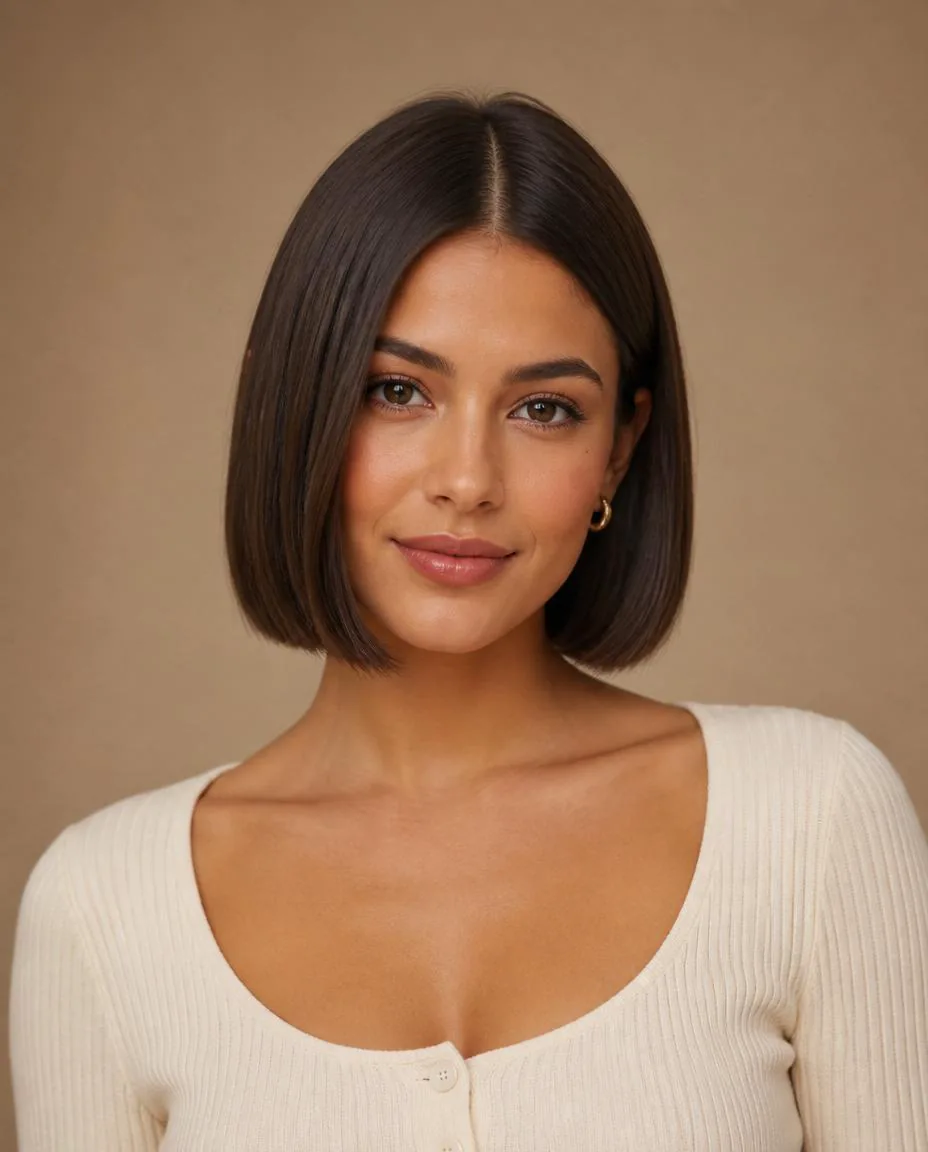
- Chin-length blunt bob
Type should I get a bob into a search bar and you will find plenty of yes-or-no quizzes. A bob is not one haircut, though — it is a family of lengths, and each length asks something different from your routine. Settle the three commitments below and the decision mostly makes itself.
Should I Get a Bob? Settle Three Commitments First
A bob changes the outline of your head, not just the length of your hair. It moves visual weight upward, exposes your neck and shoulders, and depends on a clean endpoint staying clean. That is why a bob that looks effortless on someone else can feel like work on you: the cut is not the commitment — keeping the cut is.
Three things arrive bundled in the decision:
- Length — where the ends stop: chin, just below the jaw, or collarbone.
- Weight — what your density and texture do once the hair is short.
- Routine — the styling, trims, and grow-out you are signing up for.
The first one you can preview directly, the second you can estimate, and the third only you can judge. Work in that order.
The Length: Where the Line Ends Decides the Read
Length is the variable you can judge on a photo, and it changes more than the number of inches. A bob that ends at the widest point of your cheek or jaw adds visual width there. A line that lands just below the jaw lets the eye travel downward instead. A collarbone-length lob keeps the bob silhouette but leaves enough hair to tuck, wave, or pull back.
In a straight-on photo, look at three landmarks — chin, jaw, collarbone — and notice where a cut line would sit relative to them. That single check tells you more than any style name.
There is also a trap worth naming: a cut that lands between two flattering endpoints can look like neither. Going a little shorter "to be safe" sometimes produces a length that does not frame anything in particular. If you are moving from long hair, it is better to pick an endpoint that genuinely works and commit to it than to stop halfway to the length you actually want. The bob vs lob comparison walks through the two most common endpoints side by side.
Three common endpoints
Length is the variable here, but the face under the hair changes the read — which is why the real test happens on your own photo.
Chin-length bob
A clean line near the chin. The most visible change, and the least forgiving of a skipped morning.
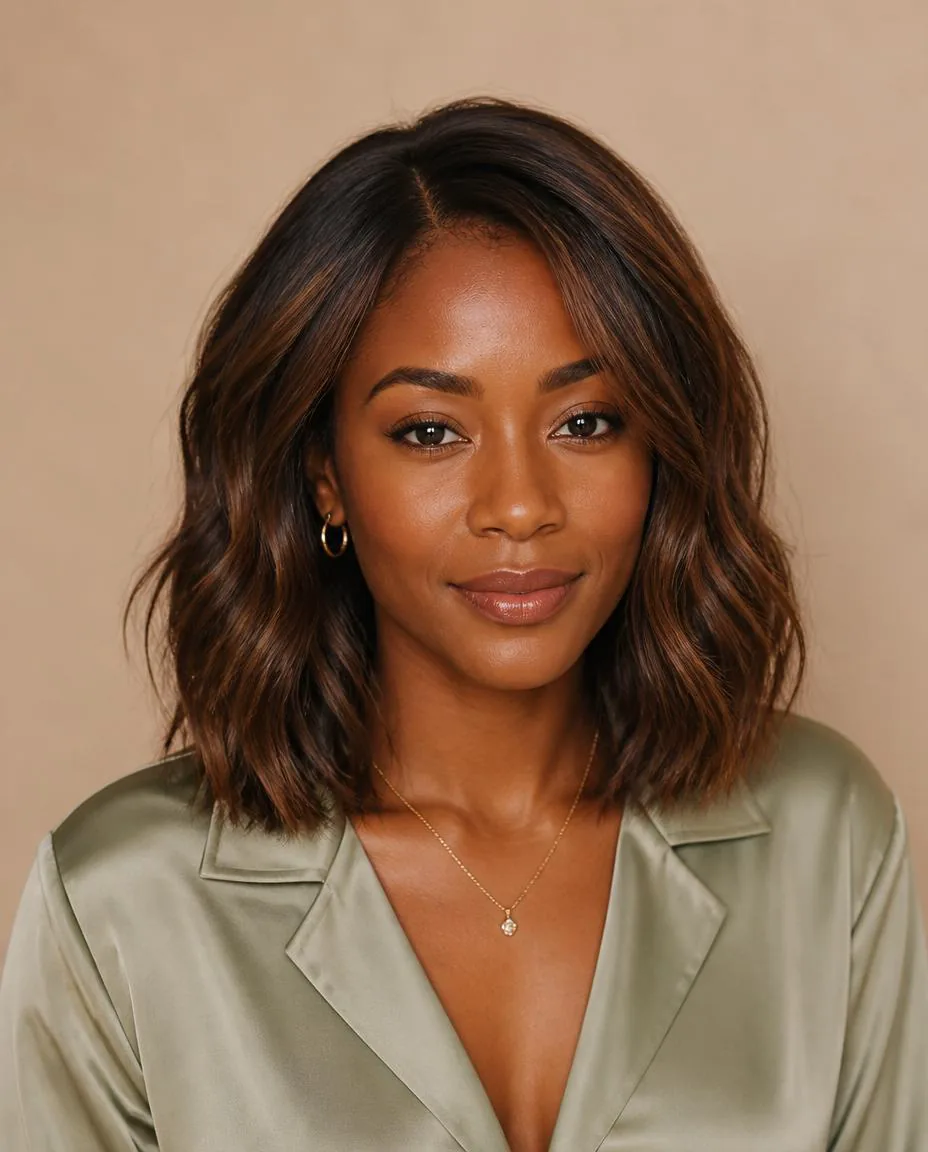
Collarbone lob
The bob silhouette with more length. Keeps styling options and grows out more quietly.
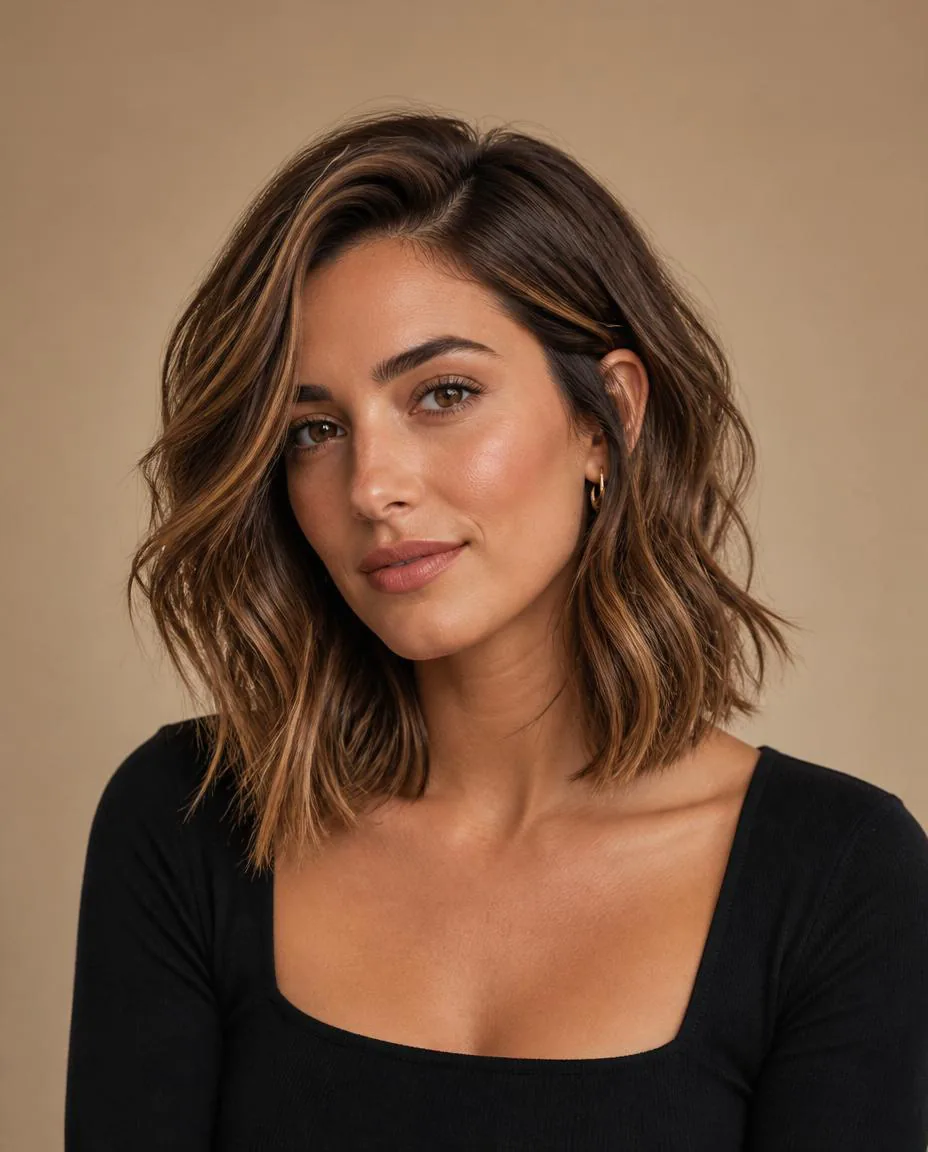
Textured long bob
An in-between length with movement. Breaks the outline so the endpoint reads less severe.
The Weight: What Your Density Does at Short Lengths
The same chin-length bob behaves differently on fine, medium, and thick hair, and that difference shows up in the outline.
- Fine hair often gains the illusion of density from a blunt line, because the ends gather into one edge instead of tapering away. Push the layering too far, though, and the same cut can look thin at the bottom.
- Thick hair usually needs weight removed before it behaves. Without internal layers or a graduated shape, a short bob can expand into a triangle and sit away from the neck.
- Wavy hair breaks the perimeter into movement, which softens a blunt line. It also means the dry length is shorter than the cut length, especially in humidity.
- Curly hair is where the cut and the finished shape differ most: shrinkage can pull a chin-length bob up toward the jaw, and side volume changes the silhouette more than length does. Curly cuts are usually shaped dry, in the curl pattern you actually wear.
This is the commitment you can estimate but not measure from a screen. A preview shows the direction; your stylist decides how much weight to leave, where to place internal layers, and how the cut will behave on your density. The curly hairstyles guide covers how curl size and shrinkage change a shape before you commit to a length.
The Routine: What Mornings Look Like After the Chop
The cut is the easy part. The routine is where bob decisions are won or lost.
A blunt chin-length bob is the least forgiving shape to own. It shows every skipped blow-dry, and the perimeter only looks intentional when the ends sit where they were cut. A textured bob or a collarbone lob tolerates air-drying, a rough blow-dry, or a quick tuck behind the ears.
Two questions do most of the deciding:
- What do you actually do on a weekday morning now? If the honest answer is "wash and go," choose the version of a bob that survives washing and going. If you already blow-dry or flat-iron, a cleaner endpoint will not change your routine much.
- What styles would you lose? A chin-length bob usually gives up ponytails, topknots, and clips. If you live in a bun at the gym or at home, that is a real cost, and a lob is the version that keeps those options.
One more thing that rarely makes the pros-and-cons lists: a big chop gets attention. Comments, questions, and the occasional "you cut your hair!" — some people enjoy it, and some find it exhausting. If you would rather not be the topic of the week, a lob reads as a change without announcing itself.
The Grow-Out: Where Most Bob Regret Actually Starts
Hair grows roughly a centimeter a month, and a bob's identity depends on where the ends sit. That combination makes grow-out the most common source of regret — not the first week, which usually feels exciting, but the second and third months.
- The shape moves quickly. A chin-length bob that felt precise can start to feel shapeless in about six to eight weeks, and a very blunt line shows regrowth sooner than that.
- Layers grow out into shapes, not lengths. A layered bob tends to lose its layers first, leaving a heavier, wider outline that is neither the cut you asked for nor the length you want.
- Trims are part of the deal. Keeping the shape usually means a salon visit every six to eight weeks, which is more often than long hair needs.
If that schedule does not appeal to you, the collarbone lob is the version that grows out quietly. If it does appeal, a shorter, sharper bob is the version that rewards the upkeep.
There is one piece of conventional wisdom worth questioning: the idea that cutting in stages is automatically safer. Staging a long-to-short change can work, but a staged cut can also leave you in a halfway shape that flatters less than the length you actually wanted. The safer variable to control is the endpoint, not the number of appointments.
Test the Decision on One Photo Before You Book
This is the part of the decision you can do today, without scissors.
- Take one straight-on portrait. Face the camera, keep your chin, neck, and shoulders visible, and use even light.
- Compare lengths in a fixed order. Start with your current length, then a collarbone lob, then a chin-length bob. Keep the color and texture the same so length is the only variable.
- Judge the line, not the look. For each result, ask: where do the ends sit relative to your chin, jaw, and collarbone? Does the shorter version sharpen something, or widen something?
- Reject directions, then bring the winner to a stylist. A preview is good at showing you what you do not want. Use the result as a reference image and discuss density, layering, and grow-out in person.
The comparison method guide covers how to keep the test fair, and the online try-on workflow takes it from photo prep to the notes you bring to the salon.
Decision guide
Where to start, by hair type and routine
Match the first length you preview to what your hair and your mornings can actually handle.
| Your hair and routine | Preview this first | Why it fits |
|---|---|---|
| Fine or thin hair | Blunt chin-length bob | The ends gather into one line, which reads as more density |
| Thick or heavy hair | Graduated bob with internal layers | Weight removal keeps the outline close to the neck |
| Wavy or curly texture | Longer layered bob | Shrinkage and side volume move the cut up |
| You air-dry and go | Textured bob or collarbone lob | The outline survives without daily styling |
| You already blow-dry | Chin-length blunt bob | A clean line rewards the routine you have |
| You live in a ponytail | Collarbone lob | Keeps enough length to tie back |
What the Photo Cannot Answer
A photo preview narrows the choice. It cannot:
- measure your density or show how much weight the cut will carry;
- show shrinkage, frizz, or how your texture behaves on day four;
- tell you how the cut feels when you cannot tie it back;
- promise that a stylist will execute the reference exactly;
- predict whether you will enjoy the attention a big change brings.
Use it to rule a length out, not to sign off on the result. The final call belongs to you and your stylist.
Put both lengths on your own portrait
Keep one portrait and compare a blunt chin-length bob with a collarbone lob in the same color before you book the appointment.
Preview bob lengths on my photoFAQ
Should I get a bob if I have fine hair?
Fine hair often looks denser in a bob because a blunt line gathers the ends into one edge instead of letting them taper. The risk is the opposite direction: too much layering or too long a bob can leave the ends looking thin. Preview a blunt chin-length version and a collarbone version on your photo, then let a stylist decide how much internal layering your density supports.
Will a bob make my face look rounder?
The label does not decide that — the endpoint and width do. A line that stops at the widest point of your cheek or jaw adds visual width there, while a cut that lands below the jaw lets the eye travel down. Compare both lengths on your own photo instead of judging from a rule about face shapes.
How often does a bob need to be trimmed?
Most bobs hold their shape with a trim every six to eight weeks. A very blunt chin-length line can start to look grown out sooner than that, so the shorter and cleaner the cut, the more the calendar matters.
What is the difference between a chin-length bob and a lob?
A bob usually ends around the chin or jaw; a lob is the longer version of the same family, landing near the shoulder or collarbone. The difference is where the visual weight sits and how many styling options you keep. The bob vs lob comparison covers both lengths in detail.
Can I try a bob on my photo before cutting it?
Yes. Use one straight-on portrait and compare your current length, a collarbone lob, and a chin-length bob in the same color. The result is a direction to discuss with your stylist, not a prediction of the finished cut.
Why do people regret getting a bob?
Usually because of the routine or the grow-out, not the first week. Daily styling, the loss of ponytails and buns, and the shape a layered bob takes on as it grows are the parts that surprise people. Checking the three commitments on this page before you cut is the cheapest way to avoid that surprise.