Hair length decision guide
Best Hair Length for Your Face Shape: Compare Short, Medium and Long
The best hair length for your face shape depends on the line you want around your chin, jaw and shoulders. Short hair reveals more of that frame; medium hair puts an edge near the neck or collarbone; long hair carries the outline lower. The shortest front layer can matter more than the back length.
Hair lengthShort vs long hairFace shapeHaircut decisions
6 min read
Quick answer
Short, medium and long are categories, not suitability scores
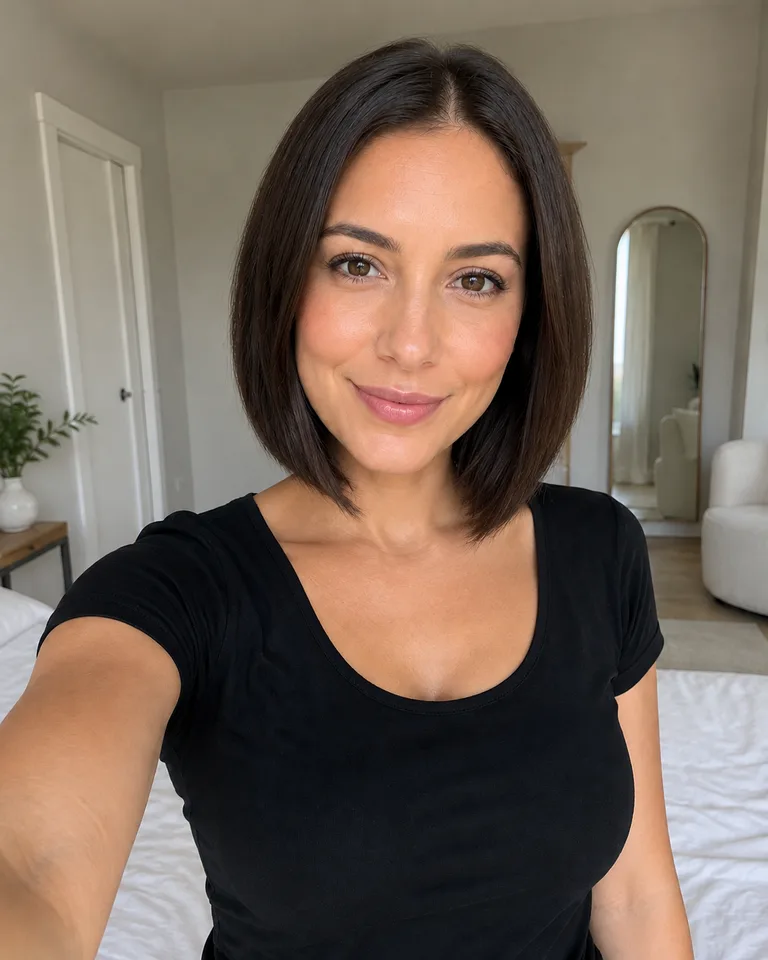
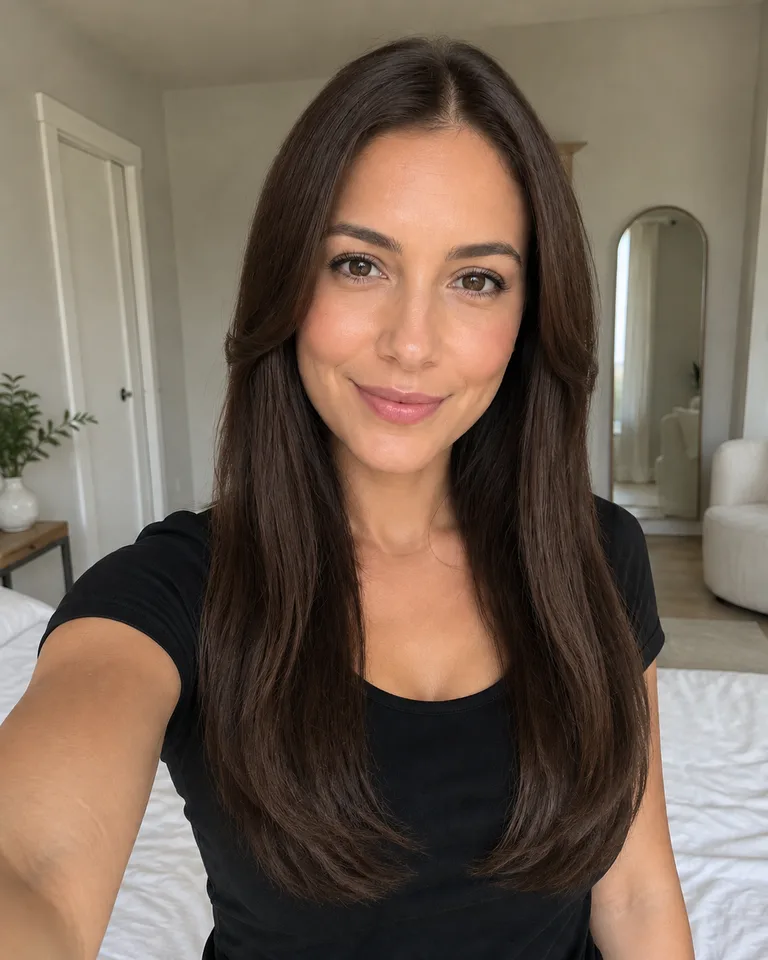
For a useful first comparison, put an edge near the jaw, another near the collarbone and a third below the shoulders. Keep the photo, color and texture as similar as possible. Then compare the shortest front piece: long hair with a cheekbone-length frame can read differently from long hair that hangs in one uninterrupted line.
- Length variable
- Where the outer ends stop
- Separate variable
- Where the front pieces begin and end
- Practical veto
- Whether you need the hair to tie back
You do not need to decide your exact face-shape label first. Start with the edge you want to see and the length you can live with. The face-shape reading guide can help if you want a name for the proportions, but no category requires one haircut length.
Two People Can Both Have Long Hair and Very Different Frames
The back perimeter tells you how much length remains. It does not tell you how much forehead shows, where the first layer bends or how wide the hair sits beside the cheeks. A long cut with short front pieces can offer a compact face frame while preserving the back. A one-length lob can put a much stronger horizontal edge next to the jaw.
That distinction resolves a common false choice: you may want a shorter front frame, rather than shorter hair everywhere. Before asking for a large chop, point to both the desired perimeter and the shortest face-framing piece in a reference. Ask a stylist what happens to each when the hair is dry and worn without the reference's styling.
A Face-Shape Matrix for Picking the First Length to Test
These are comparison ideas for stated goals, not restrictions. Use the linked face-shape guide if the outline matches your own, and keep the current length as your control.
Decision guide
Which endpoint answers your actual question?
Choose the row by the effect you want. Every face shape can wear short, medium or long hair; the details below change what each length emphasizes.
| Visible outline | Short comparison | Medium comparison | Long comparison |
|---|---|---|---|
| Round: you want less width beside the cheeks | A crop with an open side outline; check crown height separately | A lob ending below the jaw; compare where its wave widens | Longer front pieces that continue below the cheeks; watch side volume |
| Oval: you want to choose a feature to emphasize | A bob edge near the jaw versus an open crop | A collarbone edge that leaves the jaw visible | A longer perimeter with or without shorter front pieces |
| Square: you want a softer or stronger jaw frame | Textured edges versus a deliberate blunt jaw line | A lob with movement below the jaw corner | Front layers that pass the jaw rather than turn outward on it |
| Heart: you want more lower-face fullness | A chin-length bob with a visible lower edge | Waves that widen beside the jaw or neck | Movement starting near the lower face rather than only at the ends |
| Diamond: you want a different cheekbone frame | A bob with a chosen fringe and endpoint | A lob whose movement sits near the jaw rather than at the cheekbones | Long layers whose shortest front pieces stop at the cheekbones versus the jaw |
| Long: you want a less continuous vertical outline | Side fullness compared with a tall, narrow crop | A lob with lateral movement; assess forehead coverage separately | Keep the back length but test a shorter front frame or fringe |
| Triangle: you want more upper-side emphasis | A crop retaining temple fullness rather than only crown height | A lob whose heaviest edge sits below the jaw | Longer layers with upper-side movement and a quieter lower perimeter |
The round-face guide, oval-face guide and square-face guide show why the same endpoint can support different goals. For tapering outlines, compare heart, diamond and triangle rather than treating them as interchangeable. A long-face guide adds forehead coverage and side width to the length decision.
Short Hair vs Long Hair: What Changes in Daily Use?
Short hair reveals more; it does not automatically require less work
A crop exposes the neck and much of the lower face. A bob puts a distinct line near them. Both can be useful when you want a clear shape, but less drying length does not guarantee less styling: a strong cowlick, an outward turn at the nape or a fringe can still need attention. If you rely on tying everything back, check the shortest pieces and your usual tie position before cutting.
The short-hair preview tool is useful once you have a specific crop or bob direction. Compare the actual outline rather than accepting or rejecting all short hair from a single generated style.
Medium hair is a separate choice, not a compulsory halfway step
A collarbone lob can keep more tucking or tying options than a jaw-length bob, depending on the layers. It can also bend outward against the shoulders. That contact changes the dry silhouette, so ask whether the reference is tucked, blow-dried under or naturally wavy. The bob versus lob comparison helps when these two edges are the decision.
Long hair preserves options but can leave the front unchanged
Keeping length below the shoulders can preserve styling options you already use. It does not require keeping all the front pieces equally long. If your concern is that the frame feels heavy or vertical, compare front layers or a different part before assuming the answer is a shorter perimeter. Use the long-hair preview tool when you have chosen a specific long direction.
The two hero images come from one recorded recommendation run. They make the change in endpoint visible, but the texture and front pieces also differ. Use them as illustrations of the checks, not proof that length alone caused a result.
If changing the forehead opening matters more than the back length, compare bang shapes for your face. Fringe width and the outer corners can change the frame without shortening the rest of the cut.
For the shortest front piece and retained bottom fullness, use the layer placement guide. A shorter face frame and a shorter back perimeter are separate salon requests.
What Dry Texture Can Change About the Same Length
Judge a cut at the length you will actually wear it. A wet or stretched curl can sit higher when dry. A wave that hits the shoulders can turn outward. Fine ends may look sparse after extensive layering; dense ends can create a larger lower outline than the reference suggests.
John Frieda's guidance on thick, frizzy haircuts also distinguishes the dry endpoint from how the hair will be styled. The practical takeaway here is to show your stylist your usual dry texture along with the haircut reference. A face-shape matrix cannot answer those physical questions.
A Three-Preview Test You Can Explain to a Stylist
- Keep one front-facing photo with the jaw, neck and shoulders visible. Start by writing down what you want to retain, such as an open forehead or enough length for a ponytail.
- Compare a jaw-level edge, a collarbone edge and a below-shoulder outline. Choose similar color and texture when possible. If those also change, record them as extra variables rather than crediting length alone.
- For each preview, note the endpoint, the widest part of the hair and the shortest front piece. Check that your generated face still resembles the input before judging the hair.
- Eliminate an unwanted outline, then bring two alternatives to a stylist. Ask about dry length, density, growth patterns and tying back before deciding.
Still unsure which length to start with?
Get four AI hairstyle suggestions from your selfie, each with a framing reason. Choose the ones you want to preview. The shortlist is not a dedicated short-versus-long test; use the preset hairstyle tool when you need a specific length.
Find the best hairstyle for my faceWhat a Preview Cannot Decide About Your Cut
An AI image can help compare visible length direction. It cannot establish real density, predict shrinkage or show what happens after exercise, air-drying or a week of styling. Even when you request a steady color, inspect for unintended changes. The image is a reference for a discussion, not an exact haircut specification.
If the length you like is a bob, deciding whether to get a bob adds maintenance and grow-out questions. If you like your length but want another frame, try a different part before deciding the whole perimeter must change.
FAQ
What hair length is best for my face shape?
Start with where you want the ends to land relative to your jaw, neck and shoulders. Then check where the front layers sit and how much width the texture adds. Your face shape suggests variables to compare; it does not assign one correct length.
Does short hair suit a round face?
It can. A crop with an open side outline and a bob with a strong cheek-level edge create different frames even though both are short. Compare an individual cut on your own photo, including where it becomes widest, rather than treating short hair as one shape.
Should a long face have short or long hair?
Either can work. If your goal is a less elongated outline, compare side width, crown height and forehead coverage as well as length. Long hair with a shorter front frame may answer that goal without shortening the back perimeter.
Is shoulder-length hair always the safest choice?
No. Shoulder contact can turn the ends outward, and short front layers may still prevent tying back. Choose medium length because you like its endpoint and practical options, not because it is assumed to be a universally flattering compromise.
Can I test short and long hair without cutting it?
Yes. Use one current portrait to preview specific catalog directions in Virtual Hairstyle Try-On. Keep color and texture similar where possible. AI hairstyle recommendations can provide a starting shortlist, but they do not guarantee that every length will appear.
Can I keep long hair but make the face frame shorter?
Yes. Front layers or fringe can change what surrounds the face while leaving the back longer. Ask a stylist to distinguish the shortest front piece from the overall perimeter, and check what remains long enough to tuck or tie.