
Triangle and pear face guide
Best Hairstyles for Triangle Faces: Frame the Temples and Jaw
A triangle or pear-shaped face reads wider at the jaw than at the forehead. If you want more emphasis around the upper face, compare temple fullness and a diagonal fringe before changing your overall length. Keeping your jaw visible is also a valid choice.
Triangle facePear faceFace framingSide bangs
5 min read
Quick answer
A wider jaw calls for a different comparison than a wider forehead
Hairstyles for a triangle or pear face can place fullness near the temples, carry the endpoint below the jaw, or deliberately reveal the jaw in a textured crop. Choose the emphasis you want before choosing a cut. Triangle here means a narrower forehead and wider jaw; an inverted triangle describes the opposite outline.
- Upper frame
- Compare temple width separately from crown height
- Lower frame
- Decide whether to emphasize or quiet the jaw-level edge
Triangle Is Not an Inverted Triangle
For a triangle face, compare a side-swept fringe, a layered lob or a textured crop when you want more emphasis near the temples and less concentration at the jaw. The useful question is where the hair becomes widest, not whether a cut is on an approved list.
In this guide, triangle means a narrower forehead with a wider jaw; pear describes the same general direction. An inverted triangle is the opposite: a wider forehead tapering toward a narrower chin, often grouped with a heart-shaped face. Advice intended for one can put fullness in the wrong place for the other.
A hairstylist's explanation of the pear outline uses temple volume and off-center framing as styling options. Treat that as a way to compare silhouettes, not a requirement to make every face appear oval.
Unsure whether your outline is triangle, square or something between?
You can start without settling the label. Upload one clear selfie for four catalog hairstyle suggestions and a face-framing reason for each, then choose which looks to preview.
Find My Best HairstyleRead Three Widths Before Picking a Haircut
Use an evenly lit, front-facing photo with your hair away from your forehead and jaw. Compare the visible width at your forehead, cheekbones and jaw. A camera held close or below the chin can change the apparent proportions, so do not assign a permanent label from one unusual angle.
| Outline you notice | What it means for this guide | Useful next step |
|---|---|---|
| Jaw looks wider than forehead | Triangle or pear framing may be relevant | Compare upper-side fullness with a quieter lower outline |
| Forehead and jaw look similarly broad, with angular corners | Square framing may be more relevant | Read the square-face guide for endpoint and jaw emphasis |
| Forehead looks wider than chin | Heart or inverted-triangle framing may be more relevant | Compare lower-face fullness instead |
| The reading changes with every picture | The label is uncertain | Keep one neutral photo and compare hairstyle variables directly |
Face shape does not decide your density, curl behavior or preferences. You can also choose a strong bob edge specifically because you like how it emphasizes your jaw. This guide assumes a goal only when it names one.
A Fringe Changes Coverage; Temple Fullness Changes the Silhouette
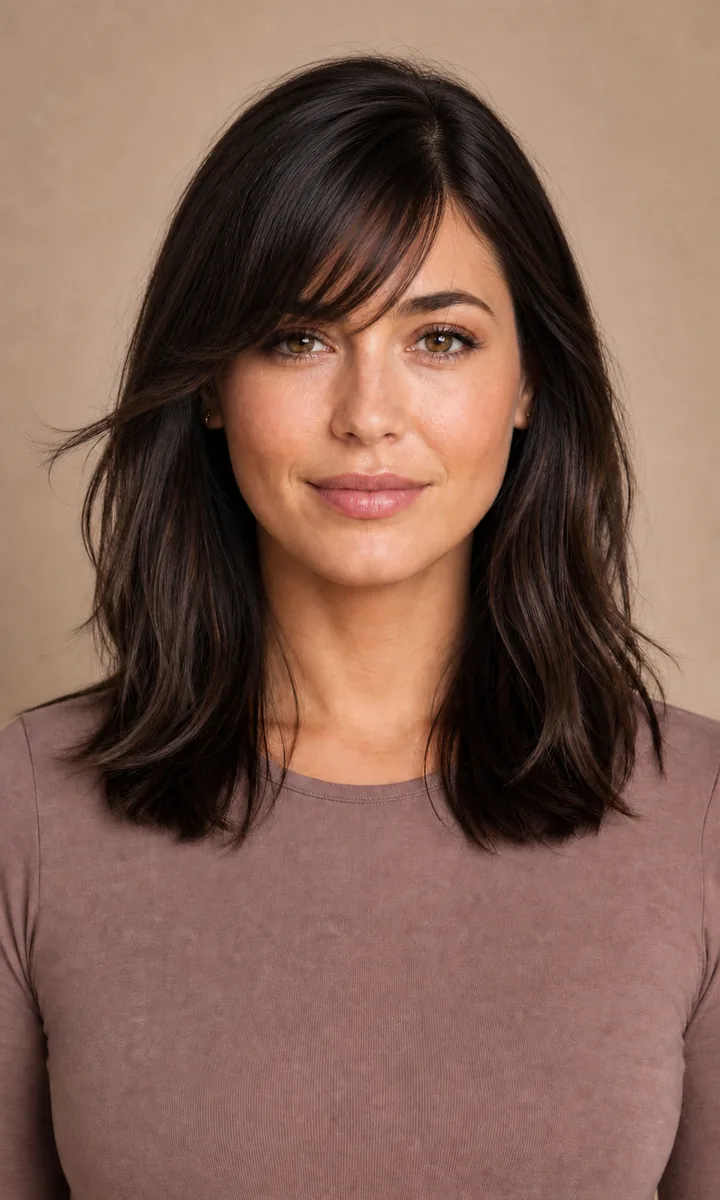
A diagonal fringe can move attention across the forehead. That does not automatically create width at the sides of the head. Check both the front edge and the area above the ears: a sweeping fringe with very flat sides can leave the upper silhouette narrow.
Visual comparison
Compare the front edge before cutting length
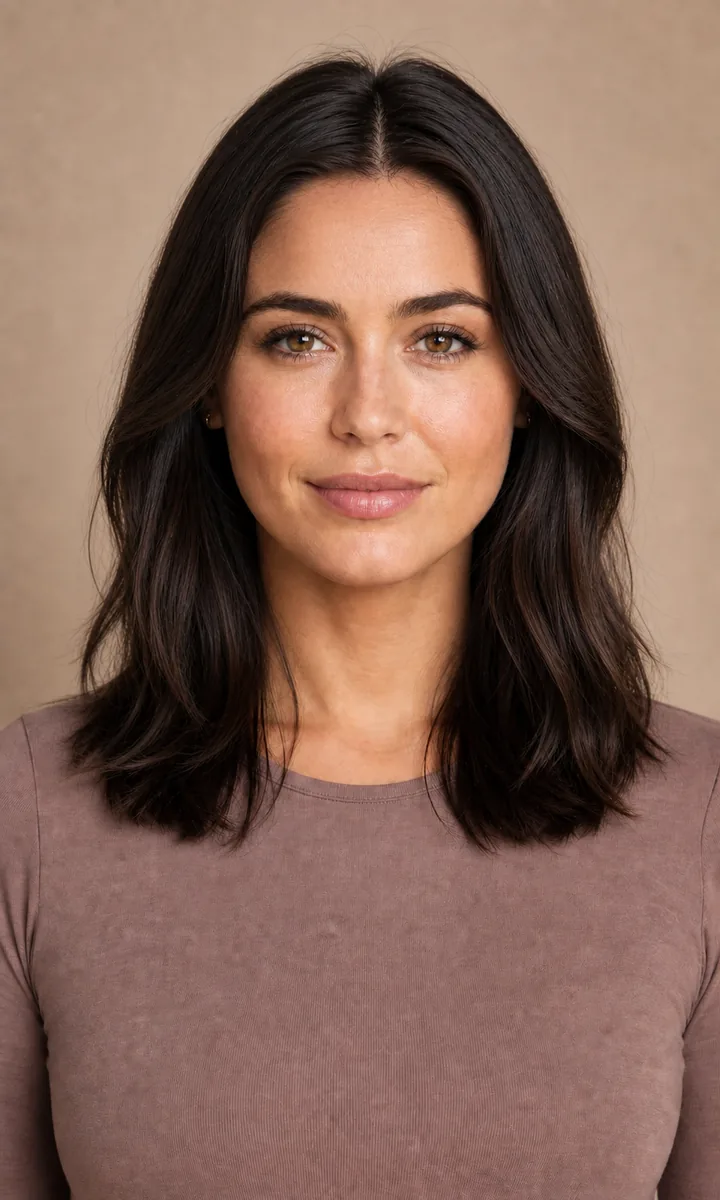
These existing images show the same illustration model with similar shoulder-length waves. Fringe and some front texture differ; they are hairstyle references, not proof of the model's face shape.
Open center
The forehead stays visible and the opening is fairly symmetric. Check whether the sides offer the amount of upper-face emphasis you want.
Diagonal fringe
A side-swept edge crosses the forehead. Compare its direction and the fullness around the temples separately from the waves below.
A full fringe is not forbidden. Its width, density and corner length matter: a dense narrow block can make the forehead opening feel smaller, while a softer transition into the sides changes the frame differently. For a first experiment, switching the part is reversible; cutting a fringe introduces growth-pattern and daily-styling questions.
Three Cuts, Three Different Tests
A layered lob: carry the endpoint below the jaw
A lob can put the outer edge below the widest part of the lower face. For a lighter jaw outline, compare movement above that edge with a dense shelf that ends directly beside the jaw. This direction is useful when you want to retain some length and test where waves begin. On thick or curly hair, ask a stylist how the dry sides will expand; a generated wave does not establish natural behavior.
A textured pixie or bixie: keep useful width above the ears
A short cut exposes the jaw rather than concealing it. That can suit someone who likes their jawline but wants a different upper silhouette. Compare fuller upper sides with tightly fitted temples. Crown height alone adds height, not necessarily the temple width you wanted. If your goal is a wider upper frame, ask where the cut will retain side weight as well as top texture.
Longer layers: separate front framing from the back length
Long hair can keep the perimeter you enjoy while shorter front sections change the upper frame. Compare where the front pieces end when worn naturally: a layer that repeatedly turns outward at the jaw can add emphasis there. Ask to keep enough perimeter density and consider whether you actually style those pieces outward every day. Fine hair may need fewer short pieces to keep the bottom edge substantial. A butterfly or shag label does not specify either detail.
Jaw-Level Endpoints Are a Choice, Not a Ban
A blunt chin-length bob draws a clear line around the lower face. If you want to emphasize the jaw, that is a useful feature. If you want the lower outline quieter, compare a longer endpoint or a softer perimeter before ruling out all bobs. Bob vs lob isolates that length question more clearly than a general list of flattering cuts.
Part and texture can change the same endpoint. A tucked side reveals the jaw; a wave can add width beside it; longer front corners can create a downward line. Decide which effect you prefer rather than treating the triangle label as a prohibition against short hair.
Turn the Reference Into a Salon Brief
- Name the goal: more temple fullness, a diagonal front edge, a quieter jaw outline, or a deliberately visible jaw.
- Keep one current portrait for your comparisons. Compare the upper sides and the endpoint separately, so a color change does not make the decision for you.
- If you have not chosen a direction, get AI hairstyle recommendations. The tool suggests four catalog styles with reasons; it does not guarantee a particular fringe, length or face-shape label.
- If you have chosen a cut, use Virtual Hairstyle Try-On for a specific catalog style. Ask a stylist to assess density, cowlicks, curl shrinkage and how the cut will sit without the styling in the reference.
An AI image can help you describe an outline you like. It cannot measure your face, verify a diagnosis, predict real root lift or guarantee a salon result. Those limits matter especially when your preferred shape depends on daily volume styling.
FAQ
What is the best hairstyle for a triangle face?
A layered lob, a side-swept fringe or a textured short cut can be useful starting points if you want more emphasis near the temples. Compare where each becomes widest and where it ends beside the jaw. There is no single best cut for everyone with a triangle outline.
Is a triangle face the same as a heart-shaped face?
No. This guide uses triangle or pear for a jaw that reads wider than the forehead. A heart or inverted-triangle outline reads wider at the forehead and narrower at the chin. Check which direction a reference guide means before following its volume advice.
Can I have a bob with a triangle face?
Yes. A jaw-length blunt edge can deliberately emphasize the lower outline; a longer bob can move that edge below it. Choose the effect you want, then consider your hair's dry volume and the perimeter a stylist can maintain.
Do triangle faces need bangs?
No. You can change upper-side fullness or the part without covering your forehead. If you like fringe, compare coverage, width and direction before the bang name, and check cowlicks and comfort near the eyes before cutting.
Can AI identify my exact face shape?
WigTryAI uses visible face shape and proportions to suggest hairstyles, but it does not provide a definitive measurement or diagnosis. Use the four suggestions and their reasons as comparison starting points. Your photo angle, natural hair and preferences still affect the decision.