Quick Answer
The simple difference in the bob vs lob question is length. A bob usually stops around the chin, jaw, or just above the shoulders. A lob, short for long bob, usually lands at the shoulder, collarbone, or slightly below. That sounds like a small change, but the visual effect can be very different. A bob exposes more neck, creates a stronger horizontal endpoint, and makes the haircut feel more intentional. A lob keeps some of that clean bob shape while preserving more length, movement, and styling flexibility.
If you are comparing a bob cut vs lob cut before a salon appointment, start with the endpoint rather than the name. Ask where the ends will sit on your face and body. A chin-length bob frames the jaw. A collarbone lob frames the neck and shoulders. A textured long bob can sit between those two ideas, especially when waves break up the outline.
The fastest way to decide is to preview both on the same photo. Written face-shape rules can help, but they cannot fully predict how a jaw-level line will look on your exact cheekbones, neck length, shoulders, hair density, and personal style. Use a clear portrait, compare one blunt bob and one shoulder-grazing lob, then judge which result makes your face feel most balanced.
Choose the bob when you want a sharper change. Choose the lob when you want the bob feeling with more styling room.
What Actually Changes Between a Bob and a Lob
The biggest change is not just the number of inches removed. It is where visual weight collects. A bob brings attention higher, often around the jaw, chin, mouth, and neck. A lob drops that visual weight lower, usually around the collarbone and shoulders. This is why the same person can look polished and bold in a bob but softer and more relaxed in a lob.
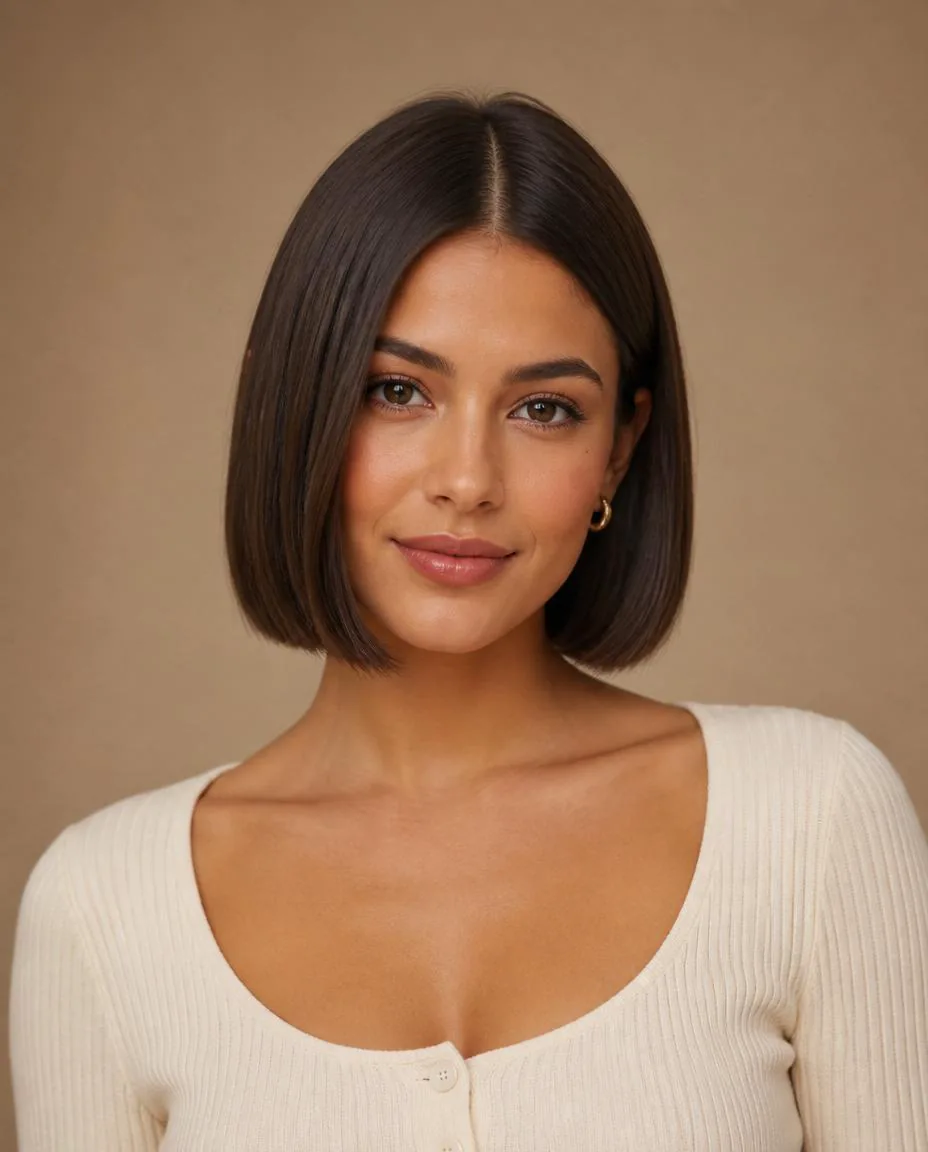 A chin-length bob gives the haircut a clear endpoint and makes the neck more visible.
A bob also makes the haircut outline easier to see. If the cut is blunt, the perimeter becomes part of the style. It can look clean, modern, and decisive, but it can also emphasize width where it stops. If the bob ends at the widest part of your jaw, that jaw can look stronger. If the bob lands slightly below the chin, it can feel softer while still reading as short hair.
A lob is less abrupt. It still belongs to the bob family, especially when the ends are shaped as a clean long bob, but it does not expose as much neck or demand as precise an endpoint. It can be styled straight, wavy, tucked, half-up, or pulled into a low tie depending on the exact length. That makes lob vs bob less about which cut is better and more about how much commitment you want from the haircut.
Bob vs Lob Comparison Table
| Factor |
Bob |
Lob |
| Typical endpoint |
Chin, jaw, or just above shoulder |
Shoulder, collarbone, or slightly below |
| Overall feeling |
Sharper, shorter, more intentional |
Softer, more versatile, less abrupt |
| Face framing |
Stronger around jaw and neck |
More vertical around neck and shoulders |
| Styling options |
Straight, wavy, curly, tucked if long enough |
Down, half-up, low ponytail, bun if long enough |
| Maintenance |
More frequent trims to protect the shape |
More forgiving grow-out |
| Best when |
You want visible change and a clean outline |
You want shorter hair without losing all flexibility |
| Watch out for |
Endpoint can widen the jaw if placed poorly |
Can read as ordinary medium hair if too long or unshaped |
Use this table as a starting point, not a rulebook. The best answer changes with your hair texture, density, side profile, personal styling habits, and how dramatic you want the change to feel.
Face Shape: Which Length Is More Flattering?
Face-shape advice is useful only when it explains the reason behind the recommendation. A bob can be beautiful on round, square, oval, heart, and diamond faces, but the endpoint needs to be chosen carefully. A lob can work on the same face shapes, but it solves different problems.
For round faces, a lob is often easier because the longer vertical line can make the face feel less compact. A chin-length bob can still work, especially with crown height, side parting, or soft texture, but a blunt line at the cheeks may add width. If you have a round face and want a bob, preview a version that ends below the chin instead of exactly at the widest cheek area.
For square faces, a lob can soften the jaw because the ends drop below the strongest angle. A bob can look striking on a square face when the goal is confidence and structure, but the cut may make the jaw feel more prominent. Soft waves, side parting, or an angled front can reduce that effect.
For heart faces, a bob is often especially flattering because it can add fullness near the narrower lower face. A blunt bob near the chin may balance a wider forehead and smaller chin. A lob also works, but it may not create the same face-balancing endpoint unless it has layers or bends that fill the lower half.
For oval faces, both cuts usually work. The choice becomes less about correction and more about mood. A bob shows off the neck and bone structure. A lob keeps the silhouette longer and easier to style. If you have an oval face, preview both because your preference may depend more on wardrobe, personality, and maintenance than on proportion.
Hair Texture and Density Matter
A straight bob and a wavy bob are not the same visual decision. Straight hair shows the perimeter clearly, which makes the bob feel sharper. Wavy hair breaks the line into movement, which can make the same length feel less severe. Curly hair can shrink upward, add side volume, and make a bob look shorter than expected.
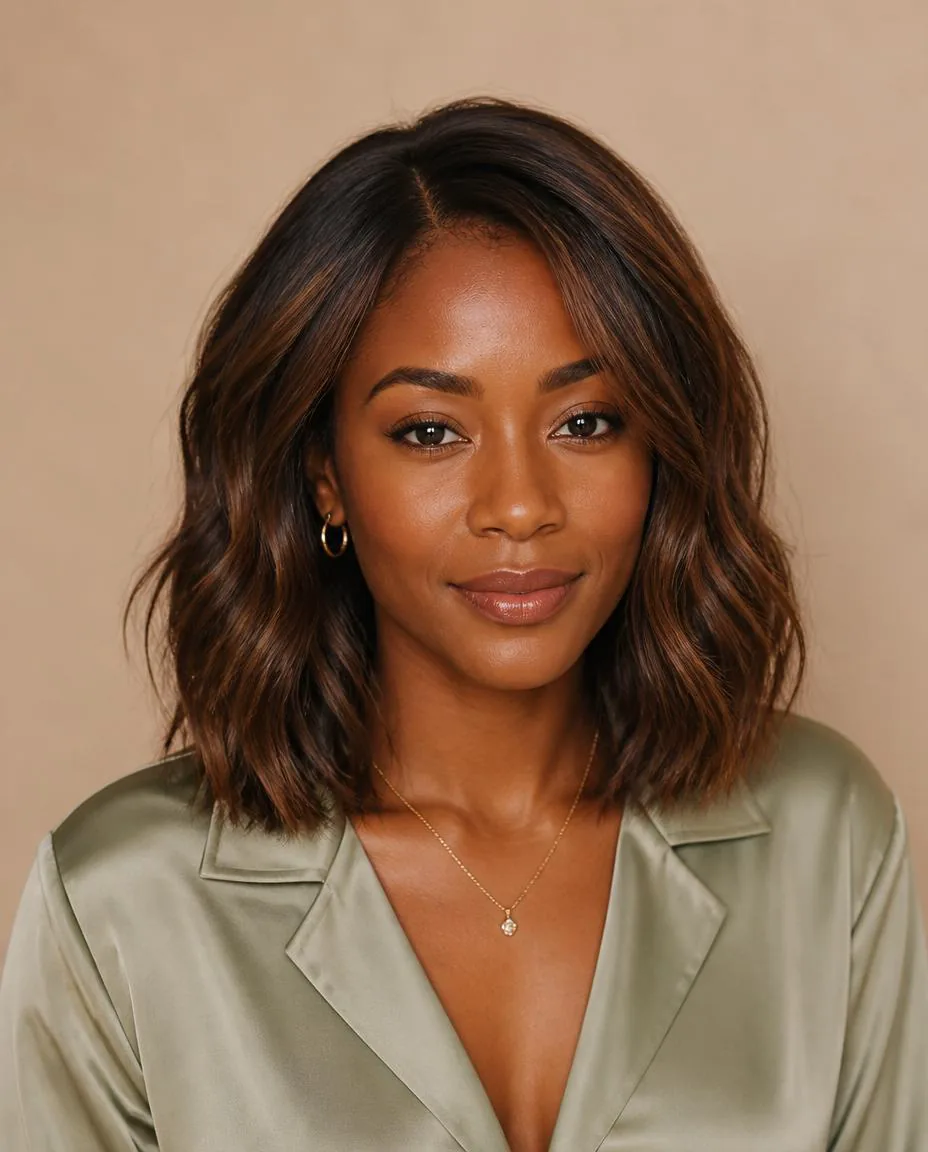 A wavy lob gives the bob family shape more softness and movement around the shoulders.
If your hair is thick, a bob may need internal layering, undercutting, or careful shaping so it does not expand into a triangular outline. If your hair is fine, a bob can create the appearance of density because the ends gather into one clean line. A lob on fine hair can look elegant, but if it is too long or overly layered, the ends may look thin.
This is also where wig-inspired previewing can help. A generated preview cannot measure your exact density, but it can show whether you prefer a compact outline, a soft wave, a blunt perimeter, or a broken textured shape around your face. Use it to narrow the visual direction before discussing cutting technique with a stylist.
Maintenance and Grow-Out
The bob is usually the higher-maintenance choice. A short, precise bob depends on where the ends land. After a few weeks, the haircut may move from jaw-length to below-jaw, and the style can start to feel less intentional. If your bob has a very clean perimeter, small changes in length become visible quickly.
A lob grows out more quietly. Because it already sits closer to the shoulders, another inch or two does not change the identity of the cut as dramatically. It becomes a longer lob or medium-length hair rather than an awkward halfway stage. This is one reason many people choose a lob when they want a fresh haircut but cannot commit to frequent trims.
The maintenance question is not only salon timing. It is also morning effort. A bob may need smoothing, reshaping, or heat styling to keep the endpoint crisp. A lob can often survive more casual styling: loose waves, air-drying, half-up styles, or a low tie. If your routine needs to be fast, the lob usually gives you more options.
Styling Options: What Can You Actually Do Each Week?
A bob can be extremely stylish precisely because it limits your choices. You wear the cut. The silhouette is the statement. A sleek bob with a center part, a jaw-length bob with tucked sides, or a softly waved bob can look finished without much extra styling. The tradeoff is that you may not be able to tie it back, clip it up, or change the shape as easily.
A lob is more flexible. It can look short when waved around the collarbone, but it can still behave like medium hair. Many lobs can be pulled into a low ponytail, styled half-up, curled, straightened, tucked behind the ears, or pinned back. If you like variety, the lob is usually the safer choice.
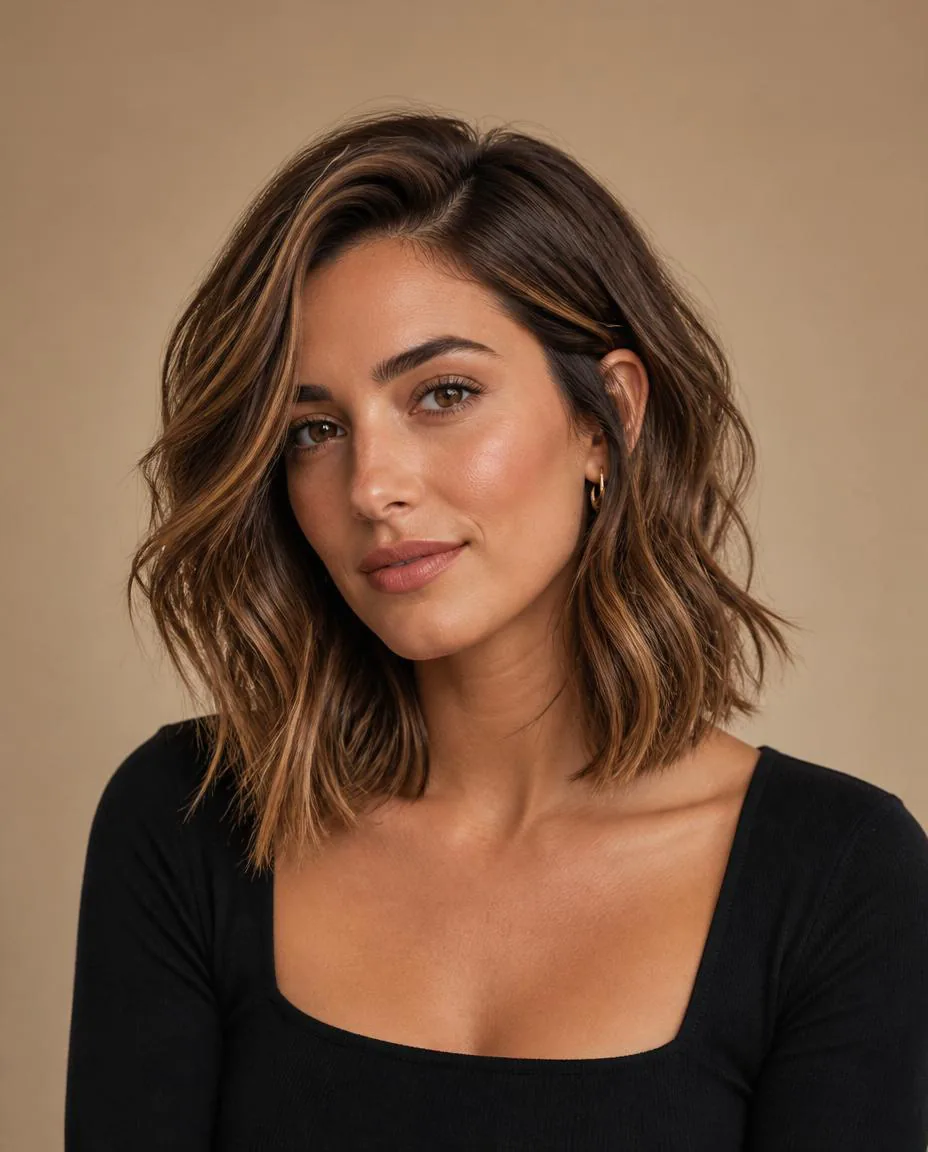 A textured long bob keeps the cut modern while leaving more room for everyday styling.
When comparing a long bob vs bob haircut, decide how often you want the haircut itself to be the main feature. If you want an instantly noticeable change, choose the bob. If you want people to notice that your hair looks fresher, softer, and easier around the face without feeling dramatically short, choose the lob.
How to Preview Bob and Lob on Your Photo
Use one clear photo for the whole comparison. Face the camera, keep your shoulders visible, and avoid heavy shadows around the jaw and neck. The endpoint is the whole point of this decision, so the image needs to show where your chin, neck, and collarbone sit.
Start with a blunt bob preview first. This gives you the clearest test of the short endpoint. Do not judge only whether the result is pretty. Look at where the line stops. Does it sharpen your jaw in a good way? Does it make your neck look longer? Does it make the lower face feel too wide? Does it match how you dress and style yourself day to day?
Then preview a wavy or softly textured lob on the same photo. Keep the color similar if you want a true length comparison. If you change length, texture, and color all at once, it becomes hard to know what you are reacting to. Judge the lob by the shoulder line, not by the curl pattern alone.
Finally, place the two results side by side. The better option is usually the one that makes you stop explaining. If you have to talk yourself into the bob, the lob may be the smarter first step. If the lob feels safe but forgettable and the bob immediately looks like you, the bob may be worth the commitment.
If you also wear wigs, the shorter endpoint has its own routine — how to style a bob wig covers the daily finishing steps, and the same order applies to a cut.
When to Choose a Bob
Choose a bob if you want the haircut to feel deliberate. The bob is a strong choice for people who like a clean outline, visible change, and a polished silhouette. It can make fine hair look fuller at the ends, create a memorable profile, and give your style a more edited feeling.
A bob is also a good choice if you are comfortable with regular trims and you do not rely on ponytails or buns. It works best when you are ready for the cut to be part of your identity for a while. The bob does not hide in the background. That is its power and its cost.
When to Choose a Lob
Choose a lob if you want a shorter feeling without losing flexibility. The lob is often the better first step for people moving from long hair to shorter hair because it lowers the risk. You still get a fresh endpoint, but you can usually style it in more ways and grow it out with less awkwardness.
A lob is also a strong choice if your hair is naturally wavy, thick, or hard to control at shorter lengths. The extra length gives texture somewhere to go. It can soften a square jaw, lengthen a round face, and keep enough hair around the shoulders to feel familiar.
The Practical Lob vs Bob Decision
The most useful lob vs bob decision is not "Which haircut is trendy?" It is "Which endpoint helps me feel most like myself?" Trends change. The placement of the ends against your face is more personal.
If you are stuck, use this order: preview a blunt bob, preview a collarbone lob, preview one textured long bob, then compare all three in the same color family. Pick the one that makes your face shape, neck, and shoulders feel balanced. After that, bring the winning visual direction to a stylist and talk through texture, density, shrinkage, and upkeep.
WigTryAI can help with the visual comparison, but it is not a salon plan and it cannot guarantee the exact cut. Treat the preview as a decision aid: it shows direction, proportion, and mood. Your stylist can translate that direction into a real haircut that works with your hair.