Hairstyles for a long face
Best Hairstyles for Long Faces: Compare Width, Fringe and Length
If you want a less elongated frame, compare width beside the face, forehead coverage and crown height before choosing a haircut length. A wavy lob, a bob with side fullness or longer layers with a deliberate fringe can each change a different part of the outline.
Long faceOblong faceFace framingBangsHair length
7 min read
Quick answer
Choose the framing change before the cut name
For a long face, start with a wavy lob, a bob with fullness at the sides, or longer layers with a fringe if your goal is to interrupt a narrow vertical outline. Compare the widest point of the hair, how much forehead stays visible and whether the crown adds height. None of these is a rule against long hair or short cuts: the same length can create very different frames.
- First comparison
- Side movement versus a narrow, straight outline
- Fringe question
- How much forehead do you want visible?
- Length checkpoint
- Where the ends sit relative to your jaw and shoulders
Not sure which framing change to try first?
Upload one clear selfie for four AI-selected catalog hairstyles and a face-framing reason for each. The suggestions are a starting shortlist, not a measurement of your face or a guarantee that a particular cut will be included.
Find My Best HairstyleLong, Oblong or Oval: Read the Outline Without Forcing a Label
A long face generally reads as having more visible length than width. The term oblong often describes a longer outline with fairly straight sides; an oval outline tends to taper more gradually. People can share features of both, and hair, camera tilt and perspective can change that reading. A tall forehead alone does not establish a long face, nor does a narrow jaw.
Look at one front-facing photo with your forehead, both sides of the face and jaw visible. Decide which relationship you actually want to change: forehead coverage, width near the cheeks, or the uninterrupted line from crown to ends. If you like the length of your face, you can keep it visible. This guide offers framing options rather than a correction target.
The oval-face hairstyle guide is useful when your outline feels closer to oval and the bigger decision is how open, polished or textured you want the finish. For uncertainty about the category itself, read how to recognize visible face-shape cues.
Forehead Coverage and Side Width Are Two Separate Decisions
A fringe changes the visible opening above the eyebrows. Side waves or a fuller bob change the hair silhouette beside the face. You can adjust one without committing to the other, so “get bangs” is not a complete answer to every long-face question.
In its long-face hairstyle advice, HAO-JIAN-CAI Hair Salon highlights forehead coverage, lateral fullness and restrained crown height as ways to change an elongated frame. Those are useful comparison variables, not guarantees that the same haircut works on every head.
Visual comparison
What changes when the forehead opening changes?
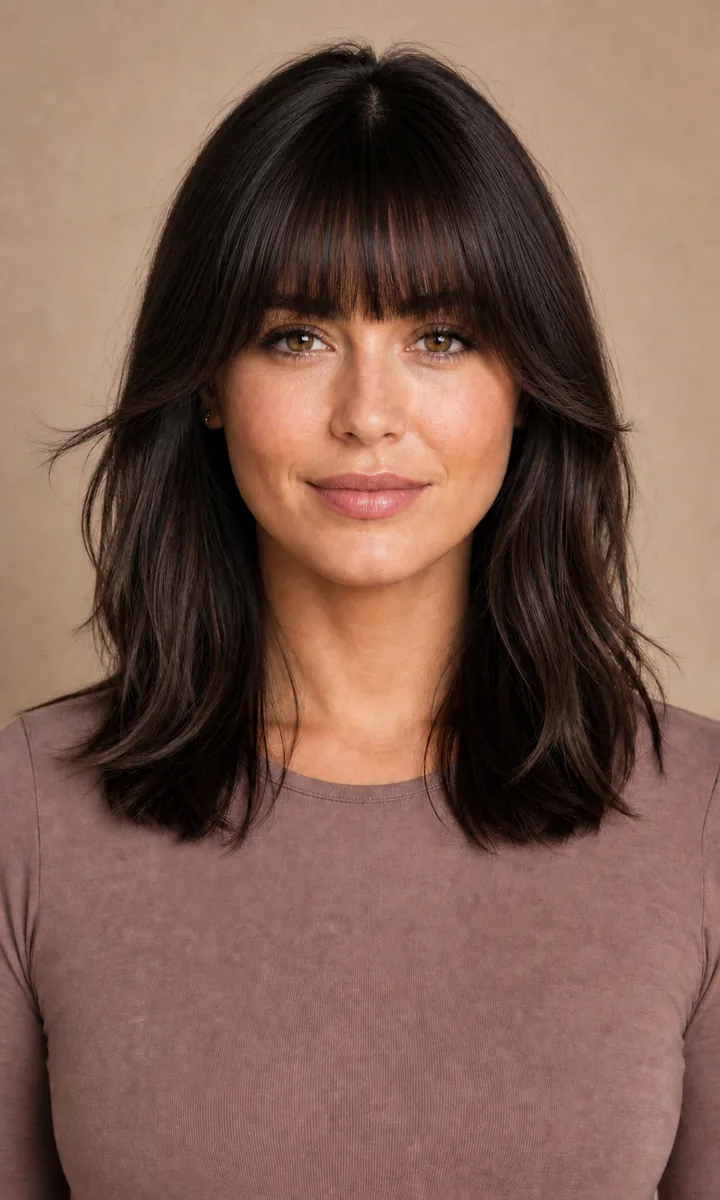
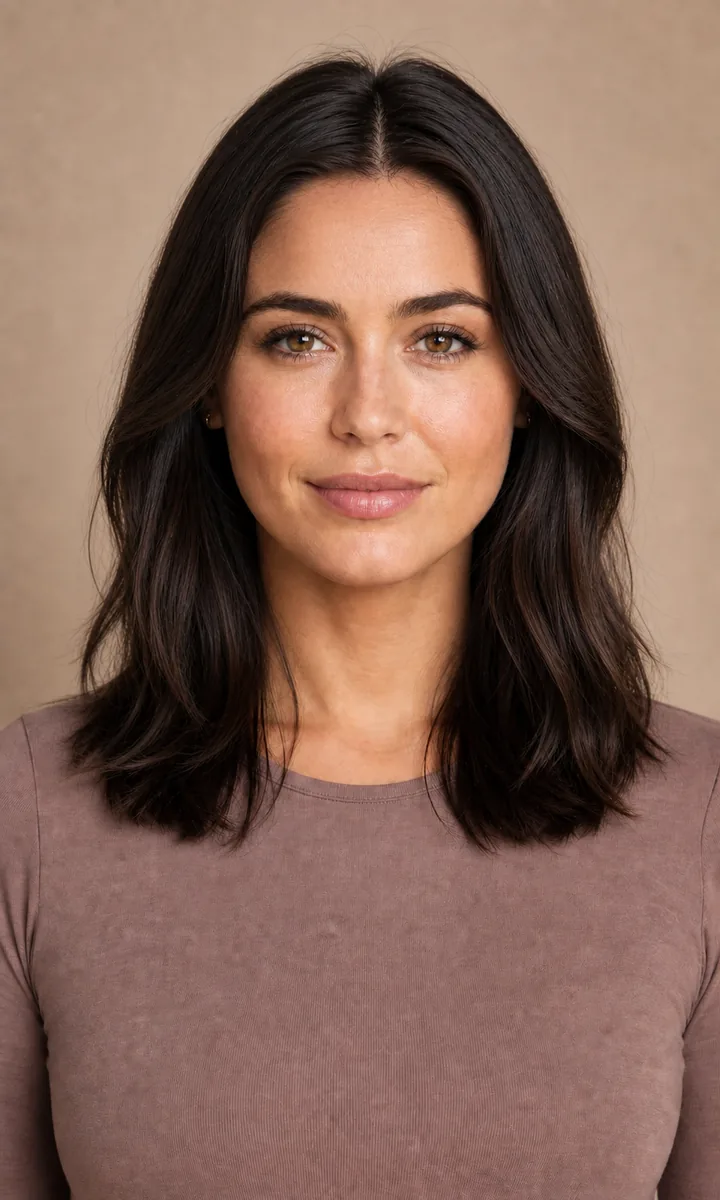
These existing illustrations use the same model and a similar shoulder-length frame. They demonstrate fringe coverage, not a measured long-face result. The front pieces and texture also differ slightly, so this is not a perfectly isolated experiment.
Open forehead
The center opening leaves the forehead visible. Look at the vertical path from the part toward the chin and the outward bend beside the lower face.
Full brow-length fringe
The fringe creates a lower visible top edge for the face. Compare coverage and the width of the fringe, then decide whether you want that much hair near your eyes.
Full bangs offer a clearer coverage test than long curtain pieces that leave the center of the forehead open. A side-swept fringe gives a diagonal edge instead. The bangs guide explains the visible differences; your growth pattern, comfort around the eyes and willingness to style the front still matter.
Three Hairstyle Directions That Test Different Parts of the Frame
These references are selected for different visible shapes, not ranked by popularity or treated as proof of what suits a long face. The images illustrate hairstyle directions; none establishes the model's face shape.
Compare an endpoint, side movement and forehead coverage
Choose the direction that answers your question. Each reference-image preview follows the pictured hairstyle and color together; the colors differ between these examples.
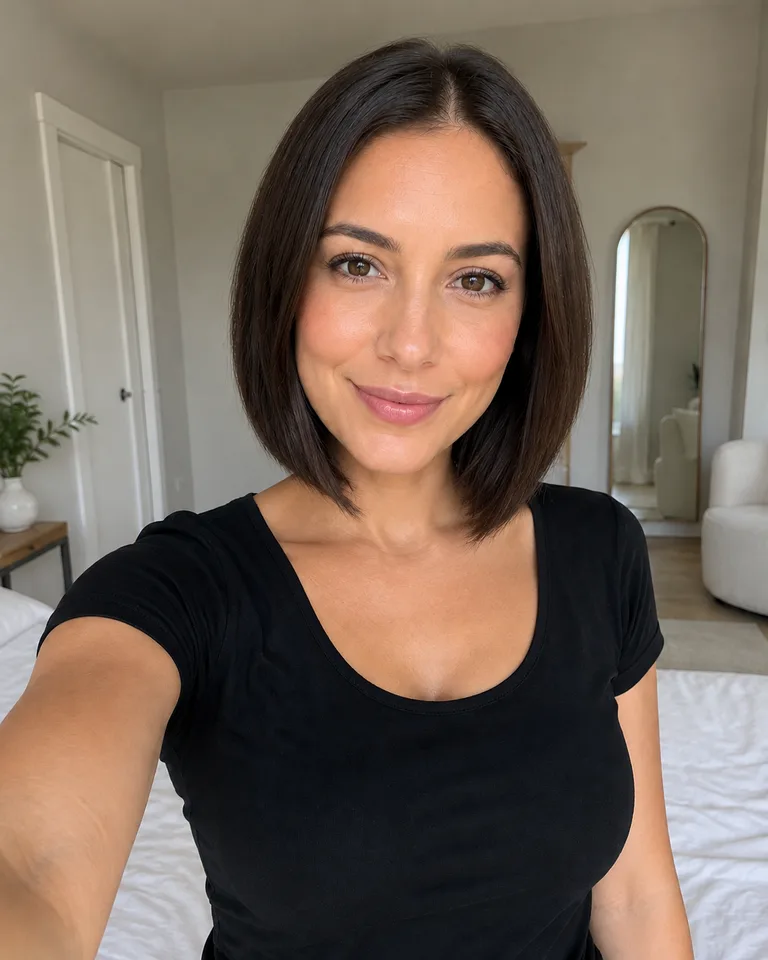
A bob with a defined endpoint
Compare the horizontal finish near the jaw and how much width sits beside it. This angled example is useful for seeing the endpoint; if its longer front pieces feel too vertical, discuss a more level perimeter or fuller sides with a stylist.
Try this look
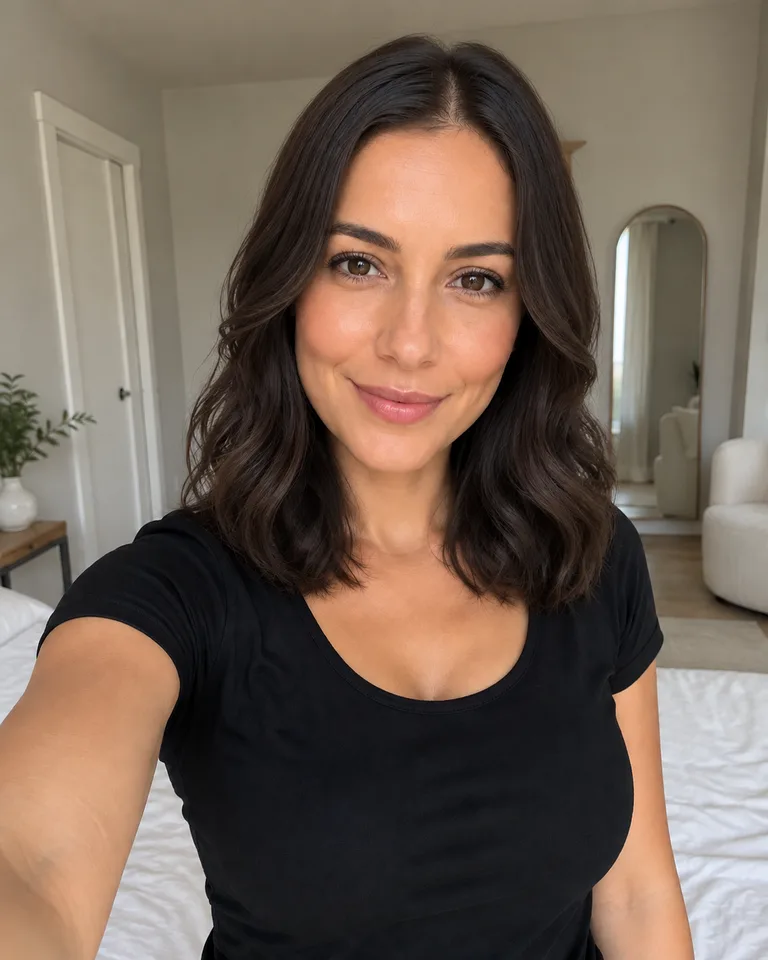
A medium wavy lob
Look at where the waves widen beside the cheeks and jaw. This is a useful medium-length starting point when you want side movement without a full fringe; compare a quieter crown if the top feels too tall.
Try this look
Shoulder-length waves with full bangs
This direction tests forehead coverage and side movement together. Separate those preferences before cutting: you may like the wave but prefer less fringe, or want the coverage without as much texture.
Try this look
The bob and lob images come from one recorded WigTryAI recommendation example. They show directions the product generated in that run, not recommendations for every visitor. Judge the new preview against your own input before deciding whether its framing is useful.
Short, Medium or Long Hair: The Endpoint Is Only Half the Story
Short hair can work. A bob lets you compare a clear edge near the jaw, while a compact crop reveals more of the face and neck. With very short hair, crown height and the side silhouette become more noticeable because there is less length below them. If you want a wider frame, compare some side fullness with closely fitted sides rather than assuming that every pixie has the same effect.
Medium length offers a useful control. A lob around the collarbone gives enough hair to test movement beside the cheeks without committing to either a close crop or a long outline. The word “lob” does not decide where its fullest wave sits. Check the front view and the endpoint separately; bob vs lob helps when that edge is your main question.
Long hair is still an option. If a straight, narrow outline feels too elongated for your preference, change where the front layers begin or where the first substantial bend sits. Keeping all the movement below the shoulders leaves the upper frame quite open. You may prefer that openness, or you may want shorter front pieces and more side movement while retaining the overall length.
Choose by the Detail That Bothers You in the Preview
Decision guide
Keep the length you like; change the framing variable
Use this after looking at a reference or a preview. The suggestions address your chosen visual goal, not a flaw that must be corrected.
| What you notice | Compare next | Check before a real cut |
|---|---|---|
| The top looks tall while the sides stay narrow | Less crown lift with more movement beside the face | Whether your roots and natural texture can hold that placement |
| You like the sides but want less forehead visible | Fuller fringe versus a diagonal side-swept edge | Cowlicks, dry fringe length and comfort near the eyes |
| The cut feels heavy at one horizontal line | A different bob or lob endpoint with softer ends | Density and whether the ends expand when dry |
| You want long hair without a narrow, straight frame | Earlier face-framing layers or side waves | The shortest layer, styling effort and natural shrinkage |
| You want the forehead open and no bangs | Side movement and an off-center part at the same length | Whether the part stays where you put it |
What if you do not want bangs?
Start with side movement, a different part or a change in endpoint. An off-center part changes how the hair crosses the upper face without covering the entire forehead. Waves can place more of the silhouette beside the cheeks rather than only below the shoulders. Neither requires a fringe, and keeping your forehead visible is a valid preference. Use the center-part versus side-part guide to compare the framing and the practical limits of your natural part.
What should you be careful with?
If your goal is less apparent length, check a tall crown combined with close sides, very long flat panels, or layers that begin so low they leave the whole face framed by straight lines. These are cues to inspect rather than banned hairstyles. A sleek center part may be exactly the deliberate, open look you want.
Fine hair may not support the side fullness shown in a reference without styling, and removing too much weight can make the perimeter feel sparse. Thick hair may widen more than the picture suggests. Curly hair changes visible length as it dries. Ask a stylist where the width and fringe will sit on your actual hair; a photograph cannot supply that assessment.
Turn the Guide Into a Shortlist on Your Own Photo
- Use one clear front-facing portrait with the forehead, jaw and shoulders visible. Keep it unchanged across your comparisons.
- If you have not picked a direction, use Best Hairstyle for My Face to get four catalog suggestions with reasons. Choose 1–4 of those looks for previews; a specific fringe or length is not guaranteed to appear in the shortlist.
- If you already know what to test, use a reference button above or choose presets in Virtual Hairstyle Try-On. Presets let you keep the selected color consistent; reference mode follows the pictured shade as well as the cut.
- Compare the forehead opening, where side width peaks, crown height and the endpoint. If several things change at once, do not attribute the entire difference to length alone.
- Keep two directions and bring the references to a stylist. Ask where the widest bend will sit when your hair is dry and how the cut will look with your usual styling routine.
An AI image is a visual aid, not a face measurement or a salon plan. It can change facial details, miss a requested fringe, or place volume unrealistically. Check resemblance to your original photo first. It cannot predict your density, growth pattern, styling hold or exact haircut outcome.
FAQ
What are the best hairstyles for a long face?
A wavy lob, a bob with side fullness and longer layers with a fringe are useful directions when you want to interrupt an elongated outline. The important details are where the hair is widest, how much forehead stays visible and how high the crown sits. Choose the effect you want rather than treating one haircut as best for everyone.
Is a long face the same as an oval face?
The labels overlap, but long or oblong usually emphasizes a more elongated outline, sometimes with straighter sides. Oval often describes a gentler taper. A photo cannot settle an exact category, and you do not need a definitive label to compare forehead coverage, cheek-level width or an endpoint.
Can a long face wear long hair without bangs?
Yes. Keep the forehead open if that is your preference, then compare side movement, part direction and where face-framing layers start. If your goal is a less narrow frame, look at whether the waves or layers add width beside the face rather than beginning entirely below it.
Do curtain bangs work for long faces?
They can, depending on how much of the forehead they leave visible and where the outer pieces end. Long, widely parted curtain pieces offer less central coverage than a full fringe. Compare the actual opening and side shape, and discuss dry length, cowlicks and styling with a stylist before cutting.
Is a bob or a lob better for a long face?
Neither length wins automatically. A bob gives you an endpoint near the jaw; a lob moves that line lower and leaves more room for waves. Compare both with similar color and crown height, then check how their side volume and ends sit on your own portrait.
Can AI identify my face shape and guarantee the right haircut?
No. WigTryAI uses visible face shape and proportions to suggest four catalog styles with reasons, but those observations are approximate. You choose which suggestions to preview. The tool does not measure your face, guarantee a particular recommendation or establish how a real haircut will behave.