
Choose your fringe shape
Best Bangs for Your Face Shape: Coverage, Width and Side Pieces
The best bangs for your face shape depend on how much forehead you want visible, how wide the fringe sits and where its outer pieces end. Start with those three choices, then compare curtain, wispy, full or side-swept versions. No face shape requires bangs or rules out a fringe.
BangsFace shapeFringeCurtain bangsWispy bangs
5 min read
Quick answer
Fringe shape and fringe density are separate choices
For a more open center, compare curtain bangs; for a diagonal edge, compare side-swept bangs; for more forehead coverage, compare full fringe with a lighter wispy version. Then adjust the outer length relative to your cheekbones and jaw. A curtain shape can be dense or wispy, so the name alone does not tell you how much forehead will show.
- Coverage
- Open center, diagonal edge or forward fringe
- Width
- How far the fringe extends toward the temples
- Blend
- Where the outside pieces join the rest of the cut
This guide answers which fringe shape to compare, once you are interested in bangs. If the real question is whether you will tolerate styling, trims or hair near your eyes, start with Should I Get Bangs?. For names and examples across the whole family, use the bangs hairstyle guide.
Compare Three Forehead Openings
Visual comparison
The upper edge of the face changes before the back length does
Existing hairstyle illustrations show different forehead openings. They are not measured face-shape samples or a controlled salon experiment; fringe direction and some front texture change together.
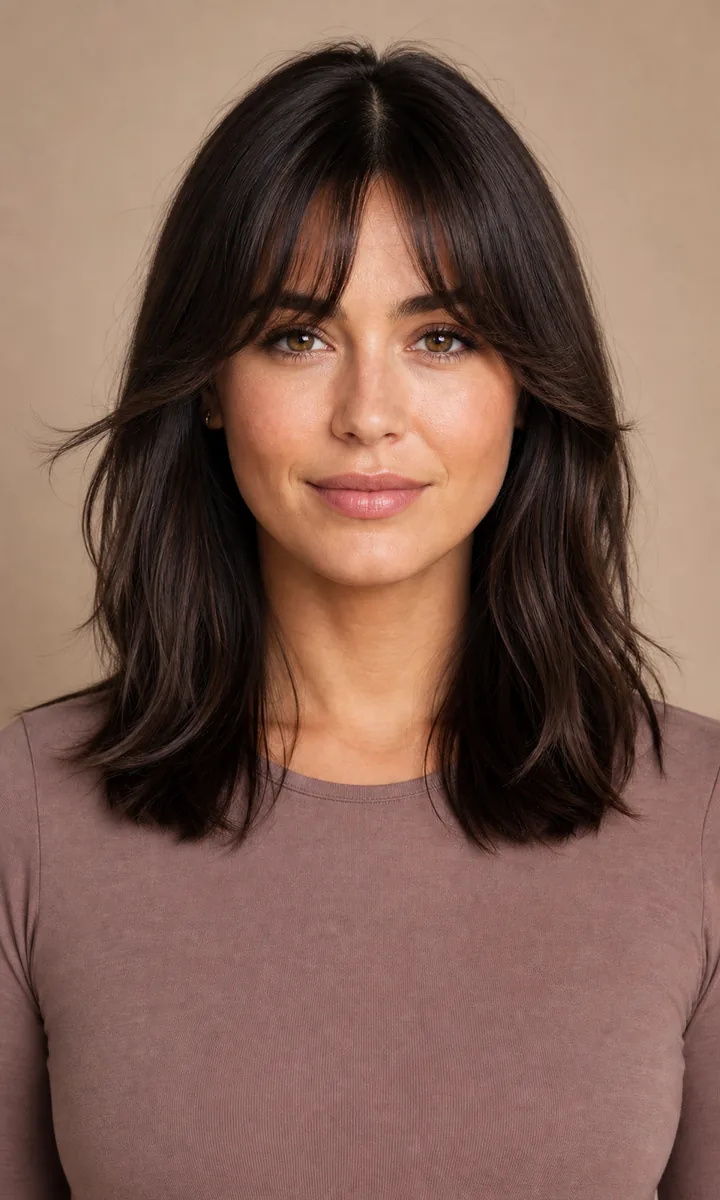
Open center
Curtain pieces leave a visible center gap and carry the edge outward. Check where the longer corners widen beside the face.
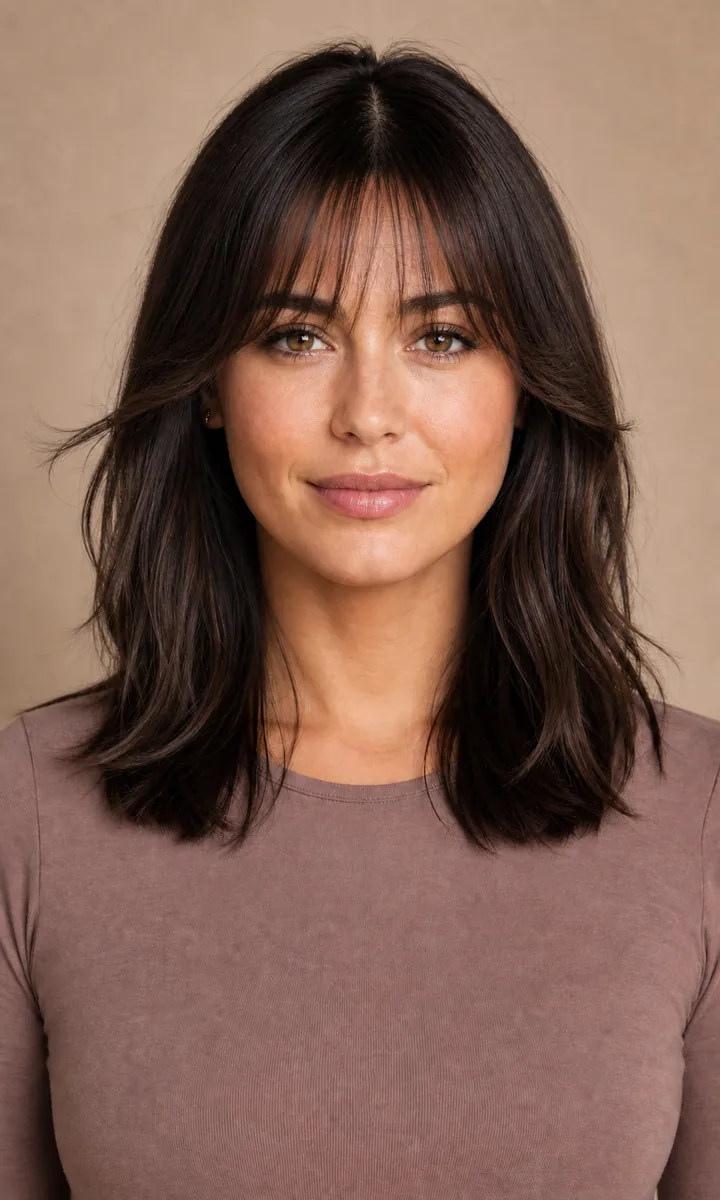
Light forward coverage
Separated strands show portions of the forehead through the fringe. Check the section width as well as the airy ends.
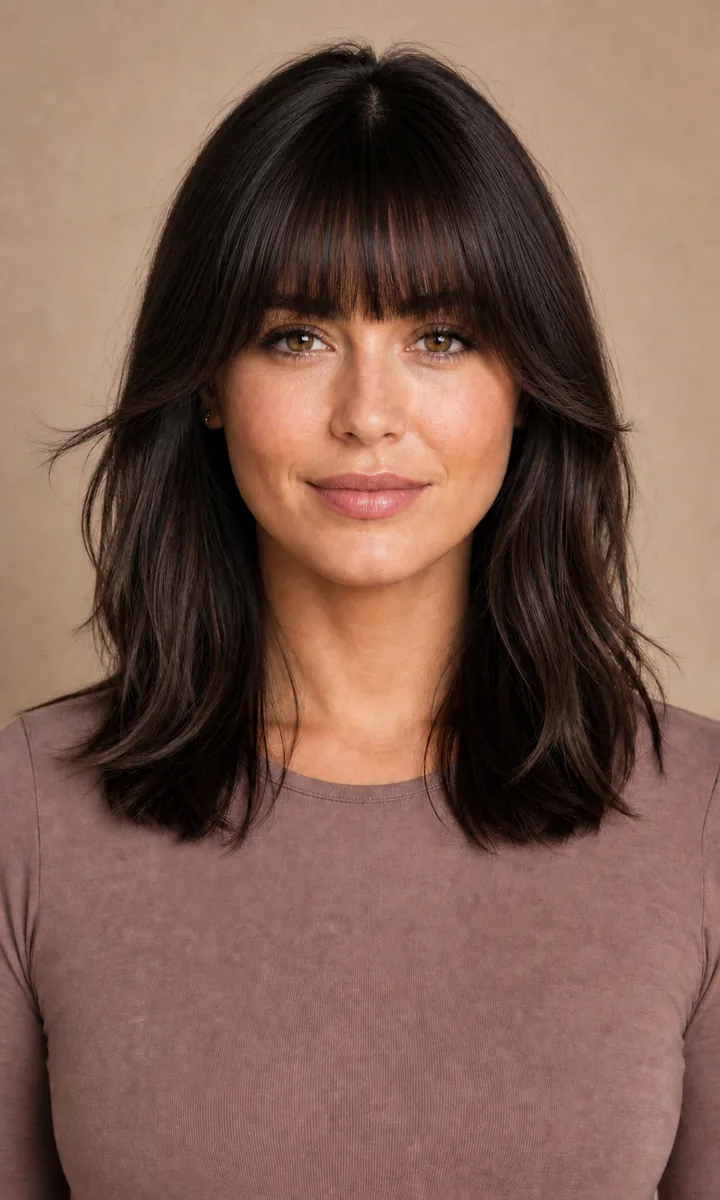
Full forward coverage
A denser edge makes the top of the visible face sit lower. Compare the center length and corner shape before asking for this much coverage.
The distinction matters most when two references share a name. Long curtain bangs that open widely may leave much of the forehead visible. Shorter, denser curtain bangs can cover more of it. Neither is interchangeable with a forward fringe just because both are described as soft.
A Face Shape × Bang Style Matrix
Use this table to pick a test for a goal you actually have. Keeping your natural proportions visible is just as valid as changing their emphasis.
| Face shape and chosen goal | Bang directions to compare | Detail that changes the result |
|---|---|---|
| Round: a more diagonal or open frame | Longer curtain pieces or a side sweep | Whether the outside pieces widen at the cheeks or continue below them |
| Oval: emphasize eyes or keep the frame open | Wispy, full and curtain options | The center length and amount of brow coverage, rather than a rule that every fringe is equal |
| Square: contrast with an angular outline | Wispy ends, a curved curtain shape or a side sweep | Whether the edge is rounded and separated or intentionally straight and graphic |
| Heart: adjust a wider forehead opening | Curtain or side-swept fringe | How wide the section is at the temples and where the sides meet the narrower lower face |
| Diamond: control cheekbone emphasis | Side sweep or longer, light curtain pieces | Whether the outside bend stops at the widest cheek point or passes it |
| Long: show less forehead | Full, wispy forward fringe or a shorter curtain opening | A long center gap can leave the vertical opening nearly unchanged |
| Triangle: add upper-side emphasis | Side sweep or curtain pieces with temple fullness | A fringe crossing the forehead does not automatically widen flat upper sides |
L Salon's own fringe guide also uses side-swept, wispy and curtain shapes as face-framing starting points. The table here adds the variable to inspect rather than treating each pairing as a mandatory prescription. Your preferred effect can be the opposite of the goal in a row.
Three Details to Point Out in Your Reference
1. How much forehead should remain visible?
An open center, a diagonal sweep and forward coverage make different upper edges. If you dislike hair near the eyes but want side framing, a longer curtain direction may be more comfortable than a brow-length fringe. If you want less forehead showing, do not judge only by the longer side pieces: look at the shortest center and the size of the gap.
For an elongated outline, full bangs offer a clearer coverage comparison than long curtains with a wide center opening. That is a visual difference, not a rule that a long face needs bangs. You can also keep the forehead open and adjust side width or overall length.
2. How far should the section extend toward the temples?
A narrow fringe leaves more of the upper sides exposed; a broad one can create a stronger horizontal line. Width is not the same as density. A wide section cut lightly still spans a wide area, and a dense narrow section can look compact. Ask a stylist to show the intended section before cutting, especially if you want to preserve density in the sides.
3. Where should the outside pieces finish?
The outer corners connect the fringe to the cheekbones, jaw or longer layers. If an outward bend ends exactly beside the widest cheek point, it may emphasize that width. If you prefer a line continuing lower, compare longer corners. For a deliberately graphic frame, you may choose a sharper break instead of a soft blend.
If you want longer framing instead of a distinct forehead edge, compare face-framing layer placement. Specify where the shortest side piece should finish and what must still tuck behind the ears.
The curtain-versus-wispy comparison separates shape from density in more detail. Bring a front view that shows both the center and the outer corners; a cropped close-up of the middle does not communicate the whole fringe.
What Your Actual Hair Adds to the Choice
Forehead proportions do not tell you whether the fringe will split, spring upward or sit flat. Redken's guidance before getting bangs includes natural texture, growth patterns and lifestyle alongside the visual shape. These are separate checks from the matrix above.
- Fine hair: ask how much hair is brought forward and what density remains at the sides. A very light fringe may not match the fullness of a styled reference.
- Thick hair: discuss section depth as well as fringe width. Removing or thinning weight without a plan does not guarantee a softer edge.
- Wavy or curly hair: agree on the dry length and the texture you will wear most often. A straightened preview does not predict the fringe's natural length.
- Cowlicks and comfort: ask where the hair naturally splits and whether you will tolerate the styling needed to redirect it. Glasses and hair near the eyes can change your preference.
From a Face-Shape Rule to Your Own Shortlist
Write down a small brief: “I want an open center, light coverage and outer pieces below the cheekbone,” or “I want brow coverage with a rounded edge and enough side length to tuck.” That communicates more than “bangs for my face shape.”
Not sure which hairstyle frame to begin with?
Use one selfie for four AI-selected catalog hairstyles with reasons. The tool may suggest styles with or without fringe; it is not a dedicated bangs selector and does not guarantee a specific bang type. For a fringe you have already chosen, use the individual looks in the bangs guide.
Get AI hairstyle recommendationsUse Virtual Hairstyle Try-On when you want a specific catalog look. Keep the same selfie and color where possible, inspect for unintended changes, and judge the forehead opening before judging the whole outfit or expression. A preview helps communicate a direction; a stylist must assess the real cut, hairline and maintenance.
FAQ
What bangs suit my face shape?
Start with the forehead opening you prefer, then choose fringe width and outer-piece length. Face shape can suggest a useful comparison, such as diagonal framing or more forward coverage, but it does not prescribe one bang type. Your hairline and daily routine may rule out a reference you otherwise like.
Are curtain bangs suitable for every face shape?
They can be adapted to many outlines, but different center lengths and side bends create different frames. Compare where the opening ends and where the outer pieces widen. A long, wide center gap does not provide the same forehead coverage as a shorter curtain fringe.
Which bangs should I compare for a round face?
Longer curtain pieces or a side sweep are useful if you want a more diagonal frame. Check whether the outer ends flare beside the cheeks or continue below them. Full bangs are also an option if you prefer their graphic edge; no face shape forbids them.
Do long faces need full bangs?
No. Full bangs can reduce the visible forehead opening if that is your goal, but side width and crown height also affect the frame. You can keep the forehead open and compare those other variables instead. Choose the effect and maintenance you prefer.
Is wispy the opposite of curtain bangs?
No. Wispy describes light density and separated strands; curtain describes a center-opening shape with longer sides. A fringe can be both. Ask for the opening, width, density and side length you want rather than relying on one label.
Will the recommendation tool always show bangs?
No. It chooses four catalog hairstyle directions from your selfie and explains the face-framing reasons. A particular fringe is not guaranteed. Use the dedicated bangs guide or preset hairstyle controls if you already know which bang type you want to preview.