
Should I get bangs?
Should I Get Bangs? 7 Things to Compare Before You Cut
The bangs question is not a face-shape yes/no. It is seven observable variables — how much forehead you want to show, where the fringe lands, what your texture does, what the upkeep really costs, how fast it grows, which way your hair wants to part, and why you want them in the first place. Compare those before you cut.
BangsHairstyle decisionBefore you cut
7 min read
Quick answer
Compare seven variables, not your face shape
Deciding whether to get bangs is a comparison of seven observable things: how much forehead you want to show, where the fringe ends on your face, what your hair texture does to a short cut, whether you will style it every day, how the grow-out works, which direction your hair naturally parts, and the real reason you want bangs. Face shape is one input, not a rule. The fastest way to test the whole decision is to keep one photo of yourself and compare fringe directions on it before you sit in the chair.
- Highest-risk variable
- Daily styling commitment
- Most ignored variable
- Natural part and cowlick
- Fastest way to decide
- Compare on one photo
The question is not "does my face suit bangs." It is "which of these seven things am I actually willing to live with." A fringe changes more about your routine than it changes about your face.
1. How Much Forehead Do You Actually Want to Show?
Bangs are really a forehead-coverage decision, and every style is a different setting on that dial:
- Curtain bangs leave the center open and frame the sides. Lowest coverage of the main styles.
- Wispy bangs use light, separated strands. More forehead shows than you would expect from photos.
- Full or blunt bangs cover the forehead in one line. The strongest visual change.
- Micro bangs sit above the eyebrows and expose the most forehead of all.
- Side-swept bangs cover one side and open the other. Asymmetry is the point.
The useful question: when your hair is down right now, how much of your forehead do you show? If you already pull a center part and like the open look, a heavy fringe will change your face more than you might expect. If you already sweep everything forward, a light fringe is a smaller jump.
2. Where Would the Fringe Land on Your Face?
Forget "bangs for round faces." What matters is where the shortest pieces end and how wide the fringe is compared to your cheekbones.
Look at two things in a straight-on photo:
- The endpoint. Bangs that stop around the brow line draw attention to the eyes. Bangs that reach the cheekbones create a diagonal frame. Micro bangs push attention to the eyebrows instead.
- The width. A fringe that is wider than your cheekbones visually widens the top of your face. A narrower, parted fringe keeps the sides lighter.
A common mismatch: inspiration photos always show bangs on someone with a lot of hair volume, so the fringe looks full and soft. On flatter hair, the same cut reads as a thin line. Judge the proportions on your own photo, not on the model's.
3. What Does Your Hair Texture Do to a Short Cut?
Bangs behave differently on every texture, and the differences show up within a week:
- Straight hair is the most predictable, but the fringe tends to lie flat and pick up oil faster than the rest of your hair. It needs blow-drying or flat styling to hold a shape.
- Wavy hair gives you a soft bend for free, but the wave pattern changes where the shortest pieces land. What is brow-length dry may sit at eye level after a humid day.
- Curly hair has the biggest gap between the cut and the result. Shrinkage can pull bangs several centimeters shorter than they were cut, and the curl pattern decides whether you get ringlets, loose spirals, or a fuzzy fringe. Ask a curl-aware stylist to cut them dry in the curl pattern you wear, not wet.
The honest rule: the texture you have when you walk out of the salon is not the texture you have at home on day four.
4. Are You Going to Style Them Every Day?
This is the variable that most quiz-style advice skips, and it is the one that decides whether you will be happy.
Bangs are not a shortcut. They are the first thing to flatten, separate, or flip after sleeping, and they rarely dry in the direction you want. Realistic daily commitment:
- Curtain or side-swept bangs: a few minutes with a round brush or a blow-dryer, or a quick re-part in the morning.
- Wispy bangs: light touch-up with a flat iron or spray, usually easier than a full fringe.
- Full or blunt bangs: the highest commitment. They need a proper blow-dry or flat iron to look intentional, and they show every skipped morning.
Ask yourself what you do on a busy morning. If the answer is "nothing," choose the lowest-maintenance direction and be honest about it — a fringe you stop styling looks different than the photo you saved.
5. How Does the Grow-Out Work?
Bangs do not stay put. They grow about a centimeter a month, and the shortest pieces hit your eyes long before the rest of the hair changes.
- Expect a trim every three to four weeks to keep the shape, or a visible transition period while they grow out.
- Longer styles like curtain bangs and wispy bangs blend into face-framing layers as they grow, which makes the transition much less awkward.
- A blunt fringe grows into a harder line. The grow-out is more noticeable because the ends move as a block.
If you already know you will skip salon appointments for months, a soft, layered fringe is the safer choice than a sharp one.
6. Which Way Does Your Hair Want to Part?
This is the one nobody sees in a photo — until you cut.
Your cowlick and natural growth direction decide where a fringe splits, whether it stays put after you style it, and whether the shortest pieces flip outward. A fringe that fights your natural part is a daily battle.
Quick test before you cut: wash your hair, let it dry naturally, and notice which way the front falls without touching it. Then picture a fringe following that direction. If you have a strong cowlick at the hairline, tell your stylist — they can cut to work with it rather than against it. An AI preview on a photo cannot show you this.
7. What Is the Real Reason You Want Them?
The strongest predictor of regret is the reason behind the decision:
- "I like how they look in this photo." Weak reason on its own — the photo is one person, one angle, one styling session.
- "I want to change my look." Good reason, and bangs are one of the fastest visible changes — but compare a couple of directions first.
- "I want to cover my forehead or soften a feature." Legitimate, and it is a coverage and width decision (see 1 and 2).
- "I think they will be less work than my current hair." This one is almost always wrong, and it is the reason most bangs regret happens.
Visual comparison
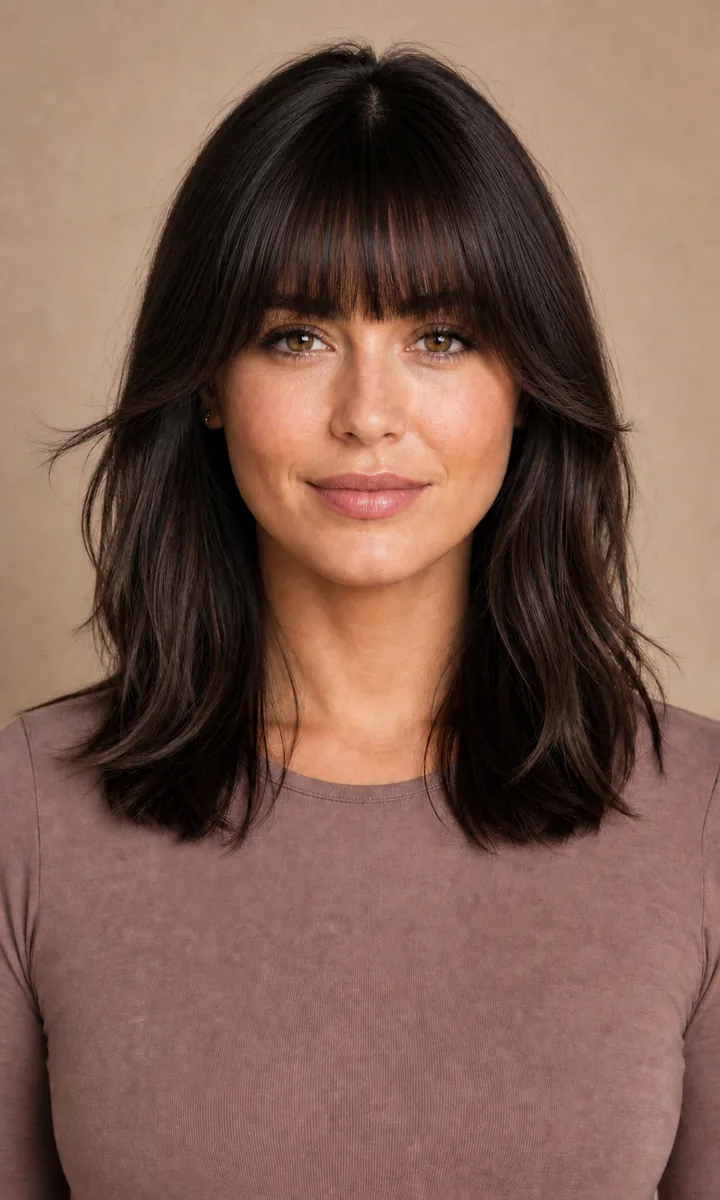
The same face, four coverage decisions
Same model, same angle, same lighting. Only the fringe changes — that is how you judge coverage and width honestly.
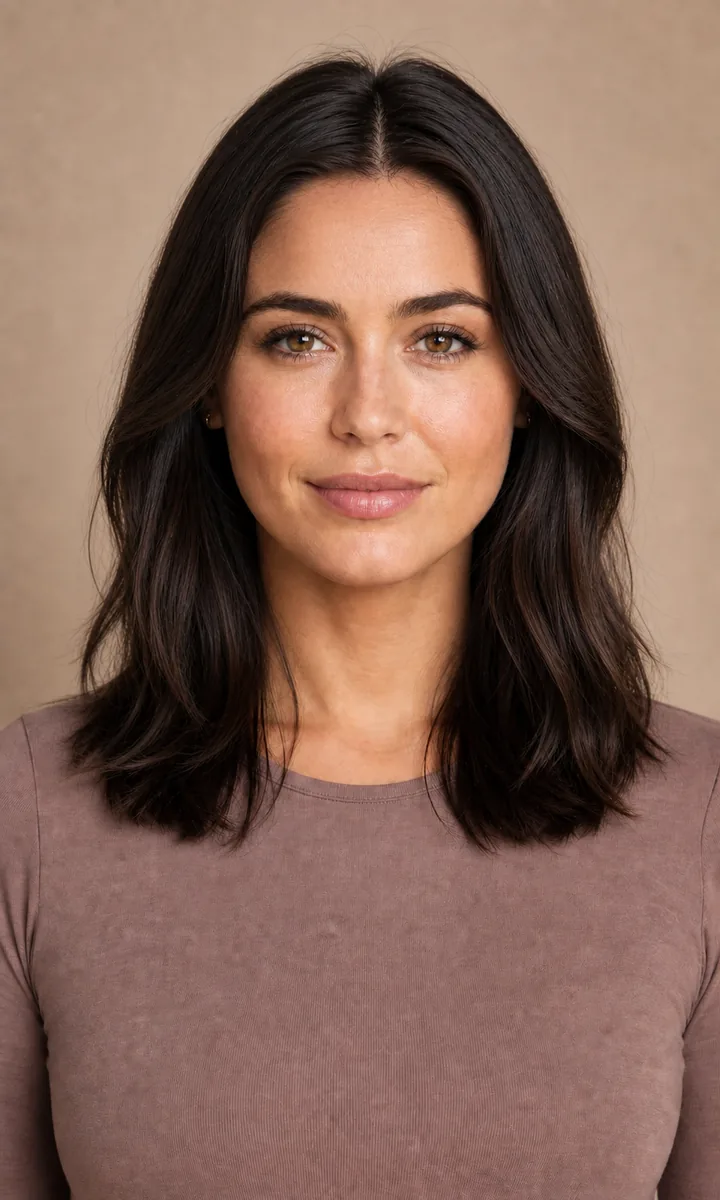
No bangs
Clean center part, full forehead visible. The baseline for the comparison.
Full bangs
Dense fringe covering the forehead in one line. The strongest change to the top of the face.
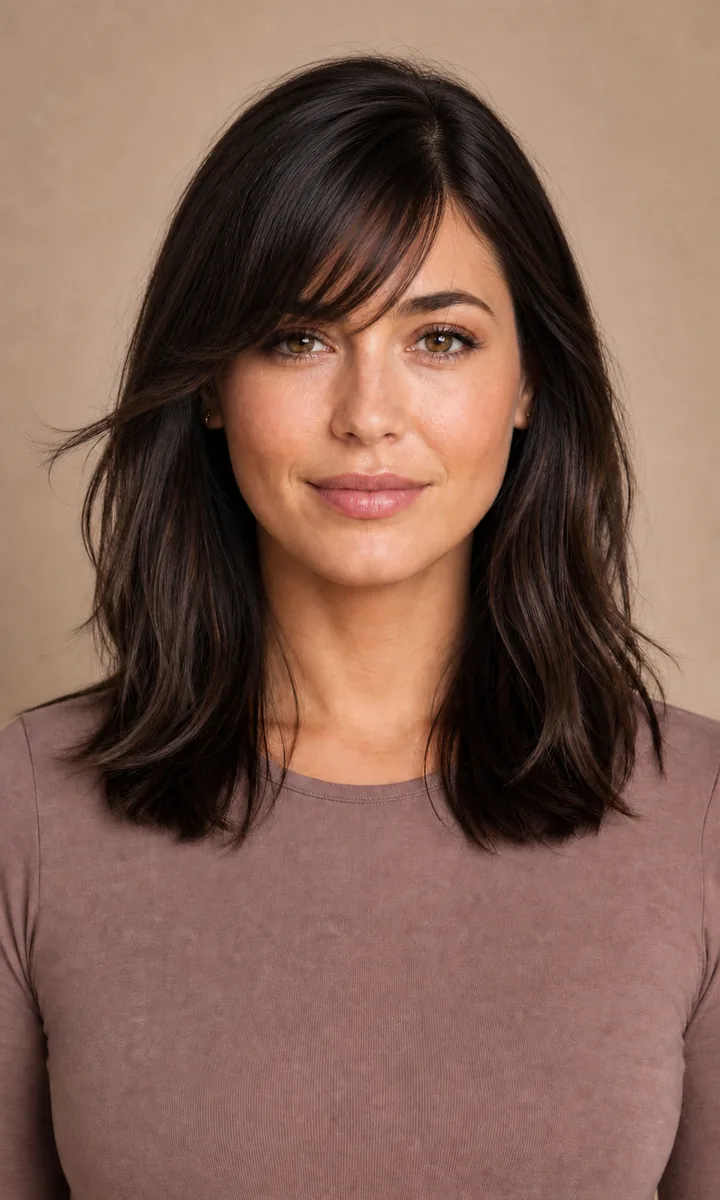
Side-swept bangs
Asymmetrical fringe that opens one side. A middle option between open and covered.
The Decision Framework
Decision guide
Which direction should you try first?
Match the variable you care about most to the starting direction, then compare it against your current look.
| If your biggest concern is | Start with | Watch for |
|---|---|---|
| Lowest daily styling | Curtain or side-swept bangs | The part can drift during the day |
| A soft change, not a statement | Wispy bangs | They can read as a thin line on flat hair |
| You want a visible change | Full bangs | Three-to-four-week trims and daily styling |
| You have a strong cowlick | Curtain bangs | The opening can follow the cowlick instead of a center part |
| You have curly hair | Longer wispy or curtain bangs | Shrinkage moves the shortest point up |
| You are not sure at all | Compare on one photo first | Pick the direction that keeps the most of what you like |
Run the comparison the same way you would any other hairstyle decision: one selfie, one lighting setup, and the fringe as the only variable. The bangs guide walks through every fringe style on the same face, and the how-to-try-hairstyles-online flow covers the full method from photo prep to a description you can bring to a stylist.
What a Preview Cannot Tell You
A photo preview answers the coverage and proportion questions. It cannot answer:
- how your cowlick and natural part will behave after the cut;
- how much your texture will shrink or move the shortest point;
- what the fringe looks like on day four without styling;
- how long the grow-out really feels on your growth pattern;
- whether a specific stylist can execute the cut you want.
Treat the preview as a direction check, not a promise. It is the cheapest way to reject a look you will hate — it cannot guarantee a look you will love.
See the bangs decision on your own face
Keep one selfie and compare curtain, wispy, full, side, and micro bangs on it before you book anything.
Preview bangs on your photoOnce you have decided that the upkeep fits your life, use bangs for your face shape to compare forehead coverage, fringe width and where the outer pieces finish. That is a different decision from whether you want to maintain a fringe at all.
If you have not chosen an overall hairstyle yet, get AI hairstyle recommendations for your face. You receive four catalog suggestions with reasons, then choose which looks to preview. The tool does not guarantee a particular fringe; use the dedicated bangs references when you know which one you want.
FAQ
Should I get bangs if I have a round face?
There is no rule that forbids bangs on a round face. The useful question is width and endpoint: a narrow, parted fringe that continues past the widest part of the cheeks usually balances better than a wide blunt fringe that ends at the brow line. Compare both directions on your own photo before deciding.
Do bangs make your forehead look smaller?
They can change the perceived size of the forehead, but the effect depends on coverage and width. A fringe that covers the forehead fully makes it look shorter; a parted fringe that leaves the center open mostly changes the frame around the face rather than the forehead itself.
Are bangs high maintenance?
Mostly yes, but the level depends on the style. Curtain and side-swept bangs are the lightest commitment; full or blunt bangs need daily styling and frequent trims. Straight hair is more predictable, while wavy and curly hair need more attention to keep the shape.
How often do bangs need to be trimmed?
Usually every three to four weeks, because bangs grow about a centimeter a month and the shortest pieces reach the eyes quickly. Longer, layered fringes like curtain bangs have a more forgiving grow-out than a blunt fringe.
Can I try bangs on my photo before cutting them?
Yes. Use one front-facing portrait and compare fringe directions on it — the same face and lighting make coverage, width, and endpoint easy to judge. Keep the result as a reference for your stylist, not a promise of the final cut.
Will bangs look different on my hair than in the preview?
Likely, in ways the preview cannot show. Texture, cowlick, density, and styling habits change how a fringe falls. A preview is a reliable way to compare directions, not a prediction of how the cut behaves in real life.