
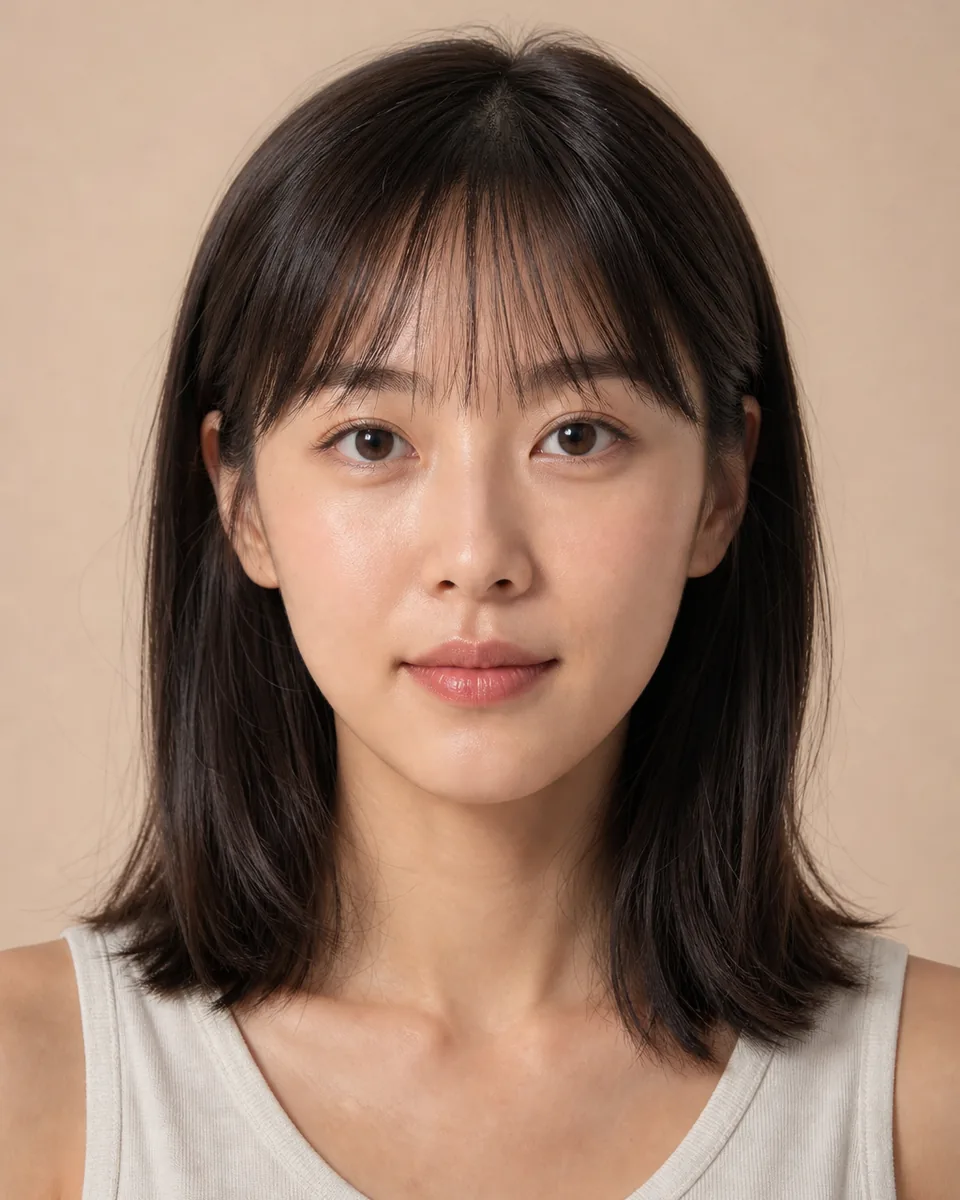
Classic Wispy Bangs
Light, separated strands sit near the brows while small gaps keep the forehead visible.
wispy bangs guide
Light density, visible separation, and longer face-framing pieces are the three details that make wispy bangs read airy instead of blunt. Compare those choices before you cut.
Wispy bangs in 30 seconds
Wispy bangs are a light, airy fringe built with lower density and visible separation, so some forehead remains visible. The key checks are how much hair is brought forward, how wide the section is, where the shortest piece lands, and whether the outer pieces frame the face. Straight hair shows the outline; wavy hair adds irregular movement; curly hair needs dry-length and shrinkage planning. Fine hair needs enough strands to look deliberate, while thick hair needs controlled sectioning so the fringe stays light. Long hair pairs well with longer outer pieces that bridge into layers, and a narrower center can keep a round face from gaining width at the cheeks. A virtual preview helps compare coverage and proportion on your photo, but it cannot predict cowlicks, growth direction, clumping, or daily styling.
Visual guide
Compare density, shortest point, fringe width, outer length, and base haircut before deciding which version to preview.
Light, separated strands sit near the brows while small gaps keep the forehead visible.
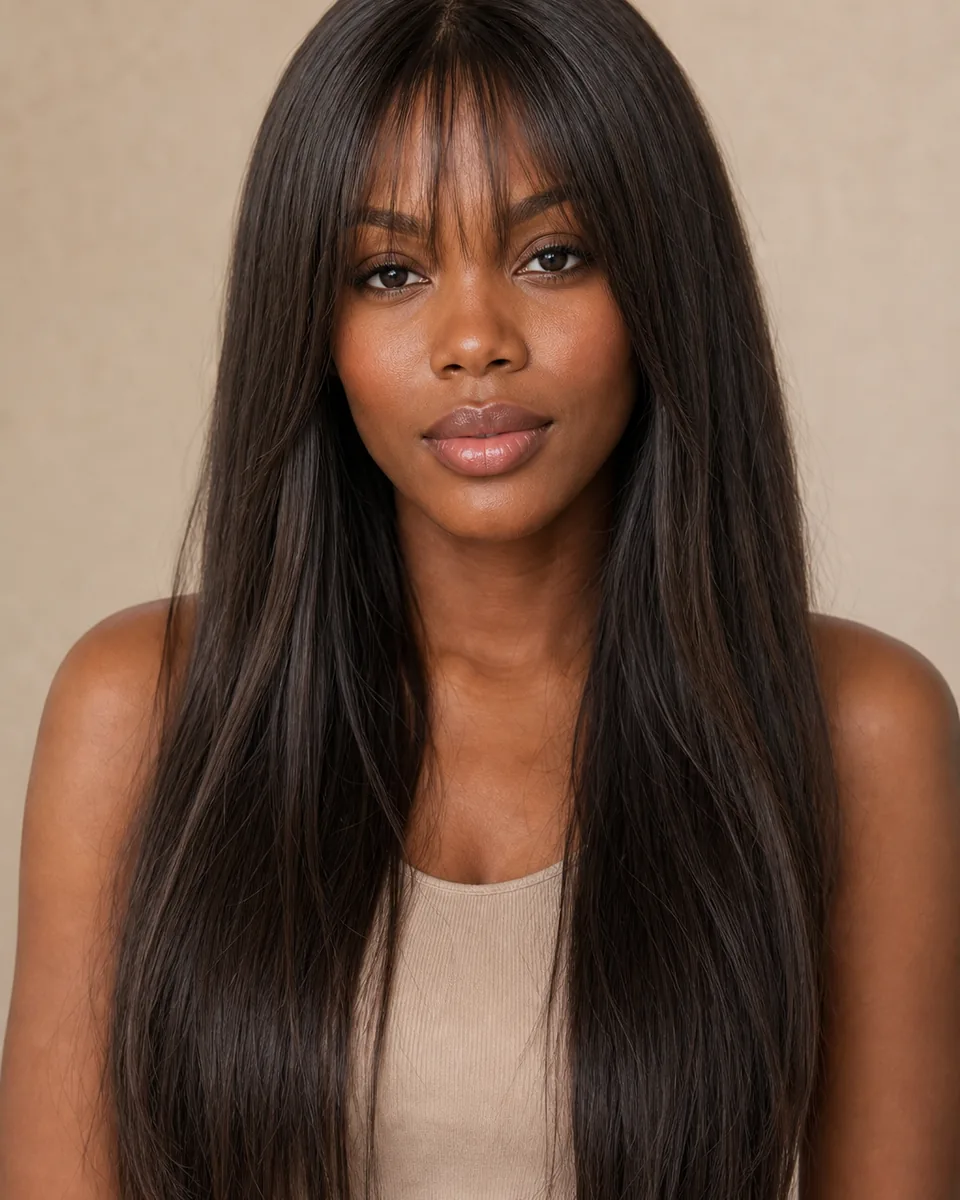
A short, airy fringe adds detail around the eyes without interrupting the long silhouette.
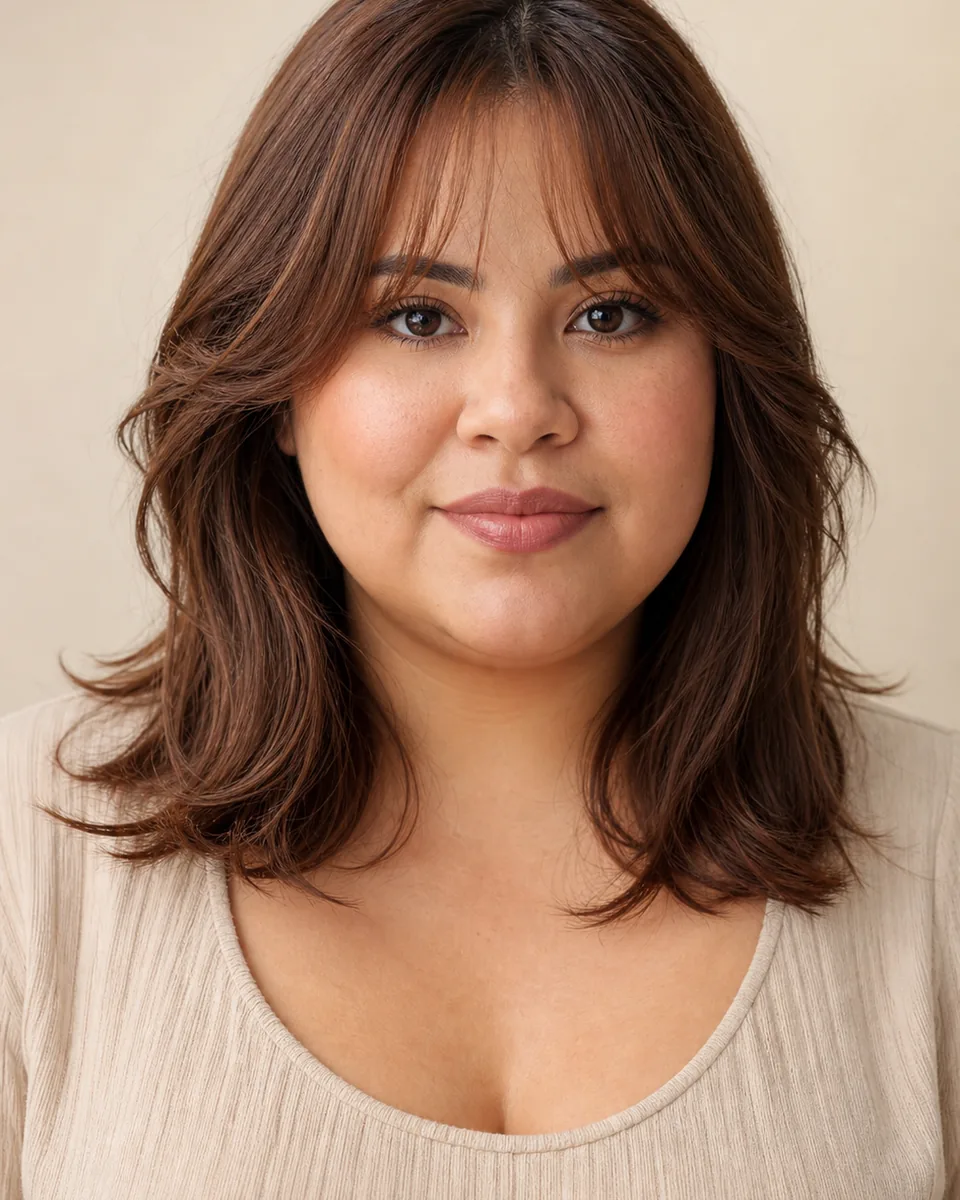
A narrow center section and longer outer pieces avoid building a wide line across the cheeks.
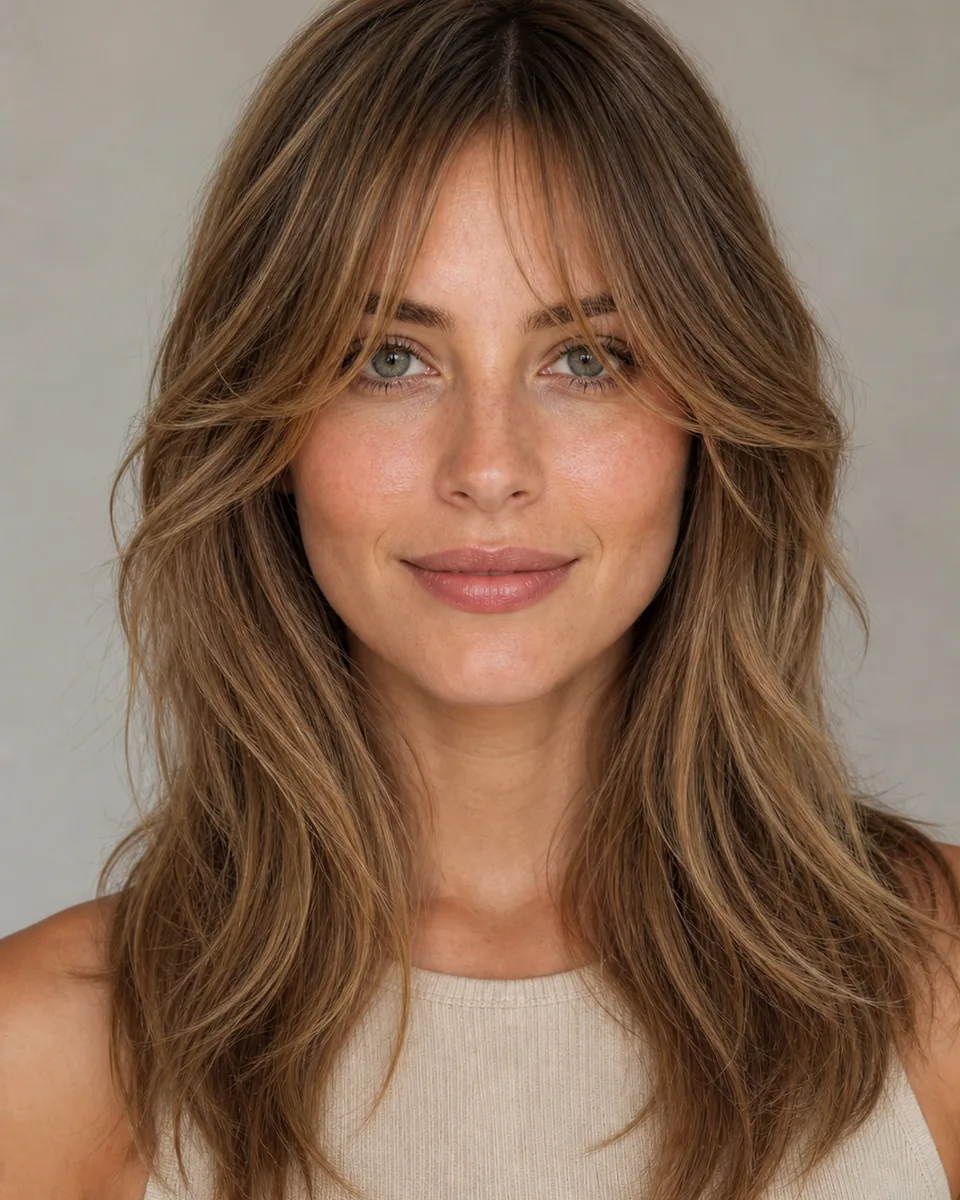
Low density combines with a soft center opening and sides that sweep toward the cheekbones.
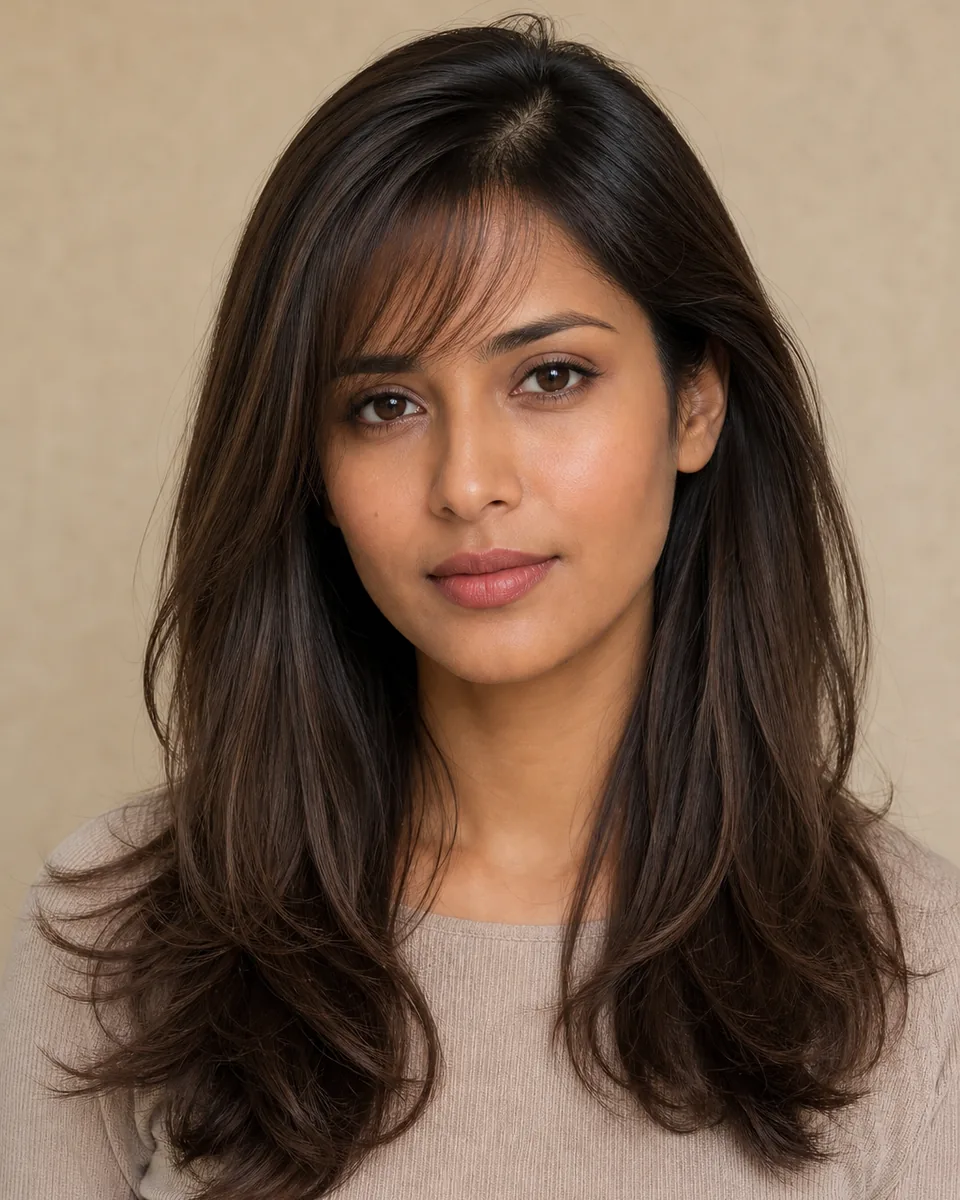
A light diagonal fringe creates asymmetry without the weight of a full side bang.
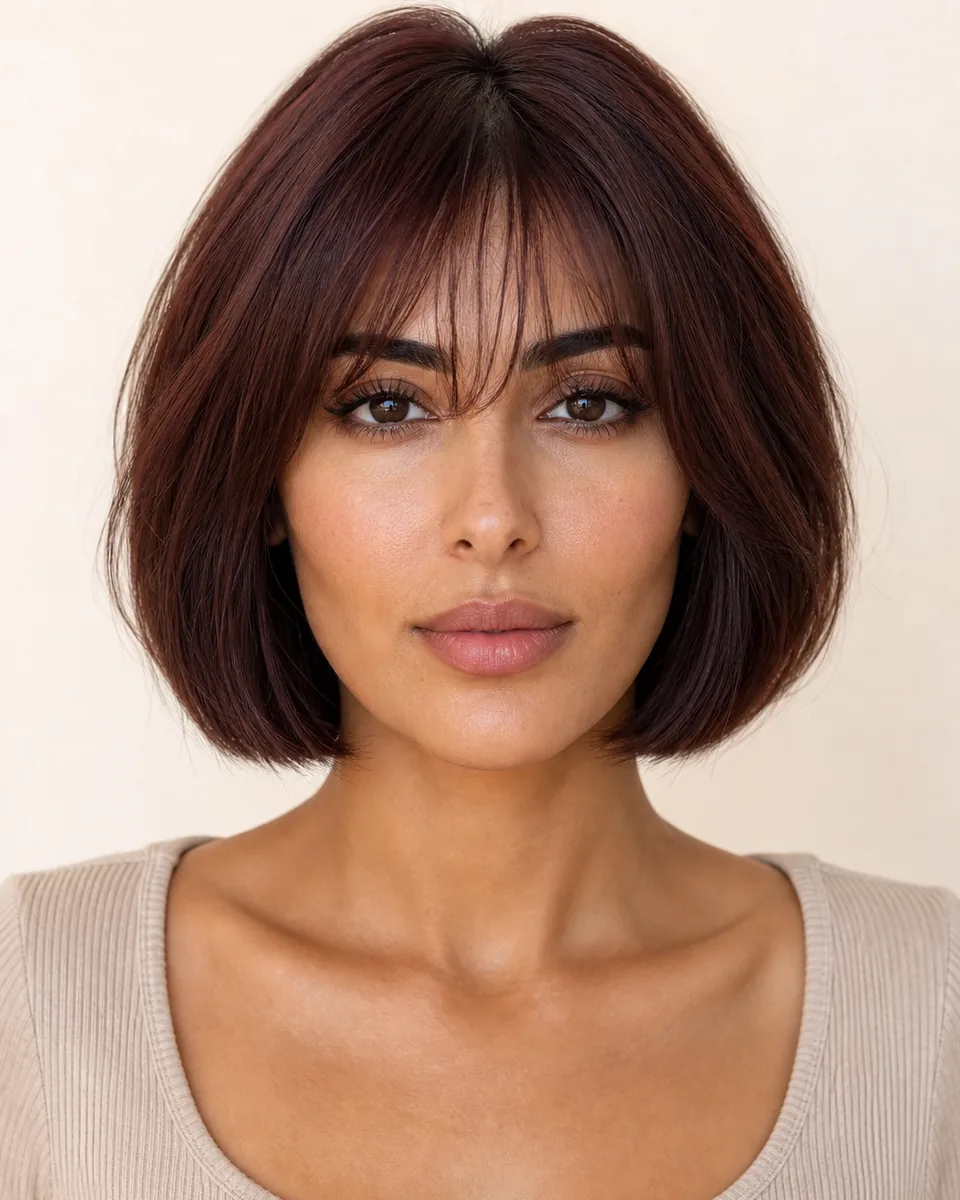
The broken fringe edge softens a defined bob perimeter and keeps the upper face open.
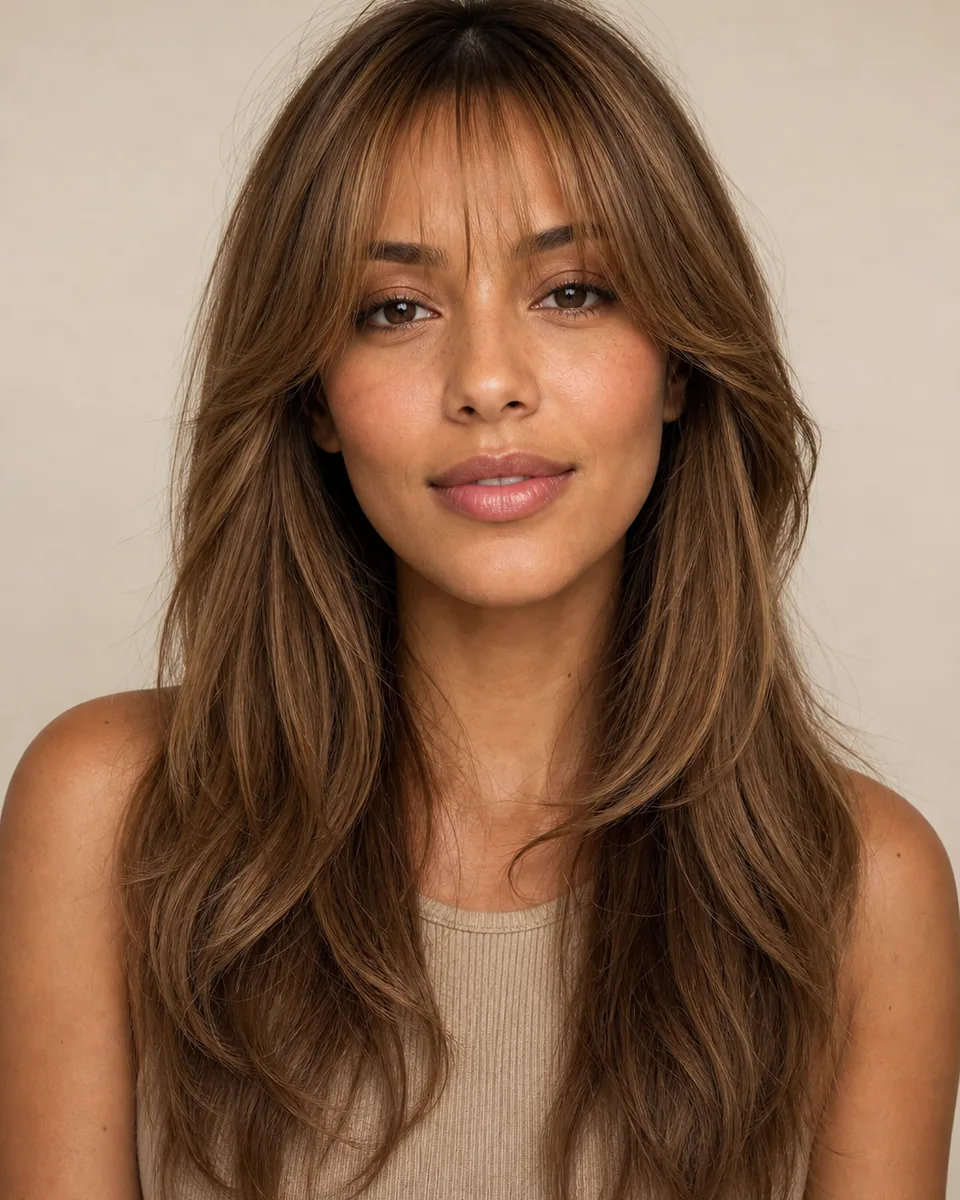
Longer side strands bridge the short fringe and the first face-framing layer.
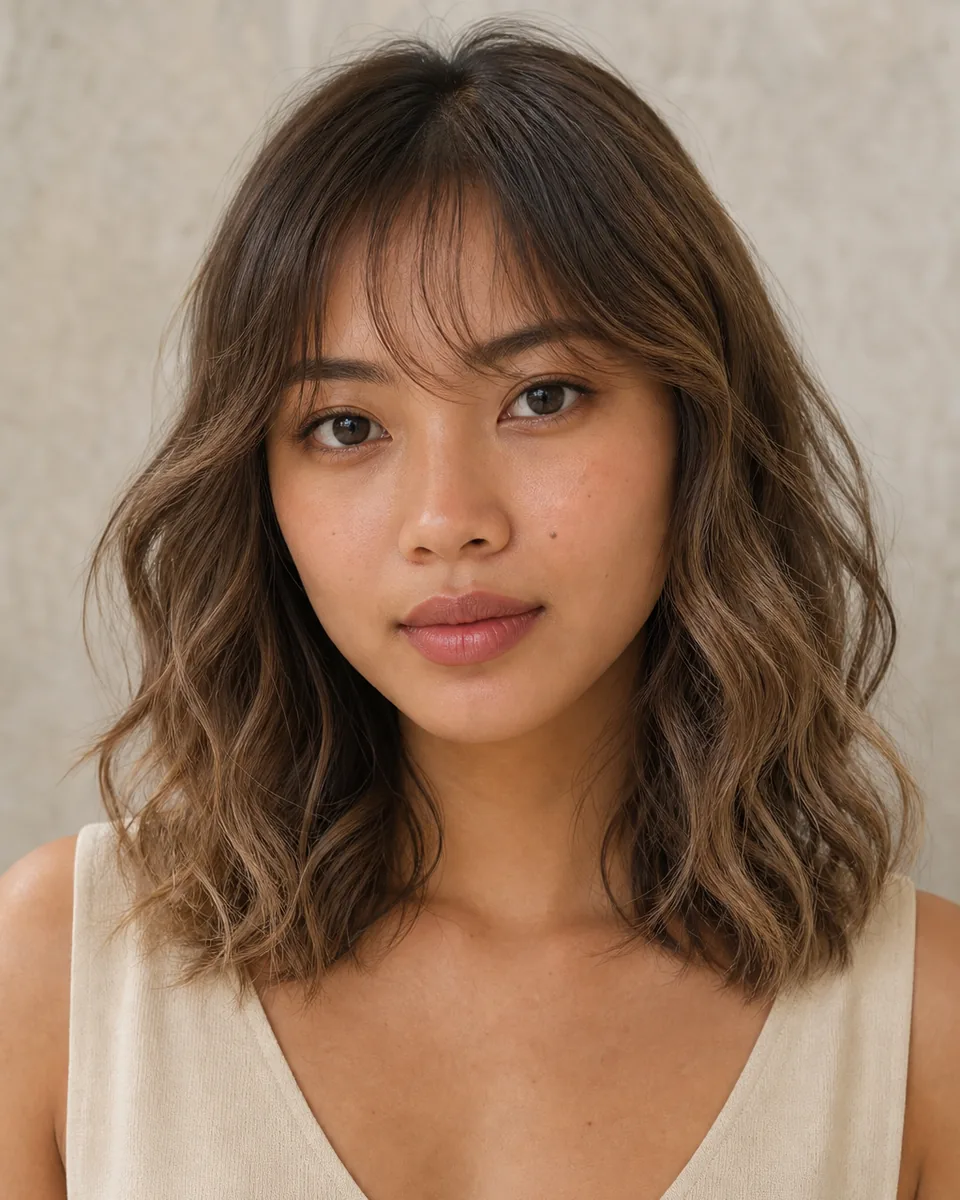
A soft bend keeps the fringe relaxed, though each separated section may move differently.
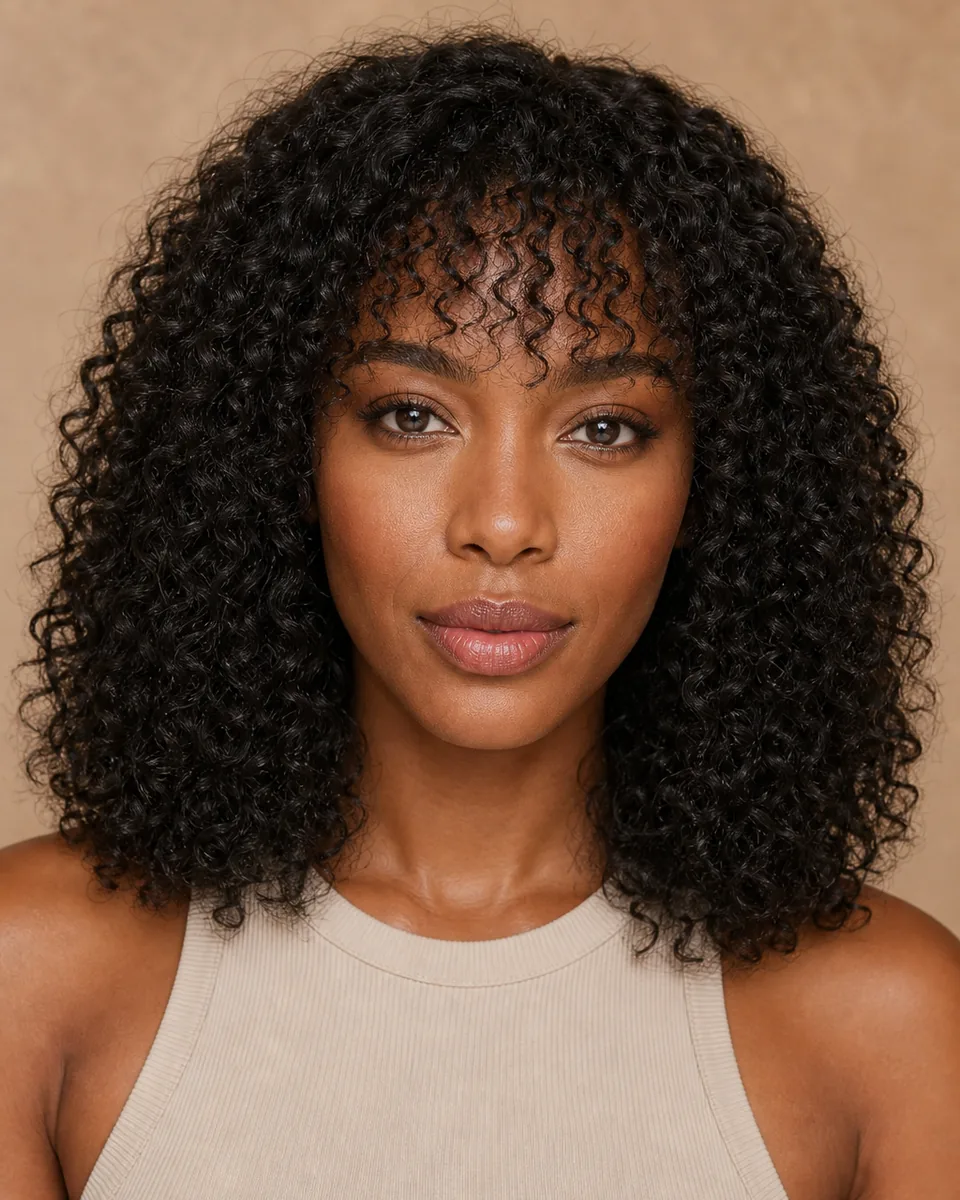
Small curl sections create airy coverage when the shortest point is judged at dry length.
Decision guide
Start with how much forehead you want to show, then adjust the width and outer pieces for your haircut and face frame.
| If you want… | Try… | Why it works |
|---|---|---|
| The lightest possible change | Classic narrow wispy bangs | A small fringe section adds movement without creating a solid horizontal line. |
| Wispy bangs with long hair | Brow-length center + longer sides | The side pieces connect the short fringe to long layers instead of leaving it isolated. |
| Less width on a round face | Narrow fringe + cheekbone-length edges | Visible forehead and longer outer pieces preserve more vertical space. |
| A center-open shape | Wispy curtain bangs | The light density remains, while the direction moves outward around the eyes. |
| A softer bob | Feathered wispy bangs | Irregular ends contrast with the stronger line at the bob perimeter. |
| Natural texture | Wavy or curly wispy fringe | Small sections follow the existing pattern instead of forcing a flat straight veil. |
Wispy bangs are defined by density, not by one fixed direction. Less hair is brought forward, individual strands or small sections remain visible, and some forehead shows between them. The fringe can fall straight, sweep to one side, or open like curtain bangs and still be wispy.
The cut stops reading as intentionally wispy when the fringe becomes one dense block or when oil joins the small sections into a few heavy pieces. Width matters too. A very wide fringe can feel visually dominant even when each strand is fine.
Wispy describes how much hair you see. Straight, side-swept, and curtain describe where that hair goes.
Long hair makes a short fringe more noticeable because the two lengths create contrast. The connection happens at the outer edges: pieces that gradually extend toward the temples or cheekbones can bridge the bangs into long layers.
If every bang ends at the same short point, the fringe may look detached from the rest of the haircut. If the outer pieces become too long or too full, the look can drift toward curtain bangs. Decide whether you want a light veil across the forehead or a center-opening frame before choosing the side length.
A clean base makes density and separation easy to judge, but flat or oily strands show quickly.
Face-framing layers give the outer fringe a natural place to blend.
A slight bend can connect the fringe to the movement below without adding more density.
Yes. The useful question is not whether a round face can wear bangs, but how wide and heavy the fringe should be. A narrow, separated center keeps some forehead visible. Outer pieces that continue past the widest part of the cheeks can create a longer diagonal frame.
A wide fringe that stops beside the cheeks may add emphasis exactly where the face is broadest. That does not make it forbidden; it simply creates a different effect. Compare both widths on the same portrait instead of relying on a universal face-shape rule.
A feathered edge can contrast with a defined jaw without erasing the face shape.
Light coverage can soften a wider forehead while avoiding too much weight at the temples.
A forward fringe can reduce visible forehead height; the shortest point controls how strong that effect feels.
Traditional wispy bangs usually place light separated pieces across more of the forehead. Curtain bangs are organized around an opening near the center and get longer toward both sides. One term describes density; the other describes shape, so a fringe can be both.
Choose traditional wispy bangs when light forehead coverage is the priority. Choose curtain bangs when the diagonal frame around the eyes and cheekbones matters more. Choose wispy curtain bangs when you want both features in a subtle version.
Use the full Curtain Bangs vs. Wispy Bangs guide to compare the two variables side by side.
Straight hair makes density and strand separation easy to see. Wavy hair adds uneven bends, so the fringe may split into pieces instead of forming an even veil. Curly hair needs dry-length planning because shrinkage can move the shortest point higher than expected.
Fine hair needs enough strands to look intentional rather than sparse. Thick hair often needs careful section control so the stylist removes visual weight without leaving short bulky layers behind the bangs. In every texture, a strong cowlick can split the fringe where the roots naturally want to separate.
Oil from the forehead, skincare, sweat, and heavy styling products can join fine sections together. Keep rich product away from the roots, refresh the fringe separately when needed, and direct the roots before shaping the ends.
More product rarely makes a wispy fringe look lighter. The goal is clean separation with enough control to keep strands from collapsing into the eyes.
Adding wax or oil to create piece-y texture can turn many fine sections into a few heavy gaps. Start with less product than the rest of your hair.
Wispy bangs may look low commitment because they use less hair, but the shortest pieces still change quickly as they grow. Brow-length sections can move into the eyes, while longer outer pieces usually blend into face-framing layers more easily.
The grow-out is often softer than a dense blunt fringe because there is less weight across the forehead. It still passes through an in-between stage where the strands may split, sweep sideways, or need pinning. Ask your stylist how the chosen width will grow into the rest of your cut.
Do not ask only for “wispy bangs.” Describe the density, width, shortest point, and side connection you want.
How much forehead should remain visible?
Should the section stay narrow or extend toward the temples?
Above the brows, at the brows, or lower?
Should the sides end at the temples, cheekbones, or jaw?
Use one clear front-facing portrait and keep the base length, texture, and color stable. Compare a traditional forward fringe, a longer version with blended sides, and a wispy curtain variation.
Look at the amount of visible forehead, the width of the fringe, the shortest point, and whether the outer pieces connect to your haircut. AI can show those visual directions, but it cannot predict cowlicks, oil, shrinkage, or how much daily separation the real fringe will need.
Try it visually
Keep one portrait and hair color while you compare classic, long, and curtain-shaped wispy fringe.
Preview wispy bangsEditorial approach
This guide treats wispy as a density decision and separately evaluates direction, width, shortest point, side blend, base haircut, texture, maintenance, and grow-out. Face-shape suggestions are adjustable starting points, not rules about who can wear a fringe.
About AI hairstyle previewsWigTryAI is for visual comparison and inspiration, not a prediction of an exact salon result.
Common questions
Wispy bangs are a light-density fringe made from separated strands or small sections. They leave some forehead visible instead of forming one solid line.
Yes. Brow-length wispy bangs can add detail around the eyes, while longer outer pieces connect the fringe to long layers. The contrast is stronger when the base hair is very long and straight.
They can. A narrower fringe, visible forehead, and longer outer pieces are useful starting points when you want to avoid adding width at cheek level. These are adjustable effects, not rules.
No. Wispy describes light density; curtain describes a center-opening shape that gets longer toward both sides. Curtain bangs can be wispy, but traditional wispy bangs may fall forward across the forehead.
Both can wear them, but the section size changes. Fine hair needs enough strands to look deliberate, while thick hair needs controlled density so the fringe does not become heavy.
No. A preview can compare density, width, and face framing, but it cannot predict cowlicks, oil, humidity, shrinkage, or how the strands will separate during the day.
Move between the broad bangs guide, the curtain comparison, face-shape advice, and the live hairstyle preview without changing the question each page owns.