
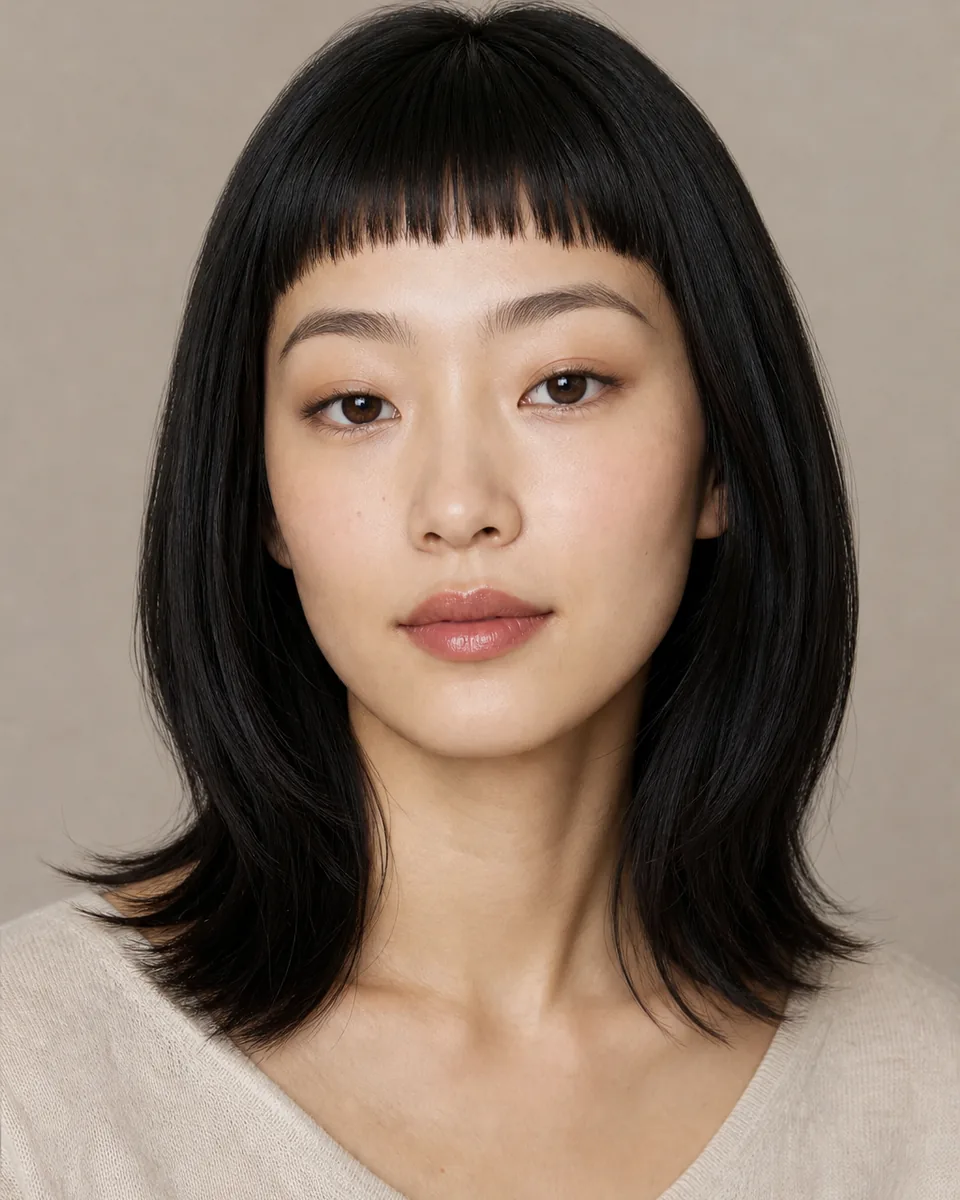
Classic Micro Bangs
A short, mostly straight fringe sits clearly above the brows and creates a graphic upper-face line.
micro bangs guide
Micro bangs sit clearly above the brows, but the edge, density, width, and base haircut decide whether they feel graphic, soft, choppy, or airy.
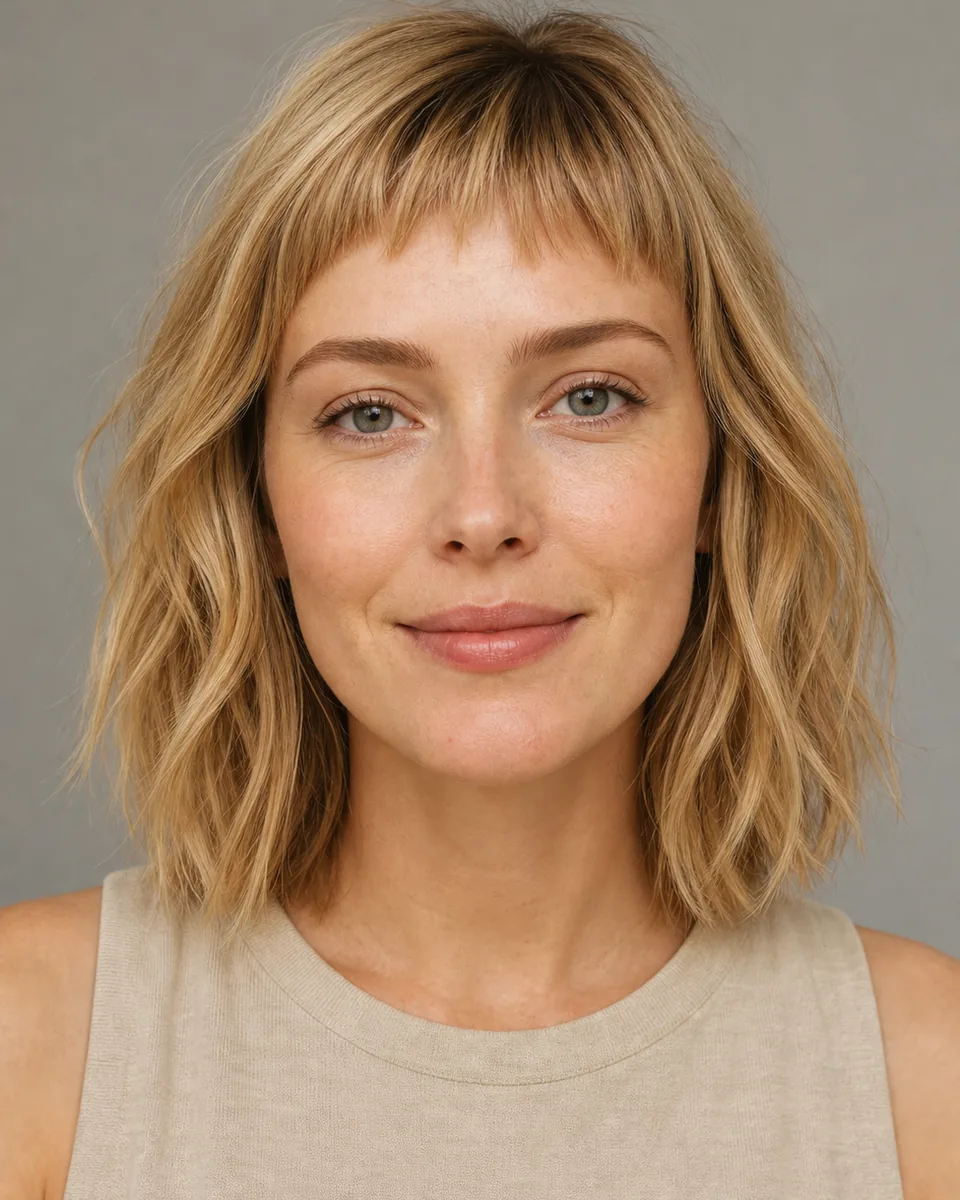
Micro bangs in 30 seconds
Micro bangs are a short fringe that sits clearly above the eyebrows. A wispy version uses a lighter section with visible separation, so more forehead shows through; a soft version keeps a light, less rigid edge; a blunt version creates a denser, more even line; and a choppy version uses deliberately uneven pieces for texture. These labels can overlap—the defining feature is the above-brow length, while density and edge shape change the effect. With long hair, that short-to-long contrast makes the fringe a focal point. Straight hair shows the edge and regrowth clearly, while waves and curls require dry-length planning because shrinkage can move the fringe higher. A virtual preview can compare height, density, and face framing, but it cannot predict growth direction, dry shrinkage, or salon execution.
Visual guide
Compare the height above the brows, edge softness, density, width, texture, and base haircut before committing to the shortest fringe family.
A short, mostly straight fringe sits clearly above the brows and creates a graphic upper-face line.
A feathered edge reduces the severity of the short line while preserving visible space above the brows.
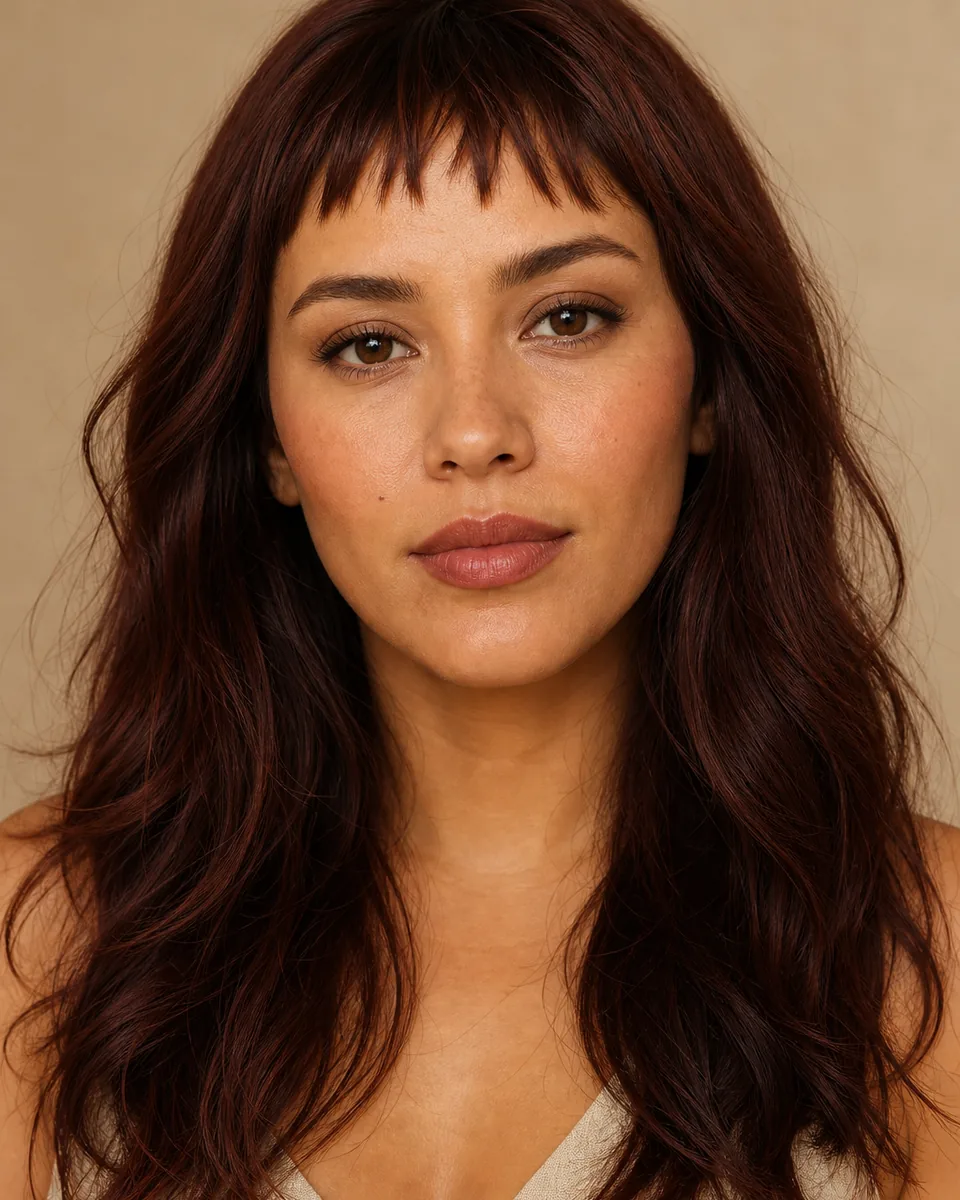
Deliberately uneven short pieces create a stronger alternative look and more visible edge movement.
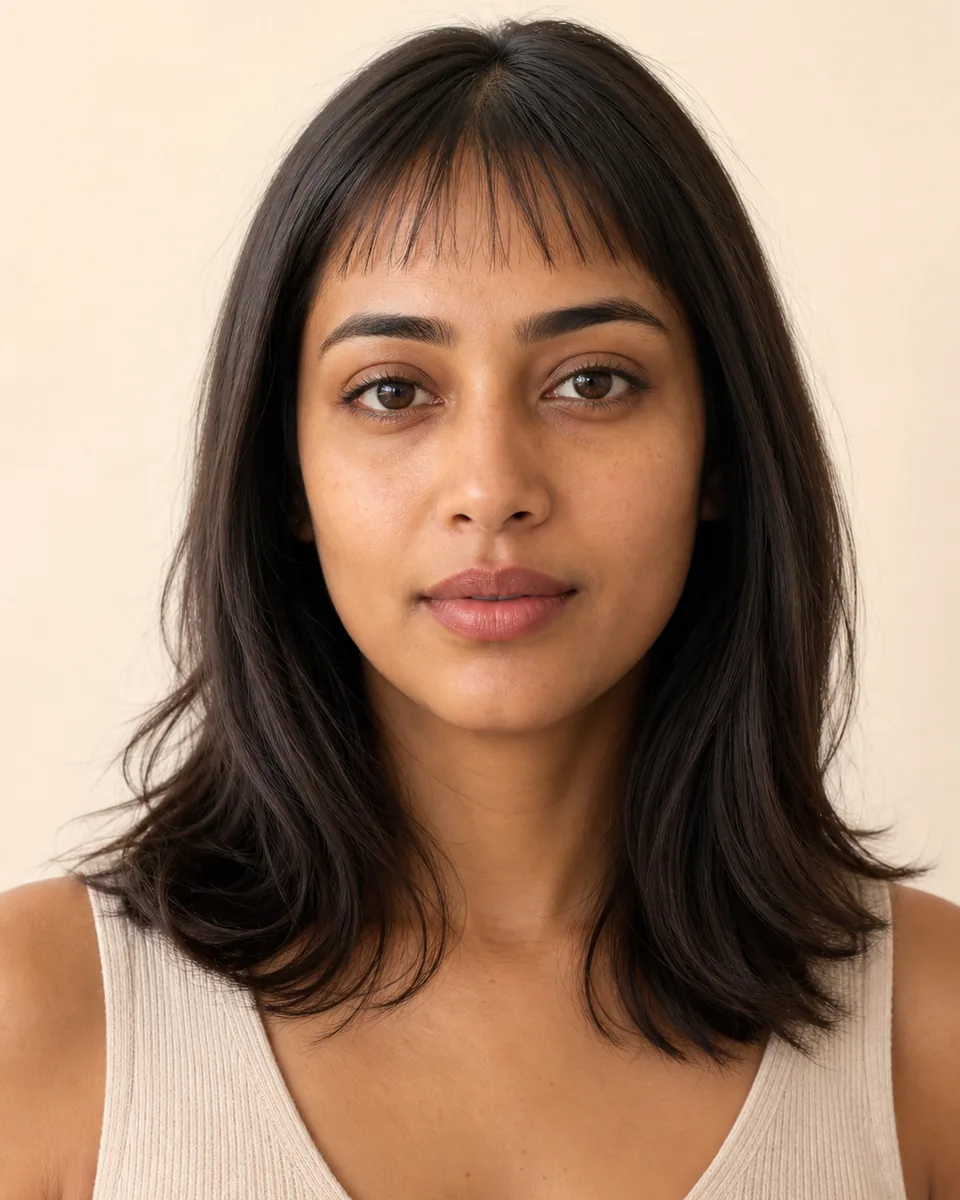
Low density keeps the very short fringe airy and lets more forehead show between strands.
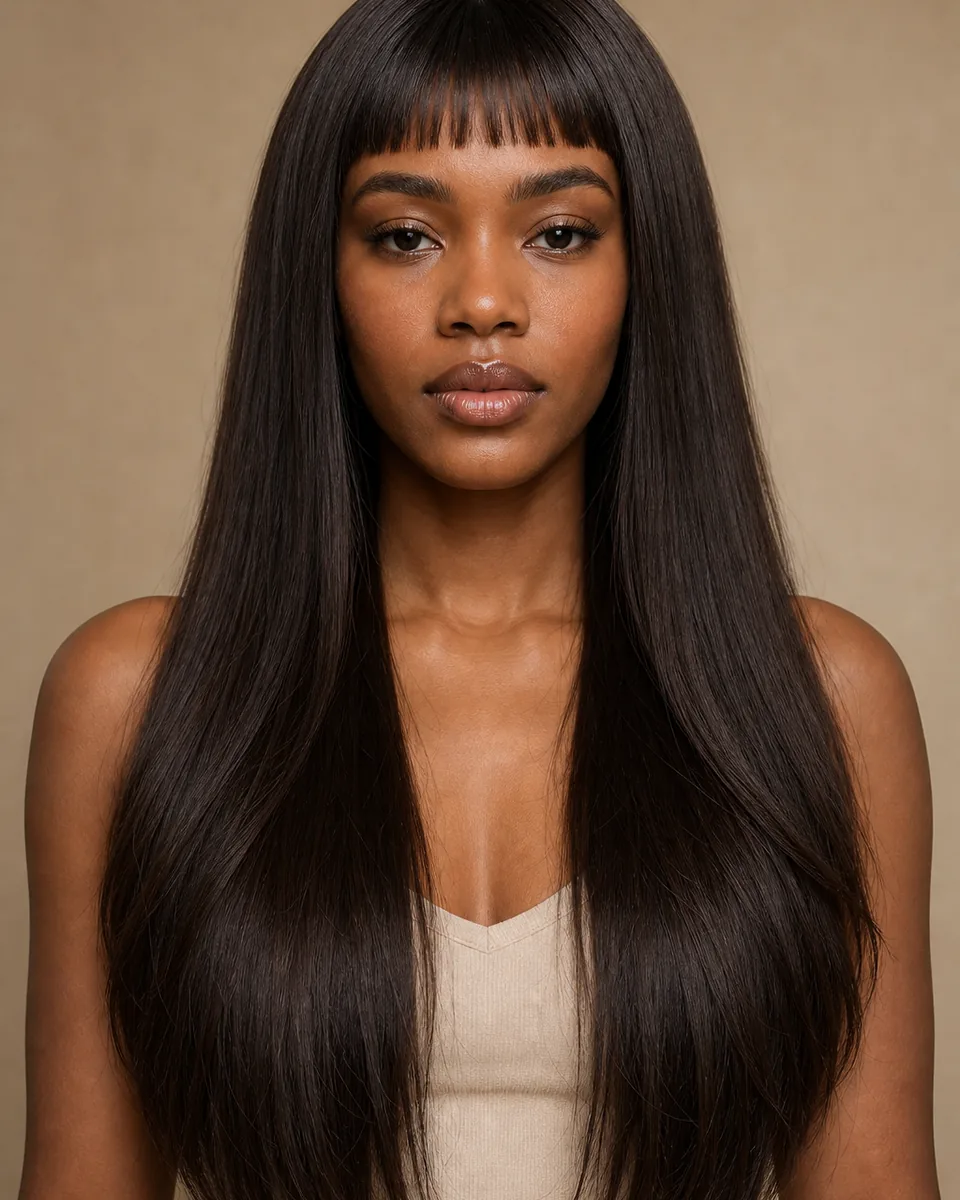
The shortest fringe and longest base length create a deliberate high-contrast silhouette.
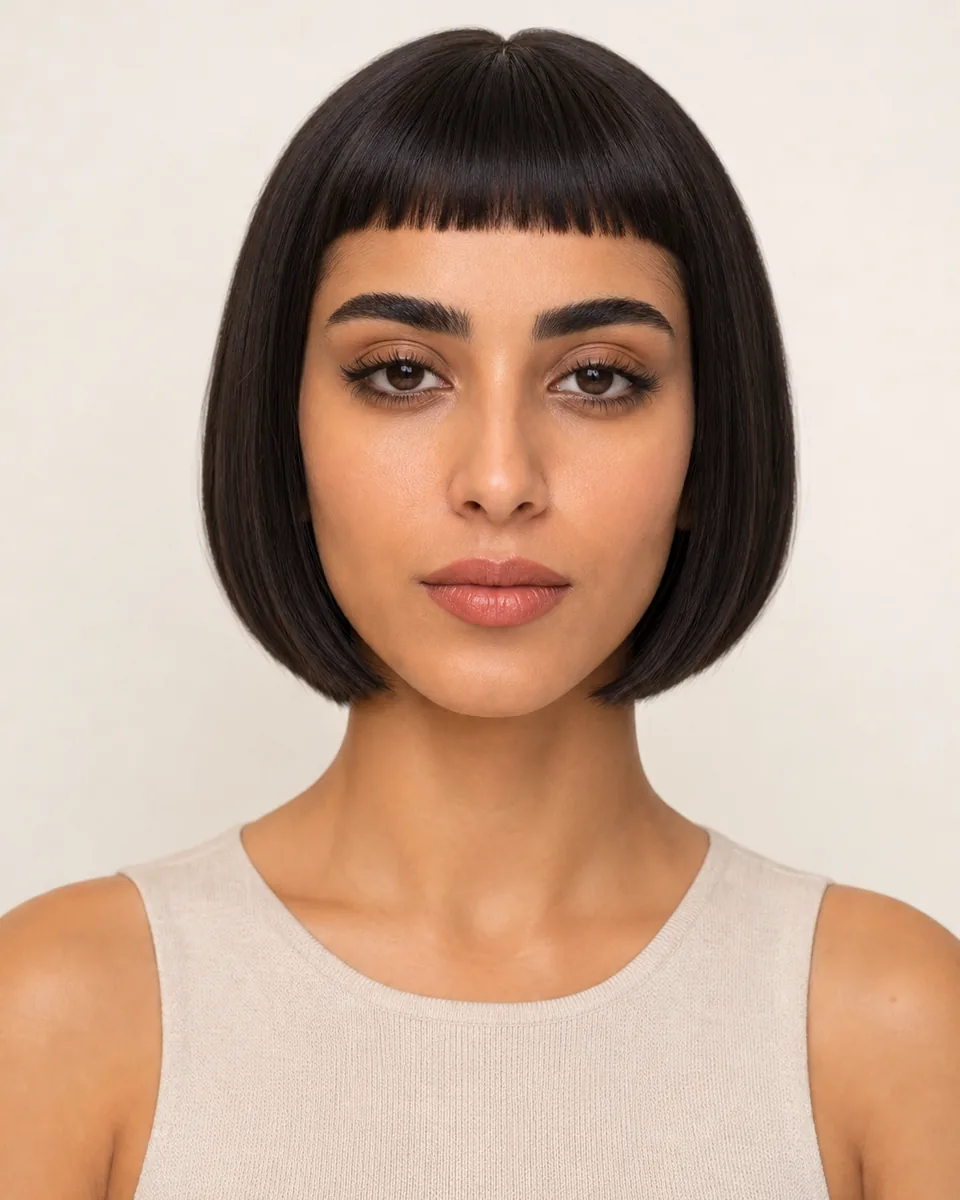
Two precise lines—the short fringe and bob perimeter—make the overall shape feel structured.
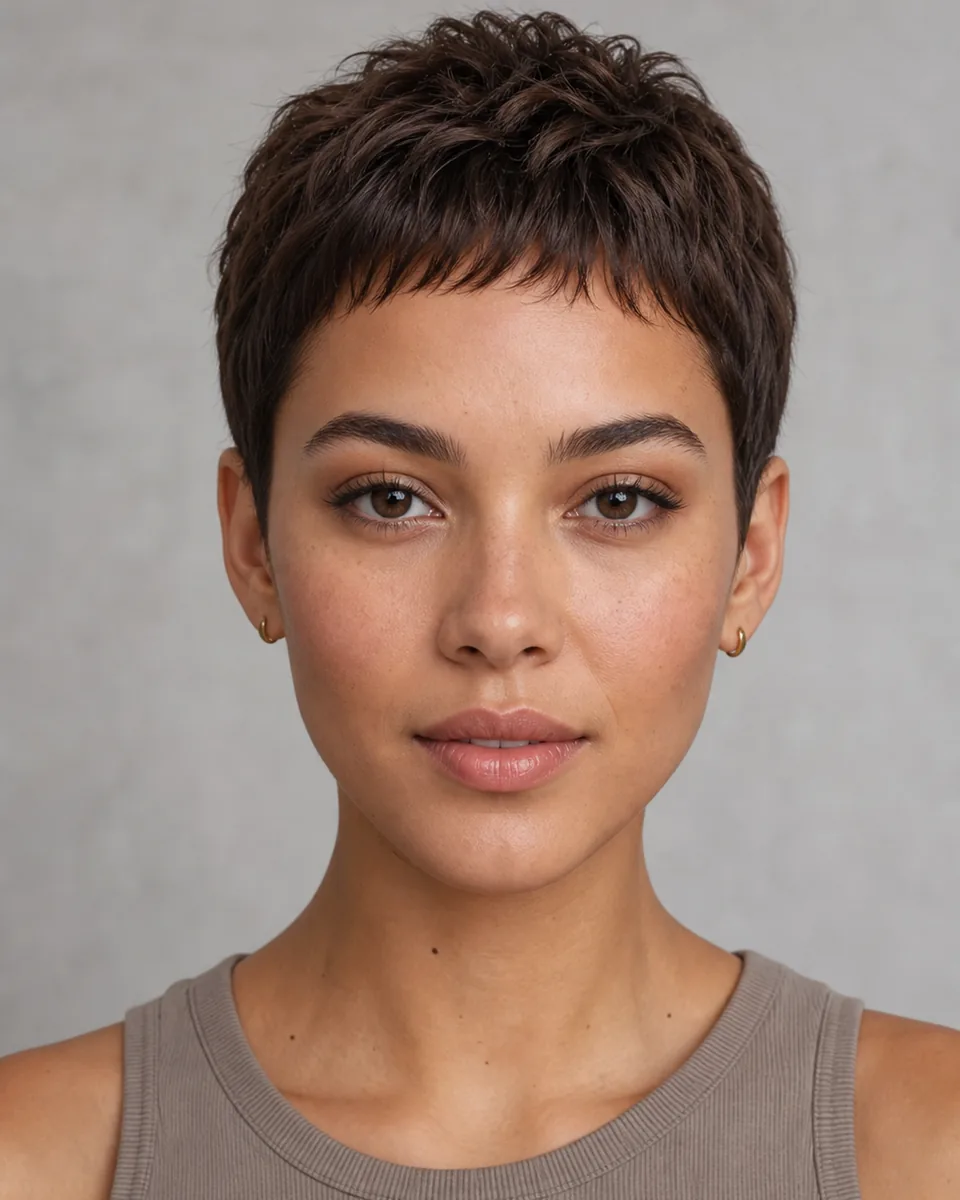
A cropped outline connects the short fringe to the sides instead of relying on length contrast.
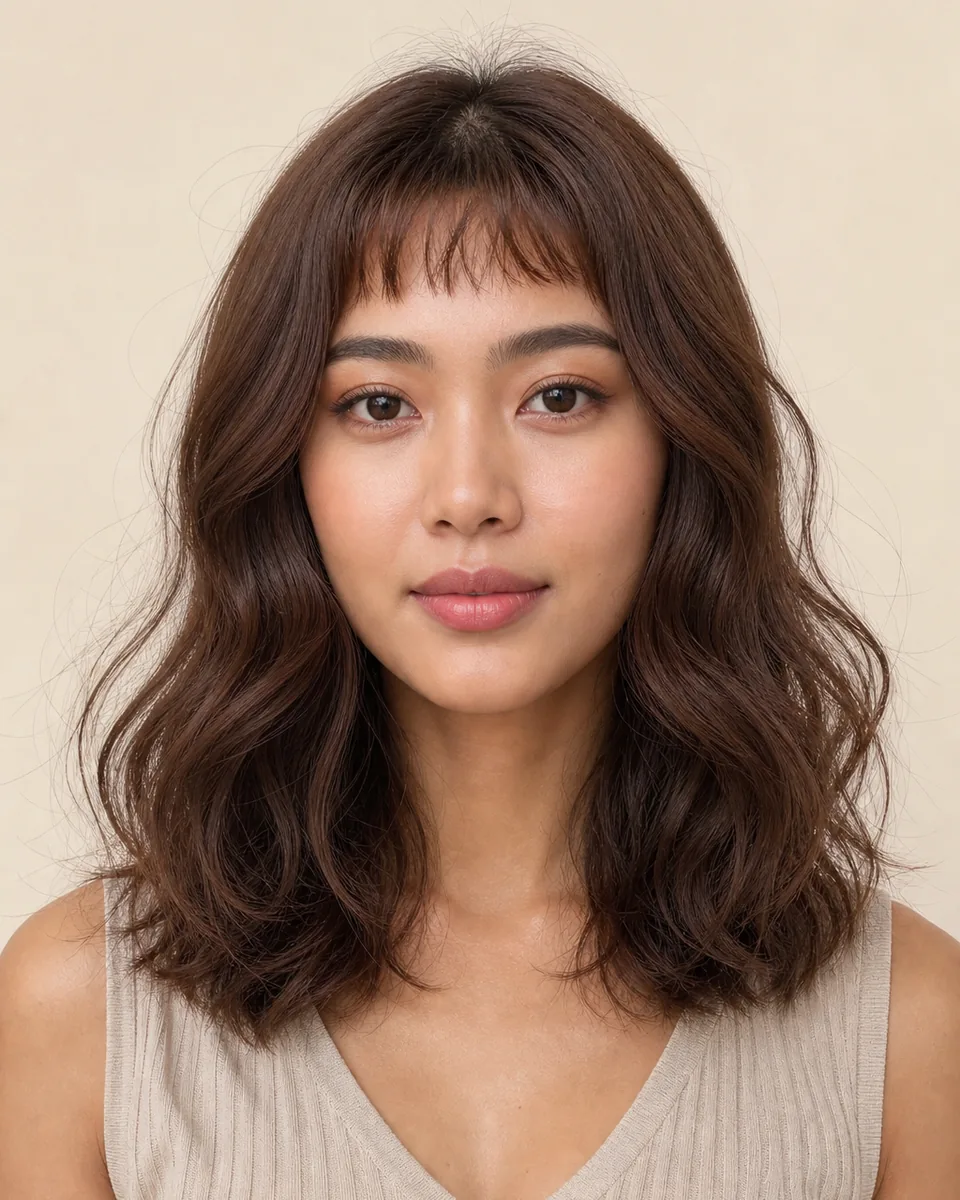
A slight irregular bend softens the edge while the above-brow length keeps the look recognizable.
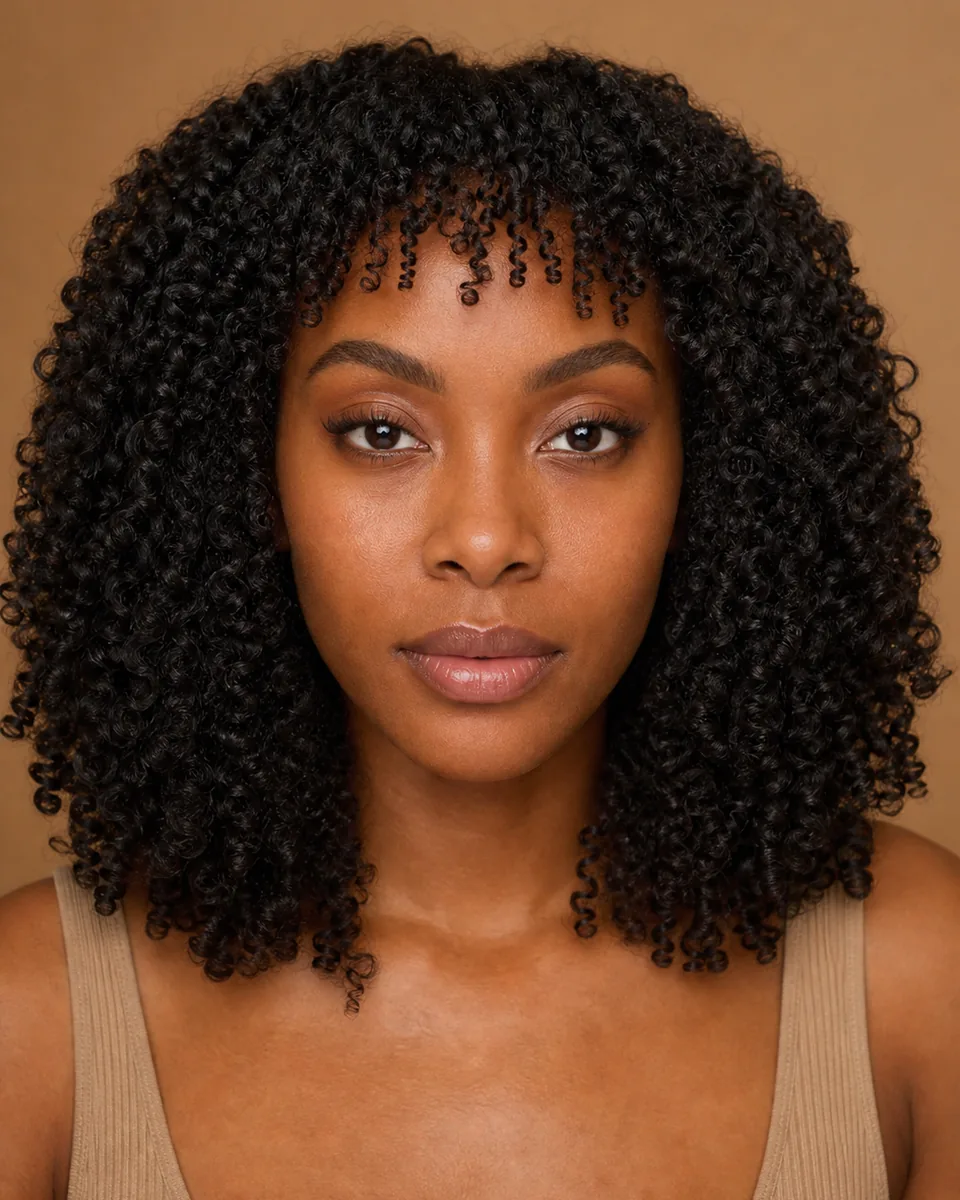
Short curl sections expose the brows, but dry shrinkage must be included in the planned length.
Decision guide
Choose the edge and density first. Those details decide whether the same short length feels graphic, soft, choppy, or airy.
| If you want… | Try… | Why it works |
|---|---|---|
| A clean graphic line | Classic straight micro bangs | An even edge makes the above-brow space and brow shape highly visible. |
| A less severe short fringe | Soft textured micro bangs | Feathered ends interrupt the line without turning the fringe into a longer wispy bang. |
| An alternative, editorial effect | Choppy micro bangs | Uneven short pieces make irregularity part of the design rather than a cutting error. |
| More forehead visible | Wispy micro bangs | Lower density adds gaps while the shortest point remains clearly above the brows. |
| Maximum length contrast | Micro bangs + long hair | The short fringe becomes a deliberate focal point against an uninterrupted long silhouette. |
| Texture-led softness | Wavy or curly micro bangs | Natural bends break up the edge, provided the dry length remains intentional. |
Micro bangs are a fringe cut clearly above the eyebrows, leaving visible forehead between the bang edge and the brows. They are also called baby bangs or micro fringe. The exact height varies, but a fringe that merely clears the brows usually reads as short bangs rather than micro bangs.
Length alone does not define the final effect. A straight dense edge feels graphic. Feathered ends feel softer. Choppy sections feel more alternative, while a wispy version uses less hair and exposes more skin.
The micro part is the height above the brows. The personality comes from the edge, density, and base haircut.
Long hair does not make micro bangs less wearable; it makes them more visible. The extreme length contrast turns the fringe into a focal point and can add structure to an otherwise simple long silhouette.
Straight long hair emphasizes the geometry. Long waves create a softer contrast, while long layers can connect the fringe to the face without reducing its shortness. If you want the bangs to blend quietly into the haircut, a longer fringe family may be a better match.
Produces the clearest contrast between a precise short fringe and uninterrupted length.
Adds movement around the face while leaving the micro edge visually independent.
Balances the short line with softer movement through the lengths.
Micro bangs expose more forehead and place a strong detail above the eyes. Face-shape guidance is useful only when it identifies what to adjust: fringe width, edge curve, density, side pieces, and the volume of the base haircut.
A wide straight fringe creates a strong horizontal line. A narrower or slightly arched version leaves more space at the temples. Soft, irregular ends reduce geometric contrast. Preview those variables rather than asking whether one face shape is allowed to wear the style.
A narrower fringe or softly arched edge can avoid extending the strongest line across the full forehead.
A feathered or choppy edge can contrast with a defined jaw more softly than a ruler-straight fringe.
Fringe width matters because a very broad section can add more emphasis at the widest part of the face.
The exposed forehead above the brows can add vertical space, so compare more than one fringe height.
Wispy micro bangs use a lighter section and visible gaps between small pieces, so more forehead shows through and the edge reads airy. Blunt micro bangs use more density and a straighter, more continuous line, so the fringe looks graphic and makes its above-brow height more obvious.
Wispy edges usually need light separation rather than a heavy coating of product; oil can make the pieces collapse into clumps. A blunt edge shows uneven regrowth sooner and depends on a precise line, while both versions still require dry-length planning around cowlicks, waves, and curls.
Compare the density decision in the wispy bangs guide before combining it with an above-brow length.
Straight hair shows every millimeter of the edge, which makes precision and regrowth obvious. Waves can introduce uneven bends that soften the line. Curly hair may spring substantially higher after drying, so the planned wet length cannot be treated as the final position.
A cowlick or strong growth direction has little length available to settle down. That can push one section upward or split the fringe. A stylist should evaluate the hairline and natural pattern before choosing the height and width.
Do not judge wavy or curly micro bangs only while wet. Shrinkage can move an already short fringe much higher than intended.
Micro bangs show growth sooner than longer fringe because the visible space above the brows changes quickly. A few millimeters can shift the look from sharply micro to ordinary short bangs. The exact trim rhythm depends on hair growth, texture, and the desired edge.
Grow-out is a real commitment. The fringe moves through short, brow-level, and eye-level stages before it can blend into face-framing pieces. Choppy or wispy edges may disguise the transition better than one dense straight line, but they do not remove it.
An AI image can help you compare fringe height, width, density, and the relationship to your brows and base haircut. It cannot show how your natural hairline will lift, split, shrink, or respond to a specific cutting technique.
Bring the visual direction to a stylist and discuss dry length, cowlicks, edge shape, and grow-out. Micro bangs leave less room for correction than a longer fringe, so the real haircut should not be copied from generated pixels as a measurement guide.
Replace “short bangs” with a precise brief covering dry height, width, edge, density, and how the fringe should meet the sides.
How much forehead should remain between the edge and brows?
Straight, softly feathered, choppy, or slightly arched?
Graphic and full or light with visible separation?
Temple to temple or a narrower section with open sides?
Use a centered portrait with the hairline, forehead, brows, and jaw visible. Keep the base haircut and color stable while comparing a classic straight edge, a softer textured edge, and a low-density version.
Judge how much forehead remains above the brows, whether the width feels balanced, and how the short fringe relates to the rest of the haircut. The preview is a visual decision aid, not a prediction of dry shrinkage, growth direction, trim frequency, or salon execution.
Try it visually
Keep the same portrait and base haircut while you compare a classic straight edge, a soft wispy edge, and a choppy version.
Try micro bangs on my photoEditorial approach
This guide separates the defining above-brow length from edge shape, density, width, base haircut, face framing, texture, maintenance, and grow-out. It treats face-shape advice as adjustable visual guidance rather than a permission rule.
About AI hairstyle previewsWigTryAI is for visual comparison and inspiration, not a prediction of an exact salon result.
Common questions
Micro bangs are a fringe cut clearly above the eyebrows, leaving visible forehead above the brows. They may be straight, soft, choppy, curly, or wispy.
Wispy micro bangs are an above-brow fringe cut from a lighter section so small gaps remain between the pieces. They show more forehead and create a softer edge than dense blunt micro bangs, although the exact separation still depends on texture, cowlicks, and styling.
The terms are commonly used for the same above-brow fringe family. The exact height and edge vary, so a reference image is more useful than relying on either name alone.
Yes. Micro bangs create a deliberate high-contrast focal point with long hair. Straight lengths emphasize geometry, while layers, waves, or curls soften the contrast.
Any face shape can test them. Width, edge curve, density, fringe height, and the base haircut change the effect more usefully than a universal face-shape rule.
They usually show growth sooner than longer bangs because the space above the brows changes quickly. Styling and trim needs also depend on cowlicks, texture, and the desired edge.
No. A preview is not a cutting diagram and cannot account for dry shrinkage, cowlicks, growth direction, or cutting technique. Use it as a visual reference for a stylist.
Use the bangs hub, wispy and curtain guides, face-shape advice, and live preview to separate fringe height from density and direction.