
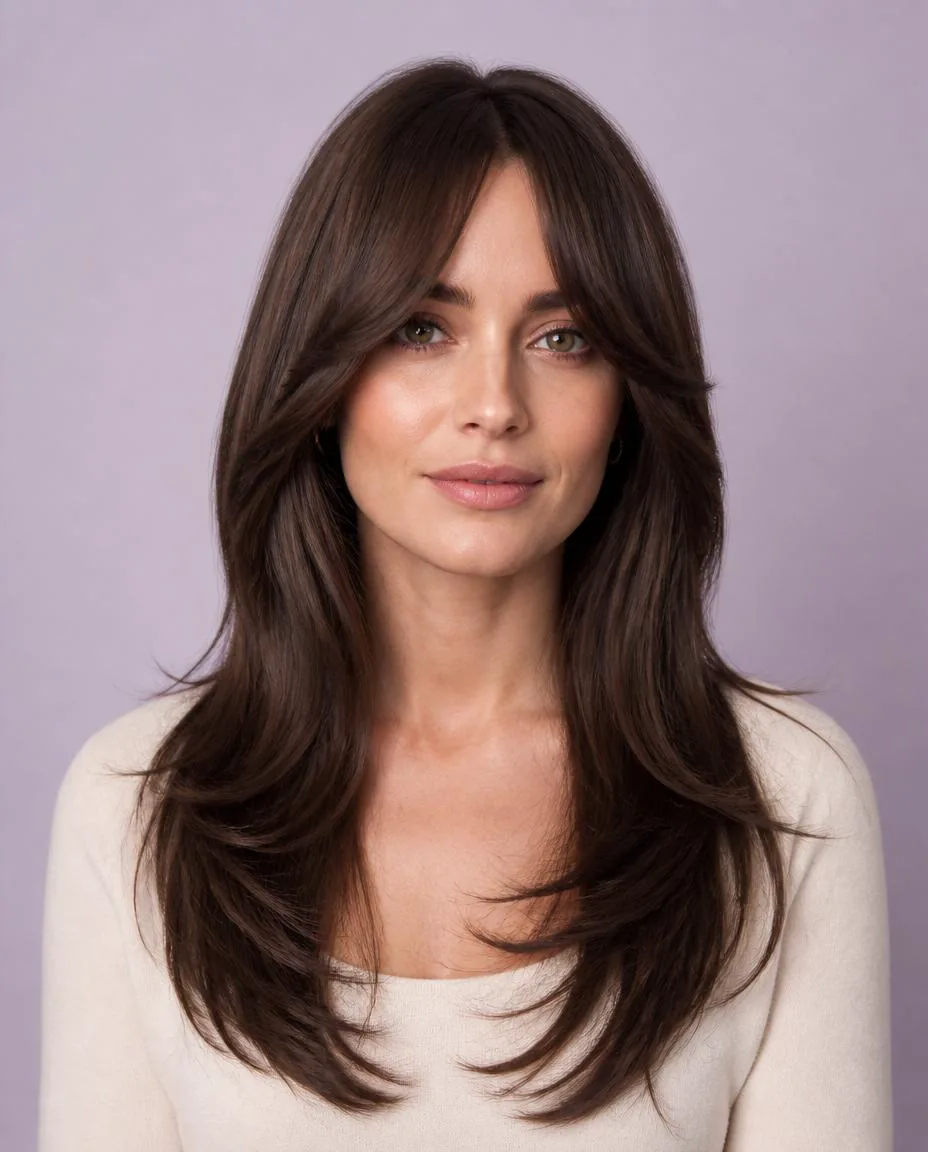
Long Curtain Bangs
Soft, low-commitment pieces that begin near the cheekbones and blend into longer layers.
curtain bangs guide
Curtain bangs are not one fixed haircut. Length, density, center-opening width, and the point where the sides blend into your hair can completely change the result. Compare the main variations, then preview the look before you cut.
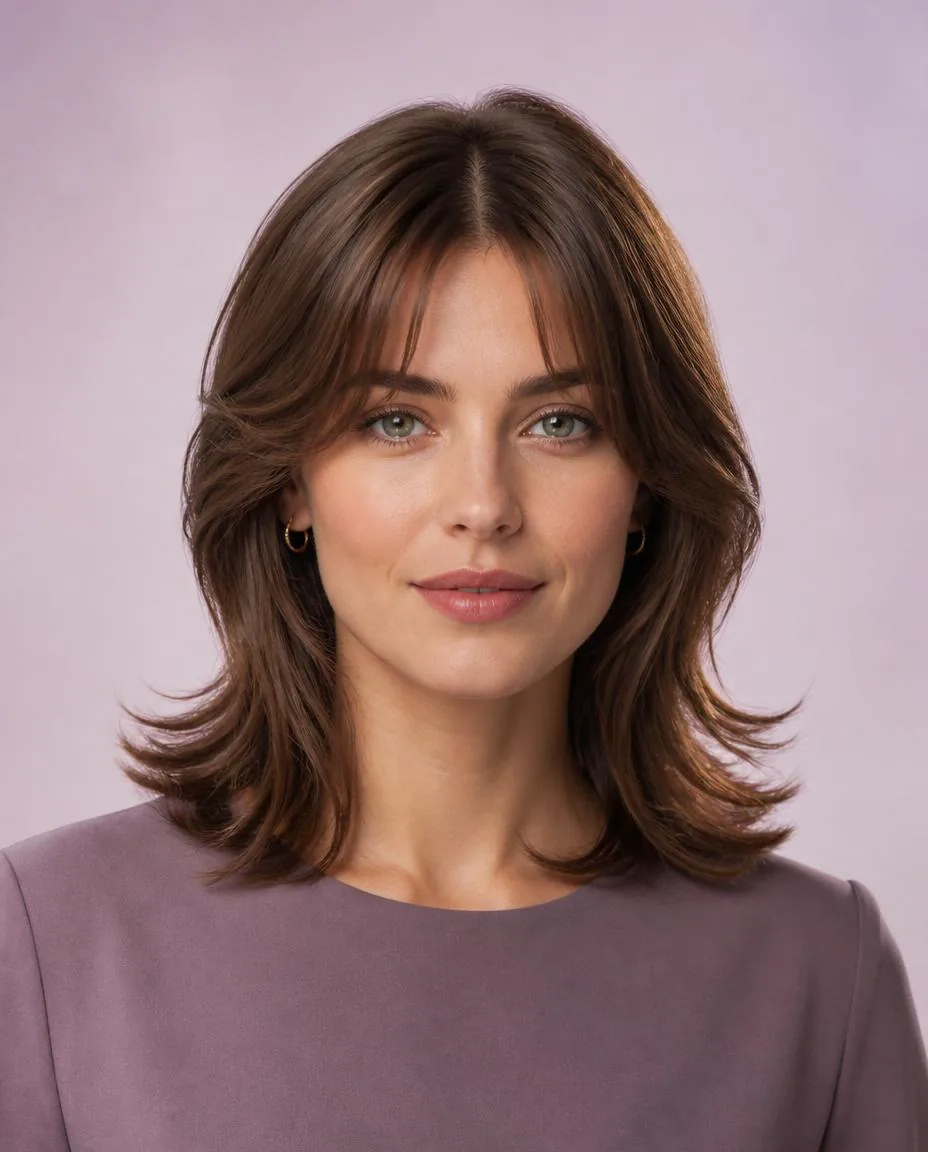
Curtain bangs in 30 seconds
Curtain bangs are a center- or near-center-parted fringe that gets longer toward the sides of the face. The four details that change the look most are the shortest point, density, center opening, and blend length. Longer versions that begin near the cheekbones are usually the lowest-commitment option because they can grow into ordinary face-framing layers. Shorter or fuller versions make the fringe more visible around the eyes and create stronger framing, but they also show regrowth sooner. Curtain bangs work on most face shapes because opening width and side length can be adjusted, and they pair with straight, wavy, or curly hair — though shrinkage changes where the shortest piece lands on curls. Wispy versions use less hair; full versions add density through the sides. A virtual preview shows the visual direction, but it cannot predict cowlicks, growth patterns, or daily styling behavior.
Visual guide
Compare fringe length, density, blend point, and texture before deciding which direction feels most like you.
Soft, low-commitment pieces that begin near the cheekbones and blend into longer layers.
A lighter-density fringe with fine separated strands and more forehead visible.
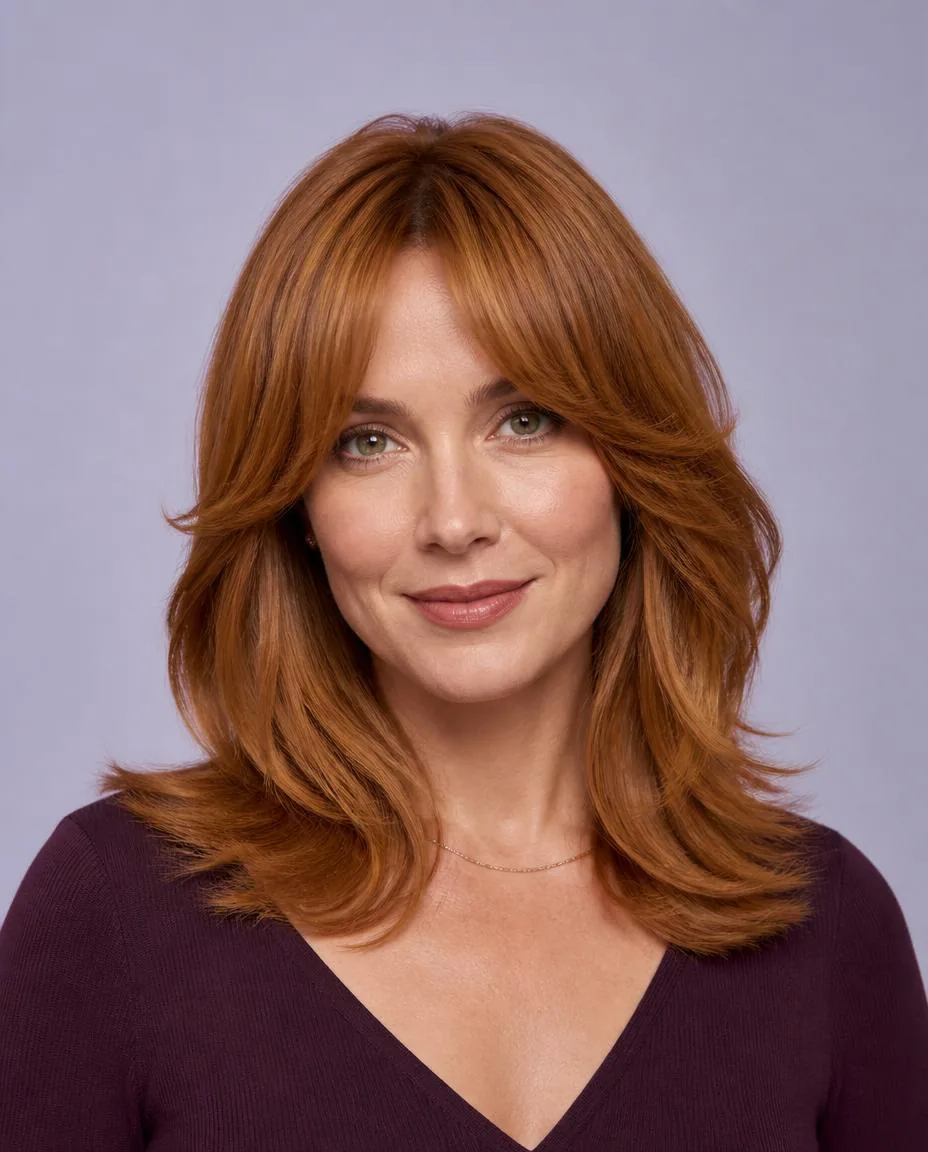
A stronger fringe effect with the shortest pieces sitting closer to the brows and eyes.

Denser side sections create more presence while preserving the signature center opening.
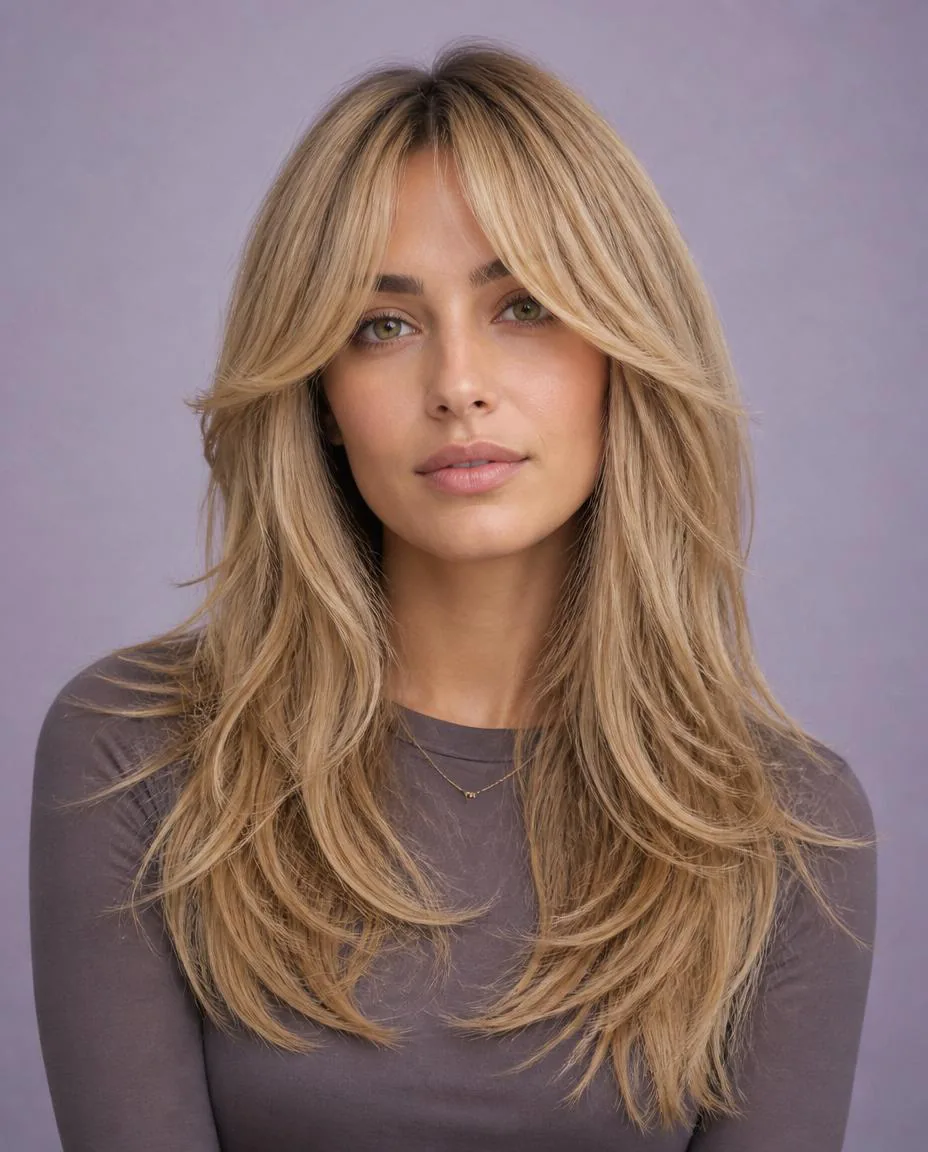
Relaxed bends and feather-light edges make the transition into the haircut feel gentle.
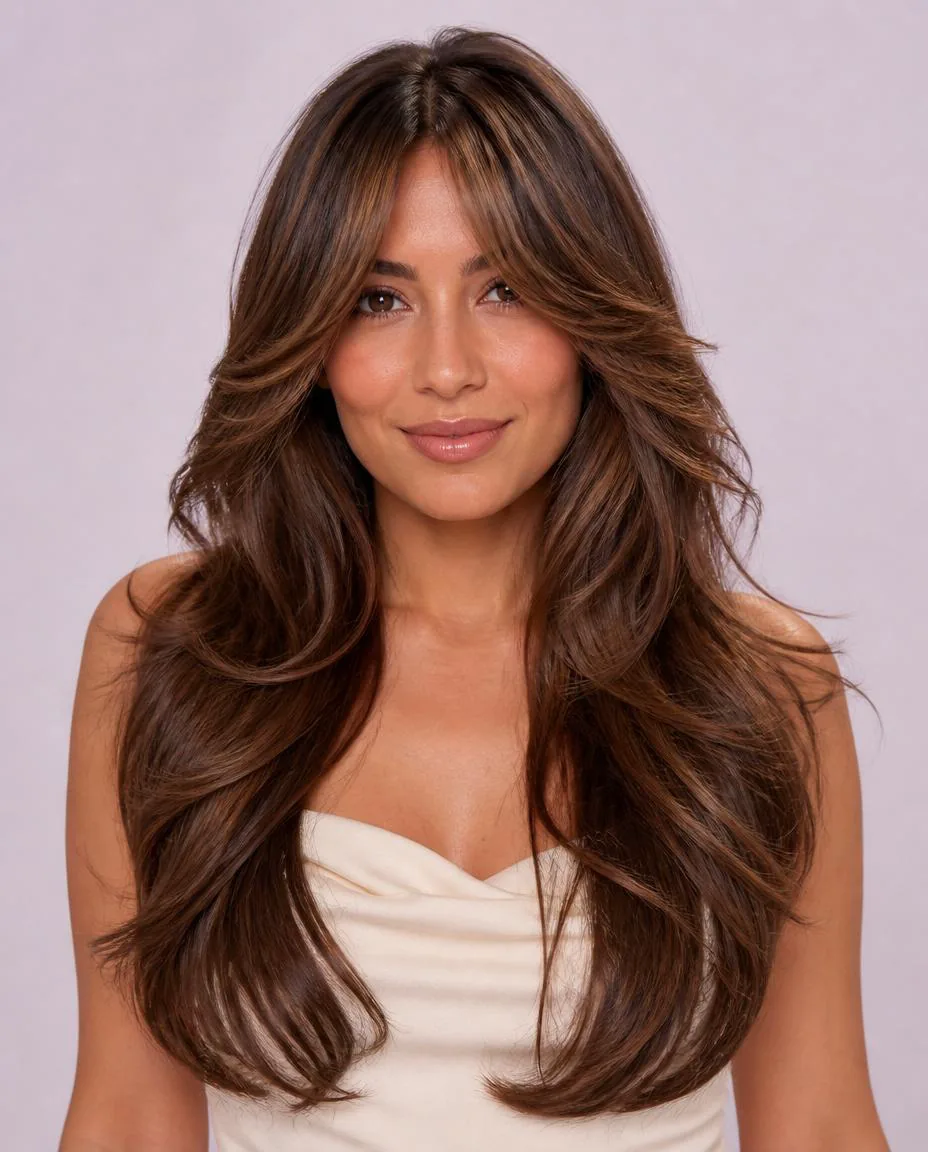
A continuous cheekbone-to-length blend makes the fringe part of the full layered shape.
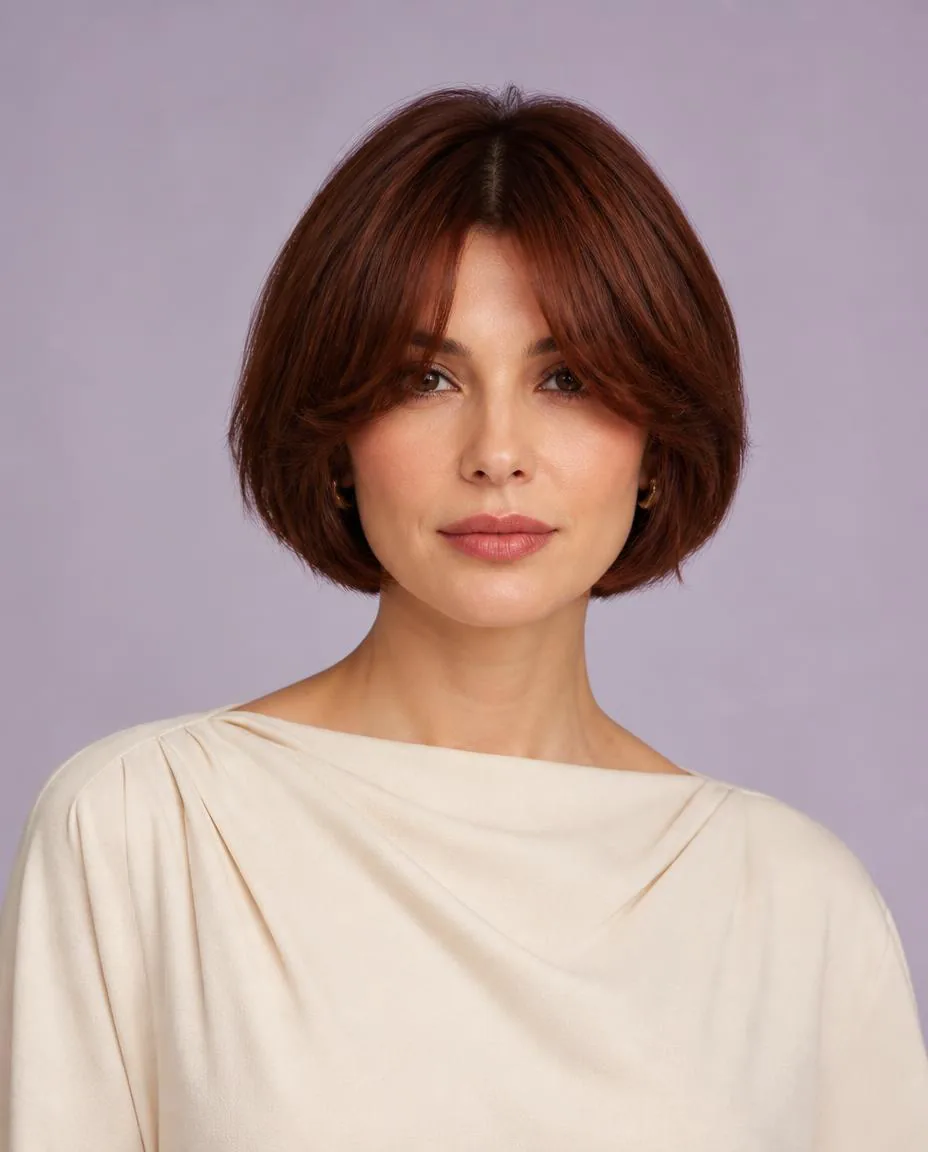
A shorter perimeter adds structure while the parted fringe keeps the forehead open.
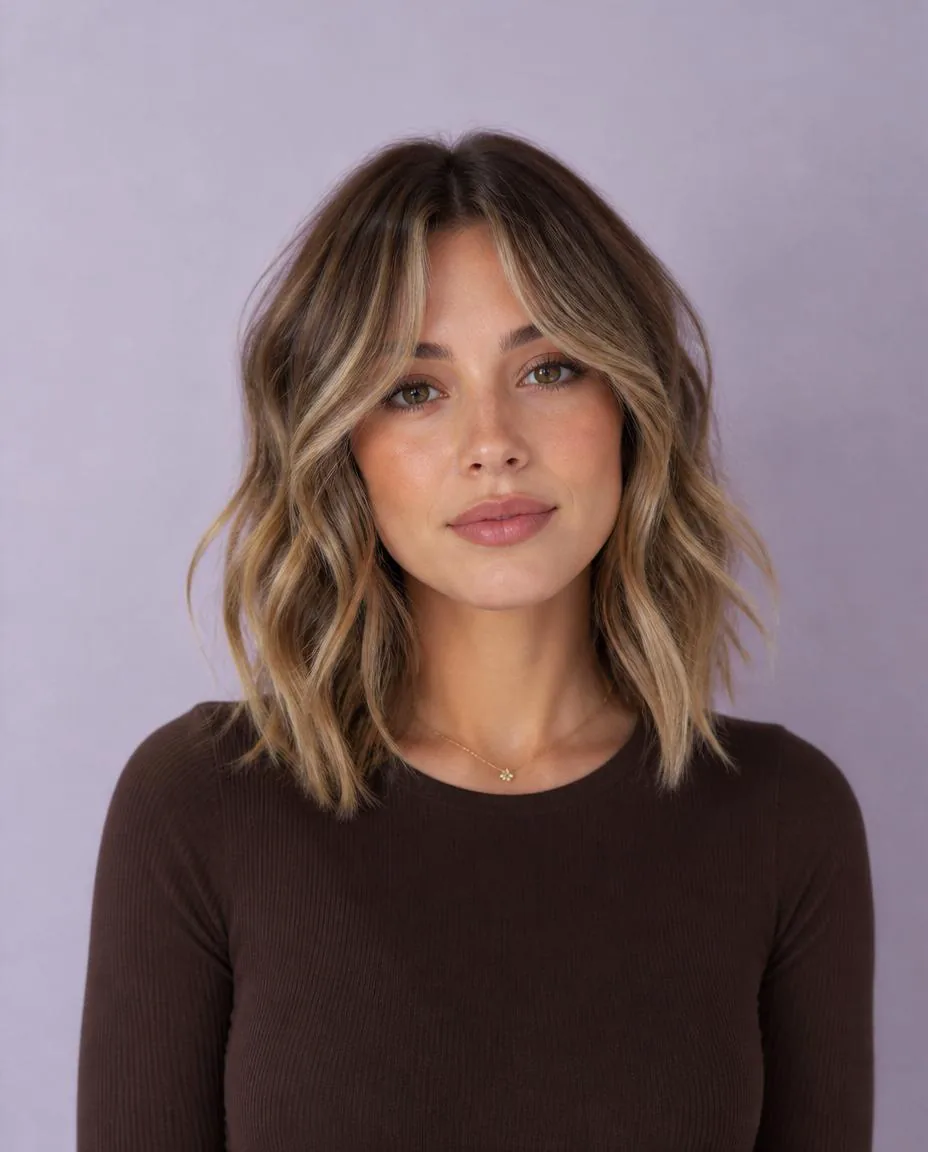
Natural movement softens the part and lets the fringe merge into surrounding waves.
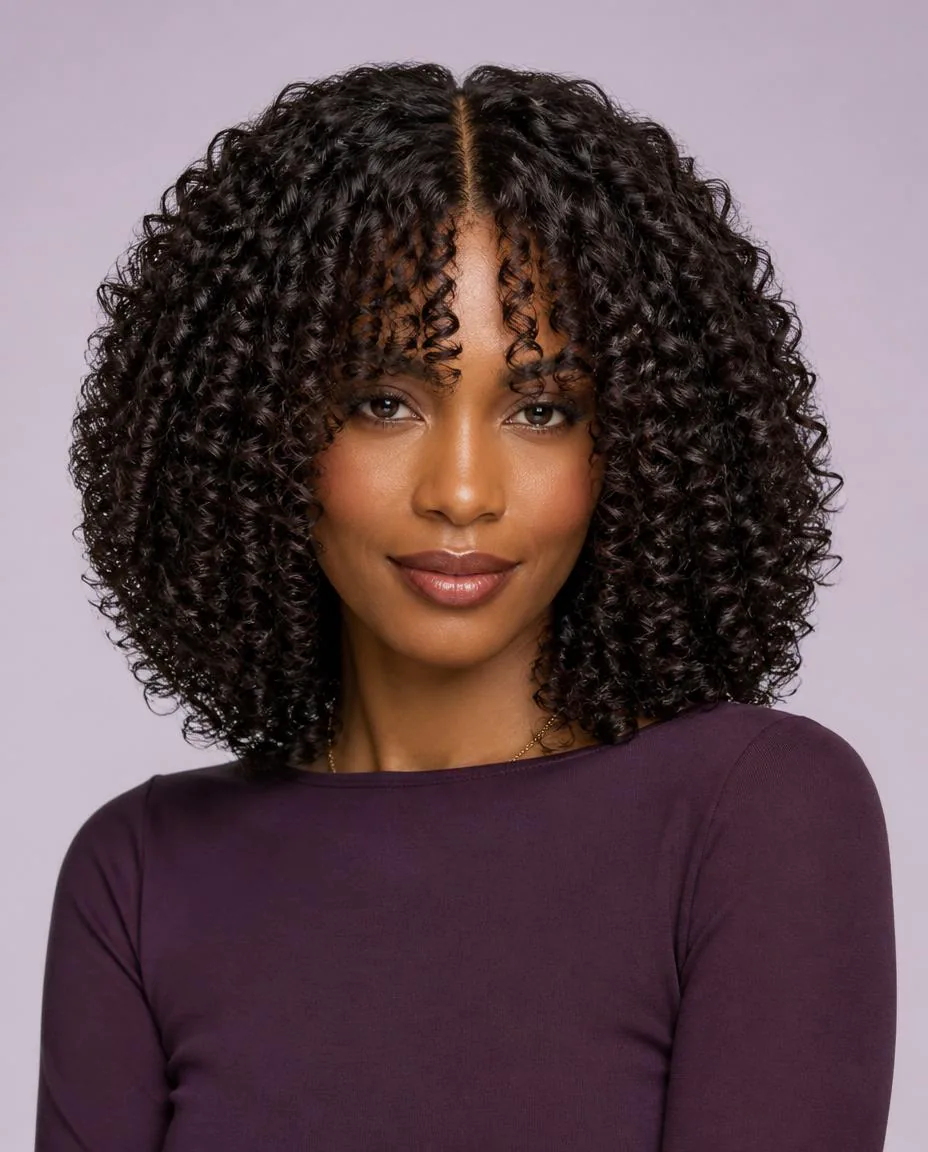
Dry-length shaping keeps curl shrinkage from moving the shortest pieces too high.
Decision guide
Start with the result you want, then choose the length and density that create it.
| If you want… | Try… | Why it works |
|---|---|---|
| The lowest-commitment option | Long curtain bangs | They sit lower on the face and can grow into ordinary face-framing layers. |
| More visible framing around the eyes | Shorter curtain bangs | The shortest pieces create a clearer fringe shape around the upper face. |
| A lighter, airier forehead | Wispy curtain bangs | Lower density leaves more visible space between strands. |
| A stronger, fuller fringe | Full curtain bangs | Denser side sections stay visible beside a layered or voluminous haircut. |
| Softer framing on a round face | Cheekbone-length pieces | Longer sides can avoid adding extra width through the middle of the face. |
| More movement on wavy hair | Soft layered curtain bangs | The natural bend helps the fringe merge into surrounding layers. |
Two people can both ask for curtain bangs and leave the salon with very different results. The term describes a family of fringe shapes, not one fixed cut. The center can be wide and open or narrow and nearly closed. The shortest pieces can sit near the brows, around the eyes, or closer to the cheekbones.
The shortest point usually creates the biggest visual change. Shorter pieces make the fringe feel more intentional; longer pieces soften the change and behave more like face-framing layers.
Think of curtain bangs as a sliding scale: shorter and denser feels more like “bangs”; longer and lighter behaves more like face-framing layers.
Long curtain bangs often begin around the upper cheekbone. They are the least dramatic option and can usually be tucked back or blended into ordinary layers. The trade-off is that they may disappear into a long layered haircut if the front pieces are too subtle.
Shorter curtain bangs make the fringe more obvious because the shortest point sits closer to the brows or eyes. They create stronger eye framing, but growth shows sooner and daily styling becomes more important.
Wispy curtain bangs keep the center-opening shape but use less hair. Fine separated strands leave the forehead visually lighter and keep the eyes open.
Fuller curtain bangs use more hair through the side sections. The center still parts, but the fringe has enough visual weight to remain noticeable beside layered or voluminous hair.
“Curtain” describes the shape: a center or near-center opening with hair sweeping away from the middle. “Wispy” describes density: light, separated strands. Bangs can be both curtain-shaped and wispy.
| Style | Main idea | Coverage | Visual effect |
|---|---|---|---|
| Curtain bangs | Parted shape with a center opening | Low to medium | Frames eyes and cheekbones |
| Wispy bangs | Light density with separated strands | Light | Airy and less defined |
| Blunt bangs | Dense straight-across line | High | Strong horizontal statement |
| Side-swept bangs | Fringe moves mainly to one side | Low to medium | Asymmetrical and directional |
Curtain bangs adapt because the opening width and side length can change. Face-shape guidance is most useful when it explains what to adjust—not when it declares that a face can or cannot wear the style.
Longer pieces that move below the cheekbones can reduce extra width through the center of the face. A narrower opening can preserve more vertical emphasis.
A softer sweep around the temples and cheekbones can contrast with a strong jaw. Longer bends usually feel softer than very blunt front pieces.
Curtain bangs can break up a wider forehead while longer side pieces direct attention toward the cheekbones.
The main choice is usually how visible you want the fringe to be and how much forehead you want to show.
Straight hair makes the center opening and shortest point easy to see. That creates a crisp result, but uneven separation or flatness is also more noticeable.
Natural bends soften the transition into layers and make a longer fringe feel relaxed, although the part may not sit in exactly the same place every day.
Shrinkage changes where the shortest curls land. Judge the shape at dry length and let a stylist account for your curl pattern before cutting.
Fine hair often benefits from a lighter fringe section. Thick hair can support a fuller shape, but too much front density can become difficult to blend.
Direct the roots first and create the outward bend second. Blow-dry straight hair forward before sweeping each side away from the face. With waves, work with the natural bend. With curls, style and judge the fringe at dry length.
Directing both sides outward immediately can split the center too widely. Give the roots some forward direction first.
Curtain bangs are more forgiving than a short straight-across fringe, but they are not maintenance-free. Longer versions grow into face-framing layers more easily. Shorter versions lose their intended proportions sooner. A strong cowlick is the biggest variable an inspiration image cannot solve.
Instead of asking only for “curtain bangs,” describe these four details. They determine most of the final shape.
Brows, eyes, or cheekbones?
Wide, medium, or narrow?
Wispy, medium, or full?
Temple, cheekbone, or jaw?
Keep one clear, front-facing portrait while you compare styles. Start with a longer version, then try a shorter eye-framing fringe and a lighter wispy option. Keep hair color similar so the center opening, shortest point, and cheek frame remain the variables you are judging.
AI can compare proportion and visual direction, but it cannot predict exactly how your cowlick, humidity, curl pattern, or daily styling will affect a real cut. Use the preview as a conversation reference for your stylist.
Try it visually
Compare long, short, and wispy options on the same portrait. Keep color stable so the fringe shape stays easy to judge.
Preview curtain bangsEditorial approach
This guide focuses on visible variables that can be compared consistently: fringe length, density, center opening, blend point, face framing, texture, and maintenance. Face-shape suggestions are starting points rather than universal rules.
About AI hairstyle previewsWigTryAI is for visual comparison and inspiration, not a prediction of an exact salon result.
Common questions
Curtain bangs are a fringe style that parts near the center and gets longer toward the sides, creating an opening through the middle of the forehead and face-framing pieces around the temples or cheekbones.
No. Curtain describes the parted, outward-sweeping shape. Wispy describes lighter density and separated strands. A fringe can be both curtain-shaped and wispy.
Long curtain bangs are usually easiest to grow out because they can gradually blend into ordinary face-framing layers and are easier to tuck away than a shorter fringe.
They can. Longer side pieces and an opening that does not add too much width through the cheeks are common starting points, but forehead height, cheekbones, haircut, and texture also affect the result.
Yes. Wavy and curly textures can make the shape feel softer, but shrinkage and natural growth direction change where the shortest pieces sit and how consistently the center opens.
Yes. Keep one portrait and a similar hair color while comparing several fringe variations. This makes forehead coverage, shortest-point placement, and face framing easier to judge.