Straight hairstyle guide
Straight Hairstyles: What Works and How to Compare Them
Straight hair is the most honest texture: it shows every line, part, and edge, which is exactly why a preview matters. The decision is about the line — blunt versus layered, where the ends land, and how much gloss you want. Get that right and straight hair looks intentional; get it wrong and there is nowhere for a cut to hide.
Straight hairstylesStraight hairSleek hairStraight hair wig
7 min read
Quick answer
Look for a clean vertical fall and a visible edge
Straight hair falls in a clear vertical direction with a continuous surface, so the silhouette is defined by one line: the outer edge. The most useful clues are whether the edge is blunt or feathered, where the ends land, how the part reads, and how much gloss the surface shows. Straight hair reveals shape more clearly than waves or curls, which makes the cut decision — blunt vs layered — the whole story.
- Edge
- Blunt or softly layered line that defines the shape
- Surface
- Continuous, glossy, no visible bend or ripple
- Key variable
- Blunt vs layered, before length or color
Straight hair is not "no style." It is a specific style family defined by a clean fall, a visible edge, and a surface that shows every detail. A center part, a deep side part, a blunt baseline, or soft layers change how the same length reads. Because the texture provides no natural movement, the haircut does all the work.
The single most important distinction is blunt versus layered. Blunt straight hair creates one clean graphic line — precise, editorial, and unforgiving if the baseline is uneven. Layered straight hair adds movement and softness, but layers also reduce the visible density, so on fine or thin hair they can read stringy or mid-grow-out. Neither is better; they are two different lines for two different goals.
Read the Line: Blunt, Layered, and In Between
Use these four checks on any straight-hair reference:
- The edge. A blunt edge ends in one even line; a feathered or layered edge tapers. The edge determines whether the style reads sharp or soft.
- Where the ends land. Chin, jaw, collarbone, or chest changes the whole proportion. "Shoulder-length" can mean just above or just below the shoulder in different references.
- The part. A center part creates symmetry and exposes the face; a deep side part shifts weight and adds a little drama. The part is a design choice separate from the cut.
- The surface. Straight hair can read glass-sleek or softly natural (in wig catalogs this is often silky straight vs yaki straight). Both are straight; they differ in shine and surface texture.
Decision guide
Blunt or layered?
Choose by how much visual weight and precision you want, not by trend.
| Option | What it looks like | Best for | Watch for |
|---|---|---|---|
| Blunt | One clean edge at a single baseline | A graphic, precise line that emphasizes length and shine | An uneven baseline or a cut that hits the wrong spot reads immediately |
| Soft internal layers | Movement inside the outline while the outer edge stays strong | Volume and motion without losing visible density | Too much internal thinning can make fine hair look sparse |
| Aggressive layers | Visible stepped or disconnected pieces | A choppy, textured straight look | On pin-straight hair, aggressive layers can look thin, stringy, or permanently mid-grow-out |
Short, Medium, and Long Straight
Compare the line at three lengths
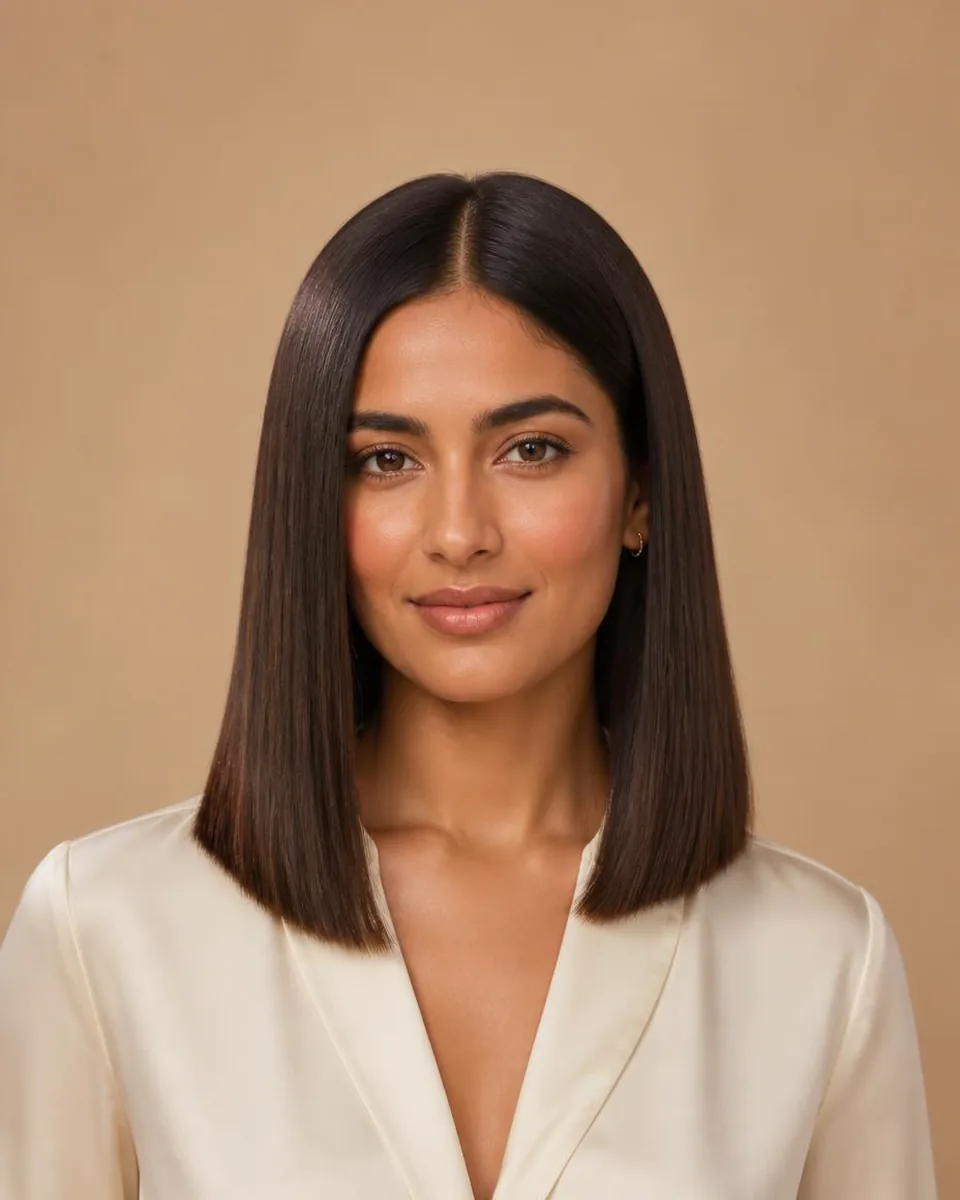
These editorial references keep the same model, straight texture, and dark shade consistent so length and edge are the only variables. Compare where the ends land and how much of the face stays visible.
Medium straight
A shoulder- or collarbone-length blunt line keeps the eye moving down the face and frames the jaw without covering it.
Try this look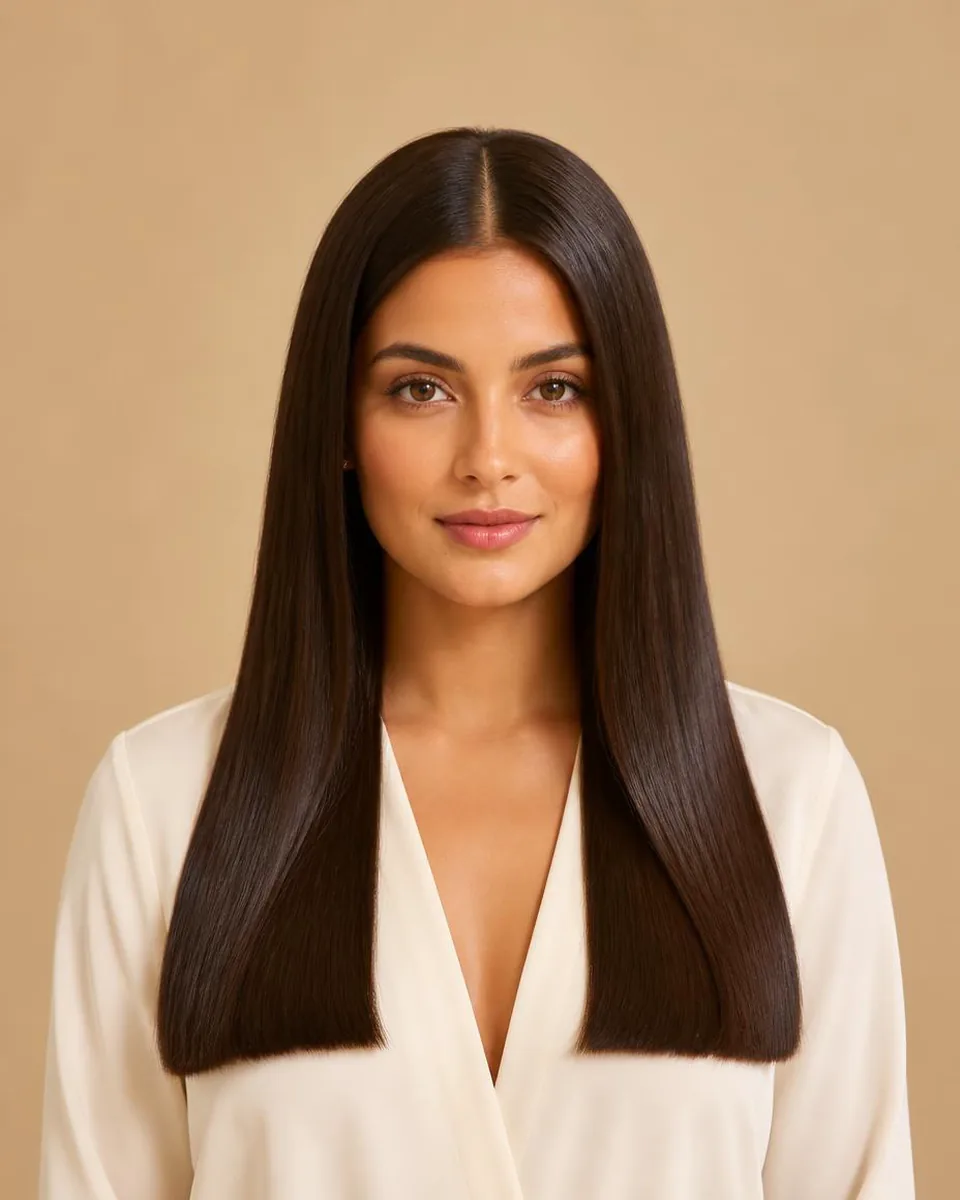
Long straight
Length extends the vertical line, carries the gloss lower, and makes the outer edge the strongest design element.
Try this look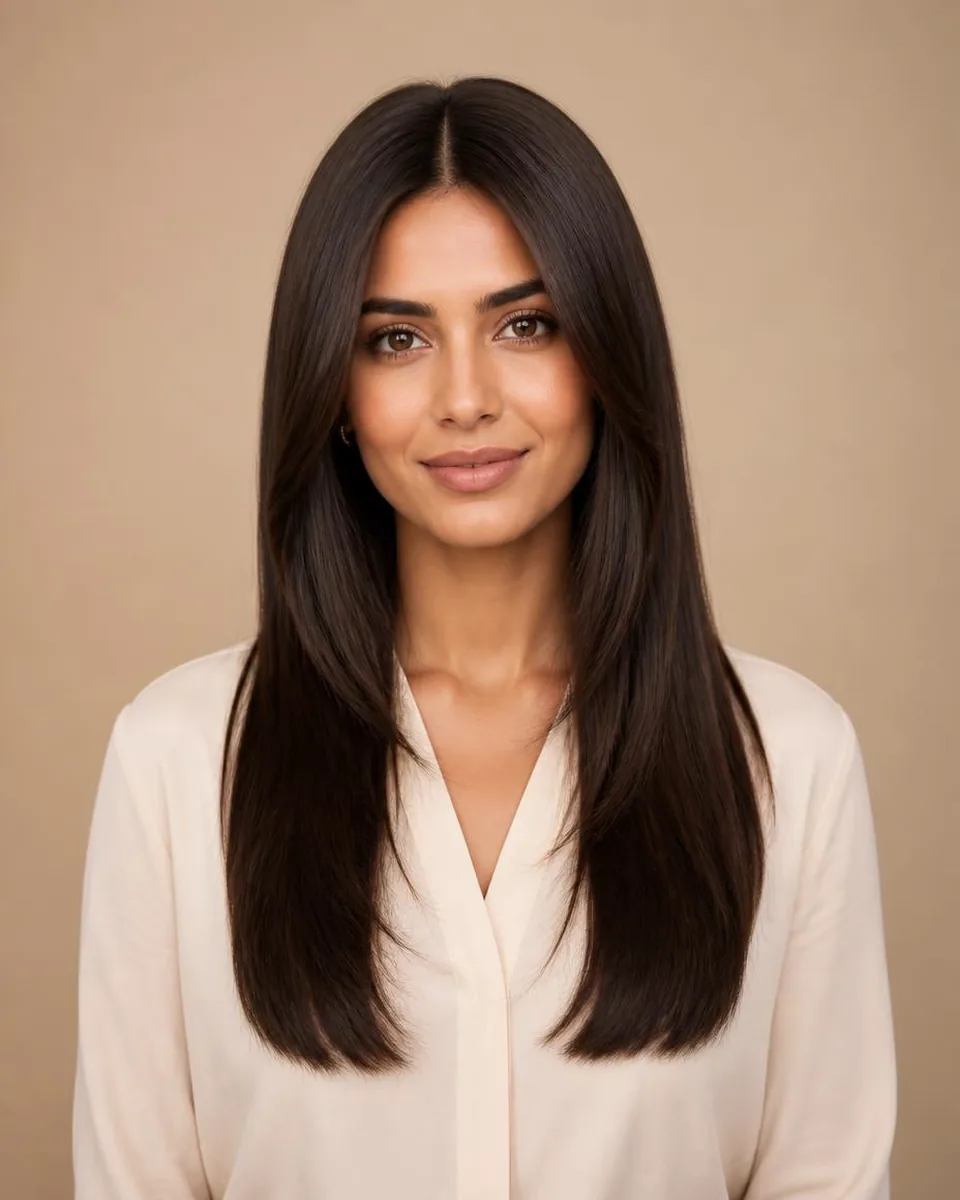
Layered straight
Soft face-framing layers open the front of the face while the overall line stays straight and dense.
Try this lookMedium straight
Medium length is the most flexible straight baseline: short enough to show the jaw and neckline, long enough to keep a strong vertical line. The blunt edge at the shoulders draws attention to the collarbone area, while the sides frame the face without adding width.
Long straight
Long straight hair makes the outer edge the whole design. Weight pulls the hair down, so the silhouette stays narrow and the gloss reads in one continuous highlight. The tradeoff is that any bend, cowlick, or unevenness at the ends becomes more visible as the length grows.
Layered straight long
Soft layers give long straight hair movement without sacrificing visible density, especially when the layers are concentrated around the face. The useful check is how much of the original density survives: heavy layers on fine hair can make the length look thinner, while soft face-framing layers add movement while keeping the body.
Test the line before you commit
Try medium blunt, long blunt, and long layered straight in the same dark color. Once the edge and endpoint feel right, compare part and color.
Try long straight hairStraight in Different Contexts
Straight hair on styled natural hair
A blowout, flat iron, or silk press can make naturally wavy or curly hair read straight. The result depends on the starting texture, heat protection, technique, and humidity — and it is temporary. A chemical straightening service is a salon procedure with its own risks and aftercare; use images to communicate the line you want, then discuss the service with a qualified stylist.
Straight as a wig or extension texture
In wig catalogs, straight usually comes in two readings: silky straight (a smooth, glossy, uniform fall) and yaki straight (a lightly textured surface inspired by blow-dried or relaxed natural hair). The label does not tell you fiber, density, cap or installation structure, or how the texture behaves after washing. Check the maker's current photos and care details for those specifics — WigTryAI previews the straight direction, but does not match or sell a physical product.
How to Get Straight Hair
With heat
A blowout followed by a flat iron is the standard route. Work in small sections, use heat protection, and do a final cool pass so the cuticle lies flat and the line holds. The hold lasts until the next wash or until humidity softens it. On hair that already has wave or curl, the same straightening is more temporary and needs smaller sections and more passes.
Without heat
The overnight wrap is the most common heat-free route: brush damp, product-smooth hair into shape, wrap it flat against the head, and secure it while it dries. Banding — tying sections in place with soft bands — and extra-large rollers work on the same principle of drying the hair under tension. Results last until the next wash and are gentler on the hair than heat.
Decision guide
Pick a method by effort and hold
Start with the row that matches your hair and schedule, then adjust sections for how sleek the finish needs to be.
| Method | Effort | Typical hold | Best for |
|---|---|---|---|
| Overnight wrap | Low | Until the next wash | A heat-free everyday line |
| Banding or large rollers | Low to medium | 1–2 days | Stretch and smoothness on textured hair |
| Blowout | Medium | Until the next wash | Volume plus straightness |
| Flat iron | Medium to high | Until the next wash or humidity | The sleekest, most polished finish |
What changes your result
Fine hair straightens quickly but frizzes easily and loses the finish fast in humidity; coarse or dense hair takes longer and needs higher heat settings, but the result holds better. Long hair shows the straight line well but its weight pulls bends loose. Product weight matters too: heavy oils flatten fine hair, while lightweight smoothing serums give gloss without greasiness.
How to Style and Maintain Straight Hair
Straight hair works with clean, graphic styling. A sleek high or low ponytail, a center-parted glass-hair finish, a half-up, or a sharp side part all lean into the same line. On day two, refresh with a small amount of dry shampoo or smoothing spray at the roots, touch up the ends with a few flat-iron passes, and avoid heavy re-styling that creates bends.
Humidity is the main enemy: it swells the cuticle, softens the line, and turns the ends into frizz. A lightweight anti-humidity serum and keeping the ends trimmed are the two most reliable defenses.
Straight vs Wavy vs Curly
The line is what separates the three. Straight hair falls in one continuous vertical direction; waves add open S-shaped bends; curls close into spirals or ringlets and push the outline outward. The same length and color look entirely different across the three because the surface, width, and endpoint all change.
If you are deciding between straight and textured, the useful question is what you want the outline to do: straight keeps the silhouette narrow and graphic, waves add movement, curls add width and body. The wavy guide and curly guide cover the pattern families, and the curly vs wavy comparison shows how the same base can read differently.
Compare Straight on the Same Selfie
- Use a front-facing portrait that shows the hairline, both sides of the face, shoulders, and upper chest.
- Begin with medium blunt, long blunt, and long layered straight in one dark or medium shade.
- Compare where the ends land relative to the jaw, collarbone, and chest.
- Check whether the edge reads blunt or feathered at the baseline.
- Compare how much of the face the sides cover and how the part reads.
- Keep length, part, and color steady when you test straight against wavy or curly.
- Save two directions and use Compare Hairstyles to review them together.
Changing length, part, texture, and color in one pass makes it hard to know why one image feels better. A controlled comparison is more useful than generating many unrelated looks.
What AI Cannot Predict About Straight Hair
An AI preview can compare edge, length, part, gloss, color, and overall silhouette. It cannot predict real density, how the hair falls on a cowlick or growth direction, frizz in humidity, hold time after heat styling, or the result of a salon straightening service. It may also alter small hair or facial details between generations.
Use the preview to make the visual request more precise. Discuss natural-hair styling or chemical services with an appropriate professional.
FAQ
What does straight hair look like?
Straight hair falls in a clear vertical direction with a continuous surface and a visible edge. It reads sleek and graphic, and it shows the shape of the cut more clearly than waves or curls because there is no natural movement to disguise the line.
Is blunt or layered better for straight hair?
It depends on the goal. Blunt creates one clean graphic edge that emphasizes length and shine. Soft internal layers add movement while keeping visible density, but aggressive layers on pin-straight hair can look thin or stringy. Compare both on your own photo before choosing.
How do I get straight hair without heat?
Brush damp hair into shape with a smoothing product, wrap it flat against the head, and let it dry fully before releasing. Banding and extra-large rollers use the same drying-under-tension principle. The result lasts until the next wash.
How long does straight hair stay straight?
Until the next wash or until humidity softens the line. The exact hold depends on your starting texture, the method used, product weight, and weather. Fine hair loses the finish faster; coarse or dense hair usually holds it longer.
What is the difference between silky straight and yaki straight?
Silky straight is a smooth, glossy, uniform fall; yaki straight has a lightly textured surface inspired by blow-dried or relaxed natural hair. Both are straight textures — they differ in shine and surface detail, not direction.
What length of straight hair should I try first?
Medium straight is a useful baseline because it shows the jaw, neckline, and a strong vertical line at once. Then compare long straight to test the extended edge and layered straight to test movement.
Does straight hair suit every face shape?
Straight hair works on most faces because the line itself is adjustable — the endpoint, part, and how much of the face the sides cover do the framing. The useful test is where the ends land and whether the sides add width or keep the silhouette narrow.
Can AI show exactly how straight hair will look in real life?
No. AI can show a visual direction for edge, length, part, gloss, and silhouette, but it cannot predict density, cowlicks, humidity frizz, styling hold, or the result of a salon service. Treat the preview as a comparison image, not a physical prediction.
What photo is useful for comparing straight hairstyles?
Use a front-facing portrait with the shoulders visible and open space around the hair. Even lighting helps you read the edge and gloss without highlights creating false shape.