
Curtain Bangs vs Side Bangs
Curtain Bangs vs Side Bangs: Two Curves or One Sweep?
Curtain bangs divide into two face-framing sections. Side bangs travel diagonally across the forehead. Decide whether you want an open middle or more coverage on one side, then check the shortest piece and your natural part.

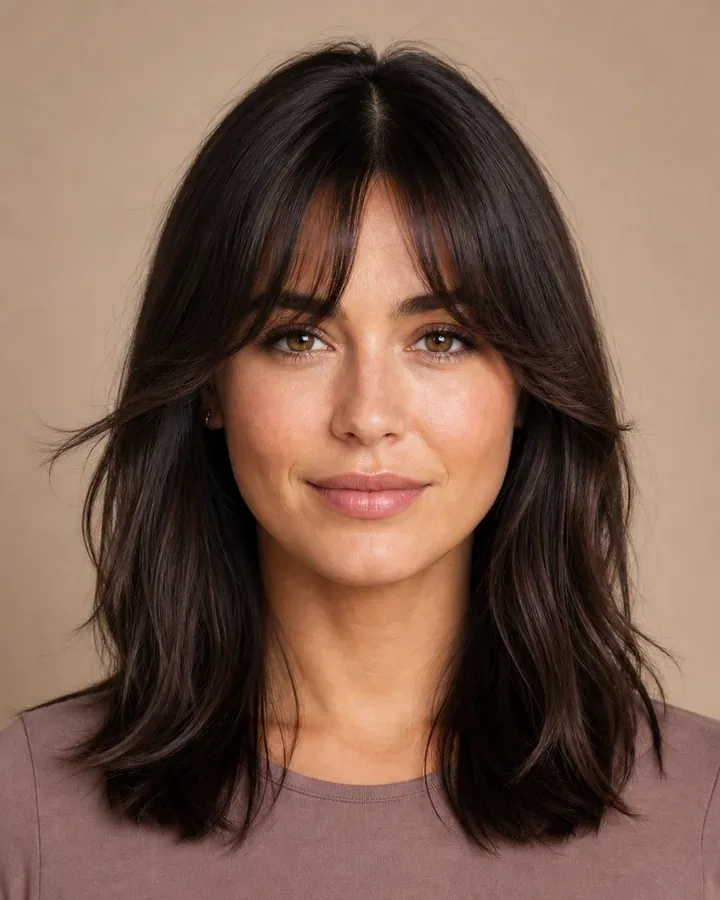
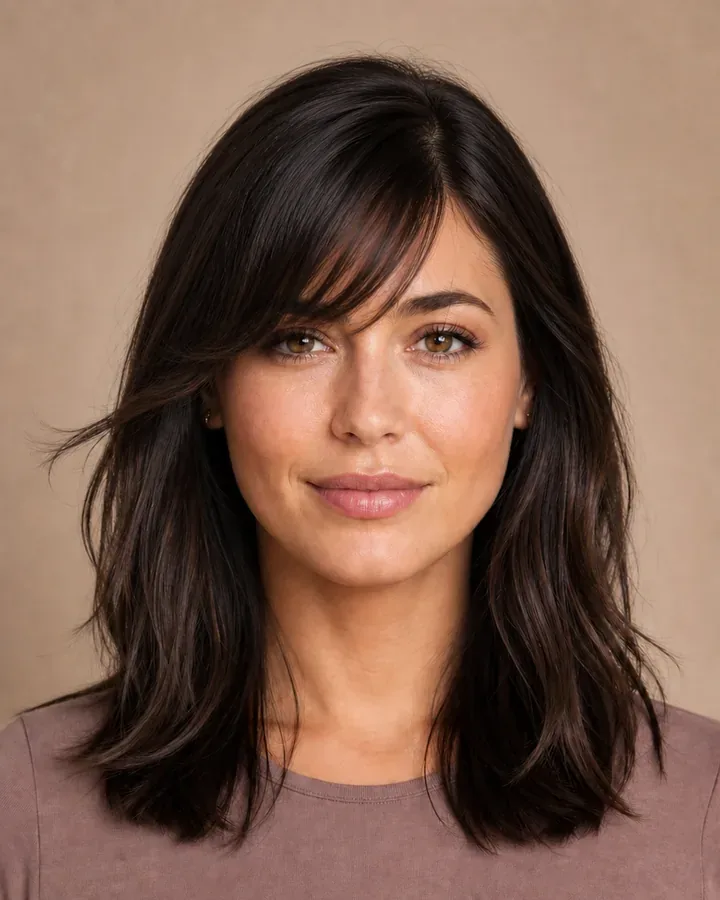
Curtain BangsSide BangsHairstyle comparison
5 min read
Quick answer
Two sides or one sweep?
Choose curtain bangs when you want an opening near the middle and a frame on both sides of the face. Choose side bangs when you prefer a diagonal sweep across the forehead. Neither name fixes the thickness or shortest length: a light curtain fringe and a light side fringe are both possible.
- Curtain checkpoint
- Where the two sections separate and turn outward
- Side checkpoint
- Where the diagonal crosses the brow and ends beside the eye
Visual comparison
Curtain bangs vs side bangs on the same model
AI-generated editorial illustrations with the same model, outfit and background. These show fringe direction, not customer results or a cutting demonstration.
Curtain Bangs
Two front sections leave a central opening and turn outward on both sides.
Try Curtain Bangs
What are curtain bangs?
Curtain bangs are a fringe divided into two face-framing sections, usually around a center or near-center opening. Shorter pieces near the middle transition into longer outer pieces. In this reference, the ends curve away from the eyes toward the cheekbones. The opening can be narrow or wide; it does not need to be perfectly symmetrical.
The curtain bangs guide covers those variations. For this decision, focus on whether you want visible forehead space between two sections rather than a continuous sweep across it.
What are side bangs?
Side bangs travel mainly in one direction across the forehead. A side part often supports the shape, but the useful feature is the diagonal path, not an exact parting measurement. A short version can end near a brow; a longer version can continue toward the cheek or tuck behind the ear.
Rapunzel of Sweden's fringe guide also separates the middle-opening curtain shape from the side-swept shape. These are reference directions, not rules that require every strand to sit in one prescribed place.
Compare the opening, coverage and outside edge
Decision guide
Which fringe shape fits your everyday preference?
Compare these features at a similar shortest length and apparent thickness.
| Decision point | Curtain bangs | Side bangs |
|---|---|---|
| Forehead opening | An opening between two sections | An open side beside a diagonal sweep |
| Eyebrow visibility | Both brows may show beneath the opening and curves | One brow may be more covered than the other |
| Face frame | A visible curve beside each eye or cheek | A stronger diagonal ending on one side |
| Glasses | Check both outer corners against the frame | Check whether the sweep falls onto one lens |
| Hair tucked back | Two shorter front pieces can remain loose | A longer sweep may tuck, depending on its endpoint |
| Daily styling | Set the opening and turn both sides | Direct the sweep without pulling it over an eye |
Which works with fine, thick, straight, wavy or curly hair?
Fine strands or low density: keep the fringe section modest so the sides retain enough hair. Splitting a sparse section into two can make the opening wider than intended. A side sweep can group the section visually, but cannot create actual density; a heavy section can leave the longer sides looking thin.
Thick hair: either shape can feel heavy if too much hair is brought forward. Ask how the weight will be reduced while preserving a visible edge. A curtain shape distributes the frame across both sides; a side shape concentrates it along one diagonal.
Straight hair: compare the direction the roots naturally take. A straight fringe that falls forward may need setting whether it is meant to split or sweep. A photo with strongly turned-out curtain ends includes a styling choice as well as a haircut.
Wavy hair: watch where the first bend falls. It can support an outward curtain curve or interrupt a side sweep near the eye. Try a reference that resembles the finish you normally wear rather than judging only a smooth blowout.
Curly hair: choose the dry endpoint and curl placement with a stylist. A curved fringe can open around the middle or travel to one side, but a straight-hair preview cannot establish shrinkage or how individual curls will settle.
Face framing: do you want two curves or a diagonal?
Curtain bangs place a frame beside both eyes and cheekbones. Side bangs draw a line from the part across the forehead toward one side. The point where that line finishes can matter more than whether your face is labeled round, square or oval.
Compare three places: the visible brow, the outer corner of the eye and the cheekbone. If you like both cheekbones framed while the center stays open, start with curtain bangs. If you prefer more forehead coverage on one side and a clearer view on the other, start with a side sweep. Neither shape is required for a particular face shape; the bangs and face-framing guide explains how to adjust endpoints instead of treating face shape as a restriction.
Maintenance and grow-out
Curtain bangs need the opening to fall where you want it and the two sides to turn in a useful direction. Side bangs need the diagonal to stay clear of the eye. The easier option is often the one closer to your natural growth direction, not the one with the longer name.
As curtain bangs lengthen, the outer sections can blend into the surrounding face frame while the shortest middle pieces still need attention. Side bangs become a longer sweep, which may become easier to tuck if the length reaches the ear. A strong cowlick, glasses or a shorter starting point can change that experience. Ask for a trim plan based on the endpoint you want rather than a universal schedule.
Try curtain bangs and side bangs on the same face
Use one recent, front-facing portrait with the hairline visible. The two references above keep the hair color and overall length similar, so the fringe direction is easier to judge. Reference-image try-on follows the pictured hairstyle and color together.
- Try the curtain reference first and note how much forehead remains open.
- Return to this page and try the side reference on the same portrait in a separate generation.
- Compare the eyebrow coverage, the eye nearest the sweep and the width beside each cheek.
- Ask which shape you would still like without the reference's exact styling finish.
Start with the two-sided opening
Use the curtain reference first. Compare the center gap and the curves beside both eyes.
Try Curtain Bangs on my photoThen check the diagonal sweep
Return for a separate side-bang preview on the same portrait. Look at the covered brow and the endpoint beside the eye.
Try Side Bangs on my photoA preview can help compare visible coverage. It cannot assess growth direction, how a fringe behaves after washing, or the cut and styling required on your hair. For a wider range of shapes, use virtual hairstyle try-on.
Which one should you choose?
Choose curtain bangs if the feature you want is a divided frame on both sides. Choose side bangs if the feature you want is an angled sweep with more coverage on one side. If the real hesitation is how much hair should cover the forehead, compare curtain bangs vs wispy bangs. If you like a short middle section that lengthens toward the cheeks, curtain bangs vs bottleneck bangs is the next useful distinction.
FAQ
Can curtain bangs be worn to the side?
Sometimes. Longer curtain sections may be redirected into a side sweep, but shorter center pieces can separate or fall forward. Ask a stylist whether the specific cut leaves enough length to wear both ways.
Are side bangs always thicker than curtain bangs?
No. Direction and thickness are separate choices. Either fringe can be light or substantial depending on the section, density and finish.
Which bangs are better with glasses?
The endpoint matters more than the name. Check whether curtain sections touch both outer frame corners or whether a side sweep sits on one lens. Preview with your usual glasses if they are part of the look you want to judge.
Can I switch between the two without cutting more hair?
It depends on the existing length and shape. Redirecting a long fringe may work, while a very short curtain center may not create a continuous diagonal. A preview illustrates the desired outline but cannot confirm that your current haircut can be restyled into it.
Which fringe is easier to grow out?
A longer fringe is often easier to tuck, whichever direction it travels. Curtain sides can blend into face-framing layers while side bangs can become a longer diagonal. The shortest piece and your growth direction determine where the awkward stage occurs.