
Curtain bangs vs bottleneck bangs
Curtain Bangs vs Bottleneck Bangs: Which Opening Fits You?
Both fringes open in the middle. Curtain bangs open wide and sweep the sides outward toward the temples. Bottleneck bangs keep two centre strands close together before they split, with straighter sides. The difference is how the opening is shaped, not how long the fringe is.
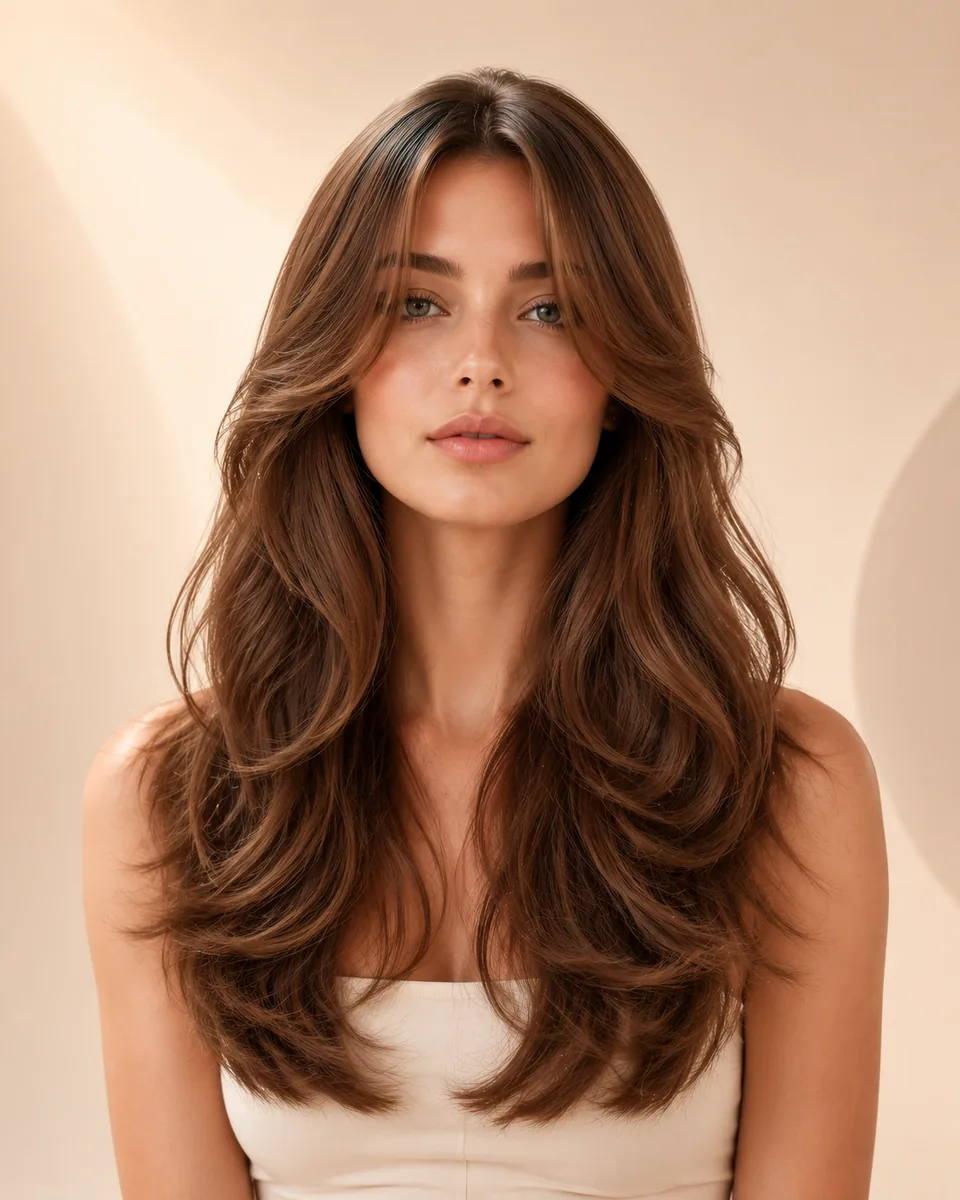
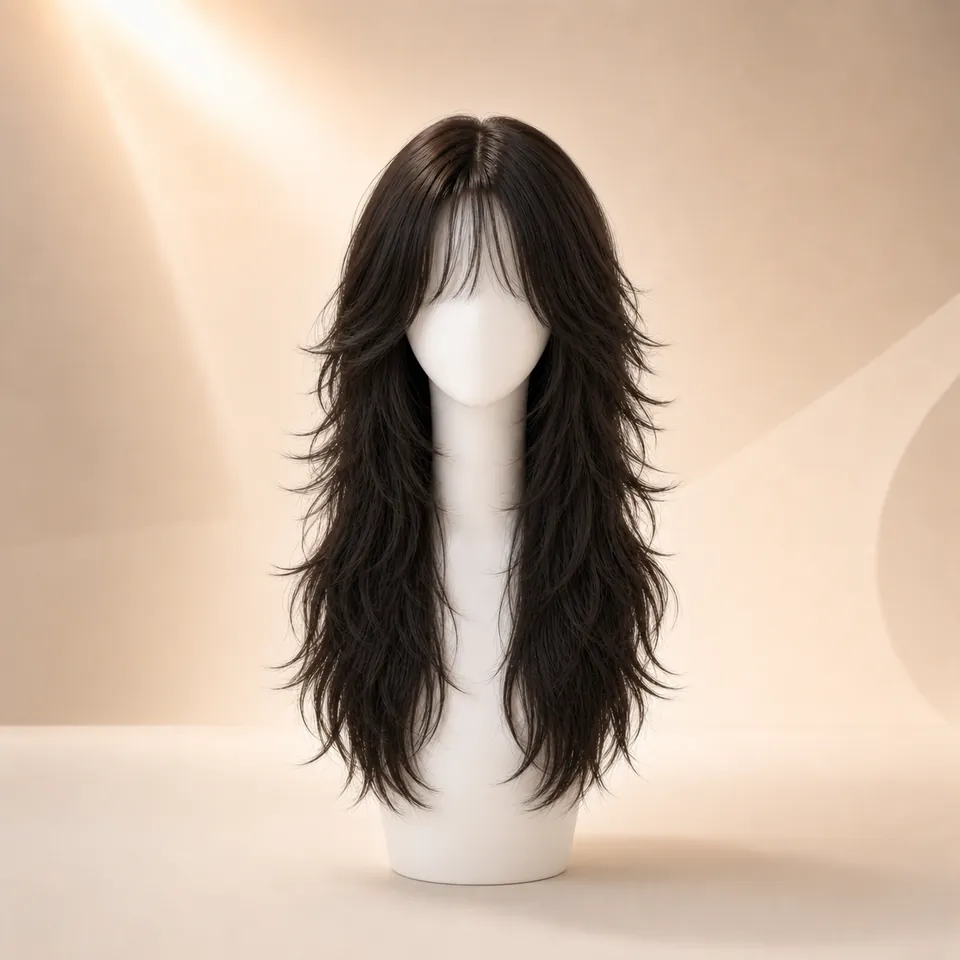
Curtain bangs vs bottleneck bangsBottleneck bangsCurtain bangsFringe comparison
3 min read
Quick answer
Which opening should you choose?
Choose curtain bangs if you want a wide centre opening with the sides sweeping outward around the cheekbones. Choose bottleneck bangs if you want a narrower centre that stays close together before splitting, with straighter sides that fall instead of sweeping.
- Centre opening
- Curtain: wide and open · Bottleneck: narrow and vertical
- Sides
- Curtain: sweep outward · Bottleneck: fall straighter
- Face framing
- Curtain frames the temples and cheekbones more; bottleneck keeps the frame tighter
- Grow-out
- Bottleneck reaches a curtain shape as the centre strands grow
The difference is the shape of the opening
Curtain bangs and bottleneck bangs are both centre-opening fringes, which is why they get compared. The difference is how the middle behaves. Curtain bangs open across the forehead: the shortest pieces sit near the middle and get longer toward the sides, which then sweep outward and blend into the rest of the hair. Bottleneck bangs keep two strands close together in the centre — narrow like the neck of a bottle — before they split, and the sides fall more or less straight instead of sweeping.
That single difference changes how much of the forehead stays visible, how strongly the fringe frames the temples and cheekbones, and how the fringe behaves as it grows out. Curtain bangs read softer and wider; bottleneck bangs read narrower and more deliberate.
Curtain opens across the forehead. Bottleneck opens in a column, then splits.
Curtain bangs vs bottleneck bangs comparison
| Factor | Curtain bangs | Bottleneck bangs |
|---|---|---|
| Centre opening | Wide, spanning the forehead | Narrow, two strands close together |
| Side direction | Sweeps outward toward the temples | Falls straighter, closer to the face |
| Face framing | Stronger around cheekbones and temples | Tighter, more vertical |
| Forehead visible | More, across the middle | A narrow strip down the centre |
| Density | Usually medium to full | Usually light to medium |
| Styling | Needs the sides directed outward while drying | Needs the centre strands kept together |
| Grow-out | Sides blend into face-framing layers | Centre strands lengthen into a curtain shape |
| Best for | A soft, wide frame | A defined, narrower frame |
Face shapes, density and upkeep
Because curtain bangs open wide, they add a horizontal line across the forehead and put width beside the cheekbones — useful when you want the face to read softer or wider. Bottleneck bangs keep that line narrow and vertical, so they suit anyone who wants a fringe without covering the forehead broadly, and they work well when the rest of the hair is straight and sleek.
Density matters more than the name. Fine hair in curtain bangs can look sparse if the fringe is cut too wide; the same hair in bottleneck bangs keeps more weight in the centre and reads fuller. Thick hair does the opposite: curtain bangs distribute the weight, while bottleneck bangs can look heavy if the centre strands are cut thick.
Upkeep differs mainly in direction. Curtain bangs need the sides blown outward to keep the opening, while bottleneck bangs need the centre strands kept together and are slightly more forgiving between trims.
Which one should you choose?
Choose curtain bangs if you want the fringe to frame your cheekbones and temples, if your hair is on the thicker side, or if you like a soft, wide opening that blends into the rest of the cut.
Choose bottleneck bangs if you want a narrower opening, if your hair is fine or straight, or if you like the fringe to read as a deliberate detail rather than a wide frame. They are also the easier of the two to grow into a curtain shape later.
Preview both on the same photo and look only at how wide the opening sits across your forehead. That single measurement is the decision.
Try both openings on your own photo
Upload one clear portrait, keep the color and part steady, and switch between the two fringe shapes so the opening is the only variable.
Compare both fringes on my photoWhat a preview can and cannot tell you
A preview compares the visible fringe: how wide the opening sits, where the shortest pieces end, and how the sides fall. It cannot tell you how dense your hairline is, which way the strands will separate after washing, or how a stylist will cut the fringe on your hair. The card portraits and comparison figures on this page are editorial illustrations produced for WigTryAI — they are examples of each direction, not outputs from a real try-on and not photos of customer results.
FAQ
What are bottleneck bangs?
A centre-opening fringe where two strands stay close together in the middle like the neck of a bottle before they split, with the sides falling straighter than a curtain fringe rather than sweeping outward.
Are bottleneck bangs the same as curtain bangs?
No, although they are related. Curtain bangs open wide across the forehead with the sides sweeping out; bottleneck bangs keep the centre narrow and vertical with straighter sides. Bottleneck bangs grow into a curtain shape as the centre strands lengthen.
Which one is easier to grow out?
Bottleneck bangs are slightly easier because the centre strands lengthen into a curtain opening, so the in-between stage still looks intentional. Curtain bangs need the sides directed outward as they grow to keep their shape.
Do bottleneck bangs suit fine hair?
Often yes. Keeping the weight in two centre strands reads fuller on fine hair than a wide curtain fringe, which can look sparse if it is cut too broad.
Can I try both on the same photo?
Yes. Upload one front-facing portrait, keep the color and part steady, and switch between the two fringe shapes in the tool. Comparing the opening width on the same forehead is the only way to see which one you prefer.