Wispy Bangs Try-On
Density is the whole decision with wispy bangs. Upload one portrait and compare a micro fringe, a light wispy fringe, full bangs and curtain bangs on the same forehead.
First 3 try-ons free · No app required · Original selfie deleted within 24h
Choose look
Hairstyle
Hair length
Choose color
Selected lookWispy BangsLong · Dark Brown
Quick answer
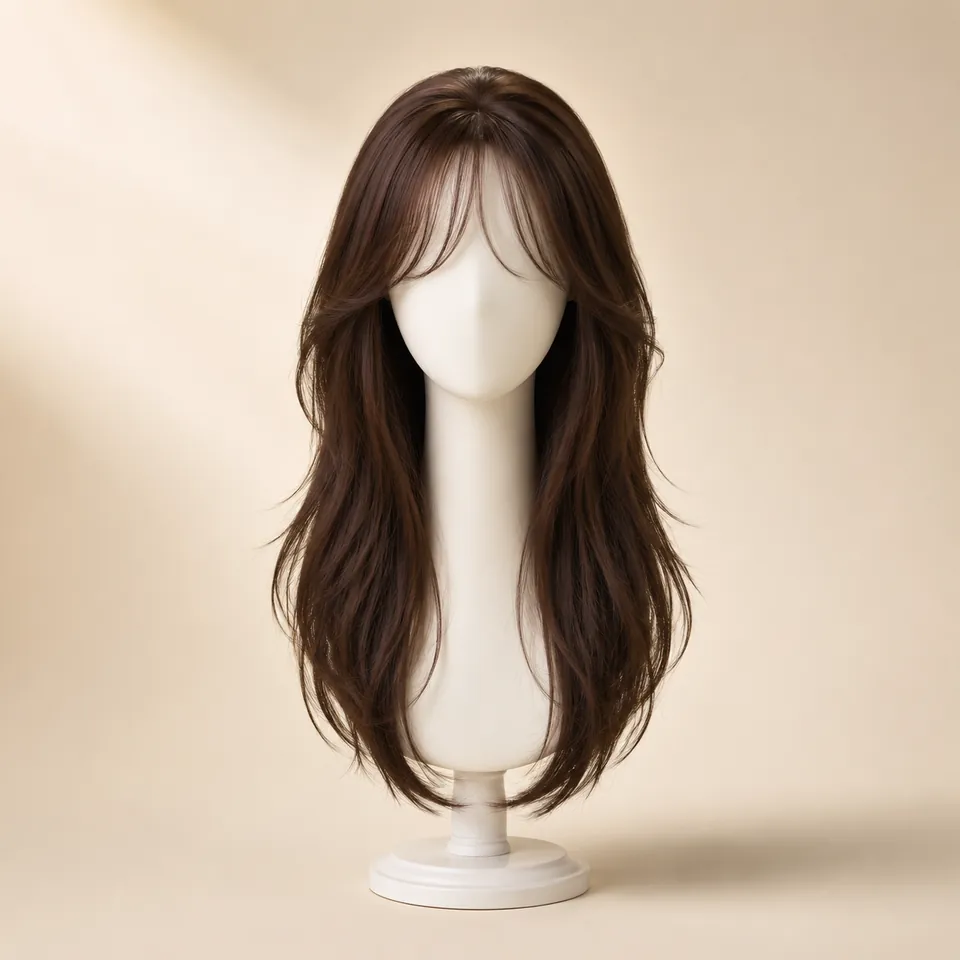
This wispy bangs try-on compares fringe density on your own photo. You upload one front-facing portrait, the tool opens on a light wispy fringe, and you can switch to a micro fringe, full bangs or curtain bangs without changing the photo. The useful thing to read is how much of your forehead stays visible through the strands, where the shortest pieces end, and how the fringe behaves beside your cheekbones. The preview shows that visible density and shape; it cannot predict your real hairline density, cowlicks, how your hair separates after washing, or how a stylist will cut the fringe.
How it works
How it works: step-by-step virtual try-on
Keep the direction, selfie, and comparison method consistent so each preview answers one clear question.
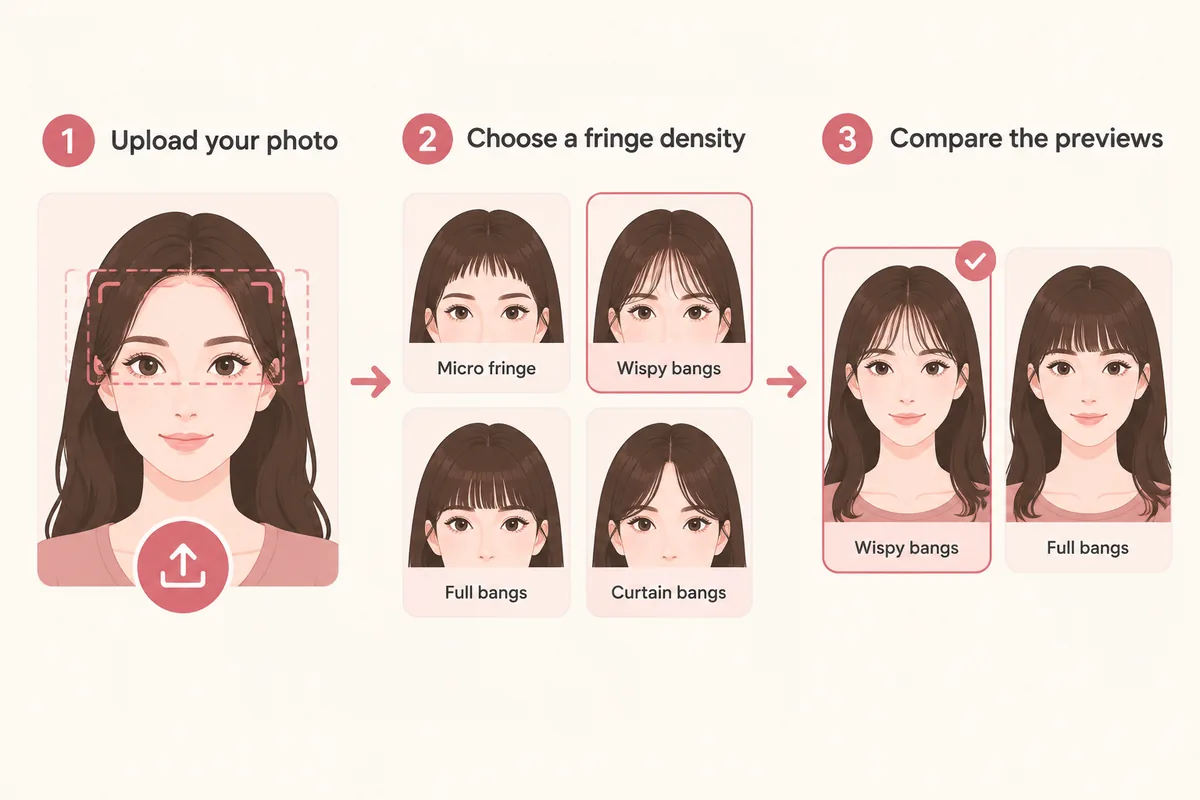
- 01
Upload your photo
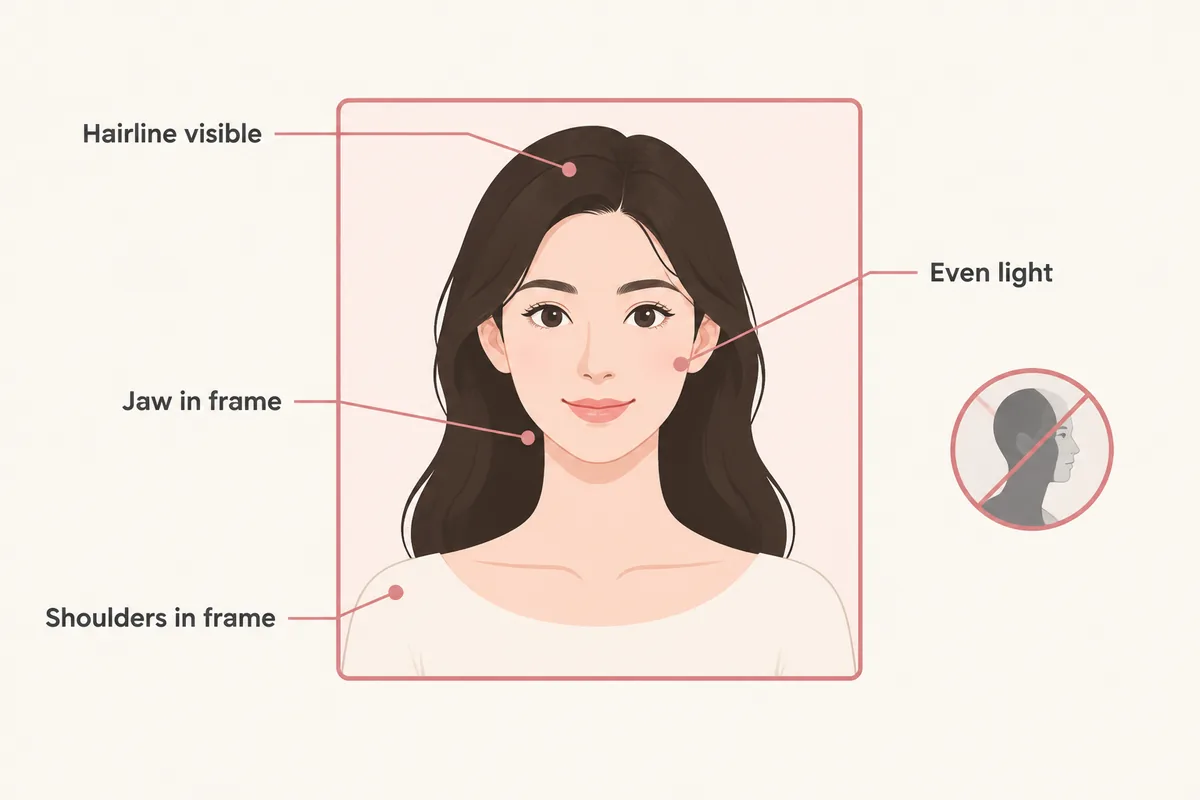
Use a front-facing portrait with the hairline, part and eyebrows visible — density is judged across exactly that area.
- 02
Choose a fringe density
Start from the light wispy fringe the tool opens on, then switch to micro, full or curtain without changing the photo.
- 03
Compare the previews
Read how much forehead shows through the strands and where the shortest pieces end.
Comparison factors
How light should the fringe be?
Compare the visible direction first, then judge detail. These factors make a virtual try-on easier to interpret.
Where the shortest pieces end
above the brow or lower
Separated strands versus solid coverage
How the fringe blends into the sides
How the color reads against your skin tone
Comparison guide
How to compare results on the same photo
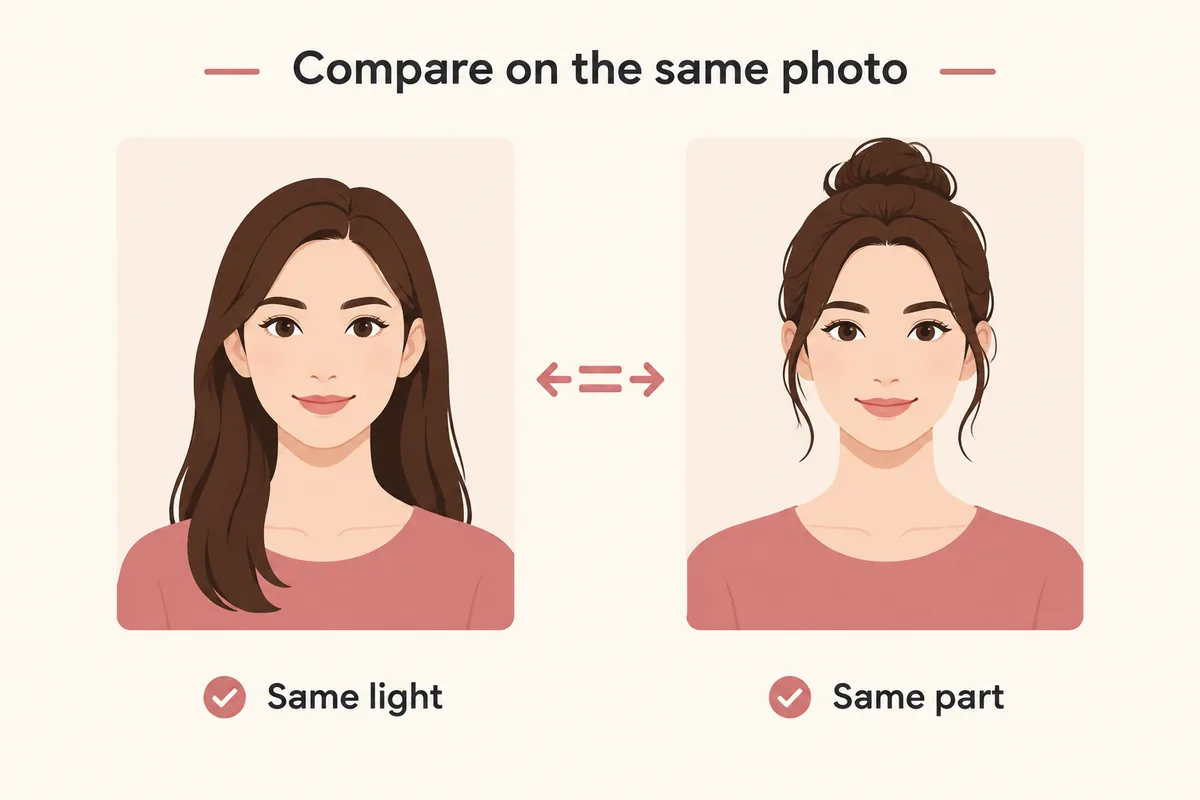
Keep one clear selfie, the same lighting, and a stable hairstyle or color direction. Change one variable at a time so each virtual try-on result is easier to compare and trust.
01
Density is the decision, not the style name
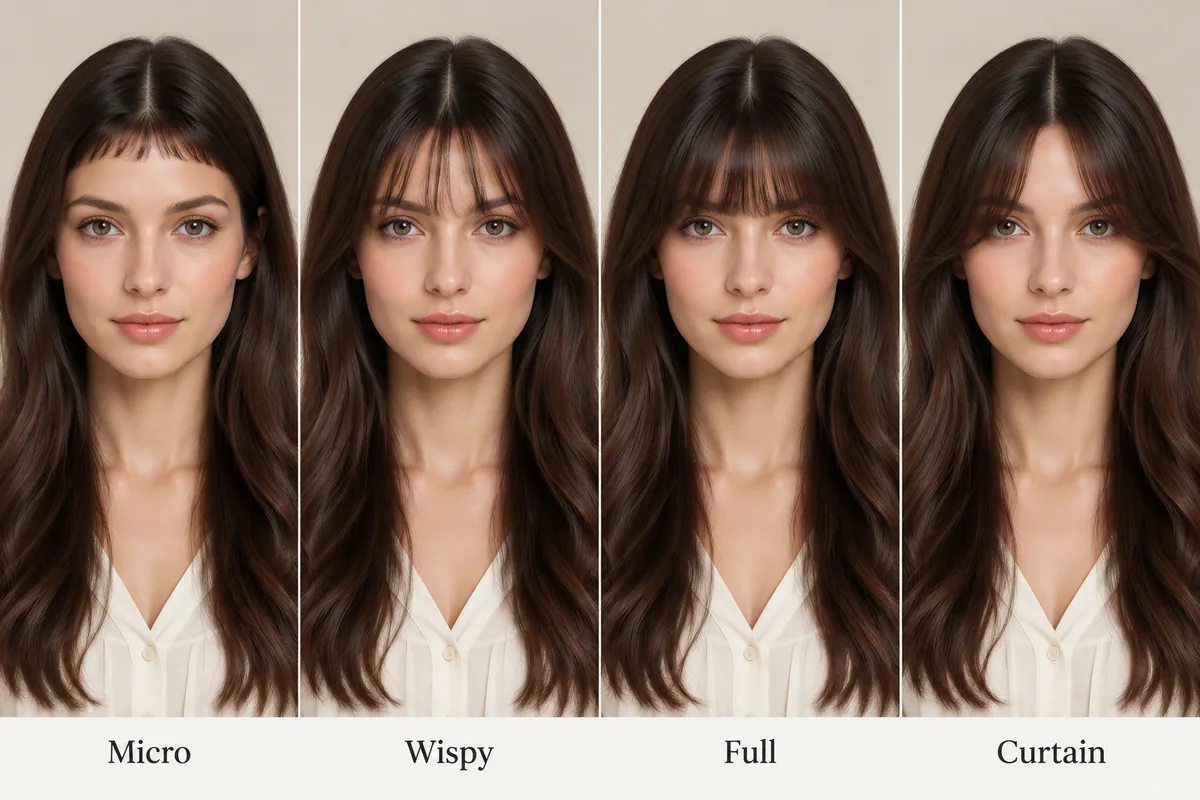
Wispy describes how much hair sits in the fringe, not how it is shaped. Two fringes can have exactly the same length and shape and still read completely differently depending on density: light separated strands leave the forehead visible and soften the whole face, while a full fringe covers the forehead and makes the fringe the strongest line on the face.
That is why the preview compares weights at the same length. Before you decide on the shape, decide how much coverage you actually want across your forehead, then choose the shape that carries it.
02
The four weights, from lightest to heaviest
A micro fringe is the lightest cut here: very short, sparse strands above the brows that barely change the forehead. Wispy bangs use more strands but keep them separated, so the forehead still shows through. Full bangs have thicker sections with almost no gaps and cover the forehead completely. Curtain bangs are different in kind: instead of falling forward they open in the centre and sweep outward, which frames the eyes rather than covering the forehead.
Most people move one step at a time. If you have never worn a fringe, comparing micro and wispy first is the lower-risk sequence; full bangs are a bigger commitment to styling and to how often the fringe needs trimming.
03
How to ask your stylist for wispy bangs
Describe three things: how much of your forehead you want to keep visible, where the shortest strands should end relative to your brows, and whether you want the fringe to fall forward or open in the middle. Density, drop point and direction describe the fringe far better than the word wispy does.
Be honest about the limits too. A preview cannot show how much hair you actually have at the hairline, which way your hair grows there, or how the strands will separate after washing. Bring two previews from your own photo — one lighter, one heavier — so your stylist can see the range you are choosing between.
Style categories
Try different hairstyle families
Not sure where to start? Explore a few popular hairstyle directions below, then try your favorites on your own photo.
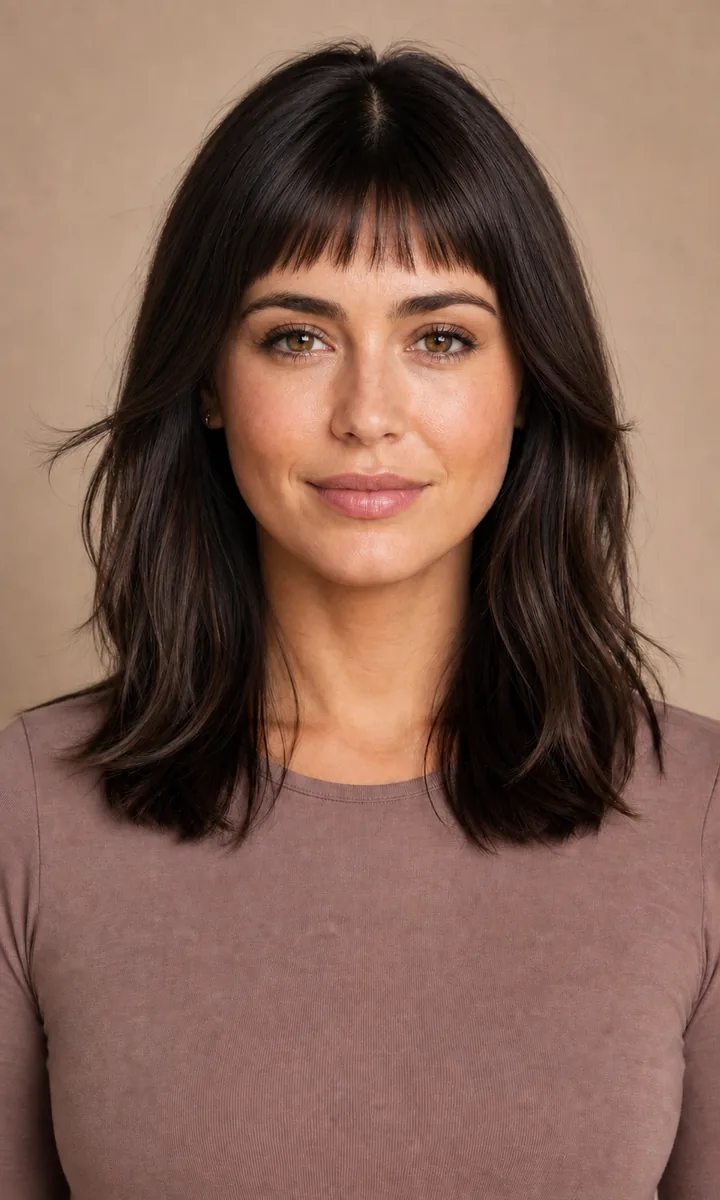
Micro fringe
The lightest option: very short, sparse strands that sit above the brows.
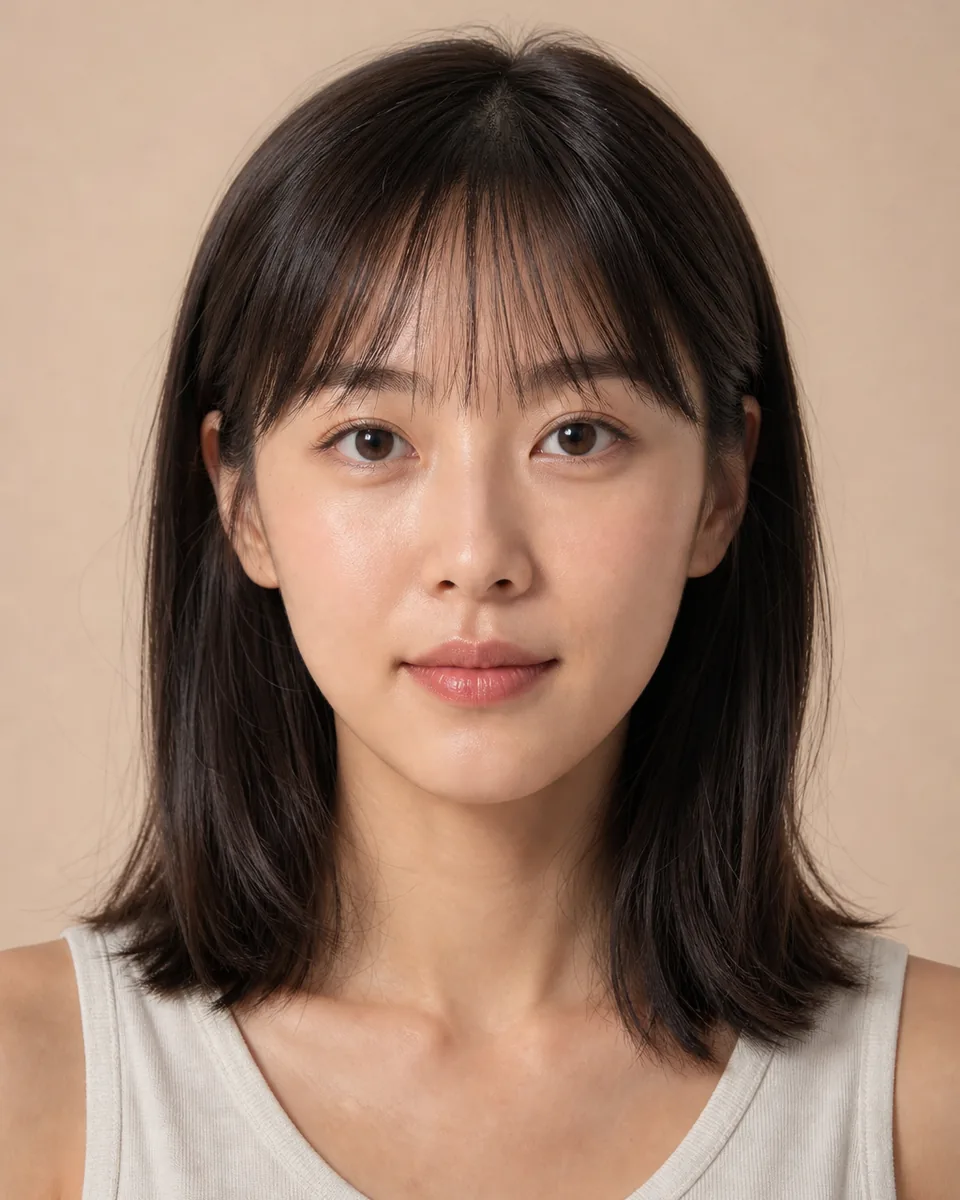
Wispy fringe
Light separated strands with the forehead clearly visible through the fringe.
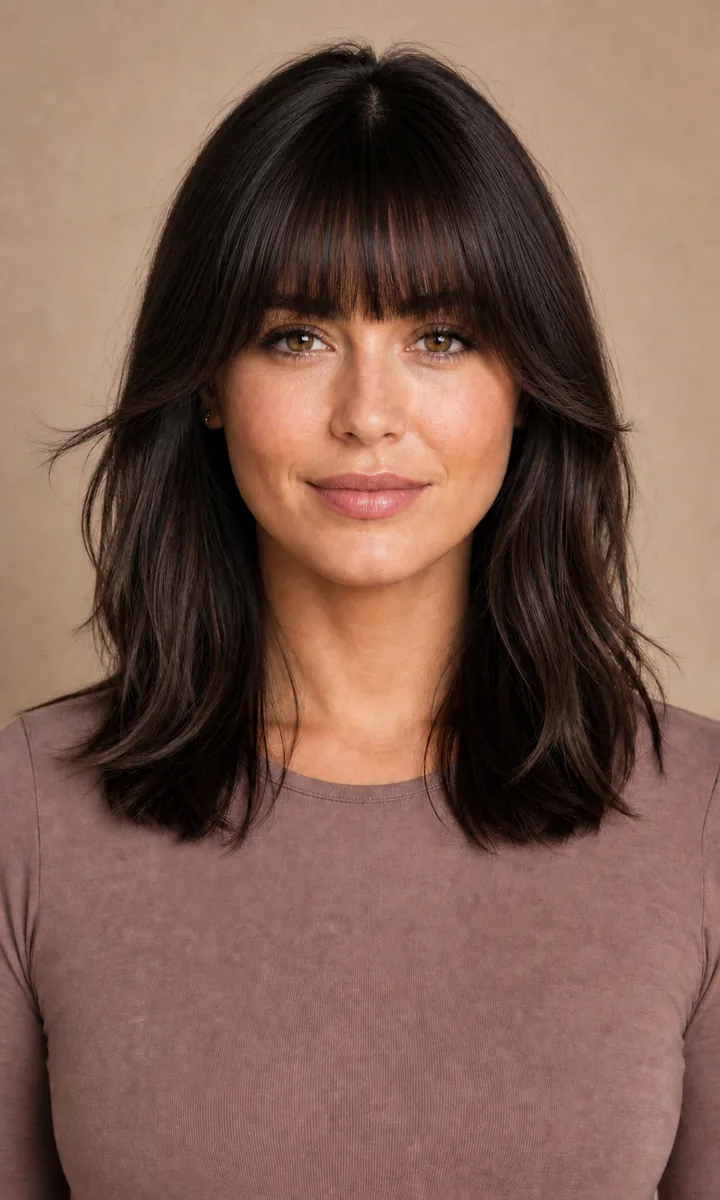
Full fringe
Thick sections that cover the forehead with almost no gaps.
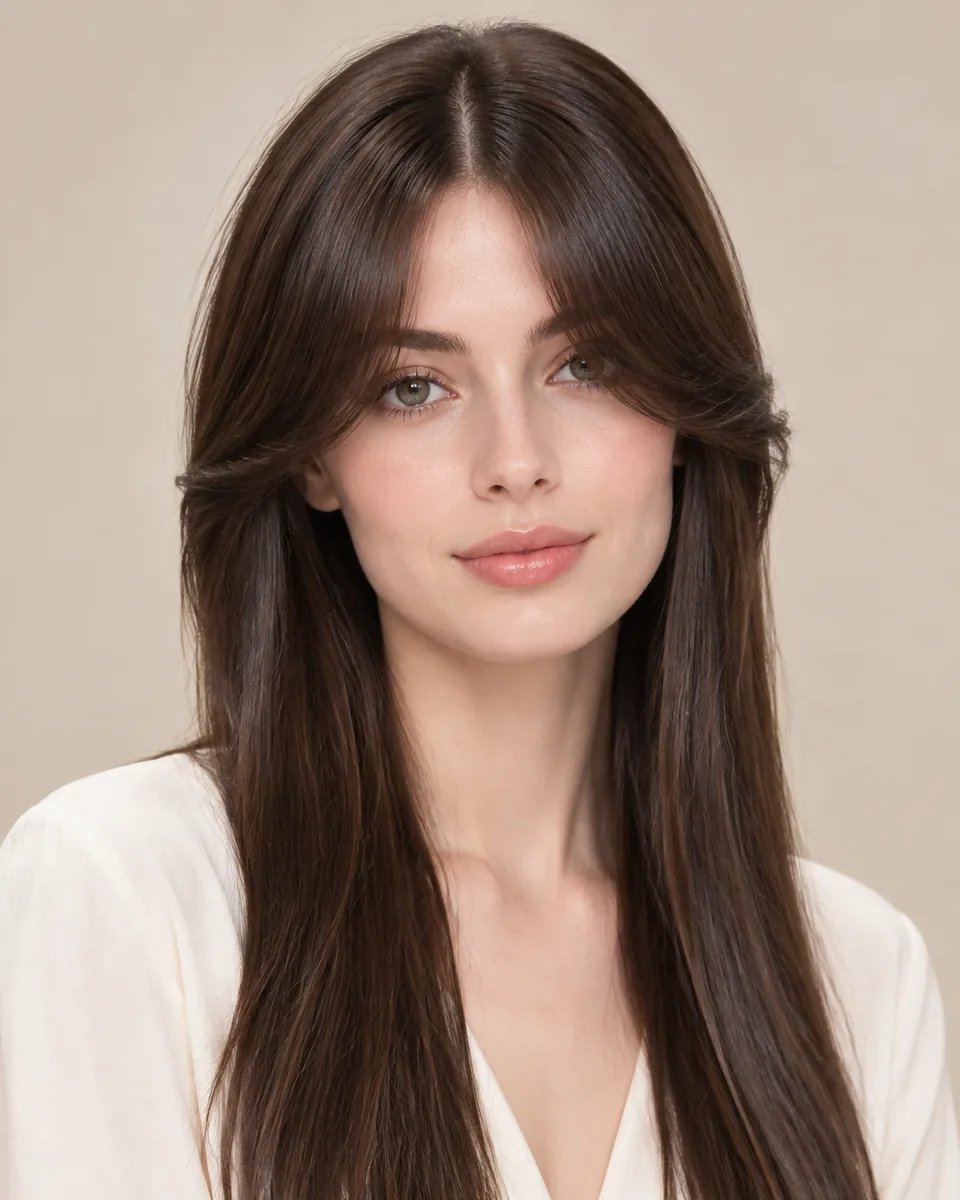
Curtain fringe
A centre opening with the sides sweeping outward instead of falling forward.
Color options
Change shape and color together
Compare color after choosing a silhouette so contrast, warmth, and dimension stay easy to judge on the same photo.
Black
Preview soft black or natural black hair directions.
Try this colorBrown
Compare dark brown, chocolate, chestnut, and warm brown ideas.
Try this colorBlonde
Try honey blonde, golden blonde, beige blonde, or platinum tones.
Try this colorBurgundy
Explore a richer red-purple shade without changing your real hair.
Try this colorOmbre
Preview darker roots fading into lighter ends.
Try this colorWhy use this tool
Built for fast visual exploration
Start with a clear portrait, compare one variable at a time, and use the result as a visual reference for your next style decision.
Settle the density question first
Compare four fringe weights
No app required
Style inspiration only
Privacy note
Preview tool, not a store
WigTryAI is built for personal visualization and style inspiration. It does not sell physical wigs, beauty products, or salon services, and it does not provide commerce matching. Your generated look is meant for exploration, comparison, and optional friend feedback.
Preview limits
What a wispy fringe preview can and cannot show
The card portraits and comparison figures on this page are editorial reference illustrations produced for WigTryAI; they are examples of the direction, not outputs from a real try-on, and they are not photos of customer results. A fringe preview compares the visible density and shape on your photo; it is not a prediction of how your hairline will behave.
Useful for comparing
- ✓how much forehead stays visible through the strands
- ✓where the shortest pieces end relative to the brows
- ✓separated strands versus solid coverage
- ✓how a fringe that opens in the centre changes the eye line
- ✓the color impression of the fringe against your skin tone
Does not predict
- —your real density along the hairline
- —growth direction, cowlicks and how the fringe splits
- —how the strands separate after washing and drying
- —how a stylist will adapt the reference to your hair
- —trim frequency and daily styling time
Photo setup
How to take a selfie for a virtual try-on
A clean, consistent portrait keeps the hairstyle or color direction as the main variable you are judging.
Face forward
keep your face centered and your eyes visible so both sides can be compared consistently.
Use soft, even lighting
avoid strong colored light and side shadows, especially when comparing blonde, gray, silver, or dimensional color.
Keep the hairline visible
move hats, sunglasses, hands, and heavy filters away from the forehead, ears, and hairline.
Keep the angle simple
avoid a strong tilt or mirror distortion so length, volume, and symmetry remain easier to judge.
Related tools and guides
Continue with the resource that matches your next decision
Move to a related tool or guide when your next question is about color, wigs, face shape, or comparison.

FAQ
Frequently asked questions
Can I see wispy bangs on my own photo?
Yes. Upload one front-facing portrait and the tool opens on a light wispy fringe, then lets you switch to a micro fringe, full bangs or curtain bangs while the photo stays the same. The first three try-ons are free, additional previews may require credits, and the original selfie is deleted within 24 hours.
How light should my fringe be?
Decide how much of your forehead you want to keep visible. A micro fringe leaves almost all of it, wispy bangs show the forehead through separated strands, and full bangs cover it. Compare two weights at the same length on your own photo and judge the coverage rather than the style name.
What is the difference between wispy bangs and curtain bangs?
Wispy describes density: fewer separated strands with the forehead visible. Curtain describes shape: a centre opening with the sides sweeping outward. They can be combined, which is why a light curtain fringe exists — the comparison page covers the two variables in detail.
Will wispy bangs work if my hair is fine?
The preview shows the fringe, not your density. Fine hair usually needs fewer, longer strands to avoid a see-through or stringy look, while thicker hair can carry more strands at the same weight. Ask your stylist how your own density changes the cut.
How often do wispy bangs need trimming?
The preview shows the visible fringe, not the upkeep. A fringe grows out faster than the rest of the cut, so most people trim every few weeks to keep the strands above the brows. Wispy bangs are slightly more forgiving during grow-out than a full fringe.