Why the Haircut You Love Online Can Look Completely Different on You
The problem is usually not your face. Inspiration photos hide the variables that decide whether a hairstyle works: texture, density, styling, proportions, and the way the reference image was taken. Here is how to make the decision with complete information instead of hope.
The model has soft curtain bangs, effortless layers, and exactly the kind of movement you have been trying to describe to your hairstylist. You save the photo, bring it to the salon, and ask for the same look.
Two hours later, the haircut is technically correct.
But it does not look anything like the photo.
The bangs sit differently. The layers feel heavier. Your face looks wider than expected. The style only seems to work when you hold your head at a specific angle.
This experience is so common that many people assume they simply chose the wrong haircut for their face shape. That is usually an oversimplification. A hairstyle does not exist independently of the person wearing it. The final result comes from the interaction between the cut, your hair texture, density, styling routine, face proportions, lighting, and even the way the reference photo was taken.
The real problem is not that you failed to choose a beautiful hairstyle. It is that you chose one using incomplete information.
Quick answer
Why the photo wins and you lose
An inspiration photo shows one styled, well-lit moment on someone whose texture, density, and proportions may not match yours. The haircut can be technically correct and still look different on you. The fix is not a better photo. It is a better process: separate the style into elements, compare variations on your own face, and ask your stylist to adapt the idea instead of copying it.
What the photo hides
Styling time, texture, density, lighting, and camera angle
Biggest single variable
Where the hair ends on your face: fringe, cheeks, jaw, shoulders
Best pre-cut check
Compare variations on your own photo, then adapt with your stylist
Inspiration Photos Are Designed to Show the Best Possible Version
Most hairstyle inspiration photos are not neutral references. They are carefully selected images showing professional styling, controlled lighting, flattering camera angles, freshly cut and colored hair, and a model whose density and texture already cooperate with the cut. They capture one perfect moment, not an ordinary Tuesday.
A haircut can look soft and effortless in a photograph while requiring heat styling, round brushing, texture spray, and frequent trims to maintain that appearance. This does not make the photo misleading. It means the image shows the finished presentation, not the full daily reality.
When people ask, "Will this haircut suit me?" they are often asking several questions at once:
Will it flatter my facial proportions?
Will my hair naturally fall this way?
Can I style it without professional help?
Will it still look good as it grows out?
Will I feel comfortable seeing myself with this much change?
A single celebrity or Pinterest photo cannot answer all of these.
The Same Haircut Can Create a Completely Different Effect
Consider curtain bangs. On one person, they open the face, emphasize the cheekbones, and blend naturally into long layers. On another, the same general shape separates too widely, falls into the eyes, or needs constant styling to avoid looking flat. The difference can come from forehead length, hairline, cowlicks, density, or where the shortest section of the fringe ends. Our curtain bangs vs wispy bangs comparison shows how even neighboring fringe styles change the face frame.
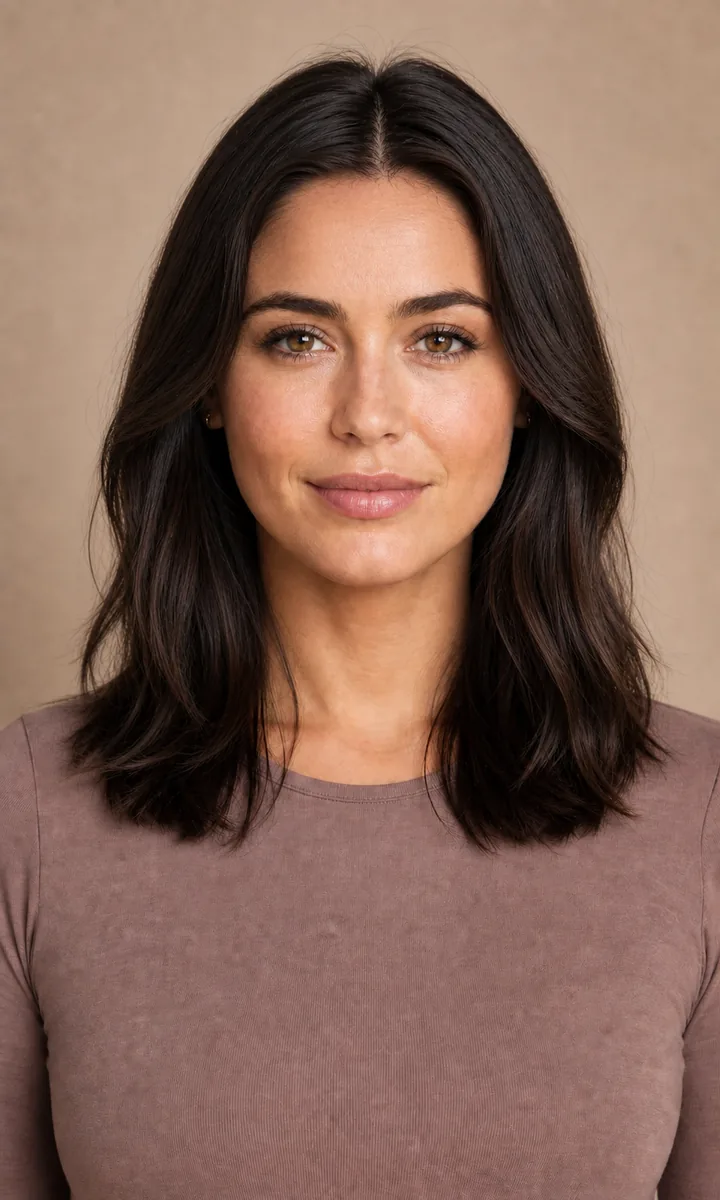
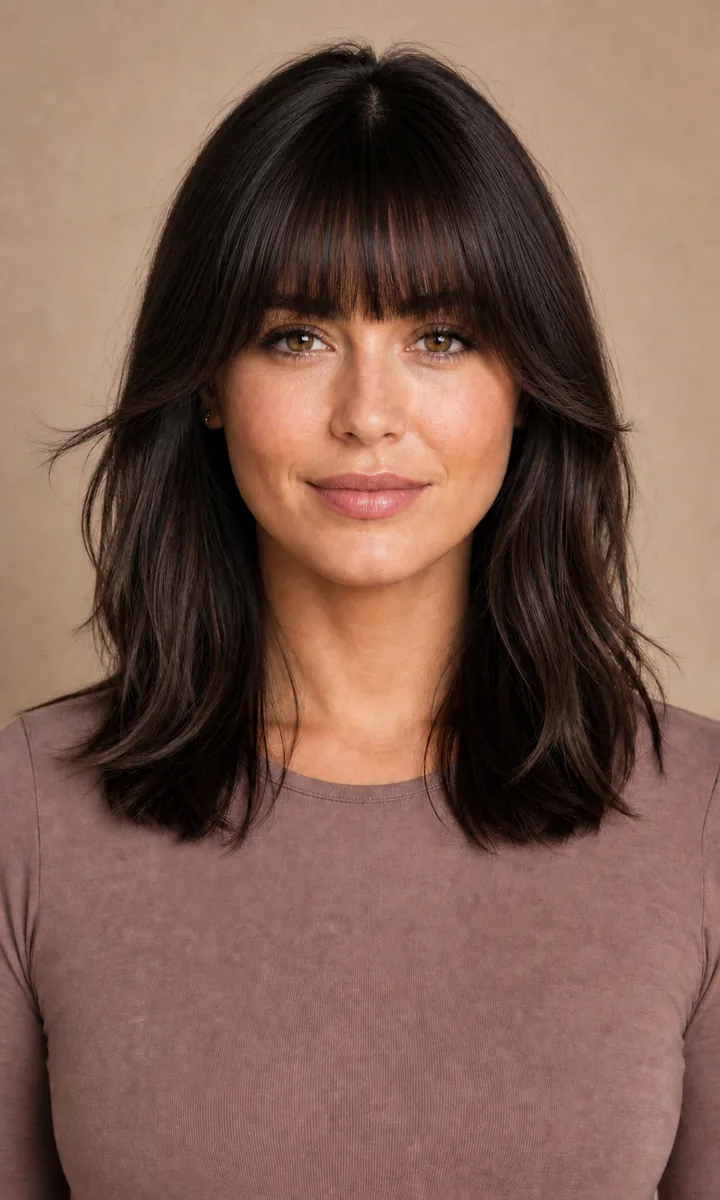
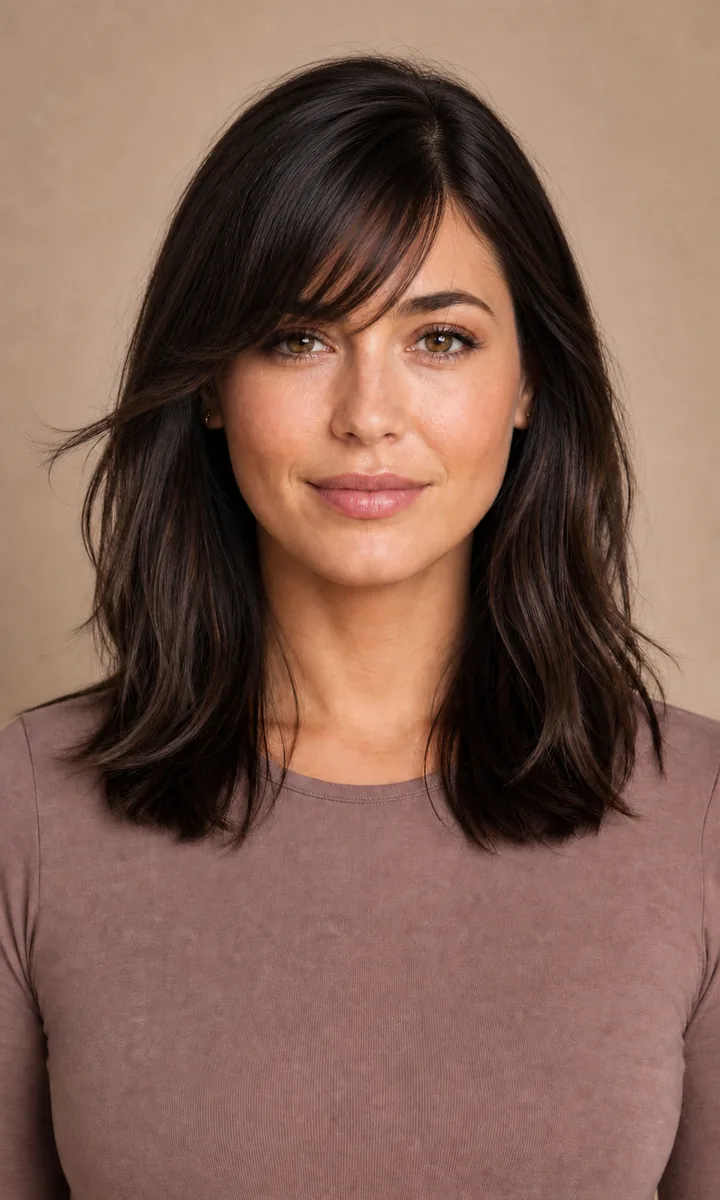
The images below make the point with one controlled variable. The person, the photo, and the base hairstyle stay the same. Only the fringe changes.
Visual comparison
Same person, same photo, three different fringes
Nothing changes except the bangs. Watch how forehead visibility, face width, and where your eye lands shift with each version.
No bangs
The open forehead keeps the face reading longer and puts all the framing work on the outer layers.
The same issue appears with length. A chin-length bob can sharpen one person's jawline and make another person feel the lower half of their face looks wider. Moving the endpoint by only a few centimeters changes the entire visual balance, which is why the bob vs lob decision is really an endpoint decision, not a name decision.
Pixie cuts create an even larger shift, because they remove the hair people normally use to frame their face. The result can look striking and confident, but it also exposes features that longer styles previously softened.
This is why hairstyle labels are not precise enough. "Curtain bangs," "layered bob," and "long waves" describe broad categories. They do not describe where the hair falls on your face, how much volume appears at the sides, or how the style interacts with your individual features.
Face Shape Is Useful, but It Is Not the Final Answer
Online hairstyle advice often reduces the decision to face shape: round faces should add height, long faces should add width, square faces should choose softness. These guidelines are a reasonable starting point, but they are not strict rules.
Two people can both have oval faces and still look very different in the same haircut. One may have a higher forehead, stronger cheekbones, and fine hair. The other may have a shorter forehead, softer features, and thick curls. Their official face-shape category is identical; their best haircut details are not.
Instead of asking only, "What hairstyle suits a round face?" it is more useful to ask:
Where should the shortest layer end?
Do I want to emphasize or soften my jawline?
How much width do I want near my cheeks?
Do I prefer my forehead to be visible?
Does my hair naturally create volume or fall flat?
How much daily styling am I honestly willing to do?
These questions lead to better decisions because they focus on the actual visual effect. If you want the face-shape framework as a starting layer, our guide on choosing a hairstyle for your face shape keeps it in that supporting role.
Hair Texture Changes the Structure of the Cut
A hairstyle can only behave according to the hair that carries it.
Fine, straight hair may make layered cuts look lighter, but struggle to hold volume. Thick hair can create dramatic movement, but poorly placed layers produce too much bulk. Wavy hair may naturally support curtain bangs and textured bobs, while shrinking or lifting as it dries. Curly hair can transform the apparent length of a cut, because hair that was cut to the shoulders may sit much shorter once it returns to its natural pattern.
This is one reason copying a reference photo too literally fails. The shape of the cut can be reproduced; the behavior of the hair cannot.
A more useful reference image is not the most beautiful one. It is the one showing someone whose hair behaves like yours.
Styling Is Part of the Hairstyle
Many people choose a haircut based on how it looks after styling, then judge the result based on how it looks without styling. That is an unfair comparison.
A layered blowout needs heat, tension, and product to create the movement in the reference photo. Wispy bangs may need to be reset every morning. A sleek bob can depend on straightening or careful blow-drying. A tousled shag can look spontaneous while still requiring styling cream and deliberate separation.
Before choosing a style, ask yourself one practical question:
Do I want the haircut itself, or the professionally styled version of the haircut?
There is nothing wrong with choosing a high-maintenance style. The problem is discovering the maintenance only after the hair is cut.
The Biggest Risk Is Often the Gap Between Familiar and New
People do not see their own face objectively. You are accustomed to a particular outline around your head, and even a flattering haircut can initially feel wrong because it changes that outline.
This is especially common with full bangs, very short bobs, pixie cuts, dramatic color changes, part changes, and removing a large amount of length.
The first reaction may not be, "This looks bad."
It may simply be, "This does not look like me."
That distinction matters. A hairstyle decision is not only about facial balance. It is also about identity and how much visual change you are ready to live with.
A Better Way to Choose a Haircut
Instead of selecting one beautiful photo and hoping for the best, use a comparison process.
1. Start With the Type of Change
Decide whether you want a subtle refresh, a noticeable change, or a dramatic transformation. This prevents you from comparing options that solve completely different emotional needs. Long layers and a pixie cut are not two hairstyle choices. They are two levels of change.
2. Compare Variations, Not Just Categories
Do not test only "a bob." Compare a chin-length bob, a jaw-length bob, a shoulder-length lob, a blunt bob, a layered bob, and a bob with curtain bangs. Often the best option is not a different hairstyle. It is a small adjustment in length, fringe, or volume.
Decision guide
Adjust one variable before abandoning the whole idea
When a direction feels almost right, the fix is usually a single variable, not a new haircut.
When the idea feels off
Change this variable first
Watch for
The bob feels too sharp
Move the endpoint a few centimeters
Width appearing where the ends stop
The bangs feel too heavy
Switch fringe density or length
Forehead visibility and eye emphasis
The style feels flat
Add or reposition layers
Bulk collecting at the wrong height
The color feels too much
Test face-framing highlights first
Contrast against your natural base
The whole cut feels too risky
Keep the element, drop the extremes
Losing the feature you actually liked
3. Put the Hairstyle on Your Own Face
The most useful reference is not a model who vaguely resembles you. It is your own face.
A virtual hairstyle try-on can help you evaluate the overall direction before making a permanent change. Tools such as WigTryAI let you upload a front-facing photo and run a virtual hairstyle try-on — comparing lengths, bangs, and colors on your own image instead of a model's photo.
The result should not be treated as a guarantee of the salon outcome. Texture, cutting technique, and styling still matter. Its value is reducing uncertainty. You may discover that curtain bangs feel more natural than full bangs, a lob feels more balanced than a chin-length bob, dark brown suits you better than a much lighter blonde, or a style you had dismissed actually works. That information is useful before the scissors come out.
4. Compare the Images Side by Side
Viewing hairstyles one at a time makes proportion changes hard to notice. Place three or four versions side by side: your current look, a safer option, a medium-change option, and a bold option. A structured walkthrough of this method lives in our guide to comparing hairstyles on your face.
Look at the overall outline first. Then examine forehead visibility, cheek width, jaw definition, volume near the temples, where the length ends, and how much attention moves toward the eyes.
Do not immediately ask which image is most attractive. Ask which one feels most believable as your everyday appearance.
Test the change before the salon does
Upload one clear portrait and compare the safe, medium, and bold versions of your idea on the same face. Keep the believable results and bring them to your stylist.
A single reference photo creates misunderstanding. Bring several images showing the desired front shape, the side profile, the back length, the amount of layering, the preferred bang length, and the style without extreme professional volume. A virtual try-on image can communicate the overall direction too.
Then ask your stylist:
What would need to change for my hair texture?
Where should this length end on me?
How will it look without heat styling?
How often will the bangs need trimming?
What happens as it grows out?
Is there a lower-risk version of this cut?
A good consultation adapts the inspiration rather than copying it blindly.
The Goal Is Not to Predict the Future Perfectly
No tool, stylist, or face-shape guide can guarantee exactly how you will feel after a haircut. Hair is physical, personal, and constantly changing.
The goal is to replace one high-risk decision with a series of smaller, better-informed ones. Instead of asking, "Will this exact Pinterest haircut make me look like the person in the photo?" ask, "Which parts of this hairstyle do I actually like, and how would those elements work on me?"
You may want the face-framing layers but not the shorter length. The movement of curtain bangs but not a full fringe. A brighter color around the face but not an entire blonde transformation. Once you separate the hairstyle into elements, the decision becomes much easier to fit to your face, your hair, and your daily life.
Before You Cut, Test the Change
The most expensive part of a haircut is not always the salon appointment. It is the time spent growing out a decision you were never confident about.
Inspiration photos are useful. Face-shape advice is useful. A good stylist is essential. But the decision gets much stronger when you can also see the change on yourself. Identify the exact feature you like, compare several variations, test the look on your own photo, consider your natural texture and styling habits, and ask your stylist to adapt the idea rather than copy it.
The best hairstyle is not the one that looks most impressive in a photograph. It is the one that still feels like you after the salon lighting is gone.
FAQ
Why does my haircut look different than the photo?
Because the photo shows a professionally styled moment on hair that may not behave like yours. Texture, density, hairline, face proportions, lighting, and camera angle all change how the same cut reads. The haircut can be technically correct and still produce a different visual effect on you.
Will curtain bangs suit me?
It depends less on your face-shape label and more on the details: forehead length, hairline, cowlicks, density, and where the shortest section of the fringe ends. The most reliable check is to preview curtain bangs on your own photo next to alternatives like wispy or full bangs, then confirm the length and styling routine with your stylist.
How can I preview a haircut before cutting it?
Upload a clear, front-facing photo to a virtual hairstyle try-on tool and compare several variations on the same image: different lengths, fringe types, and colors. Treat the results as visual direction rather than an exact prediction, and bring the believable ones to your salon consultation.
Is face shape really what decides whether a haircut suits me?
Only partly. Face-shape guidelines are a useful starting point, but two people with the same face shape can need completely different haircut details. Proportions, texture, density, and styling habits usually matter more than the category itself.
How many reference photos should I bring to the salon?
More than one. Bring images showing the front shape, side profile, back length, layering, and bang length, ideally including one version without heavy professional styling. Multiple references help your stylist adapt the idea to your hair instead of guessing from a single angle.
Can AI show exactly how a haircut will look on me?
No. AI can show the visible direction of a style on your photo, but it cannot predict texture behavior, shrinkage, styling effort, or the result of a specific cutting technique. Use it to narrow the decision, then let your stylist handle the physical reality.