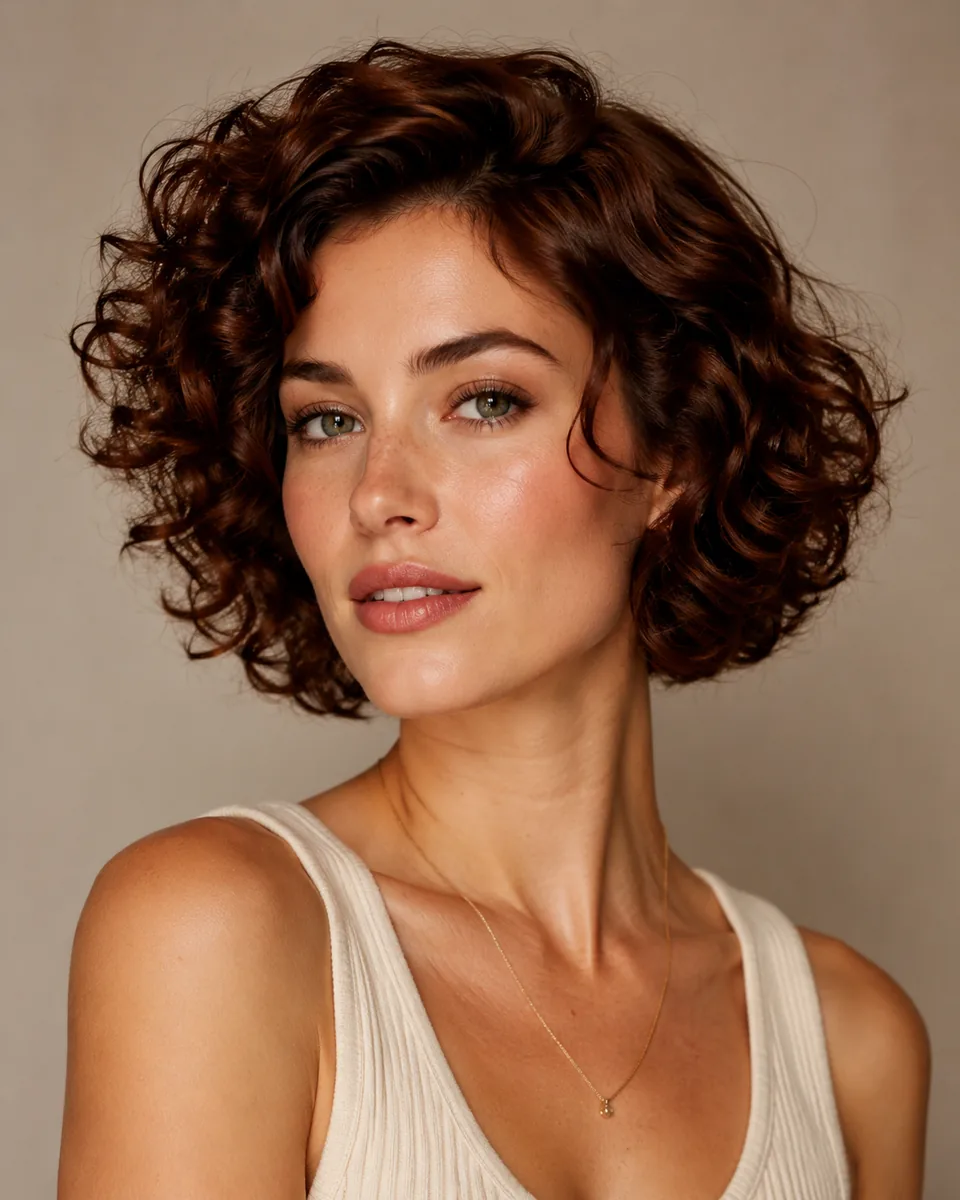
Start with the upper rim, the outer corners and the arms above your ears. These six directions compare a clear eye area with fringe framing, while keeping physical clearance a separate check.
best hairstyles with glassesHairstyle decisionsVisual guide
5 min read
Quick answer
What makes a hairstyle work with glasses?
Choose by three places where hair and frames meet: the upper rim near the brows, the outer corners near the temples and the arms above the ears. An open bob or pixie gives the frame more visible space; curtains or a side fringe add another line around it. A style can look balanced in a portrait and still catch on the frame when you move. Check appearance and physical clearance separately.
This guide is about the hair-and-frame relationship, rather than a new face-shape category. The references below show hairstyle shapes, usually without glasses. They are not evidence of fit with your frame. If forehead coverage is the main decision, the high-forehead guide compares that variable directly.
Six starting points, from an open eye area to layered framing
These are editorial starting points ordered by how much additional framing they place near the glasses, not popularity or universal suitability. A pair of thin round frames and a large angular pair may change which option you prefer. Use the glasses you wear every day for the final practical check.
Ranked shortlist
Hairstyles with Glasses: 6 Ways to Frame the Eyes
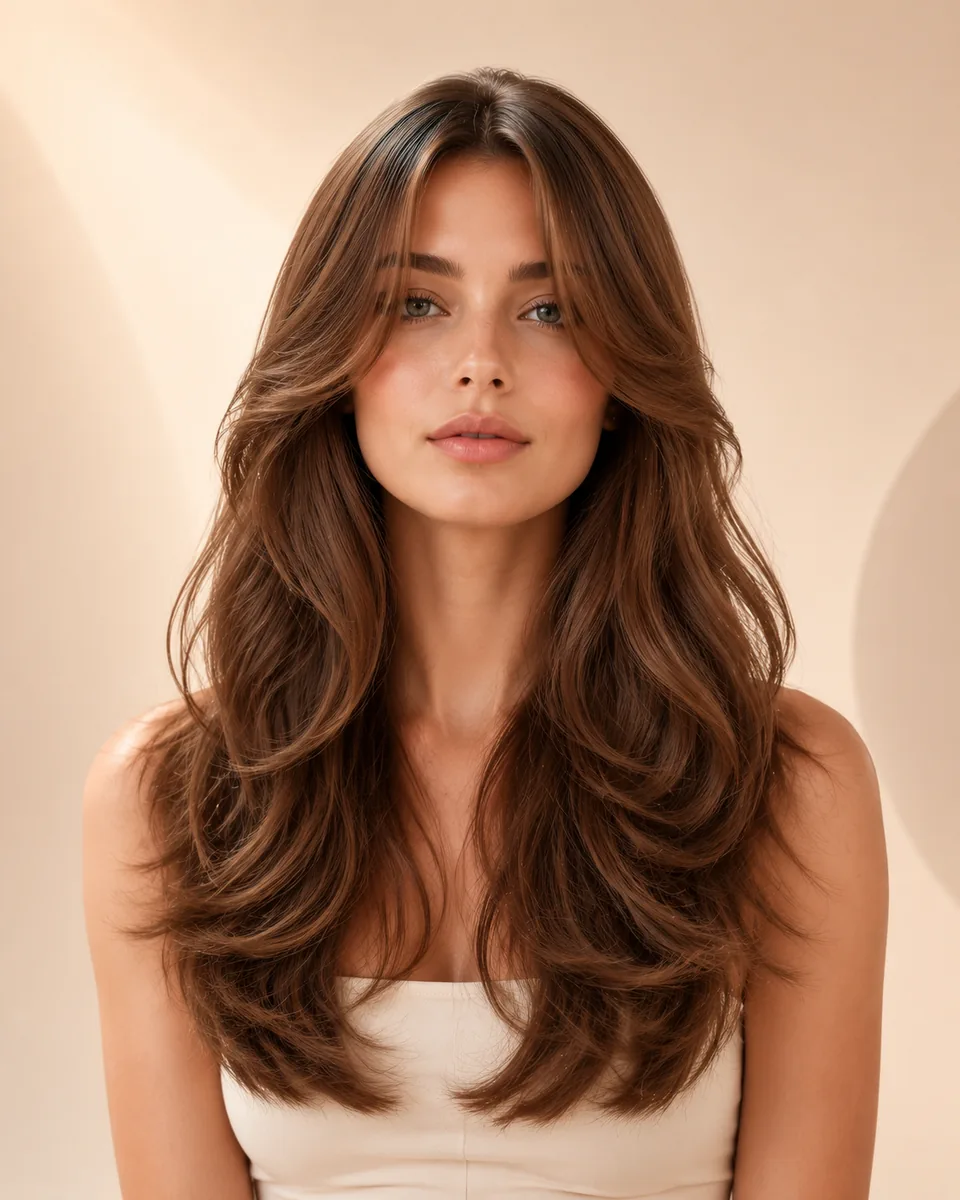
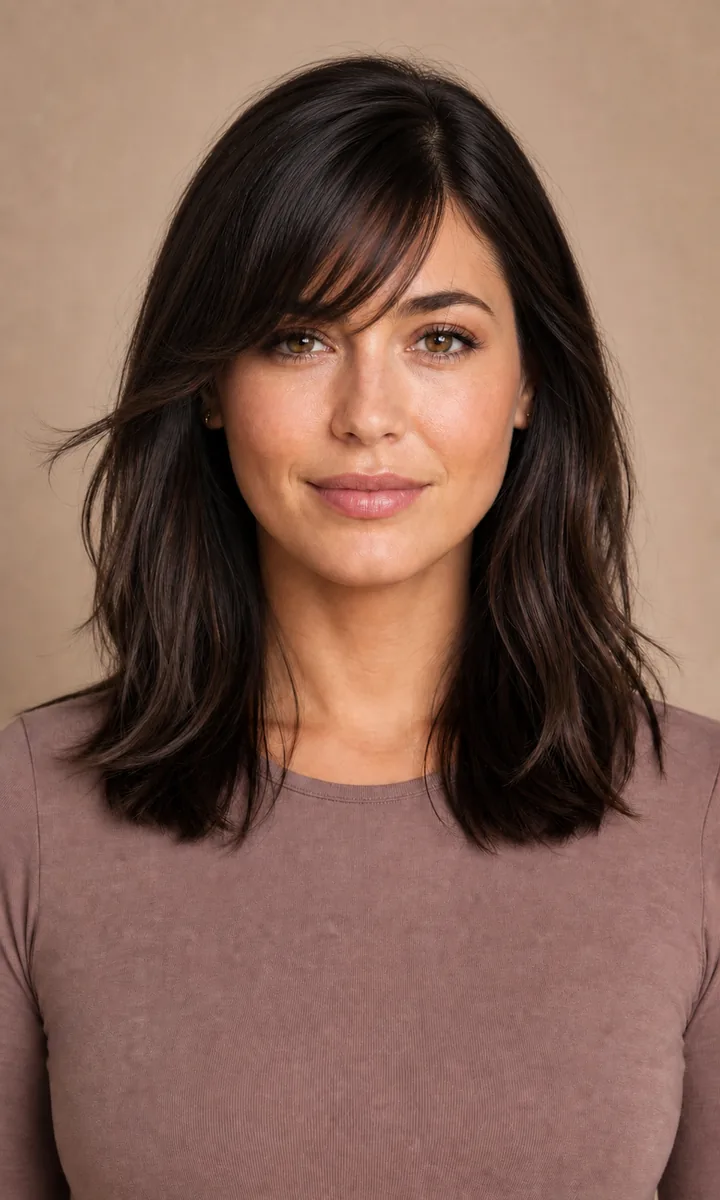
Six editorial starting points, ordered by the stated decision criteria rather than popularity, clinical results or measured suitability. Reference portraits show different people and hair colors. Each action opens the closest catalog direction, not an exact recreation of the reference.
Look 1
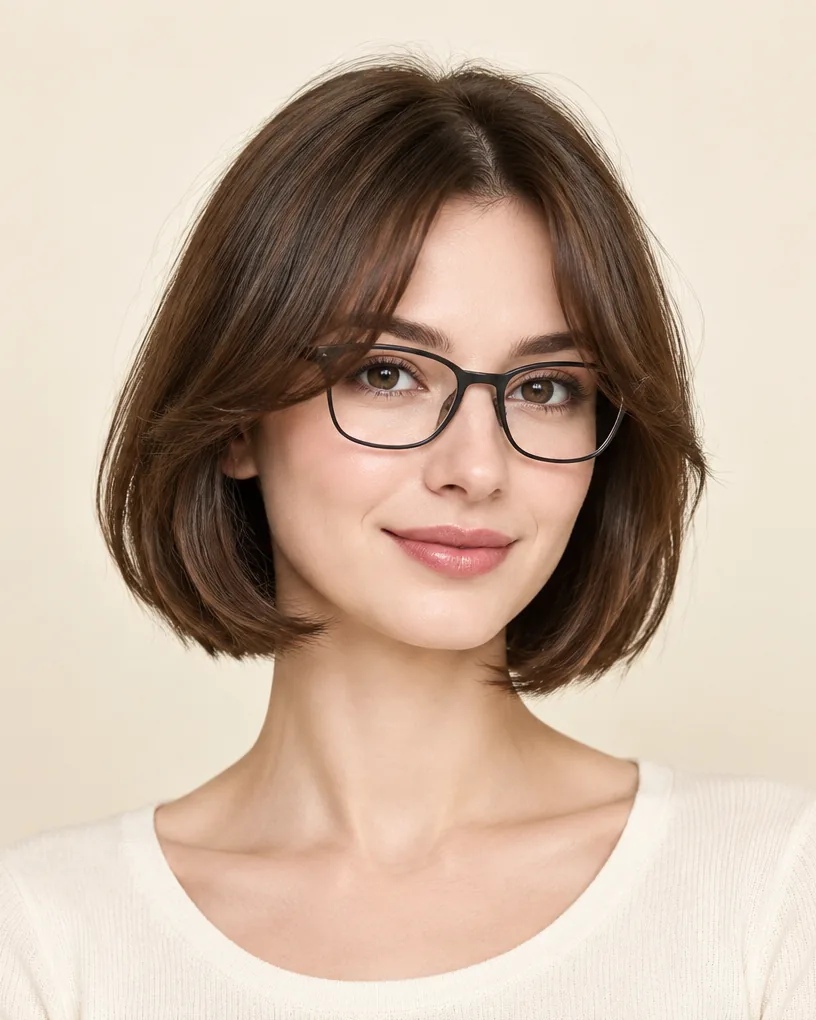
Open-front bob
A compact bob without a full fringe gives the upper frame room to remain visible.
Best for
Making your glasses a clear part of the face frame.
Why it works
The hair edge sits near the jaw while the upper rim stays a separate line around the eyes.
Hair may still catch beneath the arms near the temples. Test putting your actual glasses on and off.
Preview the closest catalog direction; the preset does not reproduce this reference exactly.
Read the upper rim before picking a fringe
Put on your usual glasses and look straight ahead. Does the upper rim sit near the brow line, above it or below it? Then decide whether you want the fringe to leave that line visible, sit above it or overlap it deliberately. There is no universal requirement for a clear gap; the useful distinction is intentional overlap versus pieces that repeatedly fall onto the lenses.
Schwarzkopf’s hairstyle-and-glasses guide treats hair, frames and facial features as a combined visual choice. That is useful styling context, not a reason to change a correctly fitted pair of glasses for a haircut. Keep the frame in its comfortable fitted position while deciding where the hair should fall.
The bangs comparison explains why curtain describes shape while wispy describes lighter separation. Either can overlap a frame. A wispy fringe that looks airy without glasses may create more separate lines across a dark upper rim; a long curtain can leave the bridge visible but land directly on the outer corners.
Decision guide
Check the three contact zones
Zone
Visual question
Real-life check
Upper rim and brows
Do you want a gap, an overlap or an open forehead?
Look down and back up; do front pieces fall across the lenses?
Outer corners and temples
Do fringe ends stop at a frame corner?
Turn your head and see whether pieces sit on the rim
Arms and ears
Do you prefer visible temples or hair tucked behind the arms?
Put glasses on and take them off; check snagging and pressure
Bridge and center opening
Do you want the bridge and center brows visible?
Compare the front opening while the frame stays in its normal position
Wear the actual glasses to the haircut consultation
Bring the pair you wear most. If you alternate between a small pair and larger work frames, bring both rather than describing one from memory. Ask to check the front length and the hair beside the ears with the glasses in place. Mention whether you tuck your hair, wear a headset or repeatedly lift the glasses onto your head; these habits affect where hair gets caught.
A pixie versus bob comparison helps if the larger choice is open temples versus a longer side panel. If you want to keep more length, the hair-length guide separates the perimeter from the pieces that touch the face. A long back does not require long pieces resting on your lenses.
Use previews for the outline, then check clearance in person
Start with one clear, front-facing portrait. If your clear lenses and frame leave your eyes visible, you can use that photo to explore the combined outline; inspect the result against the original because AI may alter the frames, eyes or reflections. Dark lenses, glare and obscured eyes can make that comparison less useful. A separate photo without glasses can help compare the cut, but it cannot answer how the cut and your frame look together.
Keep hair color steady and compare one open-front option with one fringe option in virtual hairstyle try-on. Read the silhouette rather than treating every generated strand as accurate. The hero and references are generated editorial illustrations, not a tested eyewear-fitting workflow or actual customer results. No preview can tell you whether a physical strand will catch under an arm or brush a lens when you move.
Start with an open-front silhouette
Compare a compact bob with your original portrait, then try a fringe direction. Inspect any changes to the frame rather than assuming the glasses were preserved.
Yes. Decide whether you prefer the fringe above the upper rim, deliberately overlapping it or opening around the bridge. Then check that it does not repeatedly cover the lenses or catch at the outer corners during ordinary movement.
Are curtain bangs better than full bangs with glasses?
Neither is universally better. Curtains can leave the bridge and center forehead open, but their longer sides may sit on the outer corners. Full bangs create a more continuous line near the upper rim and need their own length and comfort check.
Do short haircuts work better with glasses?
They can expose the temples and reduce overlapping hair, but they are not automatically more comfortable. A pixie and a bob place different amounts of hair around the arms and ears. Try the glasses on and off while assessing the side length.
Should I change how my glasses sit to match the haircut?
Keep them in their usual comfortable fitted position while choosing the hair length and shape. A style reference is not fitting advice. If the frame itself feels uncomfortable, a haircut preview cannot determine how it should be adjusted.
Will WigTryAI keep my glasses exactly the same?
Do not assume that it will. A generated hairstyle preview can alter frames, reflections or nearby facial details. Compare the output with the original and use it for a broad silhouette decision; physical clearance and fit must be checked with your actual glasses.