Hairstyles for a High Forehead: 6 Coverage and Framing Options
Choose how much forehead you want visible. Compare a continuous fringe, a diagonal sweep, an open-center curtain and a deliberately open forehead before deciding on a cut.
best hairstyles for high foreheadHairstyle decisionsVisual guide
5 min read
Quick answer
What changes a high-forehead hairstyle?
If you want less forehead visible, full brow-length bangs test continuous coverage, a side fringe tests a diagonal edge, and curtains test a narrower opening with an open center. If you prefer your forehead visible, an open side part is a valid choice too. The important variable is where the front pieces actually fall, not whether the haircut name includes “bangs.”
A high forehead alone does not establish a long face, a wide forehead or any single face-shape category. This guide focuses on the opening between the hairline and brows. For the whole face outline, use the long-face hairstyle guide; for a low-density front section, use bangs for thin hair.
Six directions, ordered by the coverage question they test
The order starts with more continuous center coverage, moves through lighter and diagonal coverage, then includes an open-forehead control. It is an editorial comparison order, not a ranking of attractiveness or a measurement of forehead height.
Ranked shortlist
Hairstyles for a High Forehead: 6 Coverage and Framing Options
Six editorial starting points, ordered by the stated decision criteria rather than popularity, clinical results or measured suitability. Reference portraits show different people and hair colors. Each action opens the closest catalog direction, not an exact recreation of the reference.
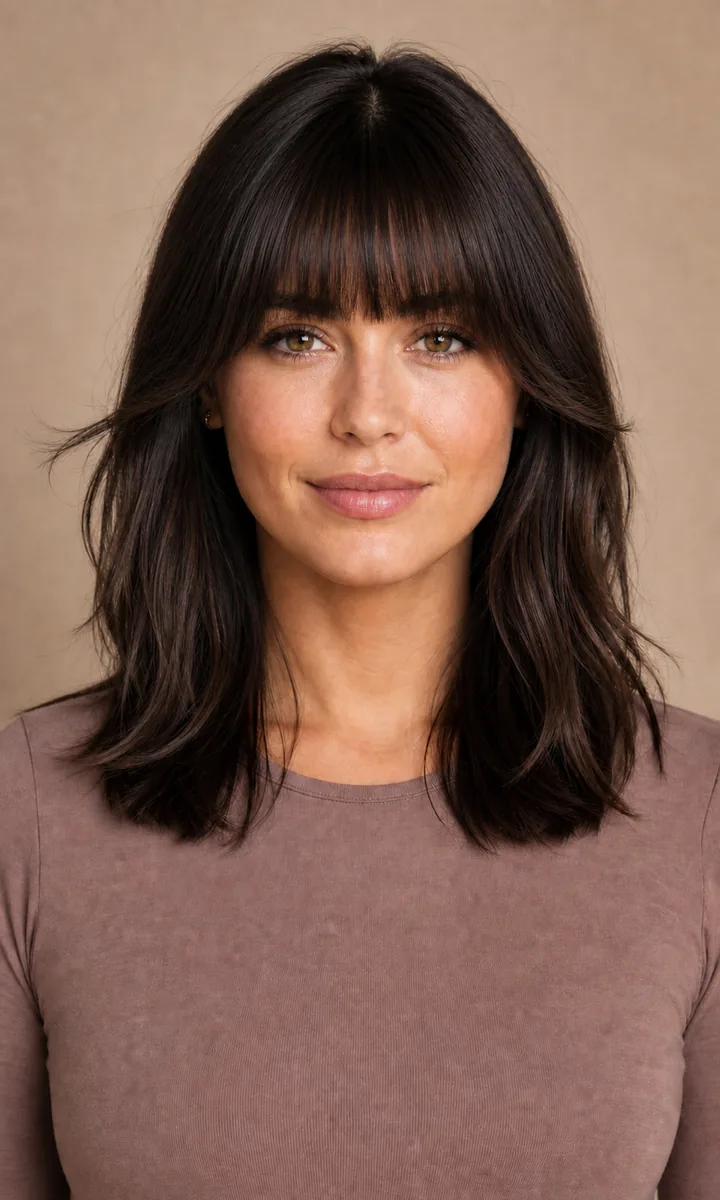
Look 1
Full brow-length fringe
A near-continuous edge puts the visible top boundary of the face close to the brows.
Best for
The clearest comparison when you want coverage through the center.
Why it works
The fringe covers part of the forehead rather than relying on side volume to change the frame.
Growth direction and front density determine whether the fringe will lie that way. A full fringe usually asks more styling than an open forehead.
Preview the closest catalog direction; the preset does not reproduce this reference exactly.
Look 5
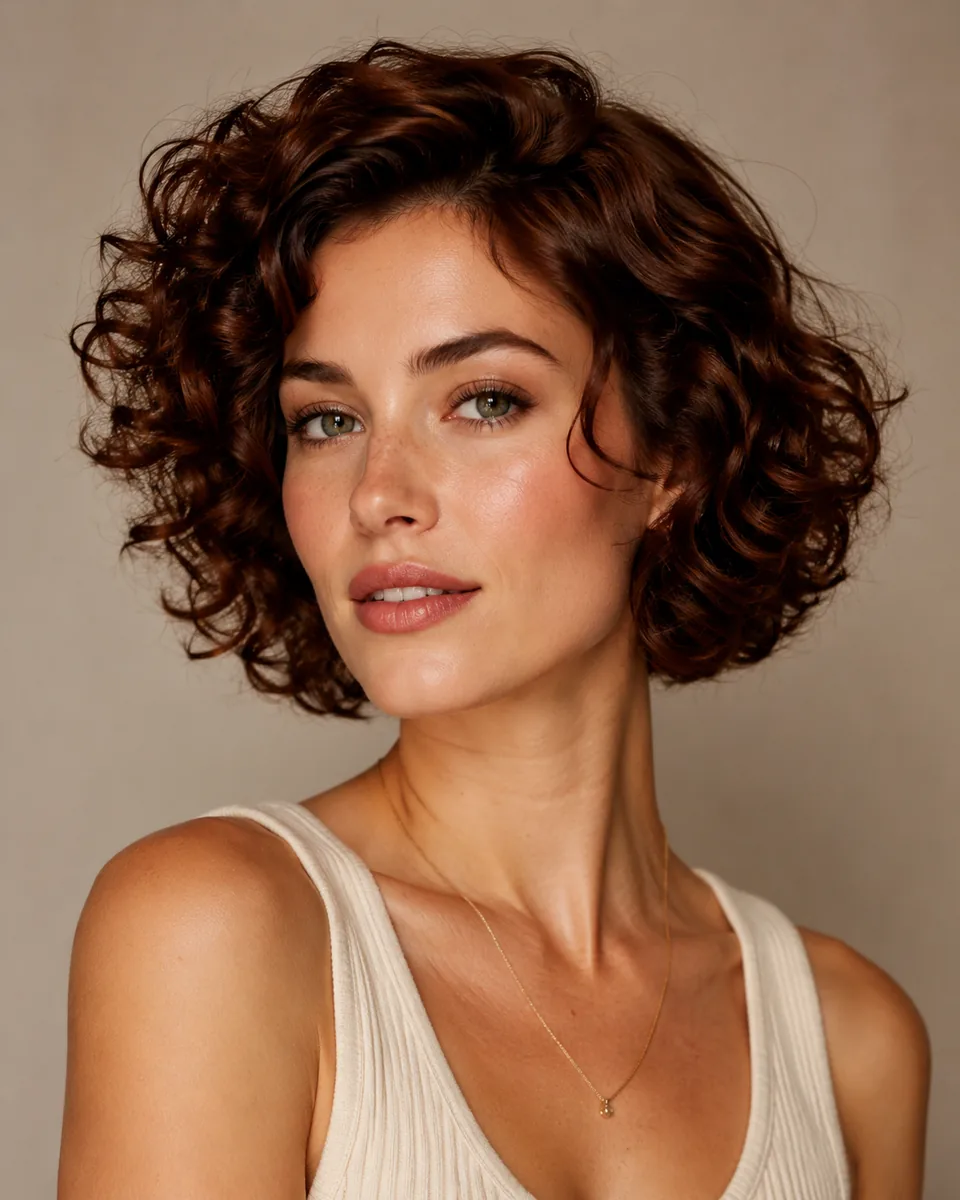
Curly bob with a side curl
A rounded curly outline places a side curl near the forehead while the center stays open.
Best for
Working with curls rather than converting the fringe to a straight sheet.
Why it works
A side curl adds a broken edge near the temple and connects it to side fullness, while leaving the center forehead visible.
The pictured bob is a silhouette reference; the preset may not generate a specific fringe. A real curly fringe needs dry-length and shrinkage assessment.
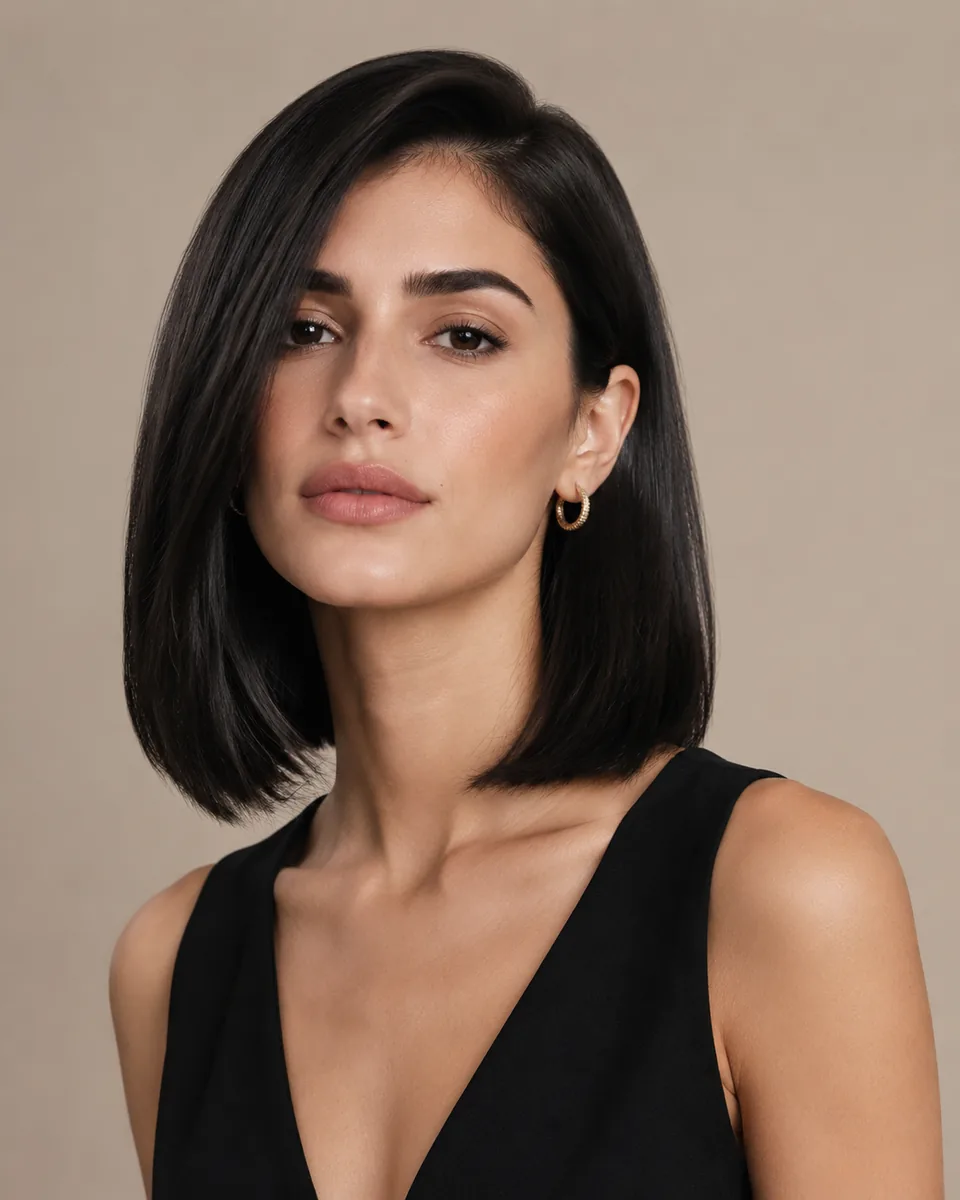
Preview a medium lob; part direction can differ from the reference.
Coverage, width and crown height are separate choices
Coverage: find the lowest front piece and the largest gap. A brow-length fringe can lower the visible upper boundary of the face. A cheekbone-length curtain can change the sides while leaving a tall center opening. Neither is inherently better; they answer different preferences.
Width: look at the distance between the sides of the fringe. A narrow opening and a wide straight-across fringe create different horizontal shapes even at the same shortest length. Do not borrow advice about a broad forehead and assume it automatically addresses height.
Crown: ask whether you like extra height above the hairline. A voluminous crown can remain part of your preferred look, but it is a separate decision from forehead coverage. Test one variable at a time instead of adding fringe and changing all the volume at once.
L’Oréal Paris’s fringe guidance distinguishes piecey, side-swept, blunt and curtain shapes in the context of a wider forehead. We use those visible fringe distinctions here; a wider forehead is not the same feature as a high forehead, and the source does not establish a universal “correct” proportion.
Decision guide
Match the fringe to the opening you want
Your preference
First comparison
What could change the decision
Cover the center near the brows
Full fringe vs wispy fringe
Actual front density, cowlicks and comfort around the eyes
Keep some skin visible
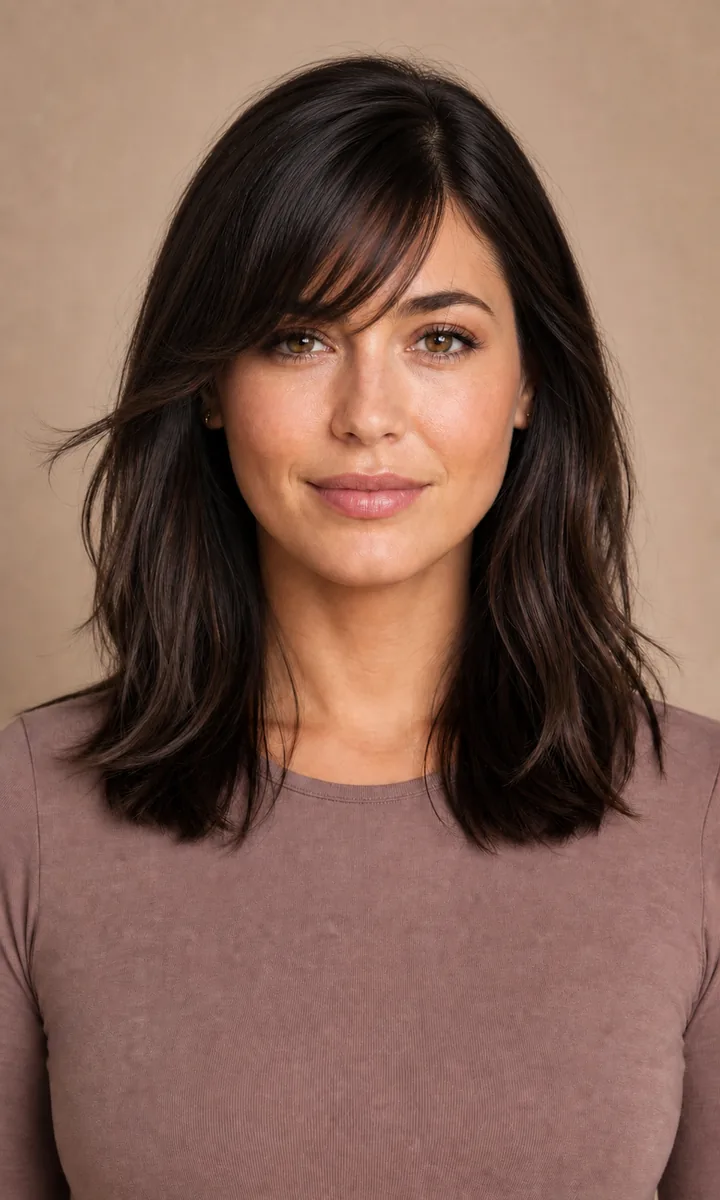
Wispy vs side-swept fringe
How separated strands sit without styling
Keep a center part
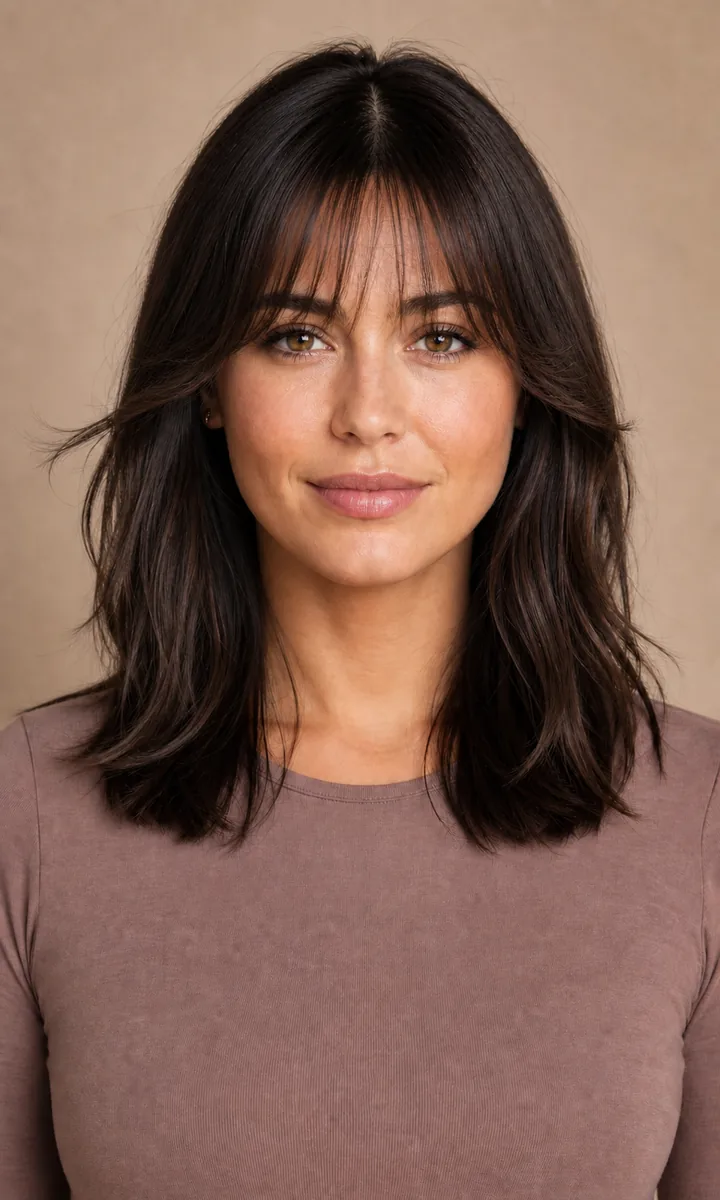
Long curtains vs full fringe
How much center forehead the curtains leave open
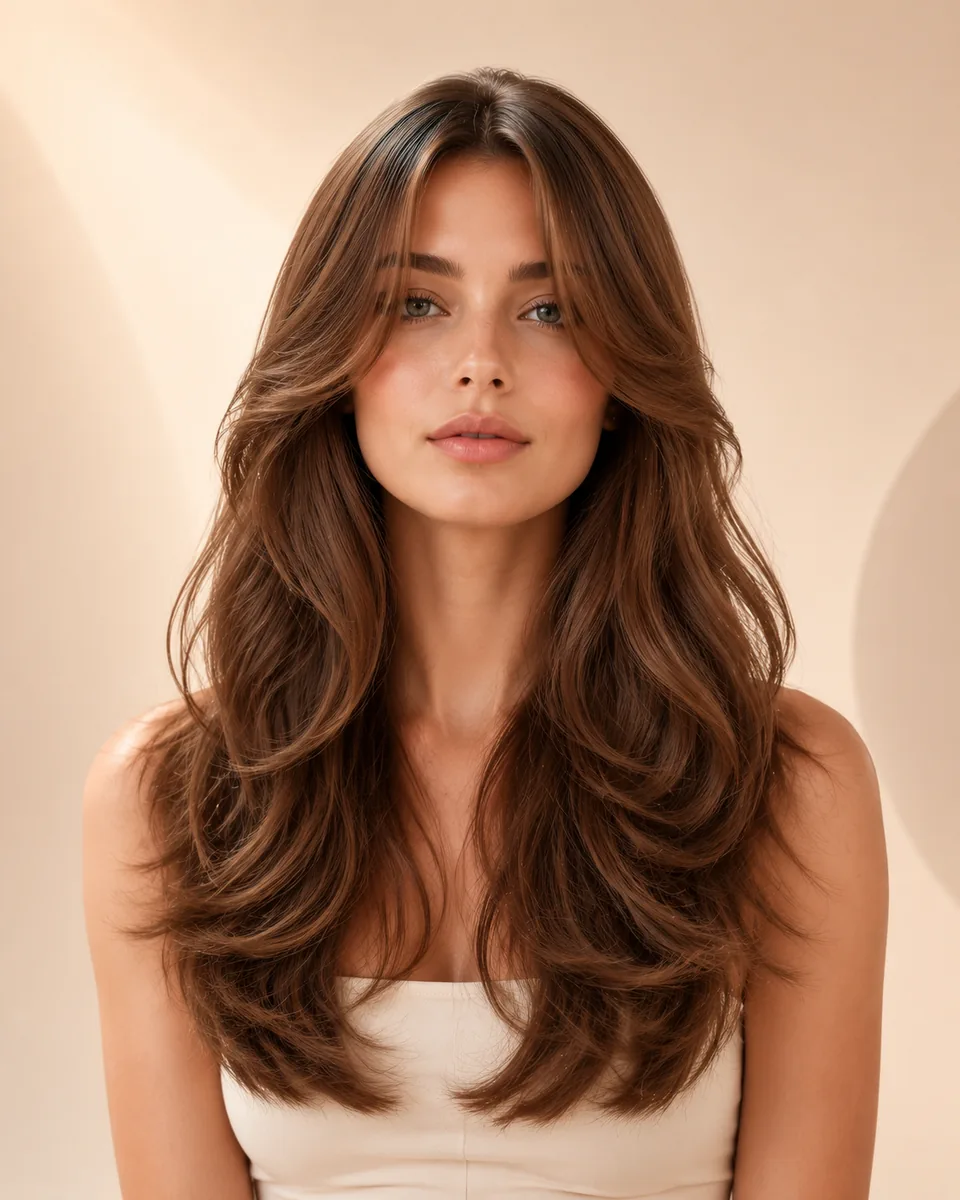
Keep hair off the forehead
Side-parted lob vs centered open hair
Part direction and side volume rather than coverage
Keep natural curls
Forward curls vs an open curly frame
Dry curl length and spring, which AI cannot predict
Hairline and maintenance checks before a real fringe
Show a stylist where you want the shortest pieces to land with your hair dry. Mention cowlicks, a part that repeatedly reopens and whether you usually let your hair air-dry. Ask how the chosen shape would behave between styling sessions and whether its fringe section would take more hair than you want from the sides.
You do not need to use a finger-width rule or compare your forehead with a beauty ideal. Those shortcuts do not show how a fringe sits or what you enjoy wearing. If curtain bangs versus blunt bangs is the remaining choice, compare the center opening directly rather than assuming every fringe provides the same coverage.
Preview two coverage levels on one photo
Start with one portrait showing your hairline and eyebrows. Compare the full-fringe and wispy-fringe presets using the same dark-brown color; then try curtains if you want more of the center open. Look at the central gap, not just the side sweep. Keep the original portrait beside the result because AI can change facial details and the hairline.
The illustrations on this page are generated editorial references, not measured high-forehead samples or real customer results. A preview can suggest a framing direction; it cannot establish your forehead proportions or predict growth direction, density or an exact salon result.
Compare stronger forehead coverage
Use the full-fringe preset as one starting point, then compare a lighter fringe on the same portrait.
A full fringe that falls toward the brows creates a more continuous edge than long curtains with an open center. Whether you can achieve that coverage depends on the real front section and growth direction. Choose it because you like the frame, not because a high forehead must be hidden.
Do curtain bangs hide a high forehead?
They can frame the sides while leaving much of the center visible. Shorter center pieces and a smaller opening change that coverage. Ask to see the intended opening rather than relying on the curtain-bangs label alone.
Can I have a high forehead without a long face?
Yes. Forehead height describes one part of the face; an elongated face describes the overall outline. Choose between changing forehead coverage and adding width beside the face before deciding on a haircut.
What if I do not want bangs?
Compare an open side part, a lob or face-framing layers while keeping the forehead visible. Those options change the direction and width of the hair frame rather than covering the forehead. There is no requirement to conceal it.
Will an AI preview measure my forehead?
No. The preview generates a hairstyle illustration on your photo and may change the hairline or facial details. Use it to discuss visible framing preferences, then assess an actual cut with a stylist.