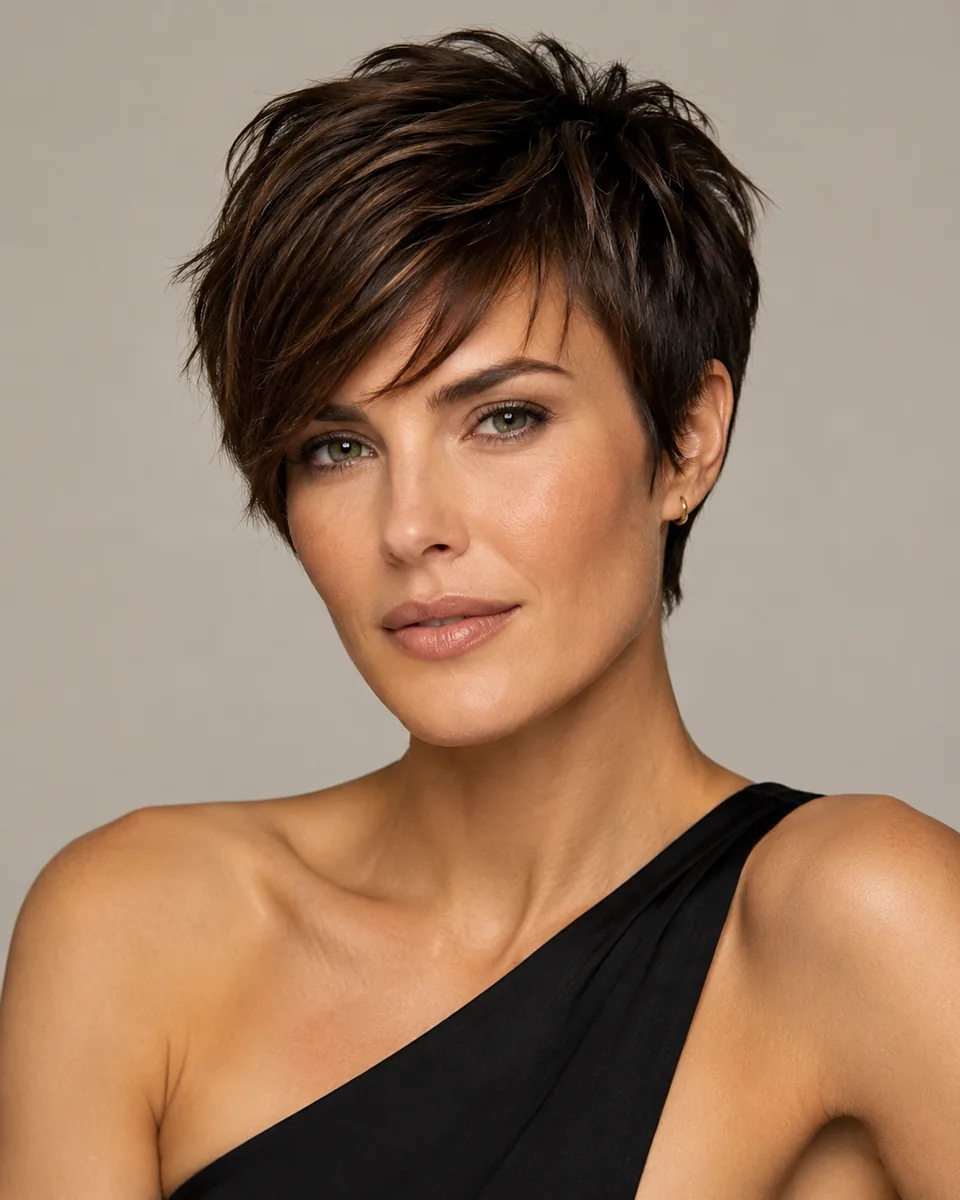
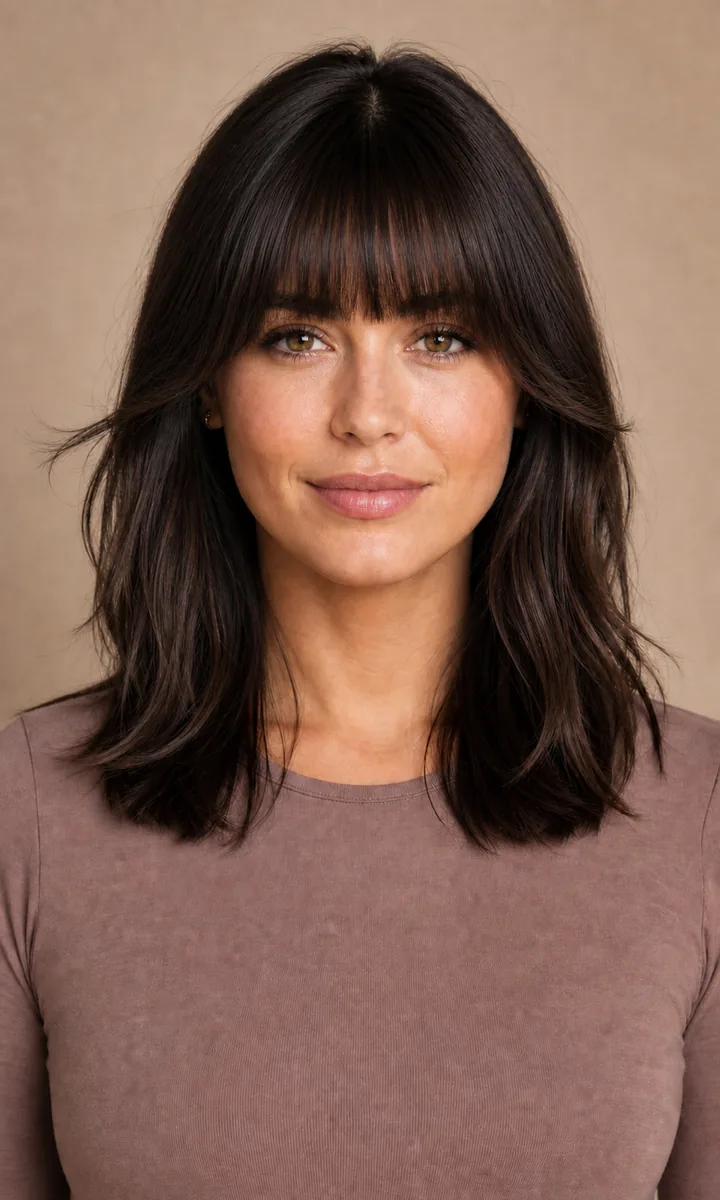
Choose how much forehead to cover and how much hair the fringe can borrow. These six directions compare section size, a center opening and a continuous edge before the scissors.
bangs for thin hairHairstyle decisionsVisual guide
5 min read
Quick answer
Which bangs work with thin hair?
Start with a light side sweep, a narrow wispy fringe or a longer curtain opening, then ask how much hair the proposed fringe takes from the sides. A fringe redistributes the hair you have; it does not create density. A full fringe can work when the front section supports it, but borrowing more hair to make the bangs opaque may leave the rest of the outline looking sparser.
This page ranks fringe starting points for lower-density hair. The thin and fine hair haircut guide covers the overall perimeter and length; the wispy bangs guide explains one specific fringe family.
Fine strands and low density change different parts of the decision
Fine describes the diameter of an individual strand. Thin describes how much hair grows across an area. You can have fine strands at high density or coarser strands at low density. Hairstory’s fine-hair explanation makes this distinction; its product advice is not the basis of this ranking.
For this decision, look at the front section you actually have. Does it fall forward, split at a natural part or separate around a cowlick? Does the hair beside the temples still look as full as you want when a fringe section is brought forward? Those observations matter more than deciding that every person with fine hair needs wispy bangs.
Six fringe directions, from lighter framing to stronger coverage
Ranked shortlist
Bangs for Thin Hair: 6 Ways to Frame the Forehead
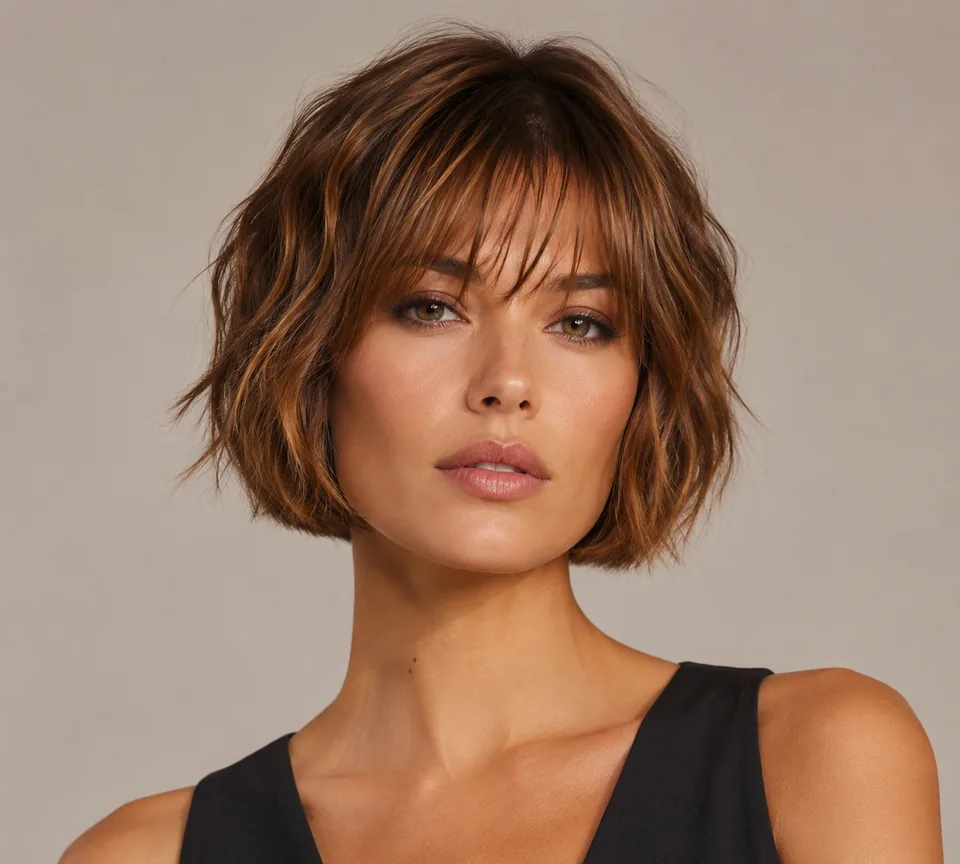
Six editorial starting points, ordered by the stated decision criteria rather than popularity, clinical results or measured suitability. Reference portraits show different people and hair colors. Each action opens the closest catalog direction, not an exact recreation of the reference.
Look 1
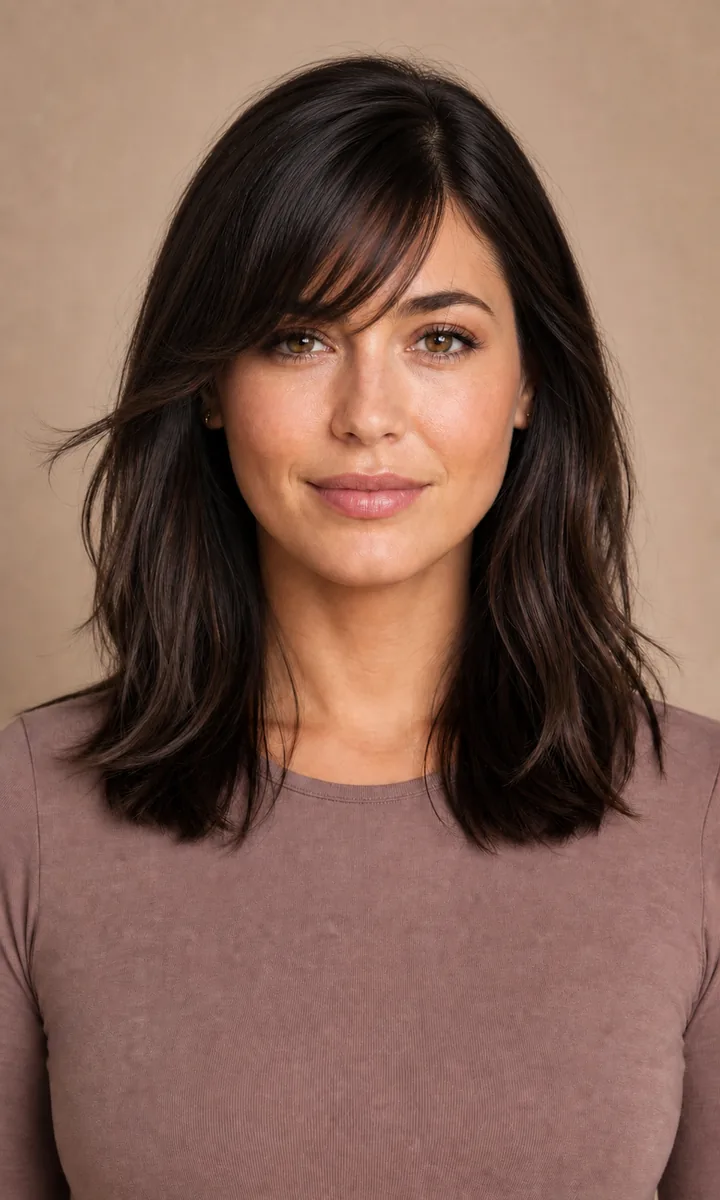
Light side-swept bangs
A diagonal fringe leaves a deliberate opening rather than asking a small front section to form a solid curtain.
Best for
A softer forehead edge with less continuous coverage.
Why it works
Hair can follow one direction across the brow, so the visible gaps belong to the shape rather than interrupting a promised solid line.
A strong cowlick may reopen the part. Do not pull extra hair from behind the hairline just to fill a gap.
Preview the closest catalog direction; the preset does not reproduce this reference exactly.
Ask about the section before the finished edge
Bring a photo showing both the bangs and the sides of the haircut. Ask the stylist to show the proposed fringe section before cutting, with your natural part visible. Explain whether your priority is a light forehead edge, a more continuous line or keeping fullness beside the temples. These can call for different compromises.
L’Oréal Paris describes blunt bangs as a way fine hair can appear fuller at the edge. That visual effect does not establish that low-density hair can spare the section required. Decide section depth, width and growth direction first; decide blunt versus wispy ends second.
Decision guide
Choose by the actual front section
What you notice
Direction to discuss
Check before cutting
A natural side part that stays open
Side-swept fringe
Whether the sweep stays off your eye without forcing the root
Enough front hair but a solid band feels heavy
Narrow wispy fringe
Whether the gaps look intentional in ordinary light
A center part you want to keep
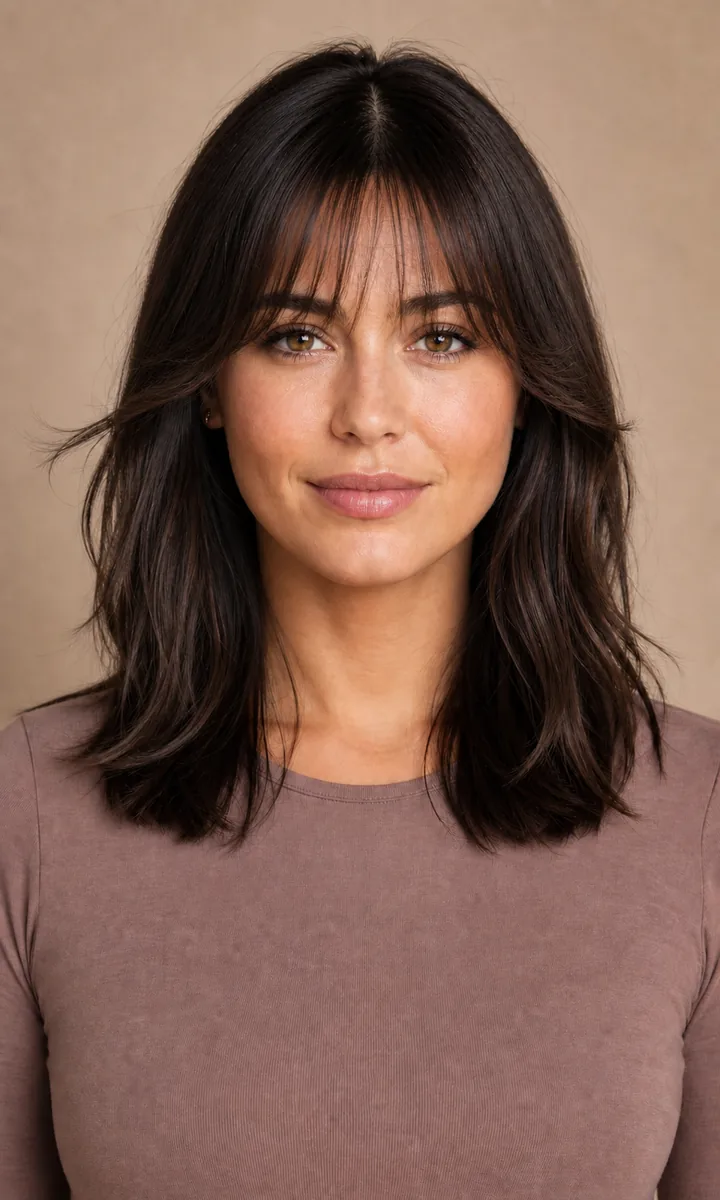
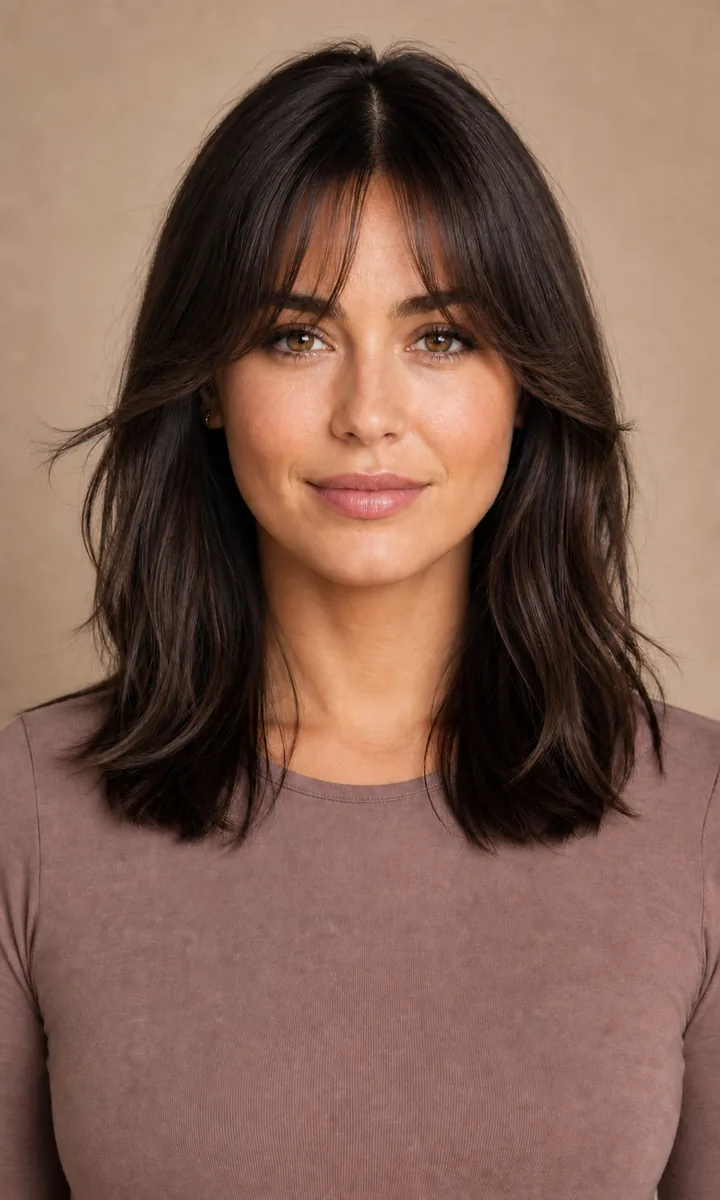
Long light curtains
How much hair remains beside the temples
Fine strands with enough front density
Soft full fringe
Whether the section can form the edge without going unusually deep
Compare the fringe without hiding the tradeoff
Use the same portrait and dark-brown preset color for the shortlist. Compare the center opening, shortest point and width of the fringe, rather than treating the preview as proof of new density. The catalog actions below the cards use the closest supported cut; a combined bob-and-bangs reference may differ from that preset.
If the broader question is how much forehead you want to show, the high-forehead hairstyle guide separates continuous coverage from diagonal and open-center alternatives. Curtain bangs versus wispy bangs explains why shape and density are not competing labels.
Start with a fringe direction on your photo
Compare the visible gaps and forehead opening. An AI image cannot assess whether your front section can support the cut.
These references and the page hero are editorial hairstyle illustrations. They are not measured low-density hair samples or actual customer outputs. AI may add hair, hide scalp or change the part; that makes it useful for comparing fringe shape, not for judging whether a real cut will have the pictured coverage. Bring your shortlist to a stylist who can inspect your hair.
FAQ
Are wispy bangs always best for thin hair?
No. Wispy bangs make separation part of the design, but very sparse forward strands can expose more forehead than you want. The available front section and its growth direction decide whether a wispy fringe, side sweep or longer opening is the better starting point.
Do curtain bangs need a lot of hair?
They can. A curtain shape describes a center opening and longer sides, not the amount of hair in the section. Ask for a light section that preserves the side outline rather than assuming every curtain fringe uses little hair.
Can fine hair have blunt bangs?
Yes, when enough front hair supports the edge. Fine strand diameter is not the same as low density. A blunt line can look more continuous, but taking too deep a fringe section can reduce the visible fullness elsewhere.
Will bangs make thin hair look thicker overall?
They may make a specific edge look fuller, but they also move hair away from other parts of the haircut. Evaluate the front, sides and perimeter together. A preview cannot establish the density of your real hair after cutting.
Should I cut bangs myself to test a small section?
A preview or a stylist consultation is a better first comparison because even a narrow fringe changes how the front grows out. Ask a stylist to show section width and length before cutting, especially around cowlicks or a strong part.