
Curtain Bangs Vs Blunt Bangs
Curtain Bangs vs Blunt Bangs: Open Center or Straight Edge?
Curtain bangs open through the center and lengthen toward the cheeks. Blunt bangs create a straighter edge across the forehead. Choose the frame first, then adjust density and length to your hairline.
Curtain Bangs Vs Blunt BangsHairstyle comparisonHairstyle preview
3 min read
Visual comparison
Curtain bangs or Blunt bangs?
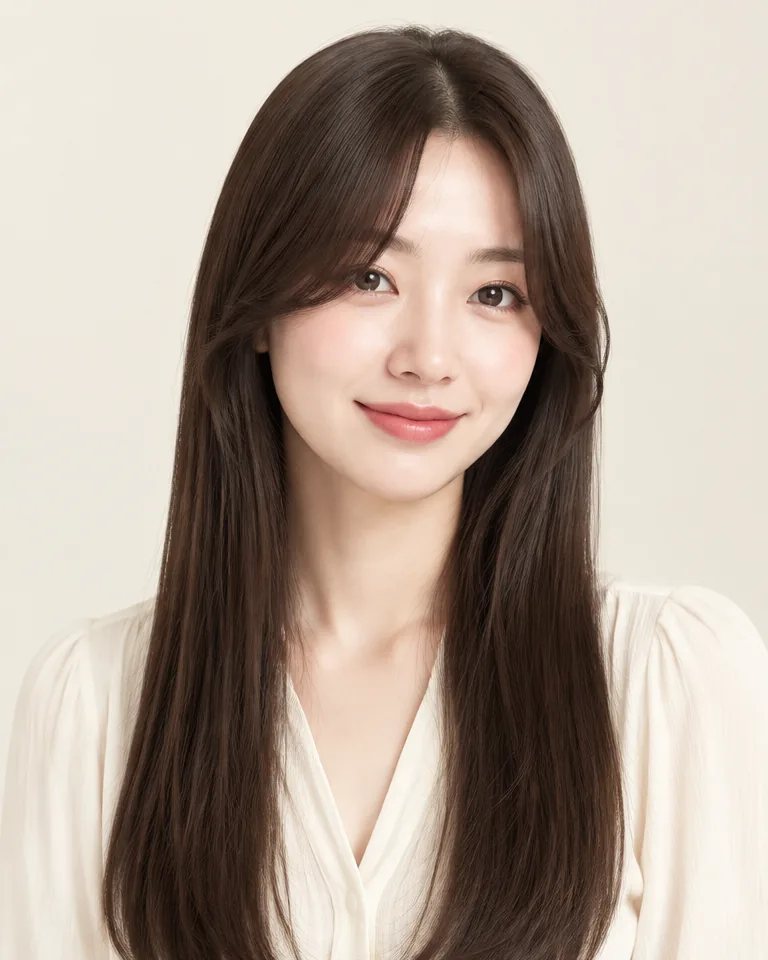
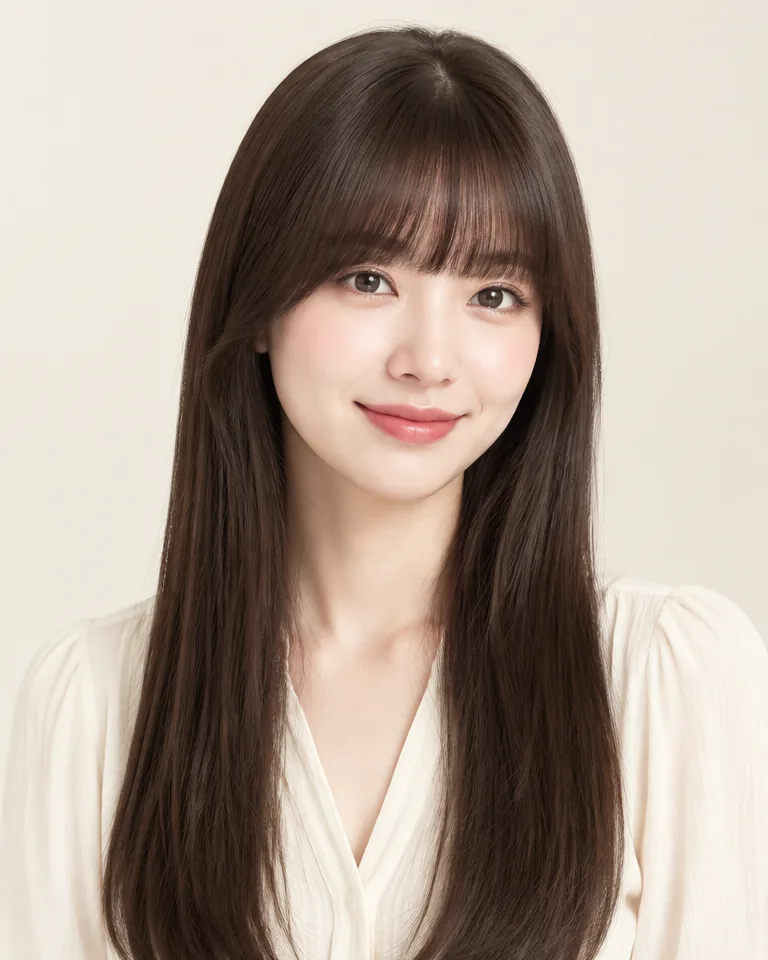
AI-generated editorial illustrations of the same model. They isolate a visual direction; they are not customer photos or actual try-on results.
Curtain bangs
An opening in the middle and progressively longer sides make the forehead frame diagonal.
Try Curtain bangsBlunt bangs
A straighter lower edge crosses the forehead; the fringe can still be light or dense.
Try Blunt bangsQuick answer
Choose an opening or a horizontal edge
Curtain bangs open around the center and become longer toward the sides. Classic blunt bangs fall across the forehead with a more level lower edge. The first draws attention along two diagonals toward the cheeks; the second creates a horizontal landmark above the eyes.
Blunt describes an edge, not necessarily a thick fringe. A light straight-across fringe can have a blunt outline, while curtain bangs can use a substantial amount of hair. If density is your main concern, the curtain-versus-wispy comparison explains that separate decision. This page compares an open-center frame with a straight-across one.
Luxy Hair's curtain-fringe references illustrate the outward face-framing shape. Bring a photograph as well as the name: a center opening, shortest point and outer endpoint communicate more than “soft bangs.”
Choose by What You Want to See Around Your Eyes
Decision guide
Which fringe outline matches your goal?
Compare the same variables. Neither name specifies your natural growth direction or the amount of hair available.
| Decision | Curtain bangs | Blunt bangs |
|---|---|---|
| Forehead exposure | An open center with coverage toward the sides | More continuous coverage across the front |
| Strongest line | Two diagonals toward the cheek area | A horizontal edge near the brows |
| Styling target | Keep the opening and guide each side outward | Keep the front edge from splitting or kicking up |
| Glasses check | See where the longer sides meet the frame arms | Check the clearance between fringe, brows and top rim |
| Grow-out choice | Blend longer sides into the face frame | Reassess length as the edge approaches the eyes |
Hairline, Density and Glasses Can Change the Answer
A strong front cowlick: neither fringe name makes it disappear. A curtain opening may work with a natural split, but an off-center growth pattern can still make one side sit differently. A straight-across edge may need more deliberate drying if the hair wants to separate. Ask the stylist to inspect your dry hairline before settling the shortest length.
A sparse-looking front section: compare how much side hair the fringe borrows. A wide, deep fringe section can reduce visible fullness elsewhere. A narrower curtain frame or lighter straight-across fringe may be worth discussing. For this specific density tradeoff, see bangs for thin hair.
Glasses: use your everyday frames during the comparison. Curtain sides can meet the hinge or brush the upper corner; a blunt edge may sit close to the top rim. The useful question is where the ends land when the glasses are on. The hairstyles with glasses guide covers that interaction beyond fringe alone.
Ask for a Dry Endpoint, Not Just a Bang Name
For curtains, point to the shortest center piece and where the longest side should join the rest of the cut. For blunt bangs, point to the lower edge and say whether you want skin visible between strands. In both cases, show the hair as you normally wear it, including its part and natural wave.
A longer starting point leaves room to reassess the shape with the stylist. It does not guarantee an easier routine: drying direction, hairline and the finish you want still matter. Avoid choosing either style on a promise of a universal trim interval.
Preview the Frame, Then Check the Real Hair
Use virtual hairstyle try-on with one clear portrait. Start with the curtain preset on the first card, then the full-bangs preset on the second. Keep color and overall length consistent. Look at the center gap, the eye line and the side endpoints separately rather than choosing only by the overall impression.
The preset names describe a starting direction. The full-bangs preset may render more density than a light blunt fringe; the AI cannot specify an exact fringe cutting plan. It also cannot predict cowlick behavior, dry shrinkage, how hair touches glasses, or a salon result.
Still deciding how much forehead to frame?
Use a photo-based hairstyle starting point, then compare the fringe outline and discuss the dry length with your stylist.
Find my hairstyle starting pointFAQ
Can curtain bangs be blunt-cut?
Yes. Curtain describes how the fringe opens and lengthens at the sides; blunt describes an edge finish. The usual comparison is between classic center-open curtains and a straight-across fringe, but their attributes can overlap.
Which bangs are easier with a cowlick?
It depends on the direction of the cowlick and the length of the fringe. A natural center split may cooperate with a curtain opening; another growth pattern may push either style away from the reference. Check the dry hairline with a stylist.
Do blunt bangs have to be thick?
No. A fringe can have a relatively level edge while using fewer strands. Ask about density and width separately from the shape of the lower edge.
Can I grow blunt bangs into curtain bangs?
Often, but growth alone does not establish the longer side blend. A stylist may reshape the sides while preserving enough center length to create an opening. The transition depends on your starting fringe and hairline.
Will a photo preview show how bangs sit on my glasses?
It can help you compare the visible frame if you use a portrait with your everyday glasses. It cannot predict physical contact, movement or whether the ends will catch on the frame arms.