
Hairstyles for thick hair
Best Hairstyles for Thick Hair: 10 Styles That Take the Weight Out
Thick hair rarely has a volume problem. It has a weight problem: too many hairs ending at the same place. These ten styles are ordered by how directly they take that weight out, from a low-layered lob to braids that remove it for a day.
Hairstyles for thick hairThick hairLayersWeight removalHairstyle ranking
8 min read
Quick answer
What actually works on thick hair?
Thick hair needs fewer ends finishing in the same place, not more volume. That is why low layers, feathered ends and warm texturing work, while one-length cuts stacked at the shoulders, heavy blunt fringes and aggressive thinning shears are the ones that disappoint.
- The mechanism
- Weight is about where hair ends, not how short it is
- Best first step
- Layers that start at or below the jaw, point cut rather than heavily thinned
- Watch for
- A blunt line above the shoulders, which widens exactly where thick hair is already wide
- Also worth checking
- Drying time: thought-through layers let water out of the interior, one solid mass does not
What thick hair needs from a cut
Three things decide whether thick hair behaves, and none of them is length.
Where the ends finish. A one-length cut sends every hair to the same line, so the ends stack into a solid block and the shape reads heavy. Layers stagger the ends, so the same amount of hair finishes at different points and the outline stays where you want it. This is the whole mechanism behind "layers take weight out": nothing is removed from the head, the ends just stop meeting.
How much water the interior holds. Thick hair keeps water in the inner layers long after the surface feels dry. A cut that leaves one solid mass takes longer to dry and turns damp again underneath. Layers give the air somewhere to go, which is why the same hair often dries faster when it is layered than when it is left as one solid mass at the same length.
Where the width lands. Thick hair tends to read widest at the shortest point of the cut. That is why a blunt line above the shoulders can read as a triangle, and why the same blunt line below the shoulders usually reads elegant instead. Before you choose a style, look at where its shortest layer sits.
The ten styles, ranked by how directly they remove weight
Ranked shortlist
Best hairstyles for thick hair
Ordered by how directly each style takes weight out and how much upkeep it asks for. Every card can be previewed on your own photo with the closest catalog style already selected.
Look 1
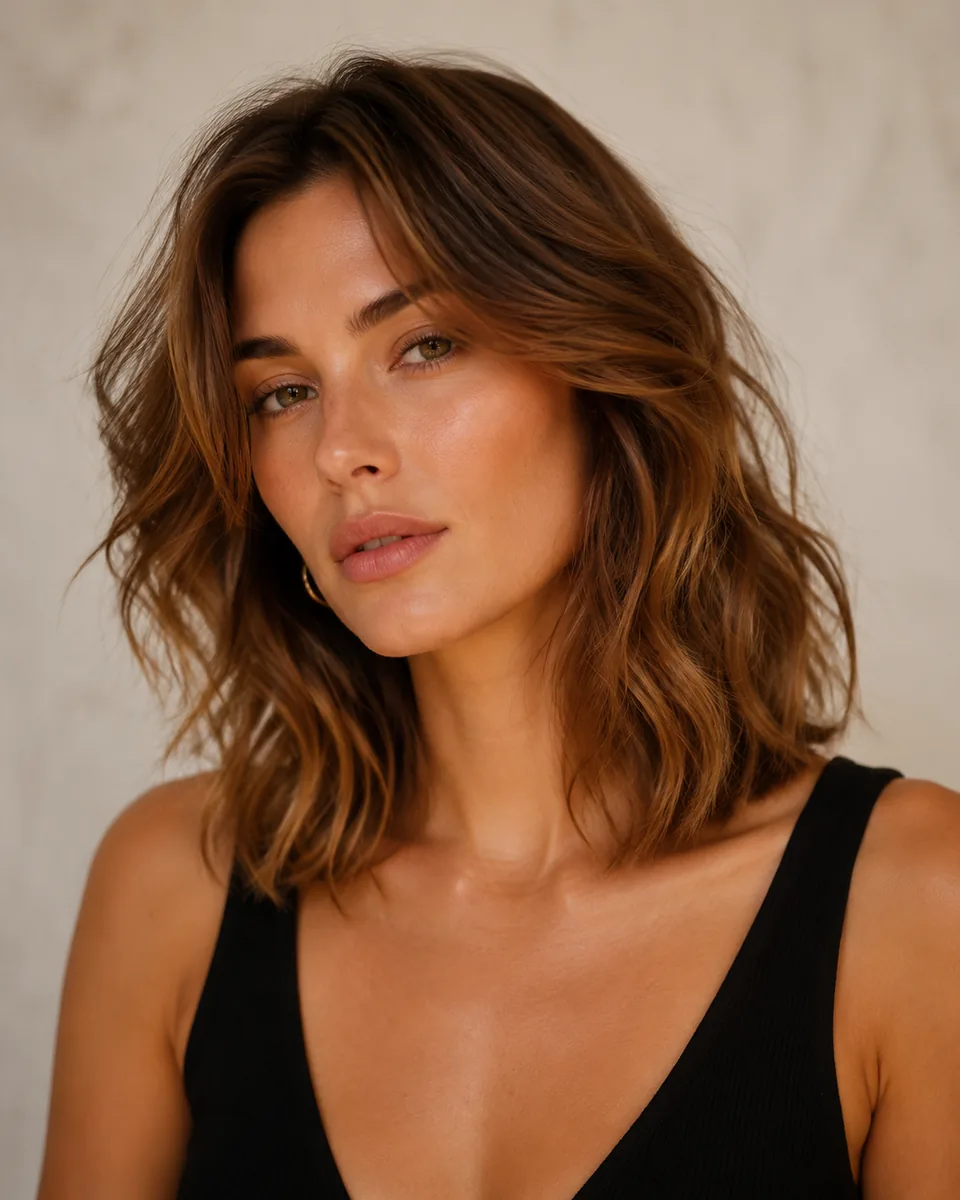
Soft layered lob
A lob with soft layers through the last third keeps a clean outline while the inside of the shape gets lighter.
- Best for
- Thick straight or slightly wavy hair that wants a deliberate shape rather than movement.
- Why it works
- The layers start low, so they remove bulk from the ends without touching the perimeter. The cut still reads as a lob from the front.
Layers cut above the jaw add width exactly where thick hair already has it.
Try this lookPreview a layered medium lob on your photo with the color preset.
Look 2
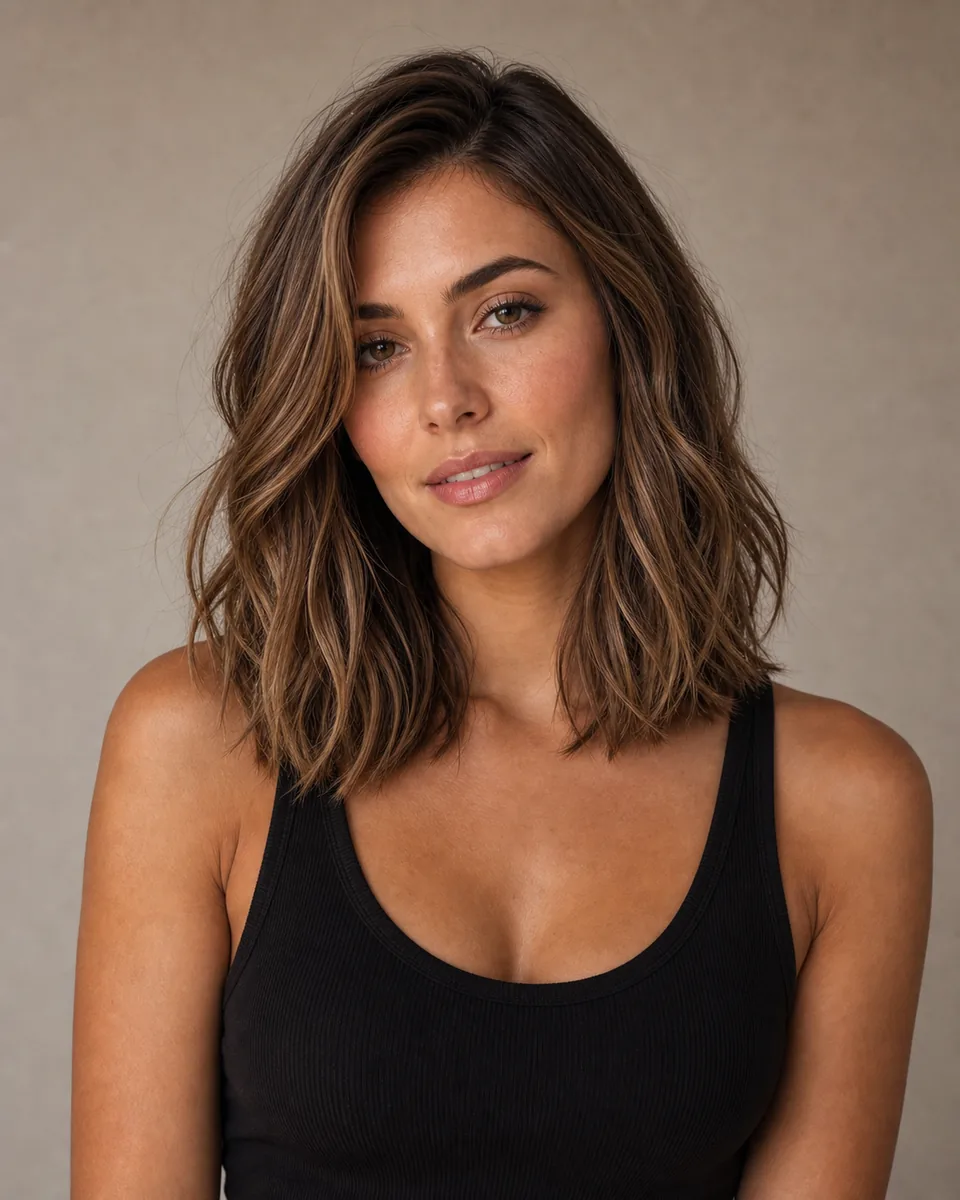
Textured lob
Texture cut into a lob breaks the mass into pieces, so the shape moves instead of hanging.
- Best for
- Thick hair with natural bend that looks solid when it is cut straight.
- Why it works
- Point-cut ends overlap instead of lining up, which removes the block that makes thick hair look heavy at the bottom.
Razor cutting and heavy texturizing shears can turn thick hair frizzy. Ask for point cutting and a light hand.
Try this lookPreview the textured lob preset on your own photo.
Look 3
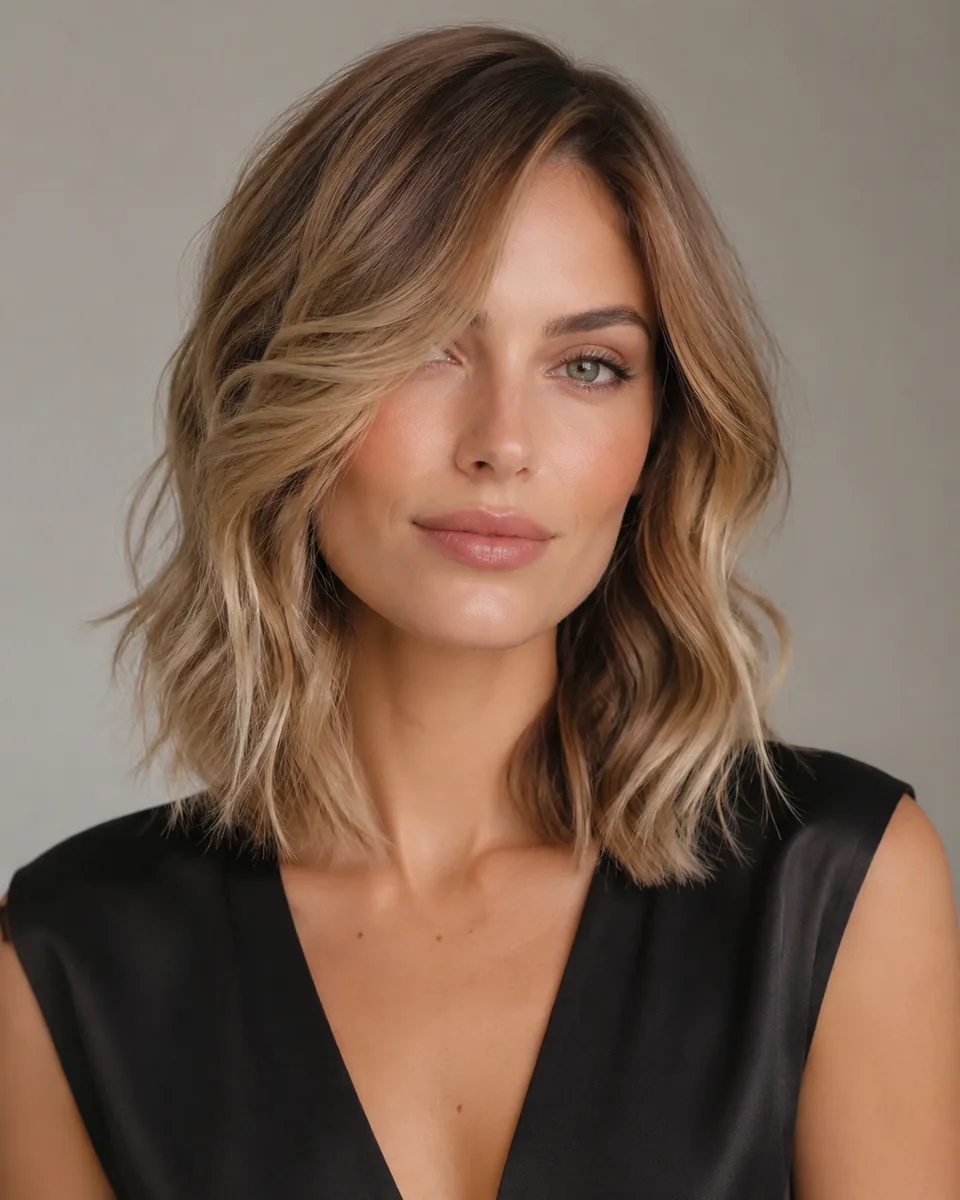
Wavy lob with layered ends
A wavy lob that keeps its layers near the ends, so the wave has room and the weight stays high.
- Best for
- Thick wavy hair that gets wider as the day goes on.
- Why it works
- Layered ends let each wave finish at a different point, so the outline stays as wide as the cheekbones and no wider.
Wavy thick hair takes longer to dry than the length suggests; the interior holds water.
Try this lookPreview the wavy lob preset on your own photo.
Look 4
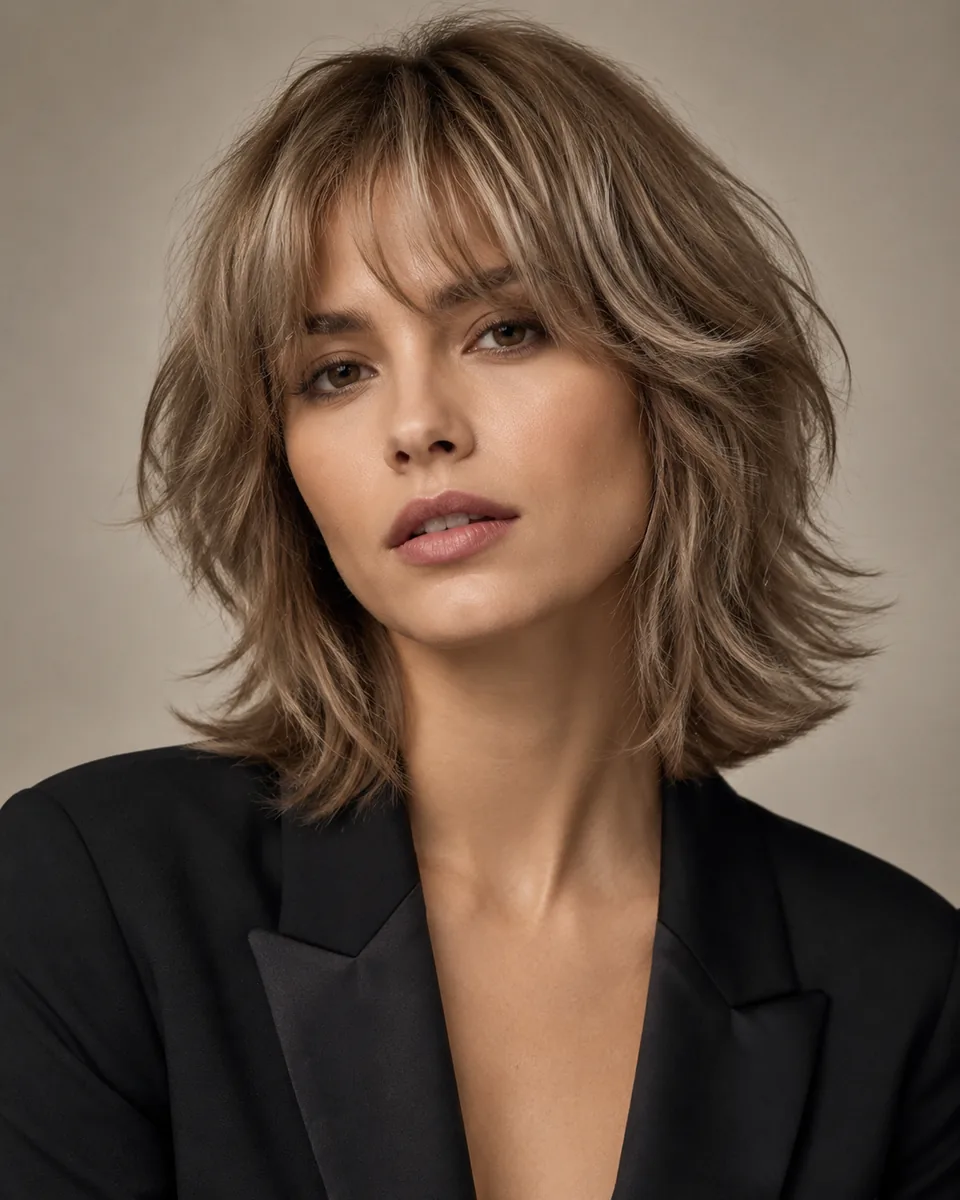
Shoulder-length shag with feathered layers
A shoulder-length shag with feathered layers empties out the interior of the shape, which is why it sits this high on the list.
- Best for
- Anyone who wants visible movement and will style the ends.
- Why it works
- The layers are cut close enough to the head to empty out the interior, and the feathered ends never line up into a line.
Feathered ends are the first thing to lose shape, so the trim rhythm is shorter than for a lob.
Try this lookPreview the closest catalog shag on your own photo.
Look 5
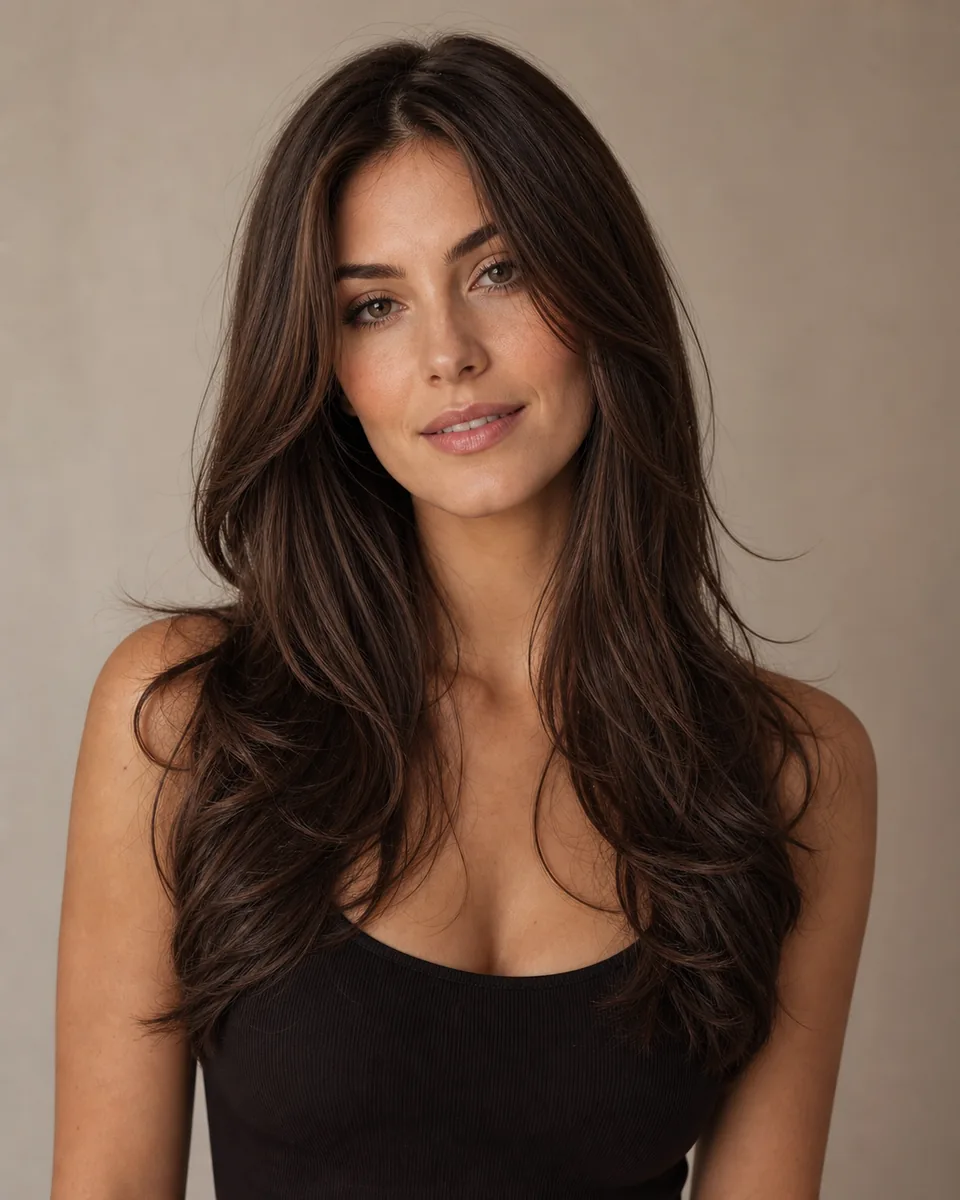
Long face-framing layers
Hair kept long, with layers that start at the collarbone and frame the face.
- Best for
- Thick hair you do not want to cut short.
- Why it works
- The mid-length layers remove weight where the mass is thickest, and the framing pieces give the eye a line to follow instead of one solid panel.
If the shortest layer starts above the chin, the shape rounds outward at the jaw.
Try this lookPreview long face-framing layers on your photo.
Look 6
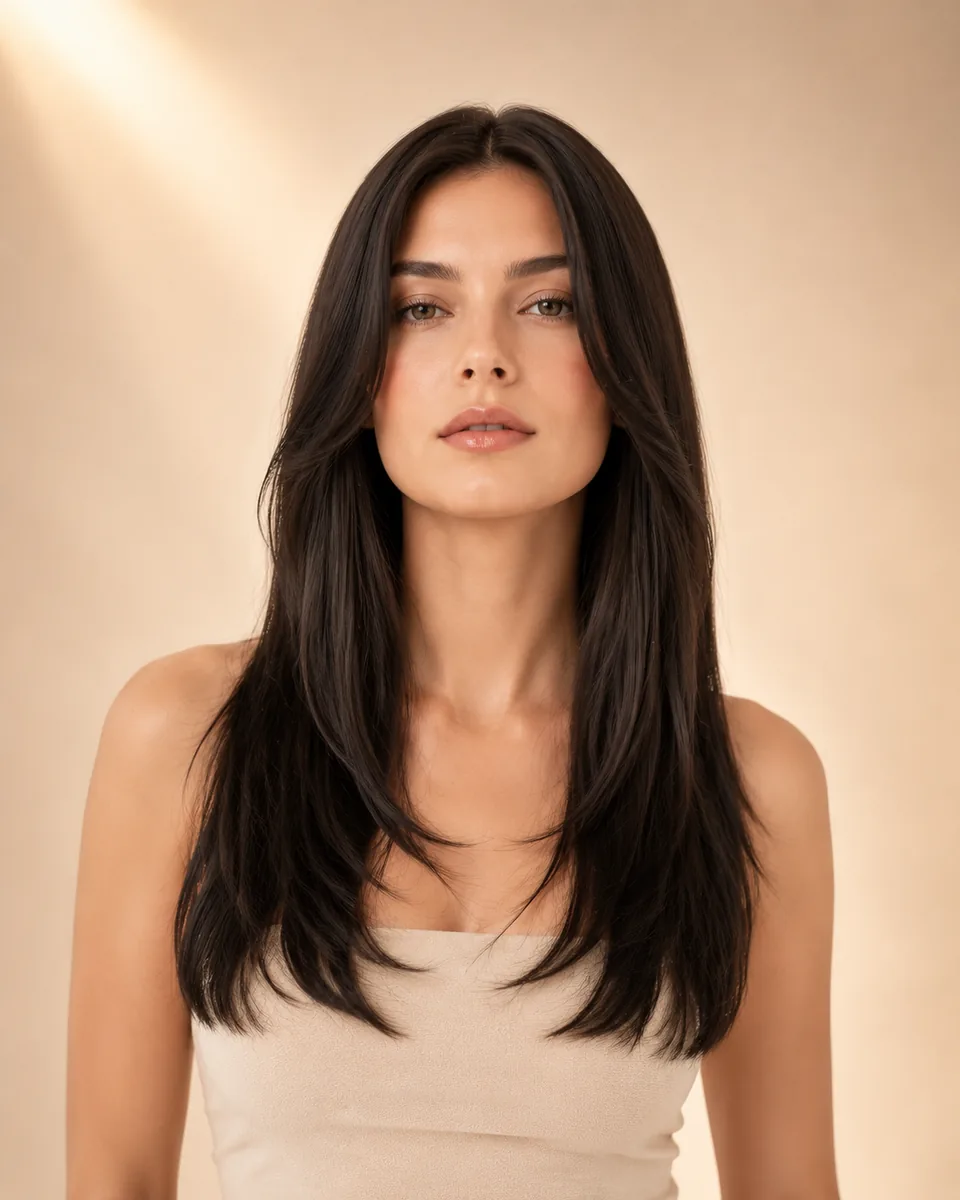
Long layered straight
Long and straight, with the weight taken out through the length rather than at the ends.
- Best for
- Very thick straight hair that hangs as a single mass.
- Why it works
- Long vertical layers let sections slide past each other, so the hair falls narrower and dries faster without losing length.
Straight thick hair shows every uneven layer. This one depends on a precise cut.
Try this lookPreview the long layered straight preset on your photo.
Look 7
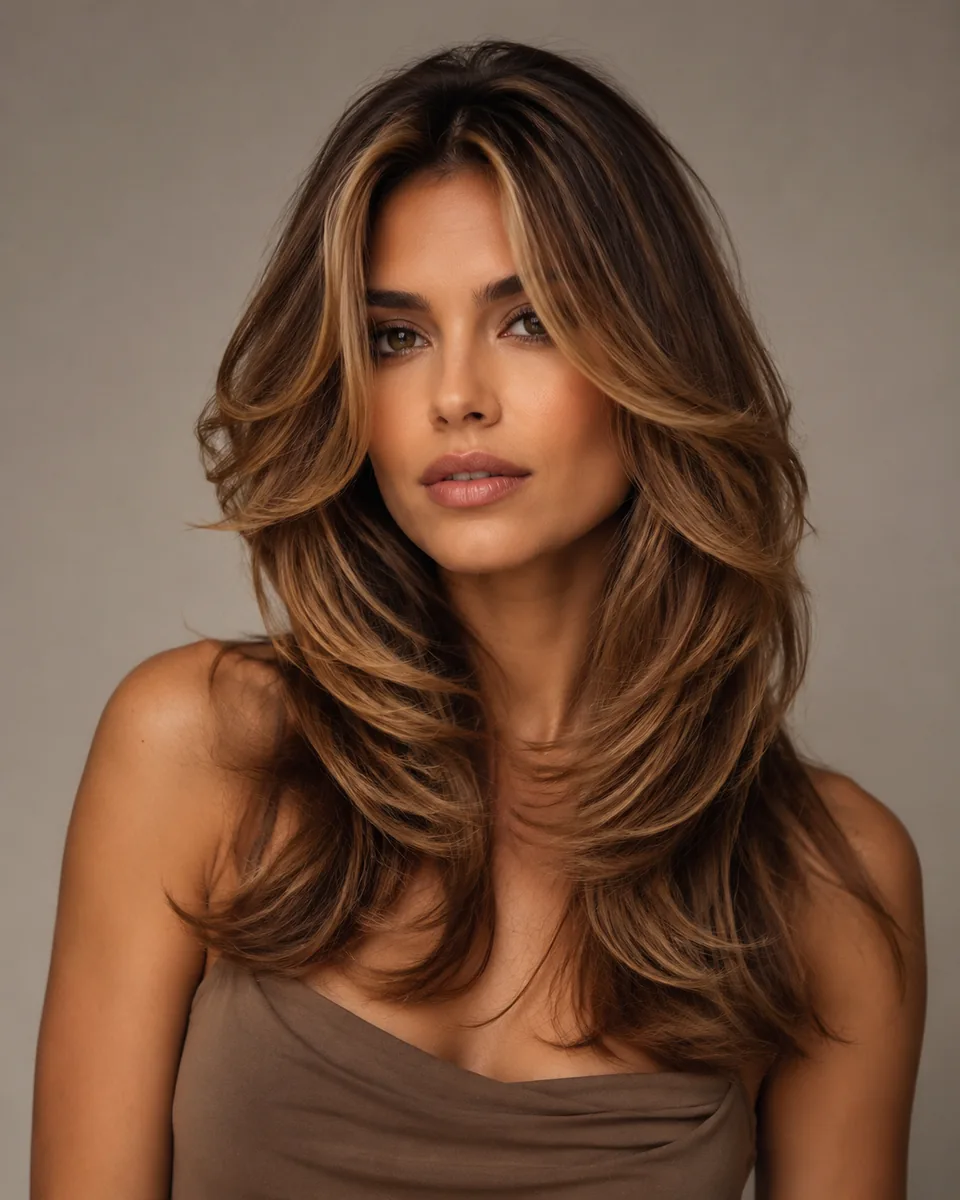
Butterfly cut with face-framing layers
Short layers on top and long layers below, so the weight comes off the crown and the length stays.
- Best for
- Thick hair that looks flat at the roots and heavy at the ends.
- Why it works
- Two layer zones let the upper section move while the lower length keeps its weight, which is what makes the shape look lighter without getting shorter.
On very thick hair the contrast can read as two haircuts. Keep the top layers long enough to blend.
Try this lookPreview the butterfly cut preset on your photo.
Look 8
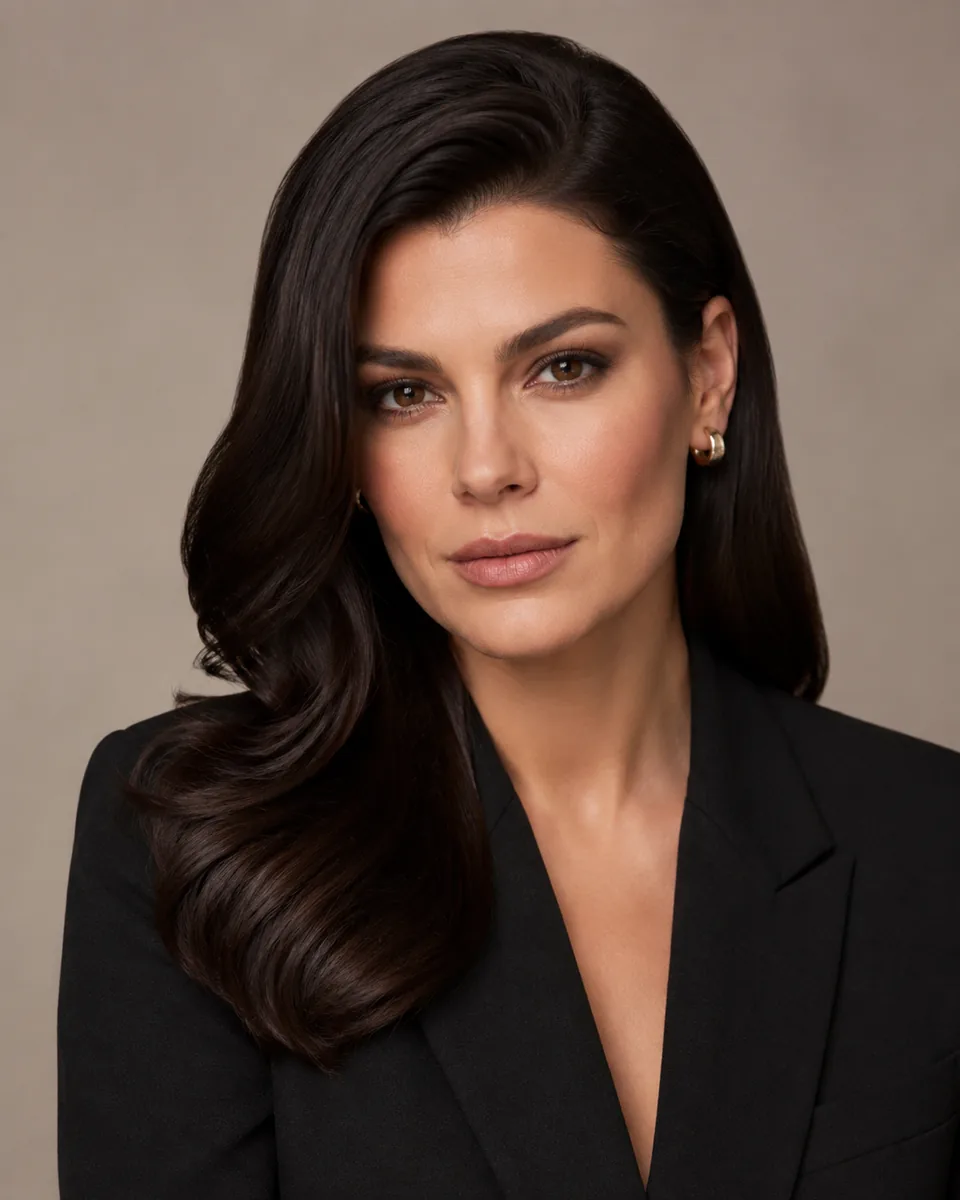
Sleek waves with a deep side part
Moving the part off center sends the volume to one side instead of both, which narrows the outline without cutting any length.
- Best for
- Thick hair that reads widest when it is parted down the middle.
- Why it works
- With a deep side part the mass gathers on one side, so the silhouette loses the symmetric width that makes thick hair look wide from the front.
The lighter side shows the shape of your head, and a strong natural part may resist moving.
Try this lookPreview a deep side part with waves on your photo.
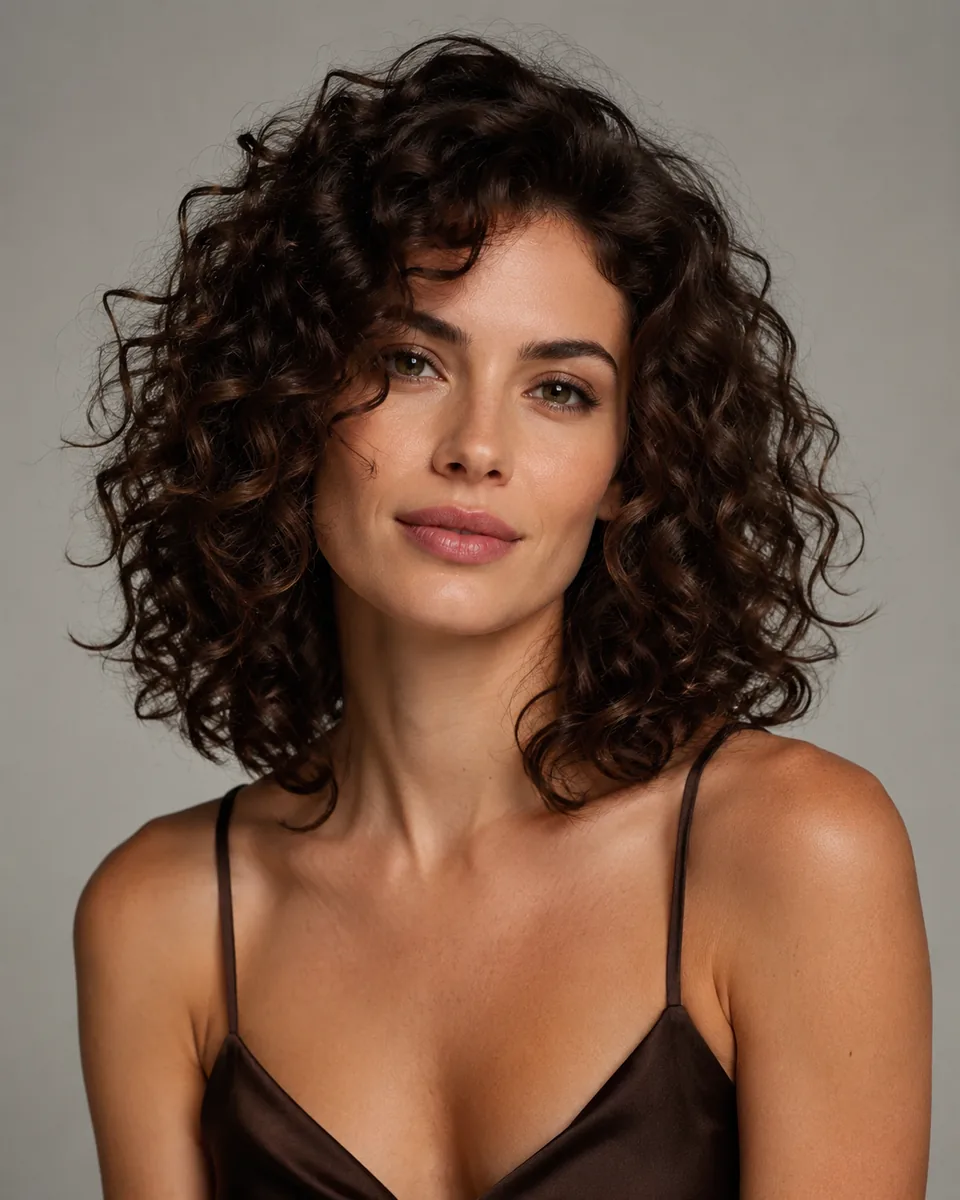
Look 9
Curly medium with root volume
A medium curly shape cut to a round outline, so the volume looks intended rather than accidental.
- Best for
- Thick curls and coils.
- Why it works
- Cutting curl by curl on dry hair keeps the layers even after the hair springs up, which stops the shape from widening only at the bottom.
Wet cutting hides shrinkage. Judge the length dry, never in the chair with wet hair.
Try this lookPreview the medium curly preset on your photo.
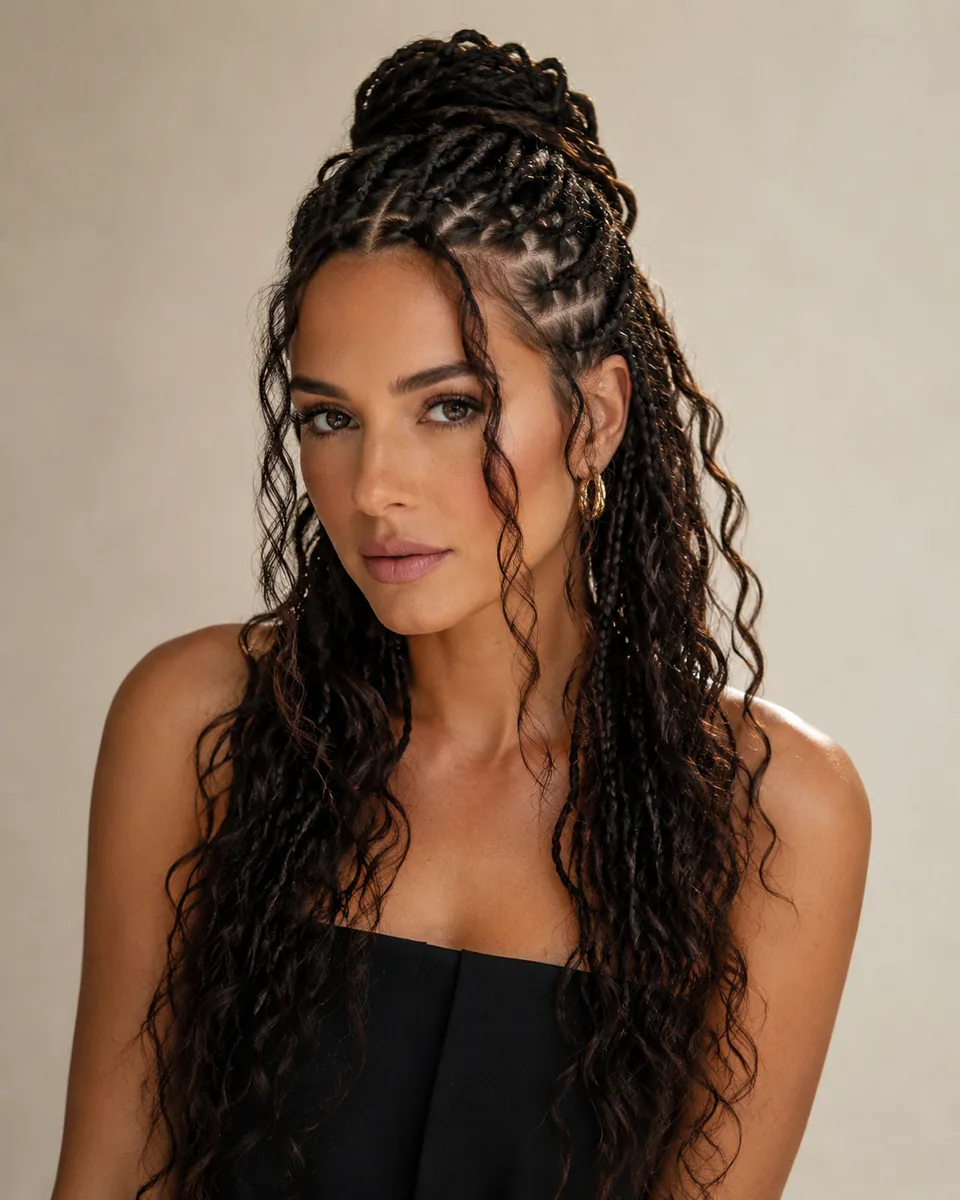
Look 10
Goddess braids, half up
Half-up goddess braids take most of the weight off your neck for a day.
- Best for
- Long thick hair that is heavy to wear down.
- Why it works
- Braiding compresses the mass, and keeping the back half up leaves the volume where it reads as shape instead of drag.
Braids need even tension. Sections pulled tight on thick hair can irritate the hairline.
Try this lookPreview long goddess braids on your photo.
Which direction fits your thick hair?
Decision guide
Choose by texture and by how much upkeep you want
Every row assumes the same goal: fewer ends finishing in one place. What changes is the texture you are working with.
| If your thick hair is | Try | Watch for |
|---|---|---|
| Straight and heavy | Long layers or a low-layered lob | Precision: uneven layers show on straight hair |
| Wavy and wide by the afternoon | A wavy lob with layered ends | Drying time inside the interior |
| Curly or coily | A dry cut to a round outline | Shrinkage, which hides the real length |
| Very long and you want to keep it | Face-framing layers from the collarbone down | Layers starting above the chin round the jaw |
| Long and heavy to wear down | Half-up braids or a top section pinned up | Tension at the hairline |
What to avoid with thick hair
The styles that disappoint are the ones that put all the ends back in one place. A blunt one-length cut that finishes above the shoulders does exactly that, which is why it so often reads as a triangle. A heavy full fringe does the same thing at the forehead: it stacks the shortest hair in the cut into a solid block that sits on the brow. And aggressive thinning — razors, deep texturizing shears, thinning scissors through the top layers — takes hair out unevenly, and the surface can read fuzzy as it grows back rather than lighter.
None of that makes a blunt cut wrong. Below the shoulders, with the weight supported by length, a blunt line is one of the strongest shapes on thick hair. It is the combination of a blunt line and a short length that goes wrong.
If you want to test the short direction before committing to a cut, the short wig try-on page starts from a textured short shape and compares three short lengths on one photo.
Bangs on thick hair
Bangs are the question thick-hair searches ask most often, and the answer is about density rather than shape. A heavy full fringe on thick hair has more hairs per centimeter than the same fringe on fine hair, so it reads solid. The two lighter directions do different jobs: curtain bangs change the shape at the forehead with an opening in the middle, while wispy bangs change how much hair sits there, using fewer and longer pieces so the forehead still shows through. On thick hair the density question is usually the one that decides.
If bangs are the actual decision, the wispy bangs guide covers the density options in order, and the curtain bangs vs wispy bangs comparison settles the shape question. This page covers the cuts those bangs sit on.
Compare the shortlist on your own photo
Pick the two or three shapes from the list that match your texture, then preview them on one photo. Keep the color, the part and the camera distance steady, and check four things, in this order:
- The widest point. Is the outline widest at the jaw, at the cheekbones, or at the crown?
- The shortest layer. Find where the layering starts. Above the jaw, thick hair usually gets wider; below it, the shape narrows.
- The ends. Do they look like a line or like separate pieces?
- The overall weight. Compare the two versions side by side. The lighter one is usually the one with more layers starting lower.
Preview the shortlist on your own photo
Upload one portrait, keep the color and part steady, and switch between the layered shapes until the outline settles.
Preview layered styles on my photoWhat a preview can and cannot tell you
A preview shows the outline: where the weight sits, how wide the shape reads at the jaw, and whether the ends look like a line or like pieces. It cannot show how your own density behaves in layers, how long your hair takes to dry after the cut, or how a stylist will place the shortest layer on your growth pattern. The portraits on this page are editorial illustrations produced for WigTryAI. They show each direction clearly; they are not outputs from a real try-on and not photos of customer results.
Want a shortlist for your face as well?
Answer a short set of questions about length, texture and upkeep, and get recommendations you can preview directly.
Find my best hairstyleFAQ
How do you thin out thick hair without making it frizzy?
Ask for layers and point cutting rather than thinning shears or a razor. Layers change where the ends finish, so the shape gets lighter without removing hair from the surface. Point cutting takes small notches out of the ends, which keeps the strand smooth; razors and deep texturizing shears cut into the surface and often grow back as frizz.
Do layers actually make thick hair thinner?
No. The number of hairs on your head does not change. Layers change how the hair falls: staggering the ends stops them stacking into one heavy block, which is what makes the shape feel lighter and dry faster.
How often does thick hair need trimming?
The shape decides the rhythm more than the thickness does. Feathered and shag cuts show their growth first, a blunt line above the shoulders shows a visible second line quickly, and long layers tolerate the longest gap because the ends already finish at different points. Thick hair does not need more frequent trims than fine hair; it needs them in different places.
What length works best for thick hair?
Any length can work; the layer placement matters more than the number. Short shapes need texturing so they do not turn into a helmet, medium lengths need the layers to start at or below the jaw, and long hair needs the weight removed through the mid-lengths rather than at the ends.
Which bangs suit thick hair?
Start with wispy bangs when density is the problem, because they use fewer and longer pieces so the forehead still shows through. Curtain bangs answer a different question — the shape and the opening at the forehead — and they can still be cut heavy. A full fringe stacks the shortest hair in the cut into one solid block, which is what thick hair usually wants to avoid. The wispy bangs guide covers the density options.
Can I preview these hairstyles on my own photo?
Yes. Upload one front-facing portrait and switch between the layered presets on the same image, keeping the color and part steady. Comparing the outline on one face is more useful than comparing ten reference photos of ten different people.