

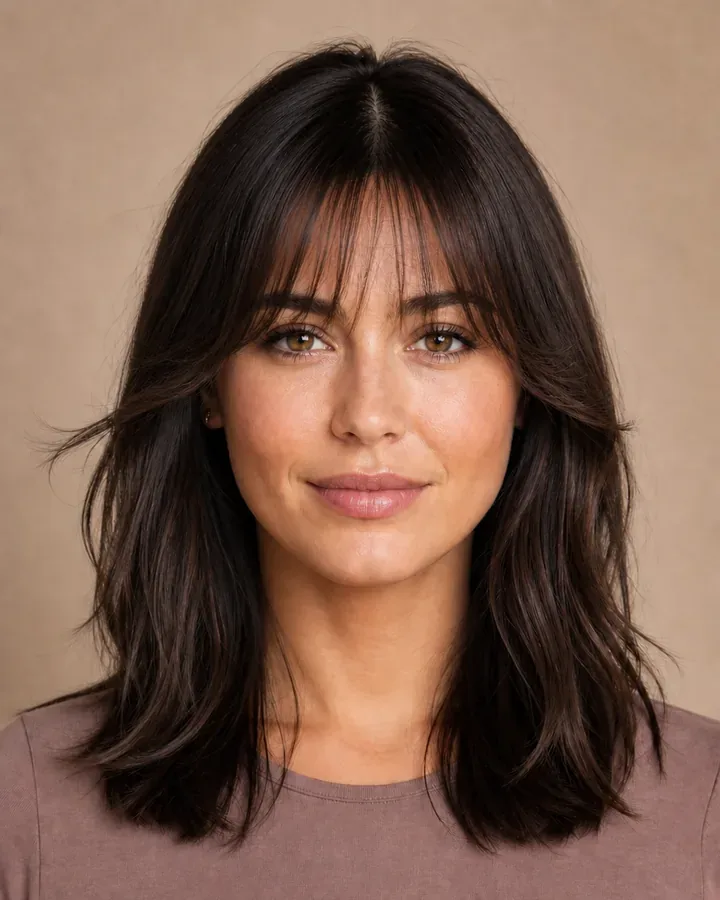
Forward wispy bangs
Light strands fall forward with gaps between them; direction and density are two separate observations.
Try Forward wispy bangsHairstyle comparison
Wispy describes light strand separation; side-swept describes direction across the forehead. A fringe can be both. Decide how much skin to show and where the shortest pieces should travel.
Quick answer
Wispy tells you about airy coverage and separated strands. Side-swept tells you which way the fringe travels. You can have wispy side bangs, so the choice is not necessarily one or the other. First decide on direction, then decide how dense that direction should look.
Visual comparison
AI-generated editorial illustrations based on the same model, with comparable color and framing. They are not customer results or a measured test. Compare the visible examples; each label allows other variations.
Light strands fall forward with gaps between them; direction and density are two separate observations.
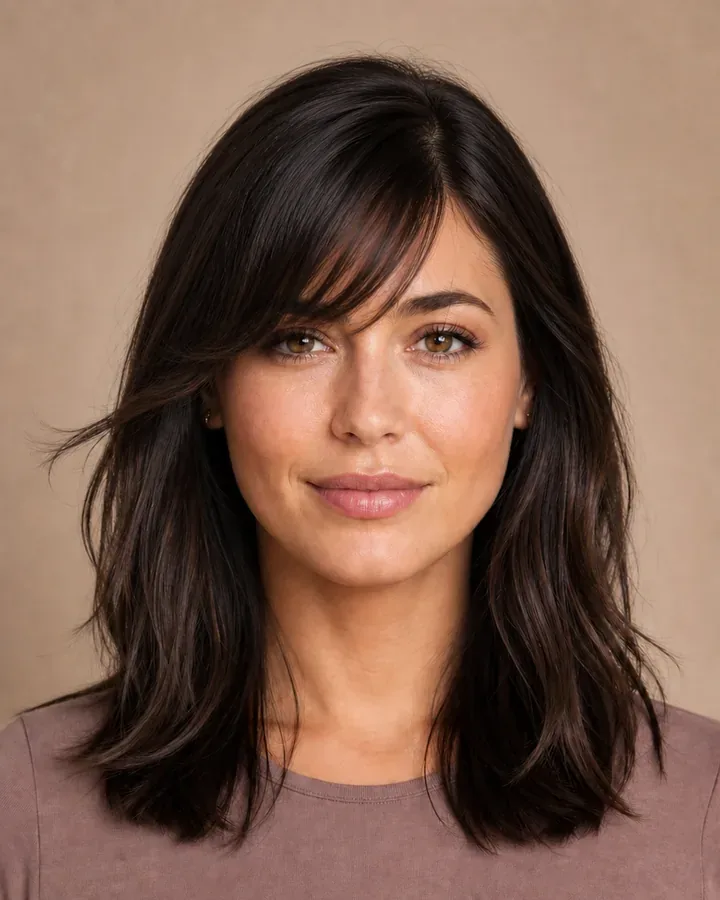
Try Forward wispy bangsA diagonal sweep moves the fringe toward one side. This reference is fuller and longer than the forward example.
Try Side-swept bangsL'Oréal Paris' wispy-bangs guide includes forward, parted and side-directed options. Its side-swept examples show how diagonal framing can accompany different hair lengths. Those examples support combining the labels, rather than treating each name as a separate cut specification.
On the images here, the forward fringe is lighter and shorter; the side fringe is longer and fuller. They demonstrate two complete looks, not a controlled test of direction alone. If you like the lightness of one and the diagonal of the other, bring both references and ask for that combination.
Decision guide
| Your decision | What to specify | What to check |
|---|---|---|
| Amount of forehead showing | Light gaps or more continuous coverage | Density of the actual fringe section |
| Travel across the forehead | Forward, parted or toward one side | Natural root direction and where the part opens |
| Eye clearance | Where the shortest dry pieces end | Whether the diagonal crosses a lens or eye |
| Connection to the sides | A short fringe or longer pieces blending outward | Whether those pieces still tuck or clip |
| A combined look | Light-density side-swept bangs | Whether the intended gaps remain visible when swept |
A long diagonal can pass close to an eye or the top of glasses. A short forward fringe can also meet the upper rim. Put your everyday frames on during the consultation and indicate the exact area you want clear. “Side bangs” does not guarantee that everything will tuck behind an ear.
If you mostly want a center opening, curtain bangs vs side bangs compares two directions more directly. If the issue is light versus fuller forward coverage, wispy bangs vs blunt bangs separates density from the lower cut line.
Before cutting, notice whether the front opens naturally at one side, splits centrally or pushes upward. A stylist can assess how that affects the desired sweep. More length may provide different styling options, but it does not guarantee that a strong cowlick will stay redirected.
Fine strands and limited density need separate discussion. A very shallow fringe section may look more separated than intended, while taking more hair forward can change the fullness at the temples. For waves and curls, choose the endpoint in your normal dry texture; a smooth diagonal illustration cannot predict curl contraction or movement during the day.
When short pieces reach eye level, decide whether you would rather sweep, part, clip or reshape them. A longer side fringe may already reach some of those options; a short wispy fringe needs enough actual length before it can follow the same route. Neither name establishes a universal grow-out schedule.
Use the broader wispy bangs guide for density variations, and the bangs decision guide for the commitment beyond this two-way comparison.
Use the two reference buttons with the same portrait in separate generations. First compare how much forehead appears between the strands. Then compare the diagonal, the shortest piece and eye clearance. The reference includes hair color and the rest of the hairstyle, so keep watching for changes beyond the fringe.
For a larger set of options, use virtual hairstyle try-on. AI can help identify a visual preference; it cannot prove that your roots will hold the sweep, that strands will stay separated, or that hair and glasses will feel comfortable together.
Yes. Side-swept describes direction and wispy describes light coverage or separation. Ask for the diagonal and the amount of visible skin separately.
No. A light fringe can be directed forward, parted or swept aside. Its density does not determine the direction or the exact cut line.
Only if the actual dry length and styling keep them clear. A long diagonal may cross the eye area, so check the intended endpoint with your normal part and glasses.
The answer depends on where the hair naturally opens or lifts and which direction you want. Have the dry growth pattern assessed; a preview cannot establish how it will settle.
You may be able to redirect some strands, but a longer sweep needs enough actual length. Clips or a temporary part can help during growth, depending on the starting cut.
