

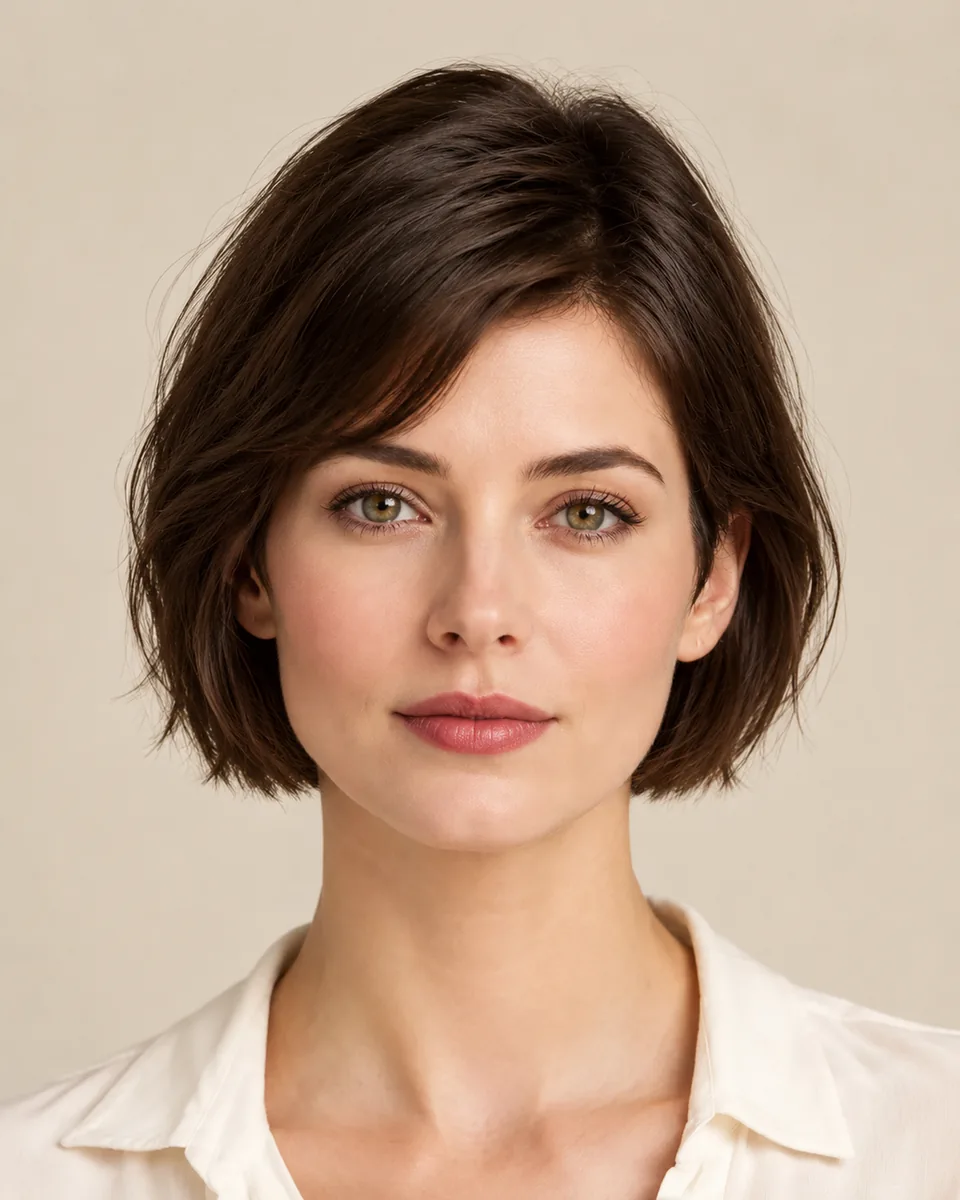
Textured bob
The reference keeps most of its lower outline together and breaks the tips into small pieces.
Try Textured bobHairstyle comparison
Textured often describes a piecey finish; layered describes different lengths within the cut. Ask where movement should begin and how much fullness should stay at the edge. One bob can have both.
Quick answer
A textured bob asks for visible separation or movement. A layered bob asks for different lengths within the haircut. These can overlap: a layered bob can be textured, and a nearly one-length bob can have piecey ends. Choose the location of the change before choosing a label.
Visual comparison
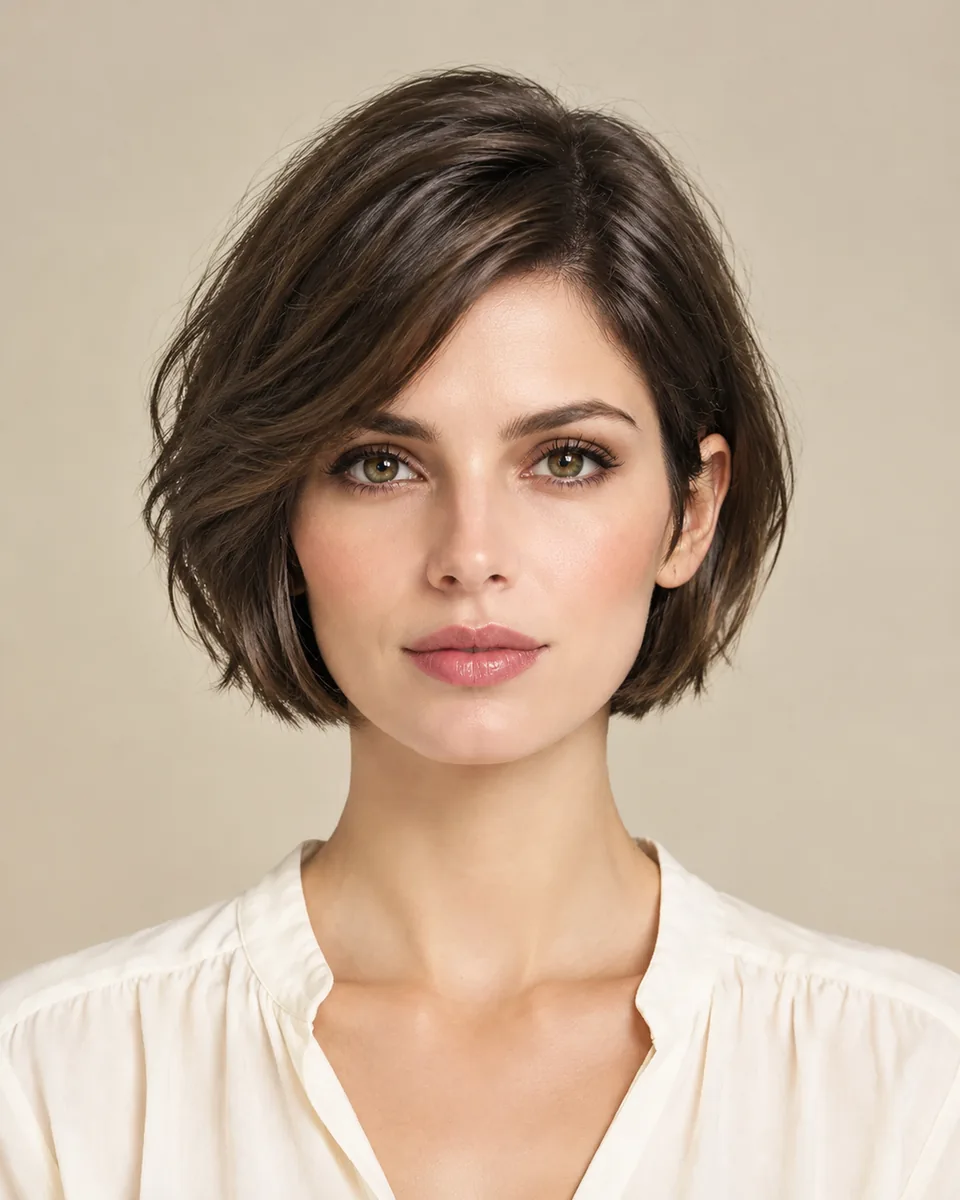
AI-generated editorial illustrations based on the same model, with comparable color and framing. They are not customer results or a measured test. The layered example also has a stronger side sweep and a slightly different head scale. Compare the complete references, not the isolated effect of cutting technique; each label allows other variations.
The reference keeps most of its lower outline together and breaks the tips into small pieces.
Try Textured bobThe shorter visible sections sit above the lower edge, making internal length changes easier to inspect.
Try Layered bobIn ARC Scissors' demonstration, stylist Chris Jones distinguishes a largely one-length textured shape from a bob with more structural layering. It is one practitioner's use of the terms, not a universal rule that texture means no layers.
For your own reference, trace one side from temple to lower edge. Are the short pieces concentrated at the tips, or do sections finish higher through the body? A wavy finish can obscure that answer. Ask to see a smoother version or have the stylist describe the internal lengths; the photograph alone may not reveal the technique.
Decision guide
| Question | Subtly textured reference | More visibly layered reference |
|---|---|---|
| Where does movement begin? | Mainly at separated tips and small surface bends | At shorter sections above the bottom edge |
| What stays full? | A relatively continuous lower outline | Depends on how much length and weight remain at the edge |
| What must the stylist specify? | How the finish is created and how much is removed | Where the shortest layers start and how they connect |
| What can styling change? | Strand separation and surface bends | The visibility of layers, not their actual lengths |
| Can these requests combine? | Yes, texture can accompany layers | Yes, layers can end in textured or cleaner tips |
If the bottom of your bob already looks sparse, point out the sections whose fullness you want preserved. Neither more layers nor more texturizing is an automatic route to thicker-looking hair. Fine strands and low density are separate issues; a useful consultation identifies how much hair is available at the perimeter before removing more.
With dense hair, distinguish reducing internal bulk from making short surface pieces. A layer ending beside a cheek can create movement in a place you wanted to keep quiet. Ask where the volume should sit when the hair is dry, rather than requesting layers everywhere.
The thin and fine hair guide covers overall fullness. For the separate question of a cleaner or softer lower line, use blunt bob vs layered bob. Layers do not inherently erase a blunt-looking edge.
Before assuming a new haircut is required, compare your usual dry finish with the inspiration. Waves can make an almost one-length bob appear strongly layered; smoothing can make internal layers less obvious. Ask what part of the picture comes from cutting and what part comes from a set or blow-dry.
For curls, the position of a dry curl matters more than its stretched length. Removing weight can change the way it sits, but the amount and direction are individual. Bring a reference in a texture you actually plan to wear, and discuss how the shortest sections will behave without that day's styling.
Try: “Keep the lower edge looking substantial. I want the movement to start near the ends, not short pieces through the crown.” Or: “I want visible internal layers, but keep the shortest piece below this point.” Mark that point in a photograph. These are different requests even if both finished bobs look piecey.
If you also want a softer cut edge, specify that separately from the shortest internal layer. For the wider family of lengths, visit the bob guide.
Use the reference buttons for two separate previews on the same portrait. Compare where short pieces appear and how substantial the lower edge looks. The tool follows each reference's shape and color; it does not enforce a single-variable hair experiment or reveal how a stylist would cut it.
A portrait cannot test air-drying, salon technique or future regrowth. Use virtual hairstyle try-on for a broader visual search, then ask a stylist how to reproduce the chosen direction on your actual hair.
Yes. Textured describes a visible finish or treatment, while layers describe length changes. A bob can combine both, so agree on the shortest layers and the amount of texture separately.
Not necessarily. Some stylists use the phrase for a largely one-length shape with subtle movement, but the name does not guarantee a specific internal cutting pattern.
No. Layers can redistribute weight, but their placement can also create width or short pieces where you do not want them. Ask about the intended dry silhouette and how much perimeter to retain.
It depends on the shortest sections and the shape you want to keep. A softly finished edge does not eliminate different internal lengths or guarantee fewer trims.
No. It generates an appearance from the portrait and reference. It cannot inspect your haircut, identify the cutting technique or predict how the layers will fall after washing.
