
Bob shape and perimeter
French Bob vs Blunt Bob: The Labels Can Describe One Cut
French bob describes a compact bob style, often with fringe; blunt describes a firm cutting line with little visible layering. A French bob can be blunt. Compare the actual endpoint, fringe and finish rather than treating the names as opposites.

French bob vs blunt bobBob perimeterFringe
4 min read
Quick answer
You do not have to choose between the names
A French bob can be cut blunt. French bob usually refers to short, compact proportions, often with fringe and a soft finish; blunt bob refers to a strong perimeter with little visible layering. Decide the endpoint, fringe and amount of internal layering separately. For the examples here, the practical comparison is a fringed compact bob versus a smooth bob with an open forehead.
This is why a request for a “French bob instead of a blunt bob” can leave a stylist guessing. You may mean shorter length, bangs, softer styling, lighter internal weight or all four. The useful instruction names the feature you want to change.
Compare These References Without Making Them Universal
Visual comparison
A fringed compact shape and a clear lower edge
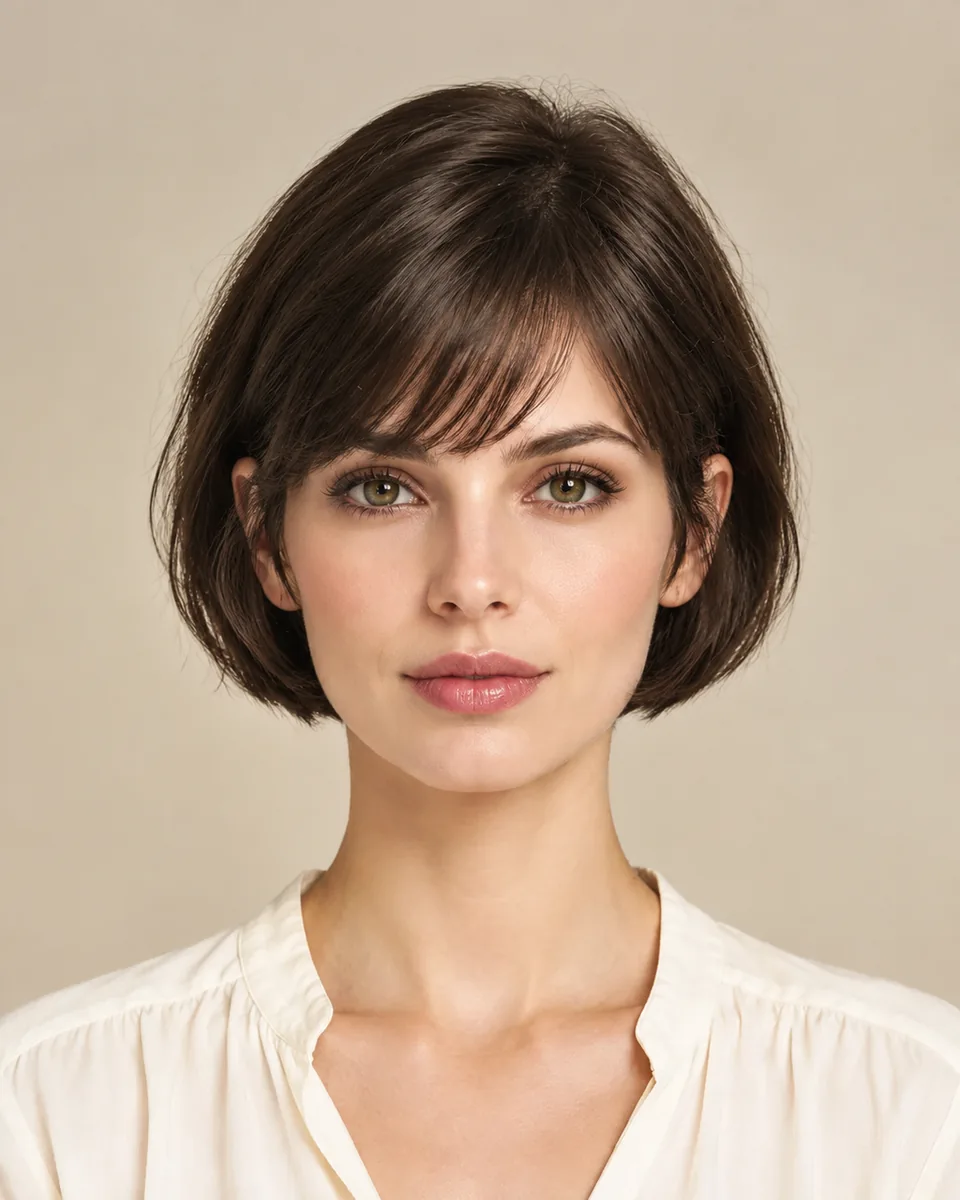
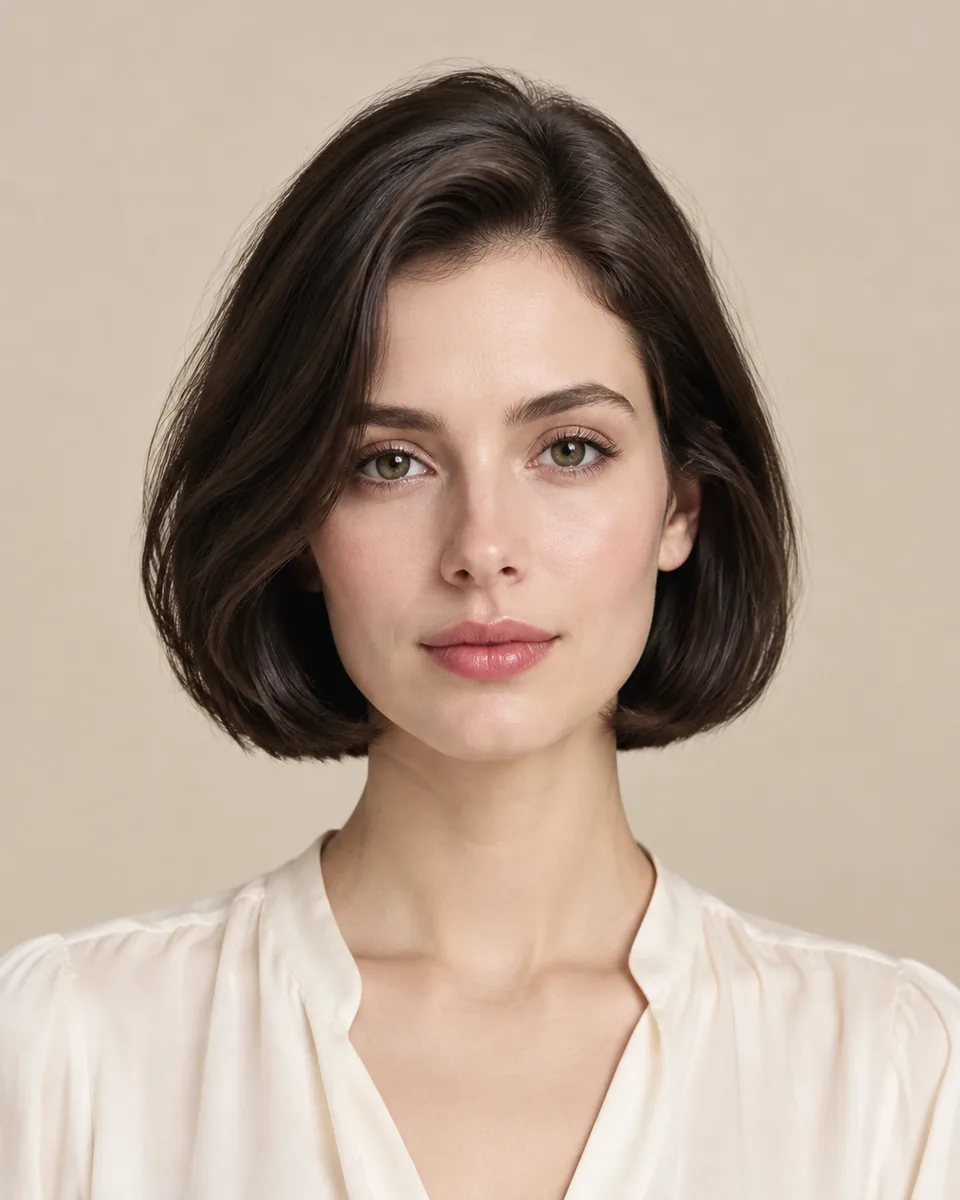
AI-generated editorial illustrations use the same model and comparable framing. These are selected examples, not exclusive definitions or actual customer try-on results.
French bob
Look at the short fringe and compact side outline. A soft finish does not prove that the underlying edge is layered.
Try French bob
Blunt bob
Look at the substantial lower edge and side-parted front. A blunt bob can also be worn with bangs or waves.
Try Blunt bob
What is a French bob?
A French bob is a compact interpretation of the bob, commonly near the jaw or chin and often paired with bangs. Soft movement and a slightly undone finish are common references, but neither bangs nor visible layers are compulsory. The bob hairstyle guide places it within the larger family.
What is a blunt bob?
A blunt bob has an emphatic outer edge, with little or no visible layering interrupting that line. It can be chin length, longer, fringed or fringe-free. L'Oréal's description distinguishes straight-across blunt ends from the subtle layering in its French-bob example. That is one common styling contrast, not proof that the categories cannot overlap.
Decision guide
Describe the change you actually want
| Choice | French-bob reference here | Blunt-bob reference here | What to tell a stylist |
|---|---|---|---|
| Endpoint | Compact near the jaw | A clear line near the chin | Point to the desired dry endpoint |
| Forehead | Short soft fringe | Open forehead with a side part | Specify fringe independently of the bob |
| Lower edge | Softly styled compact outline | Substantial continuous edge | Say how dense or broken you want the ends |
| Surface | Gentle bend and separation | Smooth surface | Show your normal texture as well as the finished reference |
| Overlap | May have a blunt perimeter | May have French-bob proportions | Both names can describe the same haircut |
Fine Hair, Thick Hair and Texture Change the Brief
Fine hair: If keeping a full-looking edge is the priority, discuss preserving end weight in either version. A wide, dense fringe can use hair you wanted beside the face, so ask about a narrower or lighter fringe section. A smooth reference does not prove the model has the same density as you.
Thick hair: A compact jaw-level edge can accumulate width, whether it is called French or blunt. Ask about internal weight control while keeping the amount of perimeter you like. Removing weight inside the shape and visibly shredding the ends are different requests.
Straight hair makes a strong line conspicuous and may show differences between the two ends. Wavy hair can soften a blunt edge without changing its underlying construction. Curly hair can carry a substantial perimeter too, but the dry length and distribution of weight need adapting. Neither label requires heat-straightening your texture.
If you are actually choosing whether to introduce internal layers, blunt bob vs layered bob answers that narrower cutting question.
Face Framing: Fringe and Endpoint Are Independent
A short fringe draws a line across the forehead; the bob's sides draw another near the jaw. Those two placements determine what is covered and where the shape ends. You can keep the French-bob outline and open the forehead, or retain a blunt edge while adding fringe.
Before changing both, decide which part of the selected reference you prefer. If it is the visible forehead, say that. If it is the way the ends frame your chin, point to the endpoint. The French bob vs Italian bob guide is a better next step when the question is compactness versus fuller lower weight.
Maintenance and Grow-Out: Follow the Feature
A crisp line can show an uneven perimeter as it grows; a short fringe can reach an inconvenient eye-level length before the bob itself feels too long. A French bob with both features has both maintenance questions. It does not become easier simply because the finish is styled to look relaxed.
For a smooth finish on naturally waved hair, consider whether the reference assumes a routine you want to repeat. For a soft finish on straight hair, consider whether the bend needs creating. During grow-out, you can keep the perimeter and change the fringe, or keep the fringe while letting the perimeter extend. Agree on which feature matters rather than committing to a universal trim schedule.
Put the Two References on the Same Face
Choose one portrait with a clear forehead, jaw and neck. The first reference button starts a French-bob preview; the second starts a blunt-bob preview. Create them separately using the same portrait. Compare forehead coverage, side width and the lower edge before deciding which full image you prefer.
The reference hairstyle try-on preloads the image selected above. A generated illustration can help communicate proportions but cannot establish how your own fringe will split, how the ends will lie after air-drying or what a stylist's cut will produce. You can also explore broader alternatives in virtual hairstyle try-on.

Which One Should You Choose?
Choose the French-bob reference if the compact length and short fringe are the features you want. Choose the blunt-bob reference if the substantial lower line and open forehead are the features you want. If you like the first one's fringe and the second one's edge, ask about a blunt French bob rather than giving up either feature to fit a label.
FAQ
Can a French bob be blunt?
Yes. French bob describes a style and its proportions, while blunt describes the cutting line. A compact bob with fringe and a firm perimeter can fit both descriptions.
Does a blunt bob have to be straight?
No. Waves or curls can be worn over a substantial perimeter. A smooth photo makes that line easier to see, but it is not the only way to style the cut.
Which is better for fine hair?
Preserving enough hair at the edge can matter more than the name. Consider how much density a fringe section takes away from the sides and avoid assuming visible texture creates more hair. Ask a stylist to adapt the edge and fringe to your density.
Is the French bob lower maintenance?
Not inherently. A short fringe, a crisp perimeter or a finish different from your natural texture can each need attention. Compare the specific routine behind each reference rather than the names.
What should I ask for if I like both pictures?
Specify the dry endpoint, fringe coverage, perimeter weight and finish you want. You might ask for the first reference's fringe with the second reference's lower edge. Those details are more useful than choosing one label.