

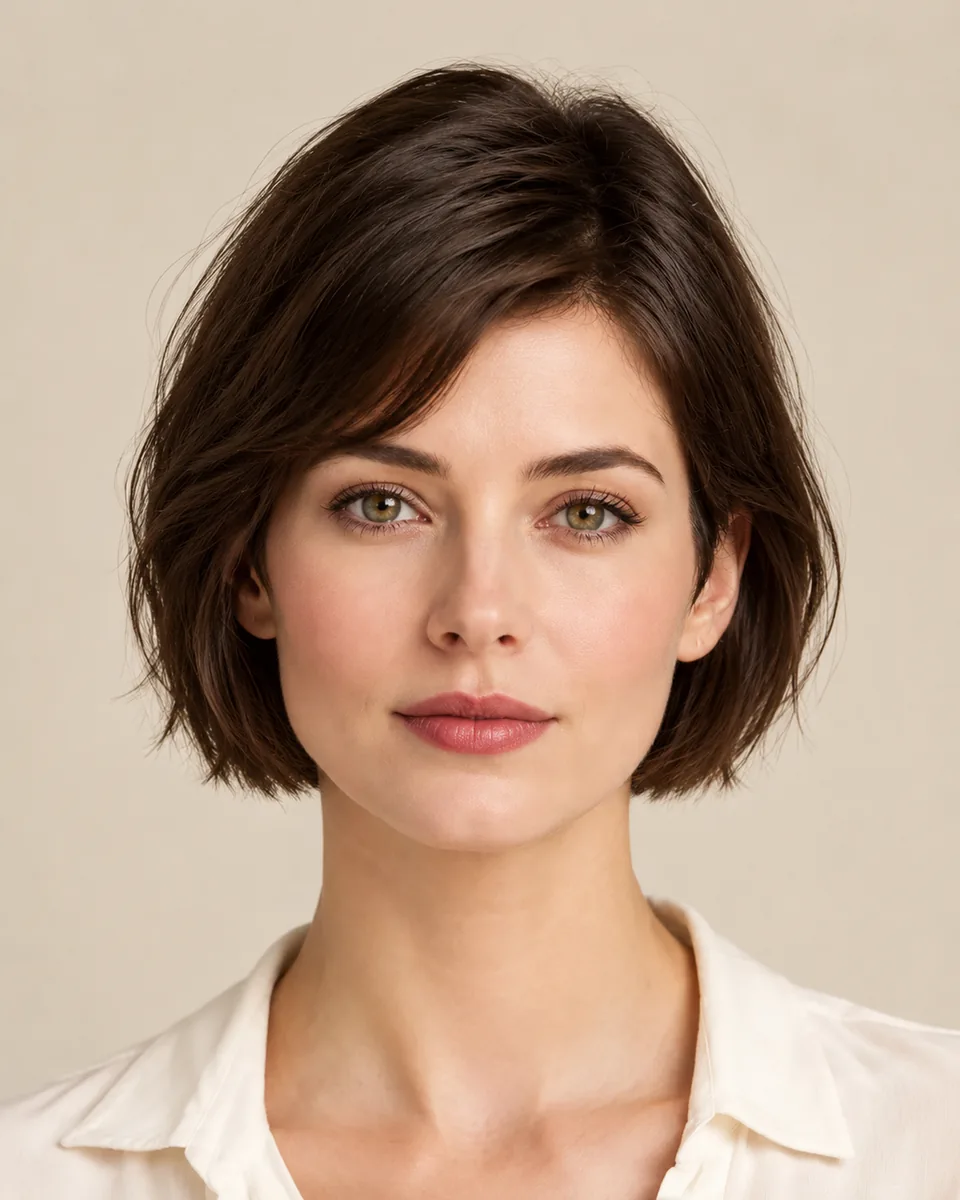
Textured bob
Small separations soften the lower edge without turning the example into a short-crown haircut.
Try Textured bobHairstyle comparison
At a similar length, a textured finish breaks the ends into pieces; a blunt-looking finish emphasizes a continuous lower line. Internal layers and natural waves are separate choices.
Quick answer
Choose a textured-looking edge if you want the tips to separate into small pieces. Choose a blunt-looking edge if you want a more continuous line at the bottom. This is a finish decision at a similar length, not a rule that one bob must have layers and the other cannot.
Visual comparison
AI-generated editorial illustrations based on the same model, with comparable color and framing. They are not customer results or a measured test. Compare the visible examples; each label allows other variations.
Small separations soften the lower edge without turning the example into a short-crown haircut.
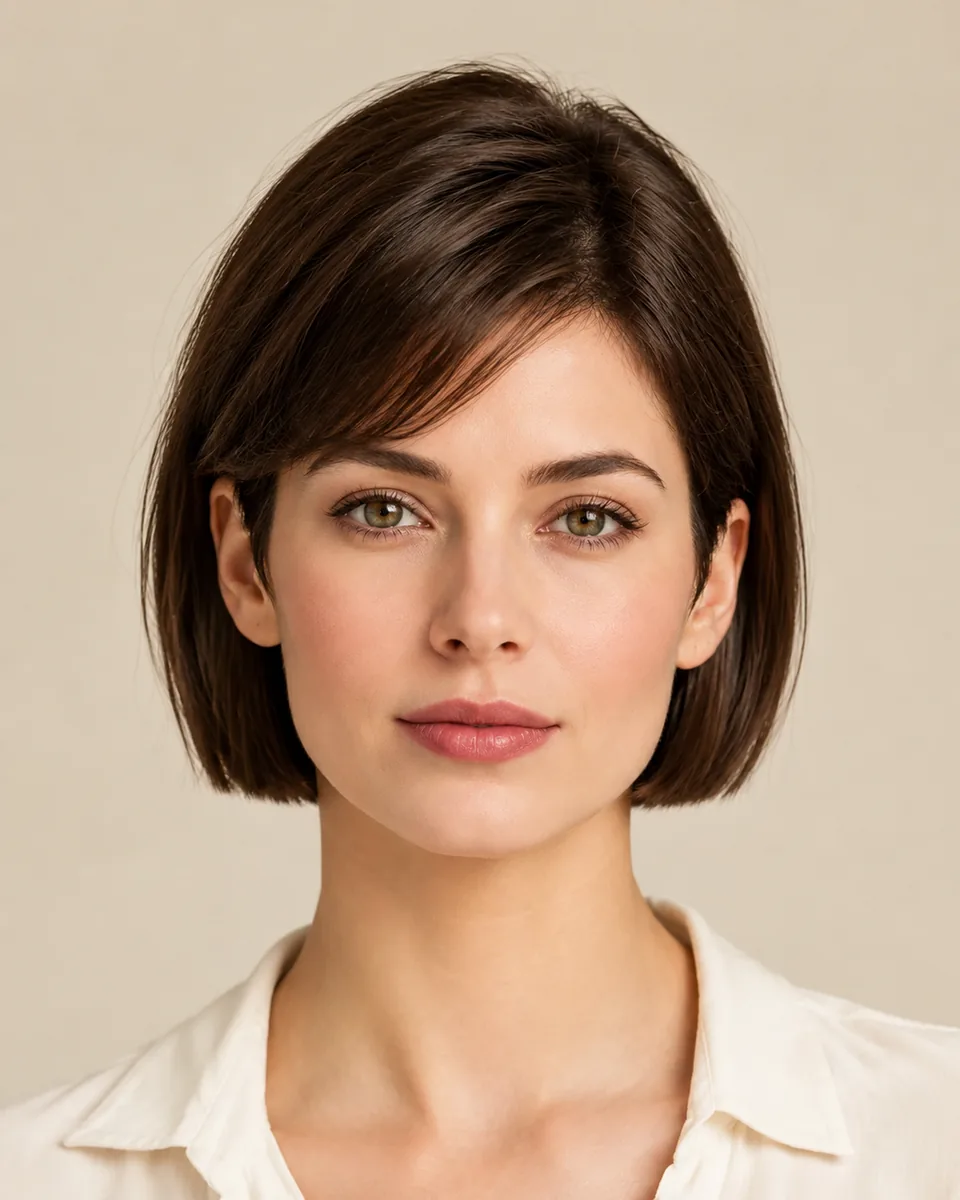
Try Textured bobA clearer lower line makes the endpoint easier to read; the reference is also styled smoother.
Try Blunt bobPut a finger across the lower edge in your inspiration. A clear line makes the endpoint prominent; a broken line puts more attention on individual tips. Now look at the body of the hair. It may be smooth, waved, layered or largely one length in either case.
ARC Scissors' bob lesson is useful context for separating subtle texturizing from more visible internal layering. Here the question is narrower: how continuous do you want the lower edge to look? The photographs also differ in surface finish, so they illustrate directions rather than proving what one cutting change causes.
Decision guide
| What to inspect | Textured-looking edge | Blunt-looking edge |
|---|---|---|
| Bottom line | Separated tips interrupt the line | A more continuous line emphasizes the endpoint |
| Ends that already look sparse | Extra separation may make gaps conspicuous | A substantial-looking edge is a goal, not added hair |
| Internal layers | Can be present or restrained | Can coexist with a strong-looking perimeter |
| Natural waves | Can emphasize piece separation | Can bend a clean cut line out of view |
| Styling request | Ask how the tips separate in your everyday finish | Ask how the edge sits without salon smoothing |
A blunt-looking edge groups the ends visually, but it cannot add density. If your sides are already thin-looking, ask what will remain after any texturizing. If you have dense hair, request an internal weight discussion instead of assuming a sharp line means the whole cut must feel heavy.
The textured vs layered bob comparison deals with where shorter pieces begin. The blunt vs layered bob guide helps when your decision includes both the edge and the interior. Neither distinction should be reduced to smooth hair versus messy hair.
A line at the chin and a line below the jaw do not frame the same place. Keep the endpoint similar while comparing finishes; otherwise you may be reacting to length. Use bob vs lob if you are deciding between jaw-level and shoulder-level hair.
For fine strands, bring an example with the amount of side fullness you realistically have. For thick hair, inspect side width as well as the ends. For waves or curls, agree on the dry endpoint and the finish you expect to wear. A smoother generated reference cannot determine how your own curls will contract or how much internal weight needs removing.
A polished blunt bob may involve smoothing. A piecey textured bob may involve deliberate separation. Neither picture tells you what will happen after washing and ordinary drying. Ask to see the shape with less styling, and choose the correction you are willing to make on a typical morning.
As the cut grows, the endpoint and internal proportions change. A softer edge can make the line less conspicuous, but it does not guarantee fewer appointments. Your preferred shape, fringe and growth pattern decide when a reshape becomes useful.
Open each reference separately and use the same portrait for both generations. Inspect the lower edge and the amount of hair beside the jaw, then check for unintended changes in face, length or texture. The reference supplies color as well as shape, and AI may vary other details.
Use virtual hairstyle try-on to explore more lengths if neither example is close. A preview helps name the visual goal; a stylist still needs to assess density, condition and cutting technique. For the wider family, the bob guide separates length, fringe and outline choices.
It can retain a strong-looking perimeter while having subtle texturizing. Ask how continuous the lower edge should remain; “blunt” and “textured” do not define every internal detail.
No. Texture may describe piece separation or a cutting finish, and it can be visible on straighter hair. Waves are a separate natural or styled feature.
It does not create more hair. A substantial-looking lower line can make the ends appear more collected, but the result depends on existing density and the chosen length.
The names do not settle that. Natural bends, growth direction, internal weight and the finish you want determine what ordinary drying looks like.
You can discuss subtle treatment at the ends while retaining most of the length. A stylist needs to assess whether that would preserve the fullness and line you want.
