

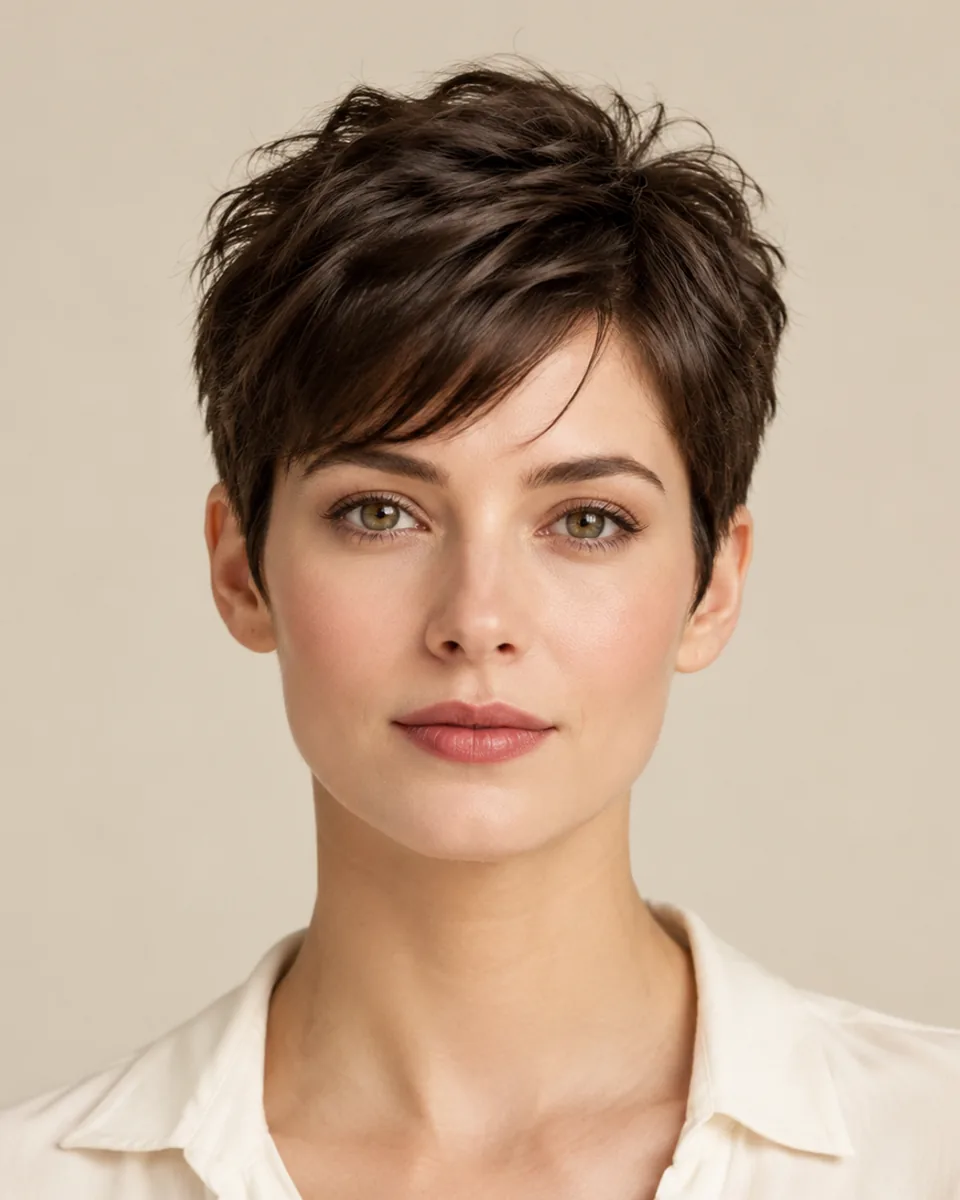
Pixie
A short side section and cropped nape establish the destination; a long top alone does not preserve a bob outline.
Try PixieHairstyle comparison
A lob-to-pixie change removes the lower perimeter and builds a new shape from the crown, sides and fringe. Decide on the destination before choosing whether to reach it in one cut or in stages.
Quick answer
If you already want a pixie, agree on its shortest sides, nape and fringe before removing the lob perimeter. If you are unsure about those short sections, a staged cut can let you assess a different length first. A bob or bixie is an option to choose deliberately, not a compulsory stop or a guarantee that the final pixie will suit you.
Visual comparison
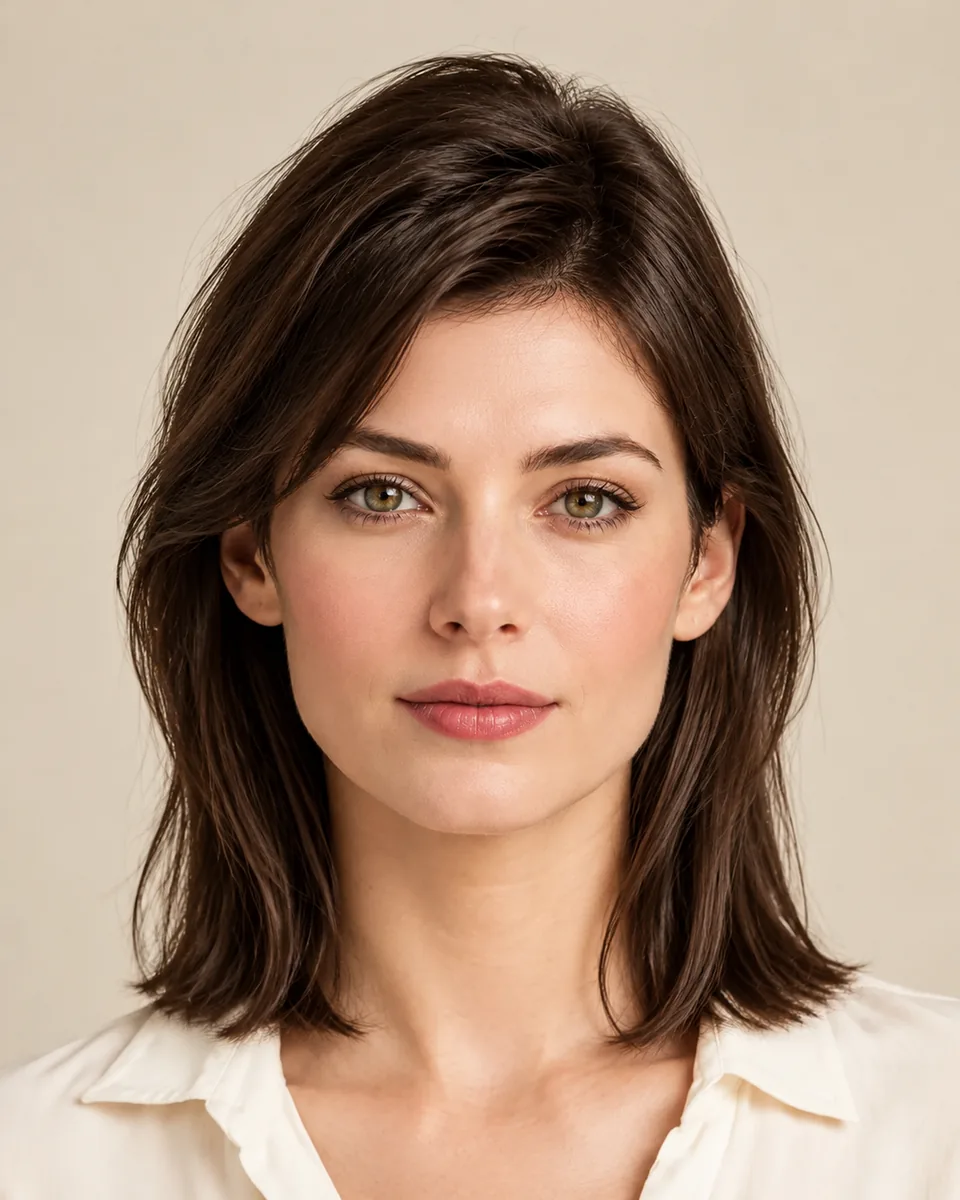
AI-generated editorial illustrations based on the same model, with comparable color and framing. They are not customer results or a measured test. Compare the visible examples; each label allows other variations.
A short side section and cropped nape establish the destination; a long top alone does not preserve a bob outline.
Try PixieThe shoulder-level perimeter is the starting length being considered, not a necessary intermediate stage.
Try Shoulder-length lobA lob keeps hanging sides and a lower perimeter. A pixie redistributes the visible shape into much shorter side, nape and top sections. Hair.com's pixie guide shows how those cropped proportions vary; its lob guide provides the longer-length context.
Moving a lob up to the jaw still leaves you with a bob-family decision. Moving to a cropped ear section changes the structure. Use bob vs lob if you only want a higher endpoint, and pixie vs bob if the unresolved choice is whether to retain a jaw-level frame. Here the task is planning the larger transition from an existing lob to a chosen crop.
Decision guide
| What you already know | Possible next step | What to settle first |
|---|---|---|
| You want exposed ears and a short nape | Discuss cutting directly toward the chosen pixie | Exact dry side length, fringe and nape treatment |
| You want shorter hair but cannot name the side length | Assess a bob or longer short shape first | Which uncertainty that intermediate cut will answer |
| You like the top of a pixie but want long sides | Compare long-pixie and bixie references | Whether the destination is actually a crop or a hybrid |
| You need particular sections kept long | Mark those sections before any cutting | Whether that constraint fits the proposed pixie |
| You are choosing mainly from styled photos | Inspect another finish and side/back views | What the cut should do without that exact styling |
Mark the shortest side. Point to the area around the ear and temple, not only the longest fringe. A long top can distract from how little length remains at the sides. Ask the stylist to assess the dry growth direction there before choosing a closely cropped finish.
Choose the nape treatment. A tapered nape, a softer scissor-cut edge and a more disconnected outline are different requests. A front image cannot show the whole back, so bring side and back references. The illustration on this page is not a technical cutting diagram.
Specify the front piece you want to keep. Say where it should finish when dry and whether it must sweep, clip or stay clear of glasses. “Not too short” can mean different things at the fringe and at the ear; name both areas separately.
A staged change is useful when it tests a specific uncertainty: how you feel with no shoulder contact, with a jaw-level perimeter, or with less side coverage. Choose the intermediate shape for that question. It will have its own styling and maintenance needs, and experiencing it will not establish how a much shorter pixie crown will behave.
If you want longer cropped layers rather than a classic pixie, bixie vs lob covers that destination. Do not call every intermediate length an unfinished pixie. It can be the haircut you prefer to keep.
Before a major crop, ask which short section would take longest to reconnect with a longer outline. Keeping a longer fringe does not keep the nape or sides long. If you later grow the haircut, the back may need reshaping while other sections gain length; there is no universal appointment count or date at which the old lob returns.
A preview cannot measure growth, density or curl response. Fine strands, thick sections and curls each need an assessment of what remains after the proposed shortening. Ask to see the destination in an everyday finish, not only in a polished reference.
Use the pixie and lob references for separate generations on the same portrait. Inspect the original face alongside each result, then identify the short section you most want to keep or change. The tool follows the reference color and shape together, and other details may vary.
Bring the preferred outline and your three instructions to the consultation. Virtual hairstyle try-on can help explore other destinations, but it cannot decide whether cutting in stages will feel better, predict your dry texture or replace a real cutting plan.
No. A stylist can discuss a direct crop if the destination and actual hair allow it. An intermediate bob is useful only if it answers a length or coverage question you want to assess first.
It preserves length at the front, not at the short sides or nape. Ask which sections would need to catch up if you later wanted a continuous longer outline.
Agree on the shortest side section, nape treatment and dry fringe endpoint. Include side and back references, everyday styling preferences and any sections you need to keep longer.
No. A bixie is a possible chosen shape with its own proportions. It can be an intermediate option, a final destination or unnecessary for your plan.
It can illustrate possible destinations, but it cannot predict how each stage will feel or behave on your real hair. Use it to identify the uncertainty you want a stylist to help resolve.
