

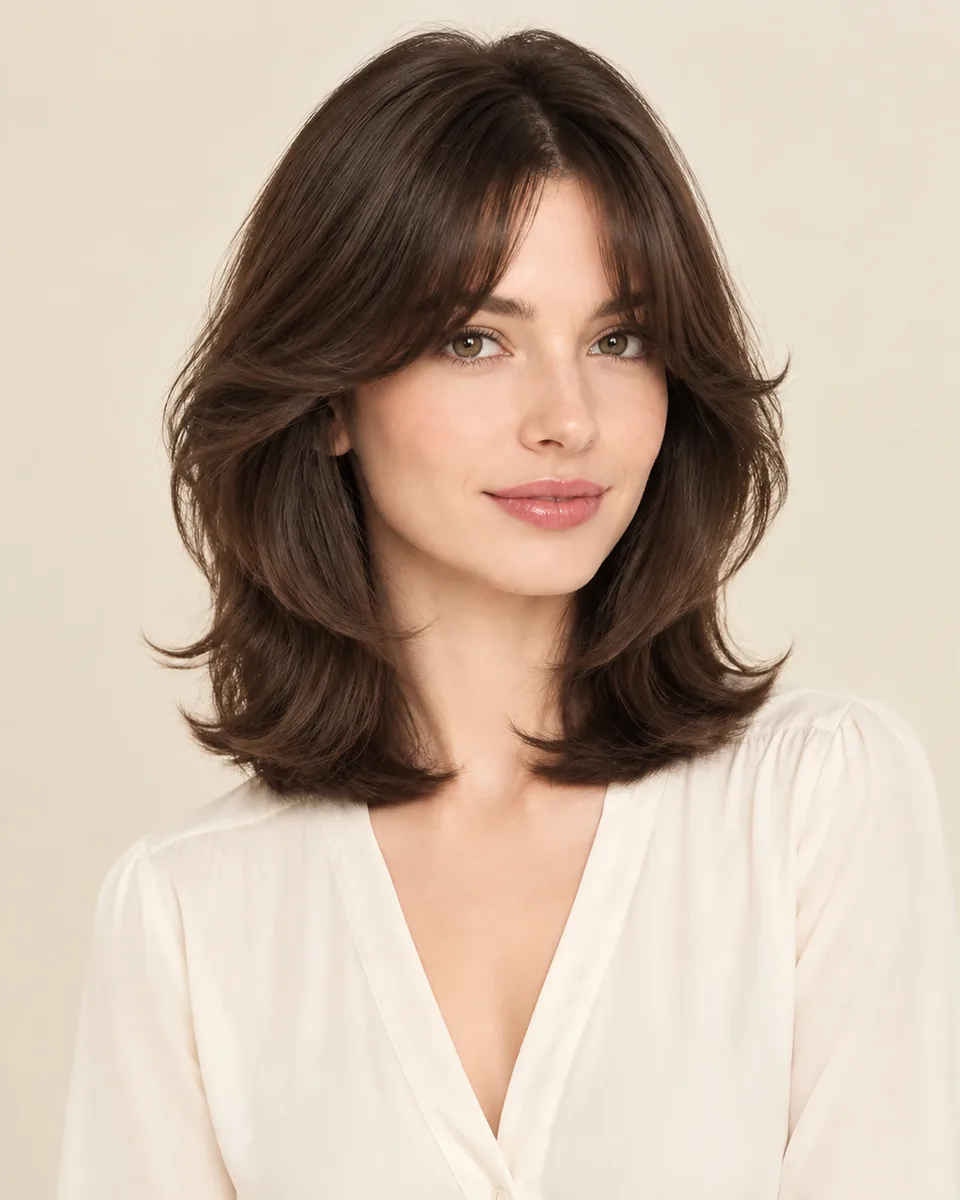
Butterfly-style layers
A broad face-framing sweep sits above a more collected lower edge in this medium-length example.
Try Butterfly-style layersHairstyle comparison
Butterfly references emphasize a distinct outward front sweep above retained length. Shag references emphasize shorter layers through the upper shape. Choose where you want the visible interruption, not a promise of effortless volume.
Quick answer
Start with butterfly-style framing when the main goal is a visible front sweep above retained lower length. Start with a shag reference when you want shorter, more distributed upper layers and a piecey outline. The families overlap; compare the shortest crown and front pieces rather than assuming there is a sharp naming boundary.
Visual comparison
AI-generated editorial illustrations based on the same model, with comparable color and framing. They are not customer results or a measured test. Compare the visible examples; each label allows other variations.
A broad face-framing sweep sits above a more collected lower edge in this medium-length example.
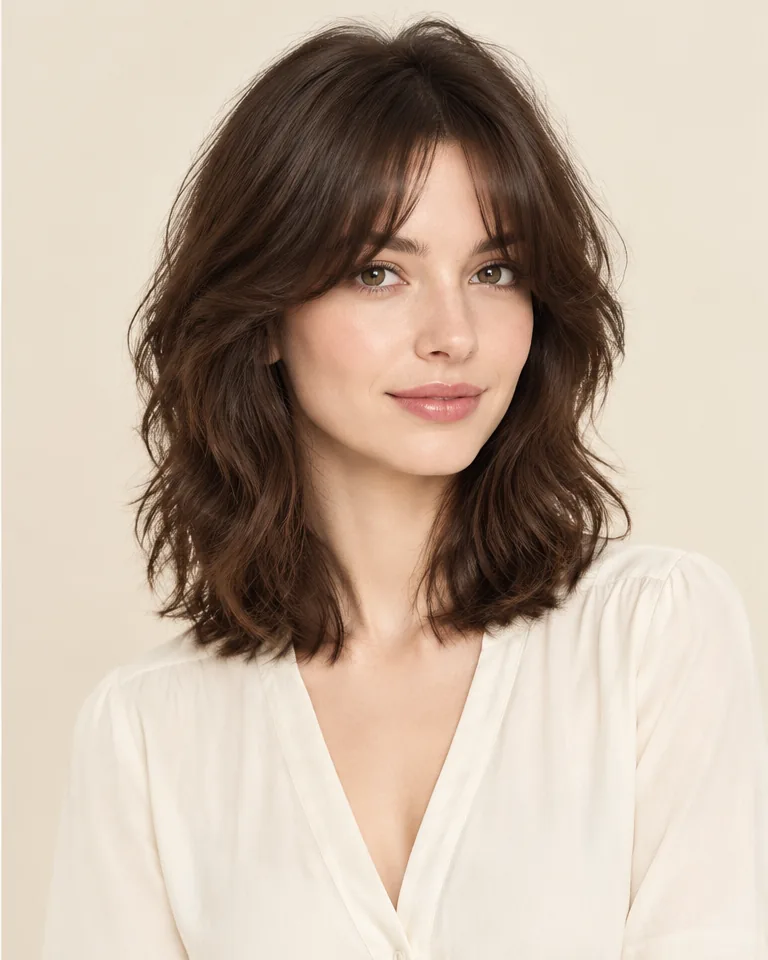
Try Butterfly-style layersShorter upper sections and a fringe spread the broken-up outline beyond the front sweep.
Try ShagJohn Frieda's butterfly guide describes shorter framing above longer sections and also discusses the tools used to shape the sweep. That is useful context for separating the layer arrangement from its styled curve.
In the butterfly illustration here, broad curves sit around the cheeks and jaw. In the shag, shorter pieces and the fringe interrupt more of the upper outline. The examples share a medium lower length, but the fringe and finish also differ: they are two complete reference directions, not proof of what a single cutting change will cause.
Decision guide
| Question | Butterfly-style reference | Shag reference |
|---|---|---|
| What catches the eye? | The outward front wings above retained length | Short upper pieces and a more scattered outline |
| What should stay long? | Specify the lower edge and the front pieces that must tie back | Specify how much lower length survives the upper layers |
| Do you want bangs? | Choose the shortest front frame separately | Choose the fringe separately from crown layering |
| What comes from styling? | The broad swept curve may need setting | The piecey finish may also need direction |
| What can overlap? | Butterfly framing can be combined with shaggy layers | A shag can retain a longer lower edge and outward framing |
“Keep my length” can mean only the longest strands. You may still lose substantial length near the face or through the crown. Point out the shortest piece you are willing to accept and how much hair should remain at the bottom. For sparse-looking ends, that second instruction is particularly useful.
Butterfly cut vs long layers handles a quieter change where the front stays longer. Wolf cut vs shag handles stronger crown-to-back contrast. This page is about the location of visible layering, not which family is more fashionable.
A broad butterfly bend in a smooth reference can involve blow-drying, rollers or another setting method. A tousled shag may also have been deliberately styled. Ask what each cut would look like after your normal drying routine before deciding that either one will be easier.
With waves, the first bend may sit at a different point once weight is removed. With curls, judge the shortest layer dry rather than stretched. With straight hair, a short internal layer can remain visible even when the intended curve relaxes. A generated image cannot predict those responses.
Short front wings may fall out of a ponytail even when the back reaches it. A short shag crown can stay outside a clip or change the upper shape as it grows. Identify which sections you need secured for work or exercise; neither “long butterfly” nor “long shag” guarantees that all of the hair remains long.
If you later want fewer layers, the shortest sections need to grow toward the lower edge. A reshape can change the outline during that transition, but it cannot erase the length difference immediately. The layer placement guide helps name the area you want to emphasize or keep quiet.
Use the reference buttons to create separate previews from the same portrait. Look at the shortest visible front piece, then the crown and remaining lower edge. Check the original face as well, because AI can vary facial details and other hair attributes.
For more options, use virtual hairstyle try-on. Treat the preview as a way to communicate a preferred outline; it cannot test styling effort, curl response or the actual technique needed to preserve your perimeter.
The names overlap in layered-hair styling. A butterfly reference usually emphasizes a separate front sweep above longer sections, while a shag reference may emphasize more distributed short upper layers.
No fixed fringe is required by the names. Show the shortest front piece you want and decide separately whether that should become a distinct fringe.
Check the actual references and sections. Both can keep a long back while shortening the front or crown substantially, so the label alone does not answer the question.
You can wear its layers in another finish, but the outward curves may look different. Ask how the cut follows your normal texture rather than expecting the styled illustration after ordinary drying.
No. It illustrates a generated shape and finish. It does not measure your growth direction, texture, shrinkage or response to removing weight.
