
Bob proportions and layers
French Bob vs Layered Bob: Compact Outline or Visible Layers?
A French bob describes compact bob proportions, often with fringe. A layered bob describes lengths cut inside the shape. They can overlap: choose how compact you want the outline, then how much visible movement you want within it.

French bob vs layered bobBob layersHaircut movement
5 min read
Quick answer
A French bob can have layers
French bob refers to a compact style, commonly near the jaw or chin and often with fringe. Layered bob refers to shorter lengths cut within a bob. You can combine them. The useful decision here is between a compact reference with restrained internal movement and a reference where the shorter pieces are visibly part of the shape.
The question is not whether a French bob is allowed to move. It is how much shorter the internal pieces should be and where their ends should sit. A small amount of hidden weight control and obvious cheek-level layers can produce very different references even when both are called layered.
Find the Shortest Pieces in Each Picture
Visual comparison
Read the inside of the bob
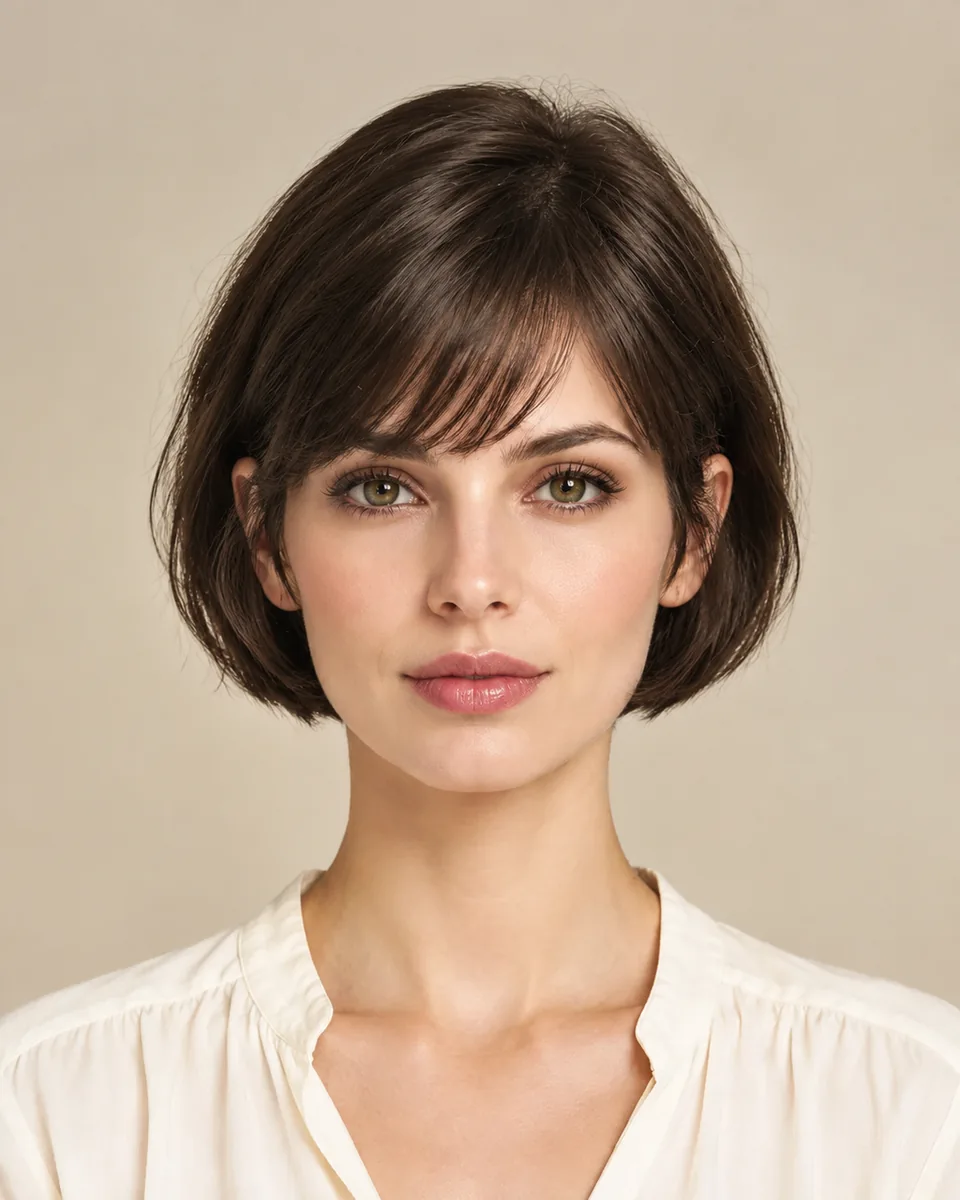
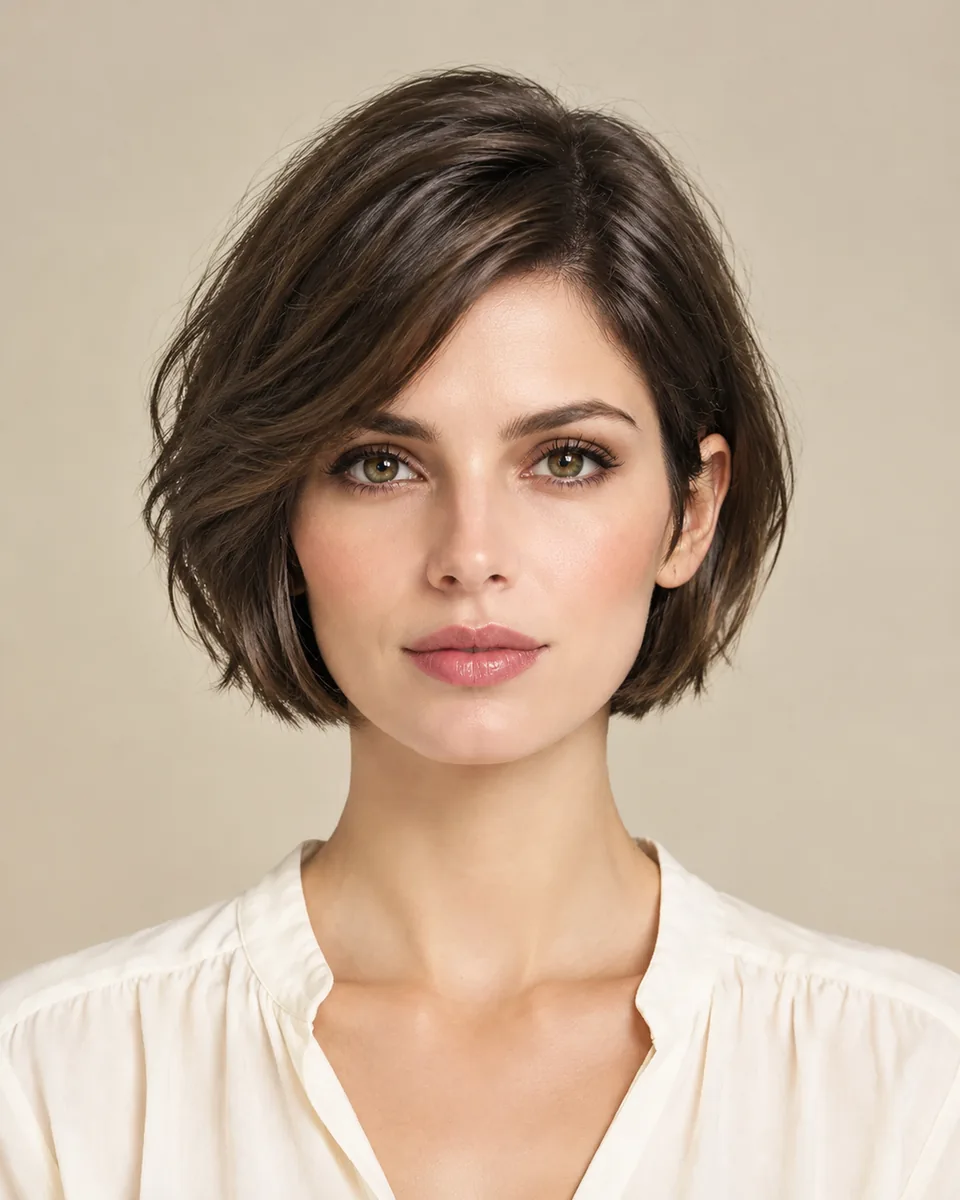
AI-generated editorial illustrations use the same adult model and comparable framing. They show selected hairstyle directions, not real customer results or a simulation of how your own texture will behave.
French bob
Start with the compact outer shape and fringe. The surface is relatively continuous, even though a French bob may include subtle layers.
Try French bob
Layered bob
Look for shorter pieces ending above the perimeter and movement through the side sections. The outer length remains in the bob family.
Try Layered bob
What is a French bob?
A French bob keeps a short, compact outline, usually near the jaw or chin. Fringe and a soft finish are common, but the internal cut can vary. L'Oréal's French-bob example explicitly includes subtle layering, supporting the distinction between a style name and a layering technique.
What is a layered bob?
A layered bob contains shorter lengths inside the longer outer shape. Those layers can change where the hair separates, where it holds weight and how much movement appears beside the cheeks. A layered bob is not automatically shaggy, very short or fringed. The bob hairstyle guide covers the family beyond these two references.
Decision guide
Which part of the shape do you want to change?
| Decision | Compact French-bob reference | Visibly layered-bob reference |
|---|---|---|
| Outer shape | Compact edge remains the first thing you notice | Internal pieces share attention with the outer edge |
| Movement | Subtle bends within a short silhouette | Separation above and through the perimeter |
| Face frame | Fringe and side endpoint are conspicuous | Shortest side layers also define the frame |
| Weight | Discuss how much to retain at the edge | Discuss where to remove or redistribute weight |
| Fine ends | Protect the perimeter from over-texturizing | Keep enough outer length to avoid sparse-looking ends |
| Grow-out plan | Follow the bob endpoint and any fringe | Follow the shortest layers as well as the endpoint |
Which Is Better for Fine or Thick Hair?
Fine hair: Visible layers can give separation, but cutting more layers does not create more density. If the ends already look sparse, keeping a stronger outer edge may matter more than adding crown movement. A French bob can keep that compact edge with restrained layers; a layered bob can also be designed conservatively. Ask how much hair will remain at the perimeter.
Thick hair: Internal layers may help redistribute weight that would otherwise collect at the jaw. Their placement still matters: very short layers can create more outward width where you wanted less. A French bob may use hidden weight removal rather than conspicuous shorter pieces. Ask to see a dry outline at the cheeks and nape before deciding the amount.
The narrower blunt bob vs layered bob comparison is useful when you have already chosen the bob's length and only want to decide whether the inside should be layered.
Straight, Wavy and Curly Hair Need Different References
On straight hair, separate layers may show as distinct ends or a feathered finish; the styling in a reference may be creating much of the apparent lift. Ask whether those pieces will fall the same way when dried normally.
On wavy hair, a layer can end where a wave bends outward. That can make a bob wider at a particular point rather than simply lighter everywhere. Choose the position of the first visible bend near the face and check whether the lower edge remains substantial.
On curly hair, the dry silhouette and shortest curl lengths matter more than the label. Removing length or weight can change where curls sit, but a generated illustration cannot predict the amount. Use a reference with a texture relevant to yours and discuss dry proportions with a stylist familiar with it.
Face Framing: Check Where the Shortest Side Layer Ends
A fringe and a cheek-level layer do different jobs. The fringe changes forehead coverage; the side layer changes where the hair breaks beside the face. You can like the French-bob reference's bangs and still prefer more movement below them, or keep the layered bob's outline with a more open forehead.
Find the shortest piece near the temple, then follow it toward the cheek or jaw. If it ends at a point where you do not want extra width, discuss a longer face-framing layer instead. No face shape requires one of these names. The placement is the useful detail.
Maintenance and Grow-Out: Layers Have Their Own Timeline
A soft-looking layered bob may still require directing the short pieces after sleep or washing. A compact French bob may need attention to its fringe and perimeter. The easier routine is the one that works with your growth pattern and normal finish; more layers are not a guarantee of less styling.
As either bob grows, the outer endpoint moves downward. In the visibly layered version, the shortest pieces also need to catch up if your eventual goal is one-length hair. Cutting the perimeter repeatedly to meet those layers is a choice, not a requirement. Ask which pieces you want to preserve while growing. If your main goal is a fuller lower edge, French bob vs Italian bob offers another direction to compare.
Compare Both on the Same Face
Use one portrait with the forehead, jaw and neck visible. Generate the French-bob reference first, then return to the layered-bob button and make a separate preview with that portrait. Compare the outer endpoint, shortest side pieces and width beside the cheeks, in that order. The two actions do not create a simultaneous pair.
The reference hairstyle tool loads the illustration you choose. It helps compare visual directions but cannot measure density, test air-drying behavior or determine the correct cutting technique for your texture. Use virtual hairstyle try-on if you would like to compare other bob lengths after deciding how much internal movement you want.

Which Should You Choose?
Choose the compact French-bob reference if you want the outer silhouette to stay visually coherent and the fringe to carry much of the face framing. Choose the visibly layered reference if shorter side pieces and internal movement are the feature you want to see. You can also request a French bob with subtle layers: show the desired endpoint and the shortest piece rather than treating the names as mutually exclusive.
FAQ
Can a French bob be layered?
Yes. A French bob can have subtle internal layers or more visible texture while retaining its compact proportions. Specify how obvious you want the shorter pieces to be.
Do layers always make a bob look thicker?
No. Layers can change lift and separation, but removing too much hair can make the ends look sparse. Density, shortest-layer length and the amount left at the perimeter all matter.
Is a layered bob always shaggy?
No. Long, restrained internal layers can sit within a fairly continuous outline. A shaggy appearance generally involves more visible separation, shorter layers or styling that emphasizes the pieces.
Which version is easier to grow longer?
A compact bob with fewer short internal pieces may retain a more continuous outline as it lengthens. A visibly layered bob can also grow longer, but the shortest pieces take time to reach the edge if your goal is one-length hair.
What if I like French-bob bangs but layered sides?
Those choices can be combined. Ask for the fringe coverage and outer endpoint you like, then point to where you want the shortest side layer to finish. A stylist can discuss whether that combination suits your texture and density.