Ask ten people "bob or long hair?" and you get a preference. Ask the dataset and you get two different answers, because the dataset records the two dimensions separately.
Bobs: A Family With No Single Winner
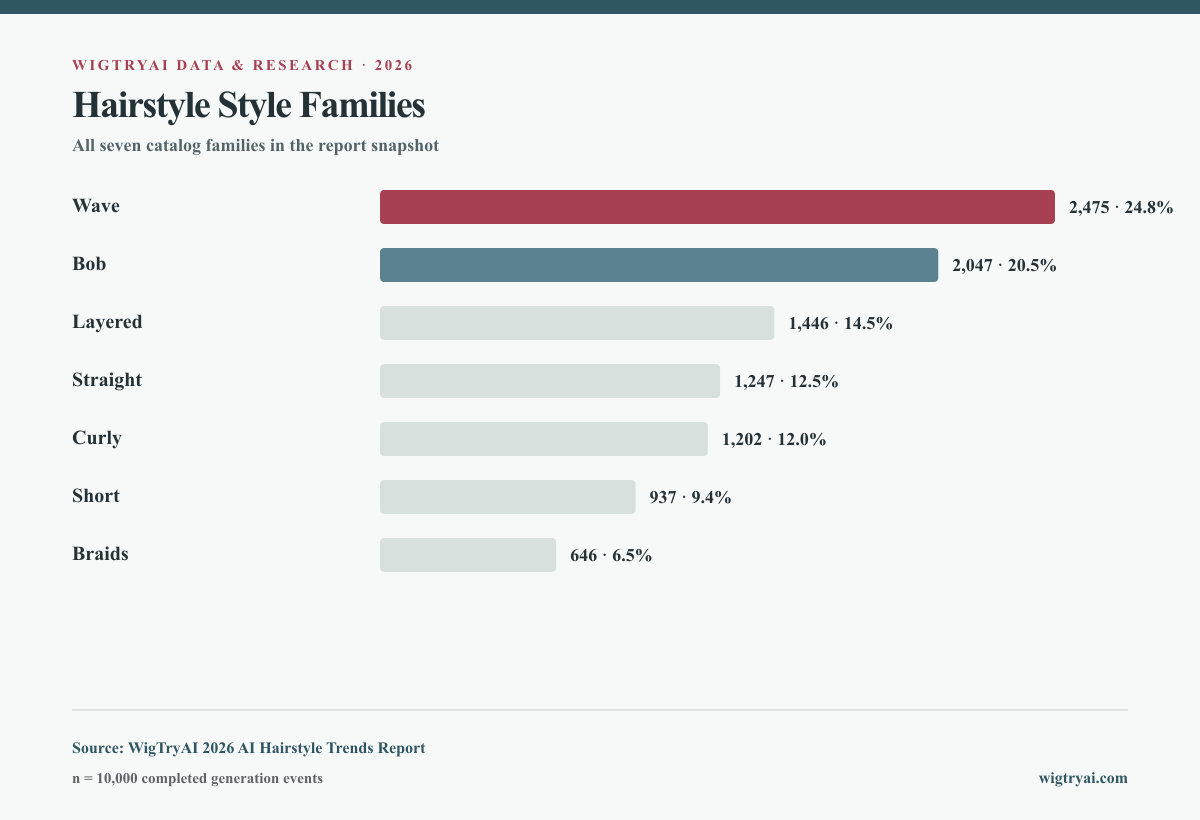
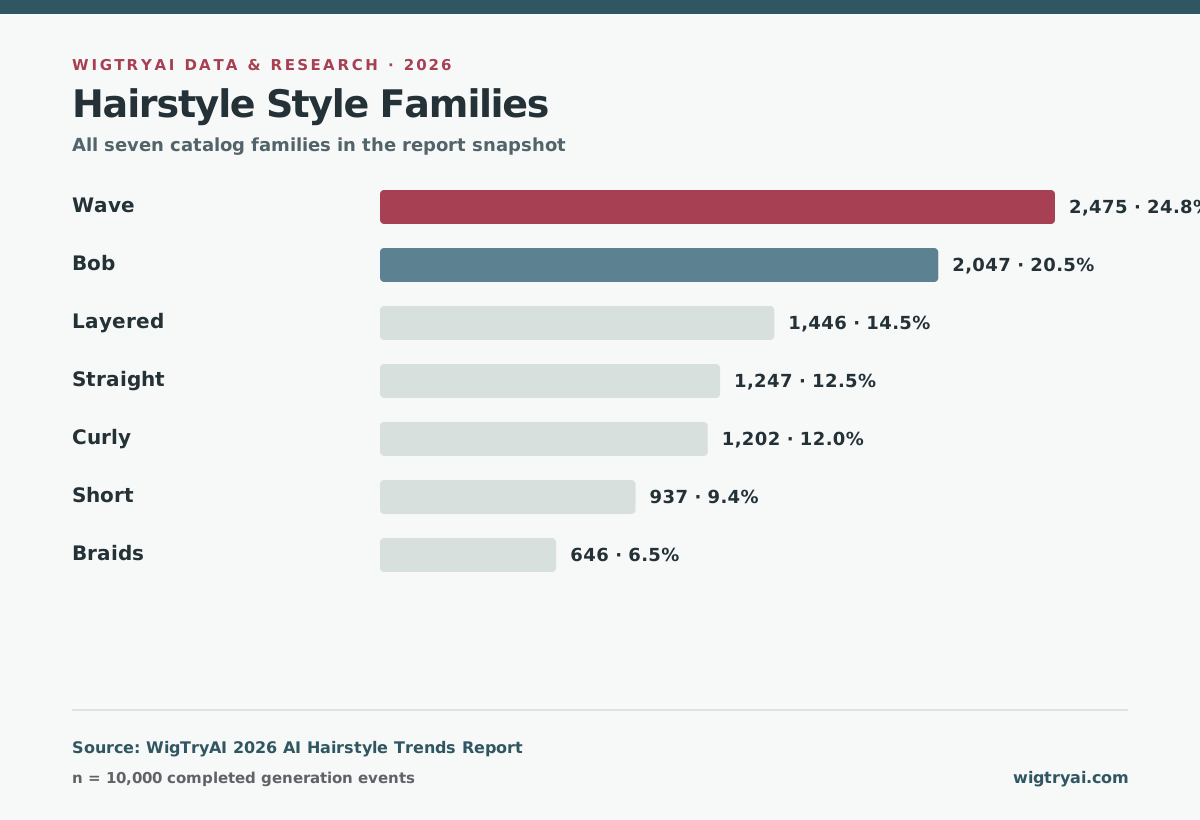
The 2026 AI Hairstyle Trends Report groups the 10,000 completed generation events into seven style families. Bobs ranked second at 2,047 events (20.5%) — but look at how that share is composed:
| Bob style | Generations | Share of all generations |
|---|---|---|
| Wavy Lob | 564 | 5.6% |
| Blunt Bob | 537 | 5.4% |
| Curly Bob | 373 | 3.7% |
| French Bob + Full Bangs | 273 | 2.7% |
| Asymmetrical Bob | 173 | 1.7% |
| Micro Fringe Bob | 127 | 1.3% |
No single bob made the top three of the whole dataset. The two strongest — Wavy Lob and Blunt Bob — together accounted for 1,101 events, or 11.0%. The bob family is large because it is diverse, not because one bob won. Six different silhouettes split 20.5% of the sample, and the family's strongest member is a lob — a bob that keeps more length and movement than the classic chin-length cut.
Long Hair: A Vote for Familiar Ground
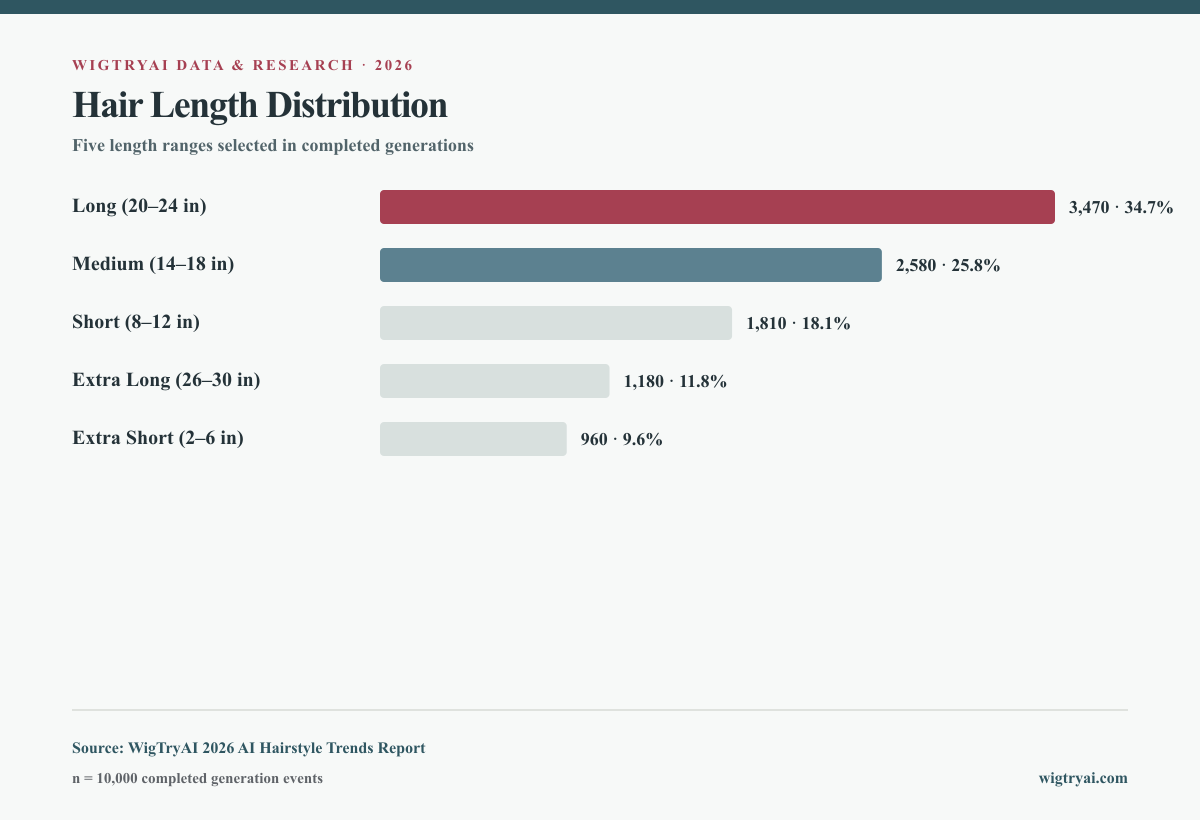
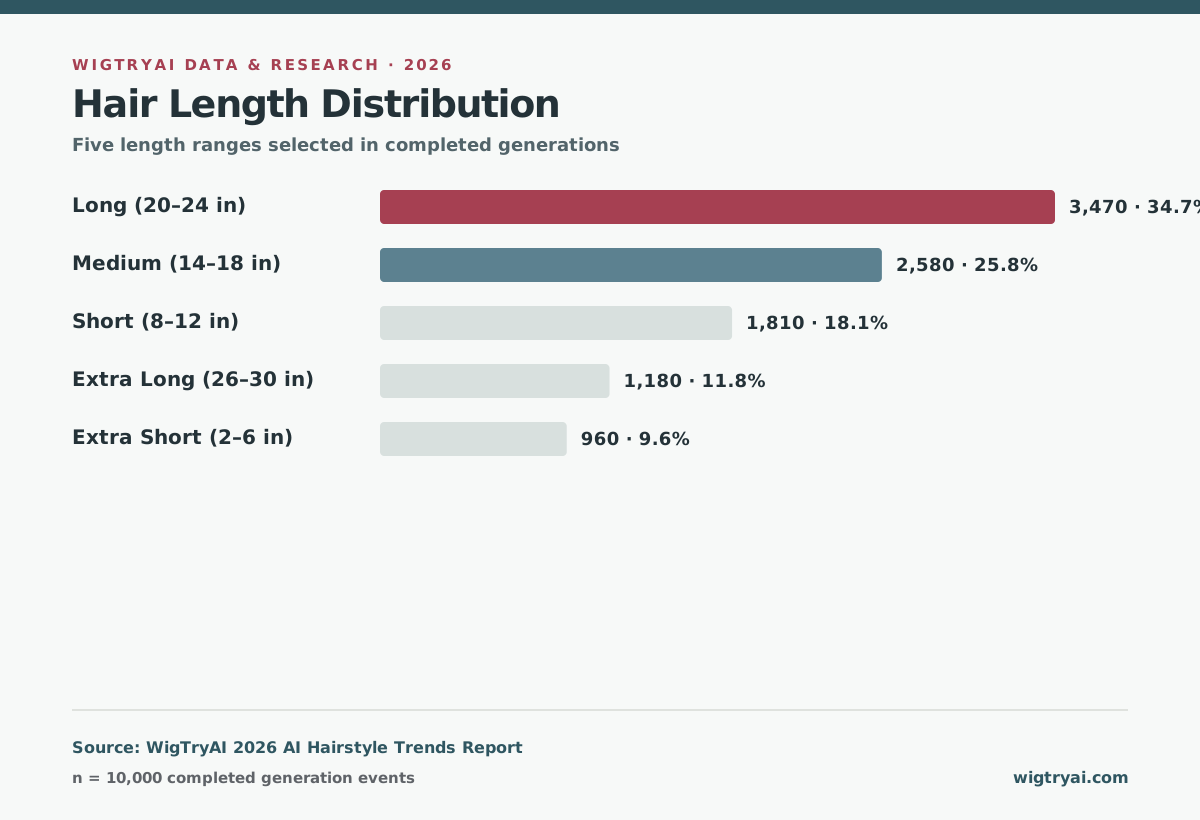
Measure the length dimension separately and the picture is different. People clearly explored long hair more than anything else — but not the longest hair:
| Length | Generations | Share |
|---|---|---|
| Long (20–24 in) | 3,470 | 34.7% |
| Medium (14–18 in) | 2,580 | 25.8% |
| Short (8–12 in) | 1,810 | 18.1% |
| Extra Long (26–30 in) | 1,180 | 11.8% |
| Extra Short (2–6 in) | 960 | 9.6% |
The most explored length band is the one most people would describe as "long enough to feel like a change, short enough to stay yourself." The extremities behaved differently: Extra Short (2–6 in) was the least-tried band at 9.6%, and Extra Long — the dramatic, waist-length territory — finished behind plain Short at 11.8%.
One Trend, Two Different Choices
Comparing the two dimensions makes the pattern sharper:
- Bobs are a silhouette decision, not a "short hair" decision. The family includes lobs, classic bobs, curly bobs, and micro fringe bobs. Because most of these sit at or near the jaw or shoulder, the family captures a change in outline — how much of the face is exposed — not a plunge into short lengths.
- Length exploration is a distance decision. People explored toward the familiar long band, not toward the extremes in either direction.
- Diversity is the actual pattern in both. No bob exceeded 5.6% of all generation events; no length band exceeded 34.7%. Strong family share plus weak single-style share is the signature of broad exploration, not a single winning idea.
What the Data Does Not Say
These numbers are measured; the explanation is not. A generation is not a preference, and one person can generate many looks. Catalog structure matters too — a family with more variations accumulates more events. The bob and length shares describe exploration inside WigTryAI during the dataset snapshot, not a survey of what people want. The full methodology and limitations are in the source report.