Hairstyles for an oblong face
Best Hairstyles for an Oblong Face: 10 Styles to Try
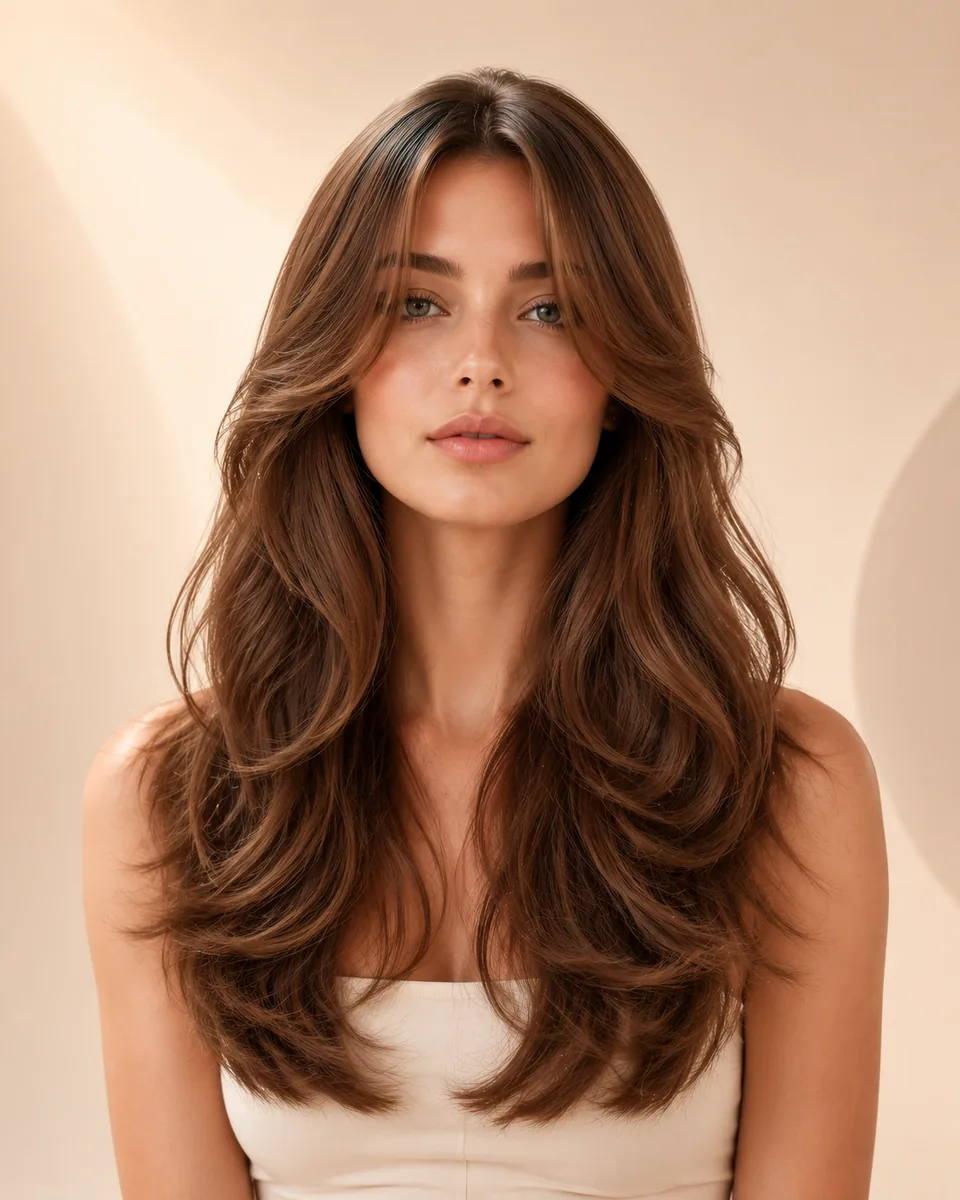
An oblong or rectangular face reads long and narrow, so the useful hairstyles are the ones that add width and break the vertical line — layered ends, curtain bangs, rounded bobs and waves that sit beside the cheekbones. These ten are ordered by how directly they do that.
Hairstyles for oblong faceOblong face shapeRectangular faceFace framingHairstyle ranking
6 min read
Quick answer
What works for an oblong face?
Styles that add width and interrupt the vertical line: curtain bangs, layered ends around the cheekbones, rounded bobs, and waves that sit at the sides. Styles that add height at the crown or run one length past the shoulders tend to make the face read longer.
- Add
- Width at the cheekbones and a visible horizontal line near the eyes
- Avoid
- Extra crown height and very long, one-length hair with no layers
- Length to aim for
- Chin to collarbone, or long with layers that start above the jaw
- Front
- Curtain bangs or side-swept pieces rather than a tall, lifted centre part
What an oblong face actually needs
An oblong or rectangular face is longer than it is wide, and the forehead, cheekbones and jaw sit at similar widths. The goal is not to “correct” anything — it is to decide where you want the horizontal line to land. Hair that adds width at the cheekbones, bangs that cross the forehead, and layers that flare outward at the jaw all shorten the read. Hair that adds height above the forehead or falls in one long, flat column lengthens it.
Because the length is already there, most people with this face shape get a better result from a cut that stops between the chin and the collarbone, or a long cut with layers starting above the jaw rather than at the ends. If you want to keep long hair, the changes that matter are the ones near your face — not the ones at the ends.
The 10 styles, ranked
Ranked shortlist
Best hairstyles for an oblong face
Ordered by how directly each style adds width or breaks the vertical line. Every card can be previewed on your own photo with the style already selected.
Look 1
Curtain bangs
A centre opening with the sides sweeping toward the temples creates the clearest horizontal line you can add without cutting much length.
- Best for
- Anyone who wants width near the eyes and is not ready to lose length.
- Why it works
- The shortest pieces cross the forehead and the sides flare outward, so the widest point of the hair moves up beside the cheekbones instead of staying at the jaw.
Keep the sides below the brow line so they sweep rather than sit flat.
Try this lookPreview curtain bangs on your photo with the length you already have.
Look 2
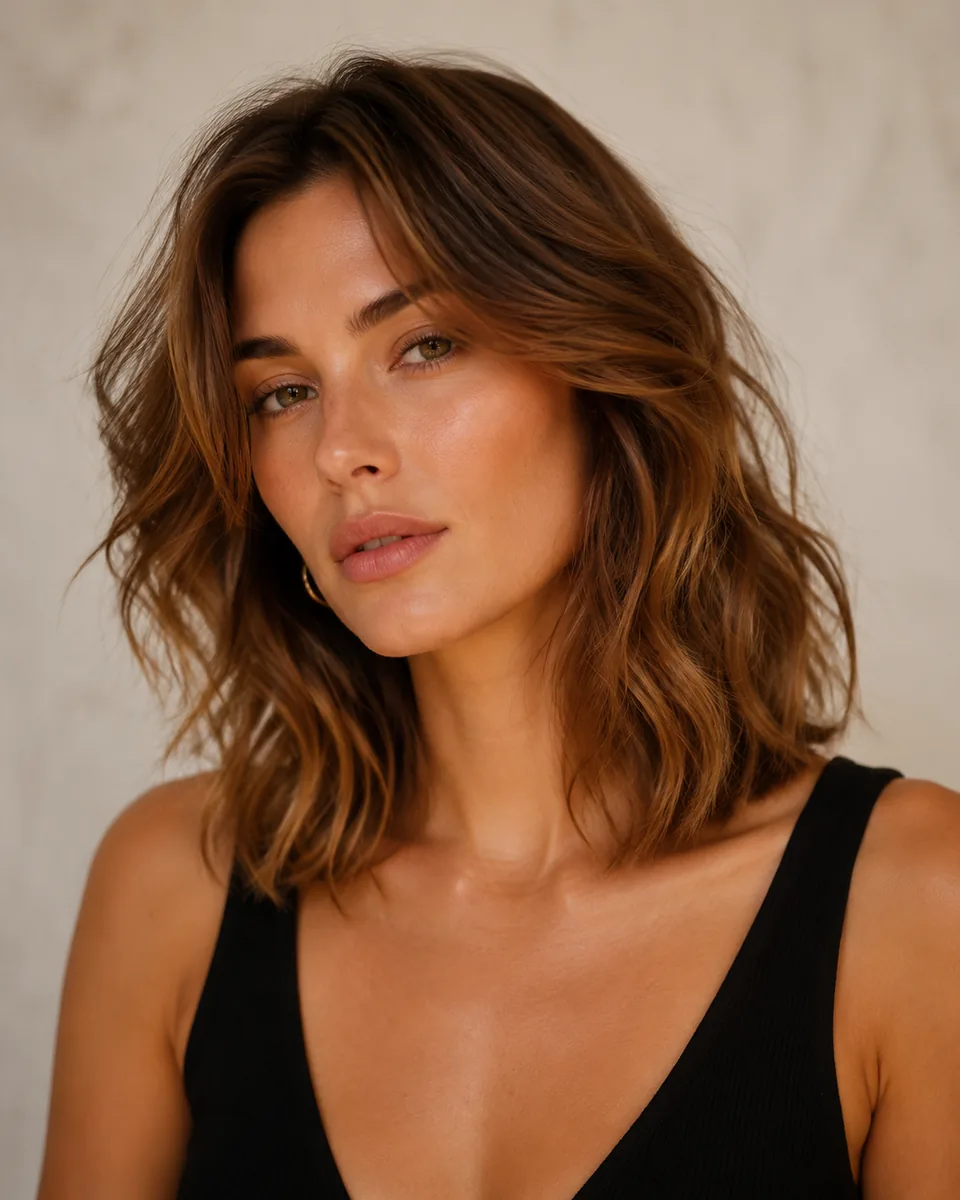
Soft layered lob
A lob that ends between the chin and the collarbone with soft layers that flare slightly at the ends.
- Best for
- The most reliable single change if you are unsure how short to go.
- Why it works
- Stopping the length above the shoulder removes the long vertical column, and the layered ends push width outward at exactly the jaw line.
Ask for the layers to start above the jaw, not at the very ends, or the shape stays narrow.
Try this lookPreview a layered lob on your own face before committing to the length.
Look 3
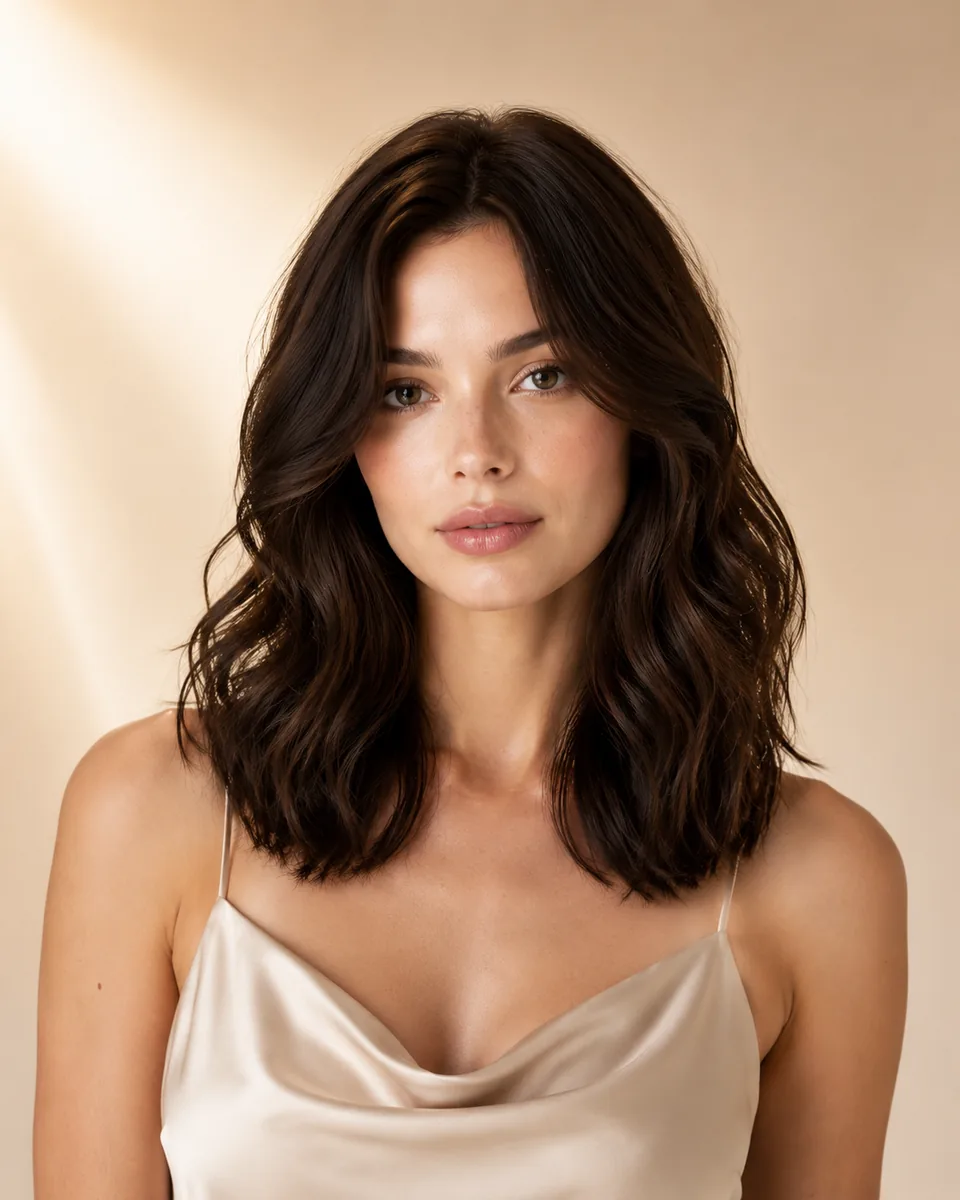
Shoulder-length waves
Waves that sit at the sides of the face add width without any cutting at all.
- Best for
- Long hair you do not want to cut yet.
- Why it works
- The wave pattern pushes hair outward beside the cheekbones, which is the point where an oblong face benefits most from volume.
Keep the root area smooth; lifting the crown adds the height you are trying to avoid.
Try this lookCompare soft waves at shoulder length on your photo.
Look 4
Rounded bob
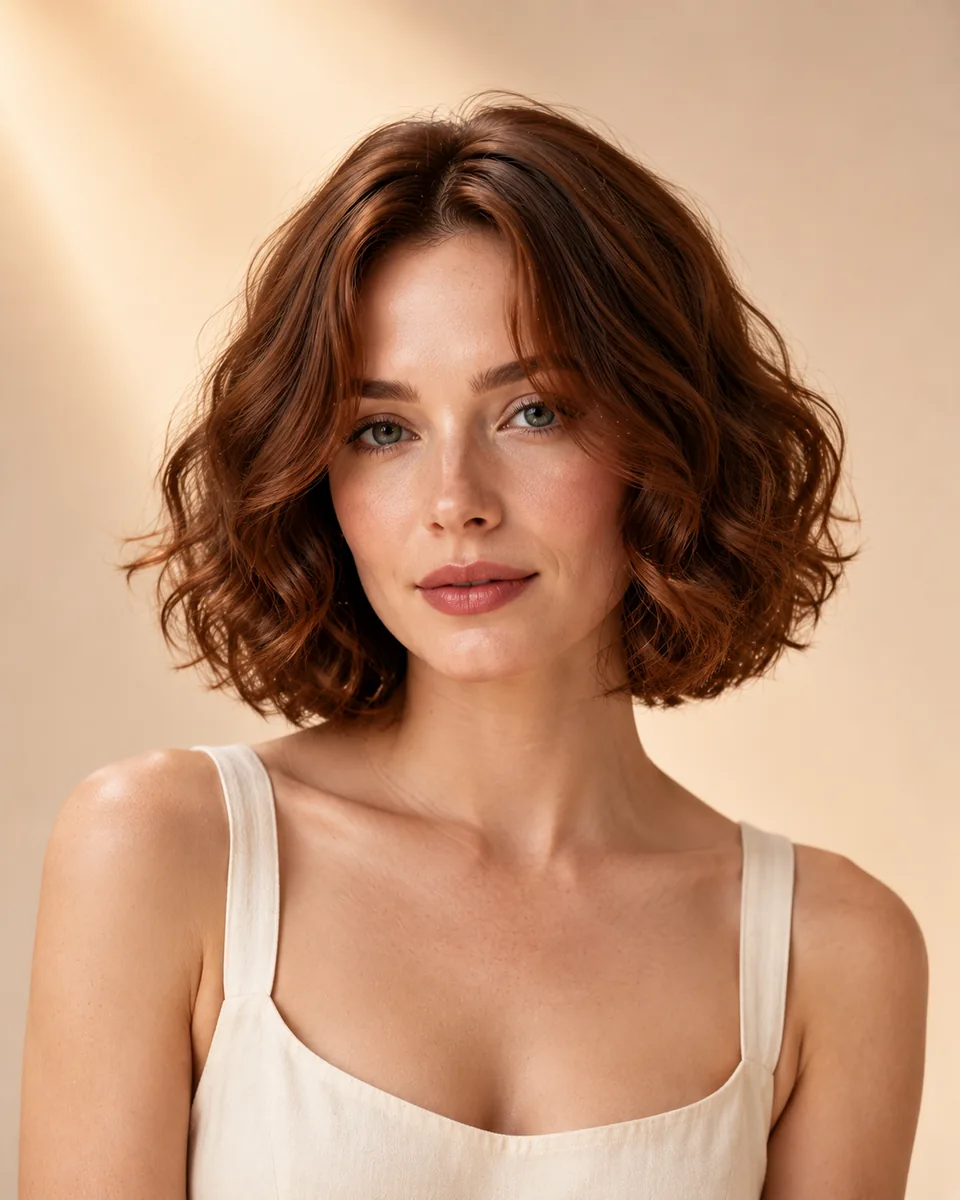
A chin-length bob with a rounded outline that puts volume beside the jaw.
- Best for
- A short change that softens the length immediately.
- Why it works
- The curve of the bob sits at the narrowest part of the silhouette and reads wide, which balances a long face better than a blunt line does.
Keep the back slightly shorter than the sides so the width stays at the front.
Try this lookPreview a rounded chin-length bob on your own face.
Look 5
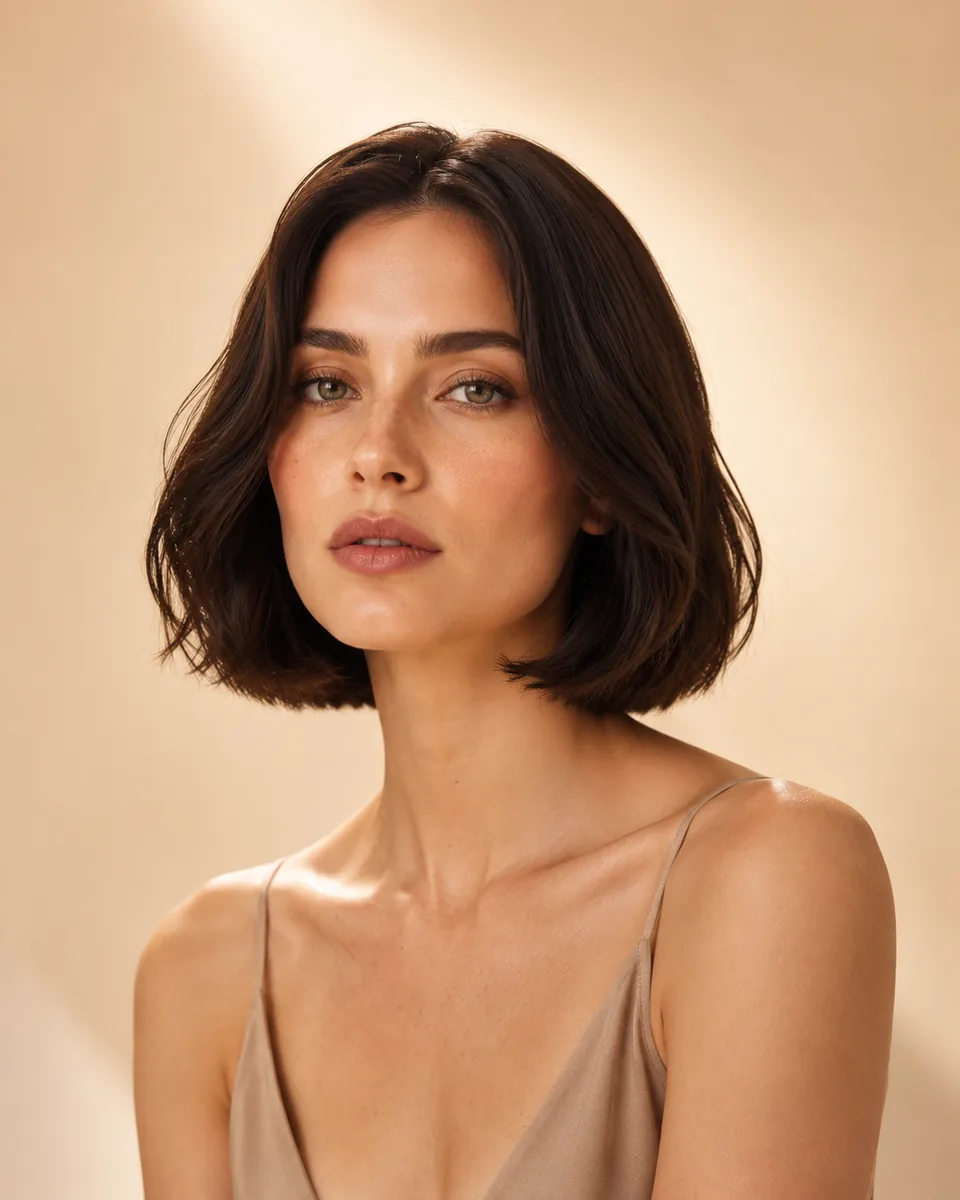
Textured Italian bob
A bob with visible texture and a slightly fuller outline than a sleek version.
- Best for
- Adding body without going shorter than the chin.
- Why it works
- Texture breaks the outline into pieces, so the eye reads width rather than a single vertical edge.
Texture that sits only at the crown will add height instead of width.
Try this lookCompare a textured bob against a sleeker version on the same photo.
Look 6
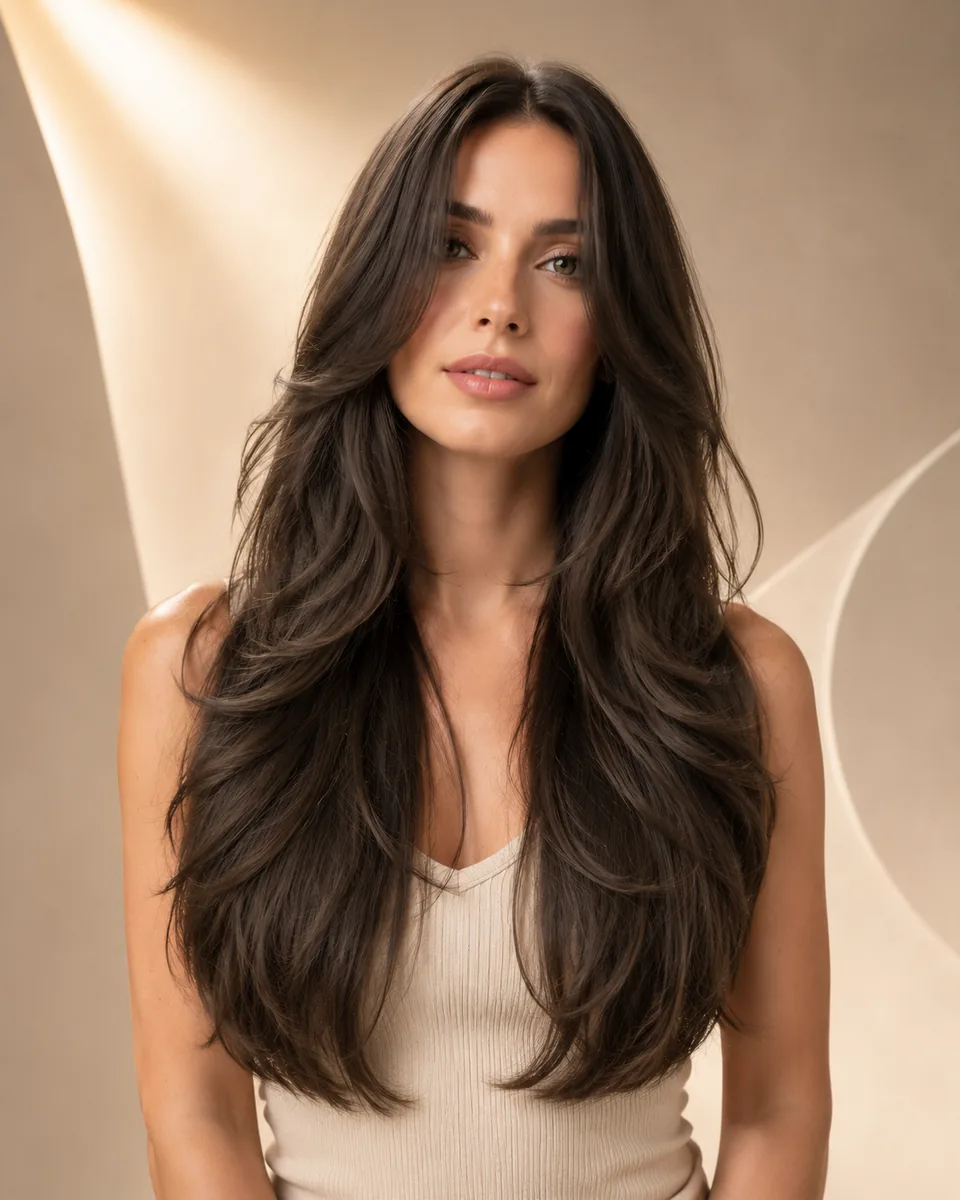
Long hair with face-framing layers
Pieces that start at the cheekbone and break the long line without changing the length.
- Best for
- Keeping long hair while changing how the front reads.
- Why it works
- The layers create a visible step beside the cheekbones, which is the horizontal reference an oblong face is missing.
Layers that start below the jaw leave the face reading as long as before.
Try this lookPreview face-framing layers on your current length.
Look 7
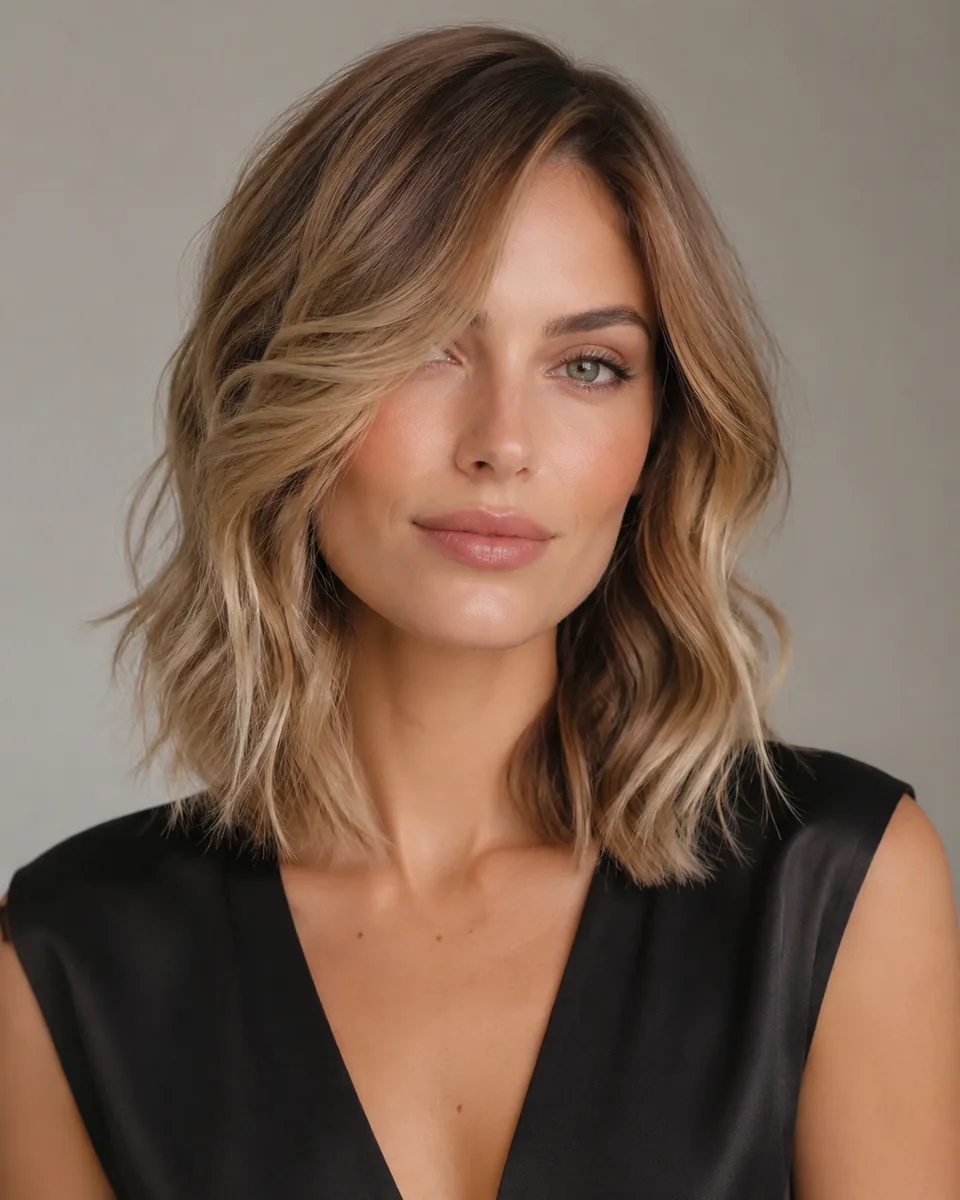
Wavy lob with layered ends
A wavy lob where the layers flare at the ends for extra width at the jaw.
- Best for
- Fine hair that needs help holding a wider shape.
- Why it works
- The wave and the layered ends work together: the wave adds body and the layers direct it outward rather than down.
Over-layering fine hair thins the ends; ask for layers through the last third only.
Try this lookCompare a textured lob with a smooth one on the same photo.
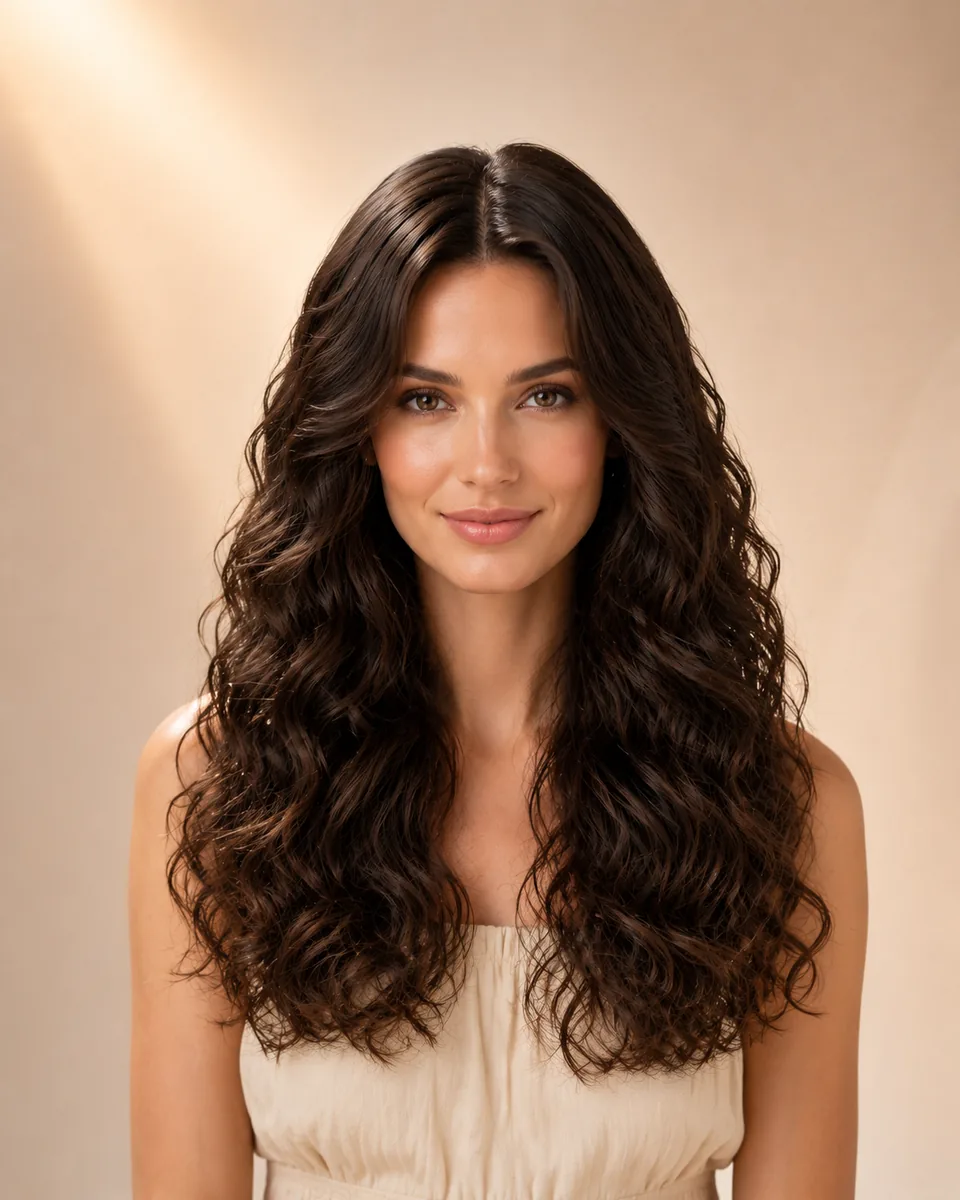
Look 8
Shoulder-length curls
Curls that build a rounder silhouette on their own, without styling effort.
- Best for
- Natural texture that already holds volume.
- Why it works
- Every curl adds width at the sides, so the outline stops reading as a narrow column.
Curly hair shrinks, so a length that looks right stretched can sit higher once worn curly.
Try this lookPreview shoulder-length curls and judge the width they add.
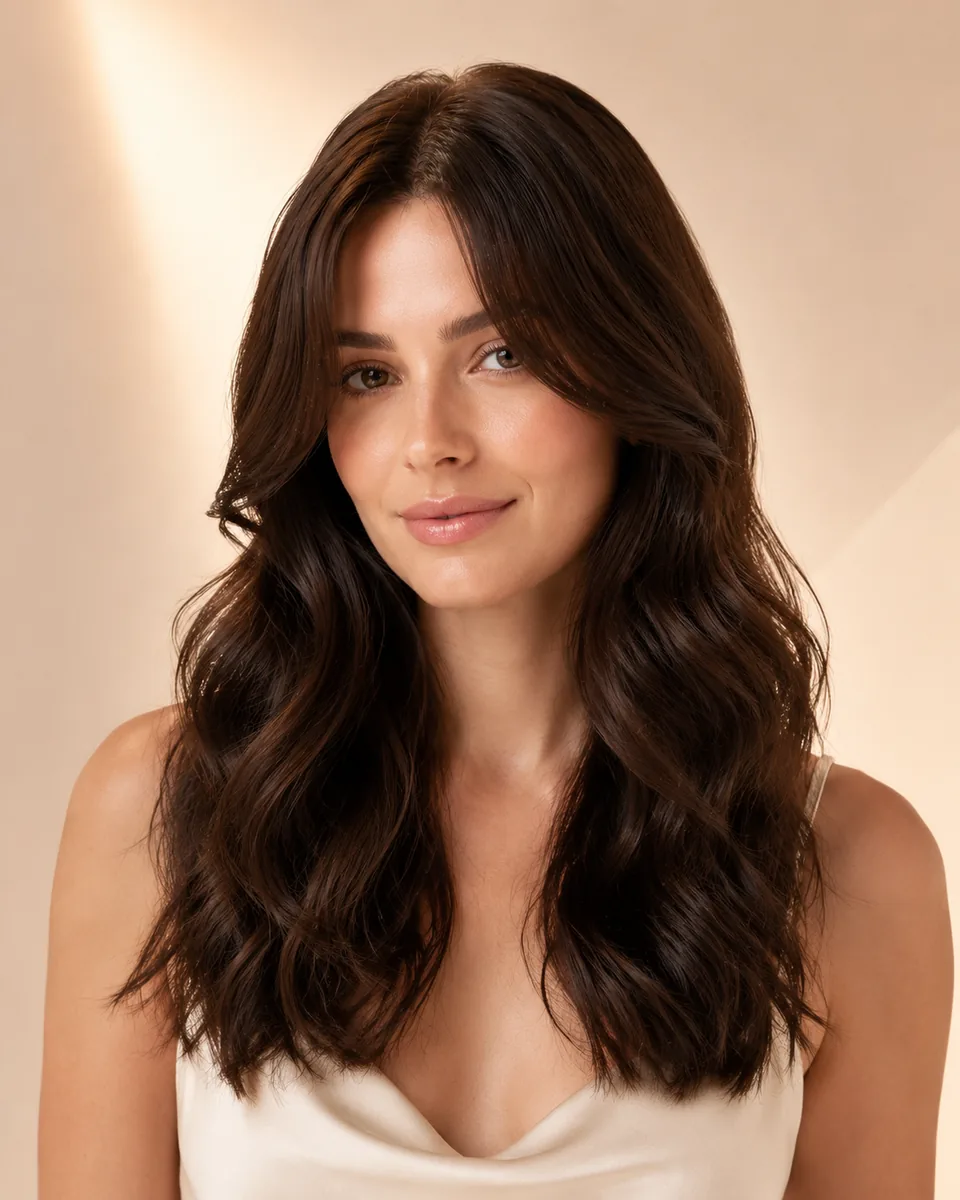
Look 9
Long layered waves
Waves kept long but layered so the sides stay full instead of flat.
- Best for
- Long hair with a preference for softness over a sharp cut.
- Why it works
- Layering keeps the sides from collapsing against the head, which is what makes very long hair read as a narrow column.
Keep the layers below the cheekbone so the width lands where it helps.
Try this lookPreview long layered waves on your own photo.
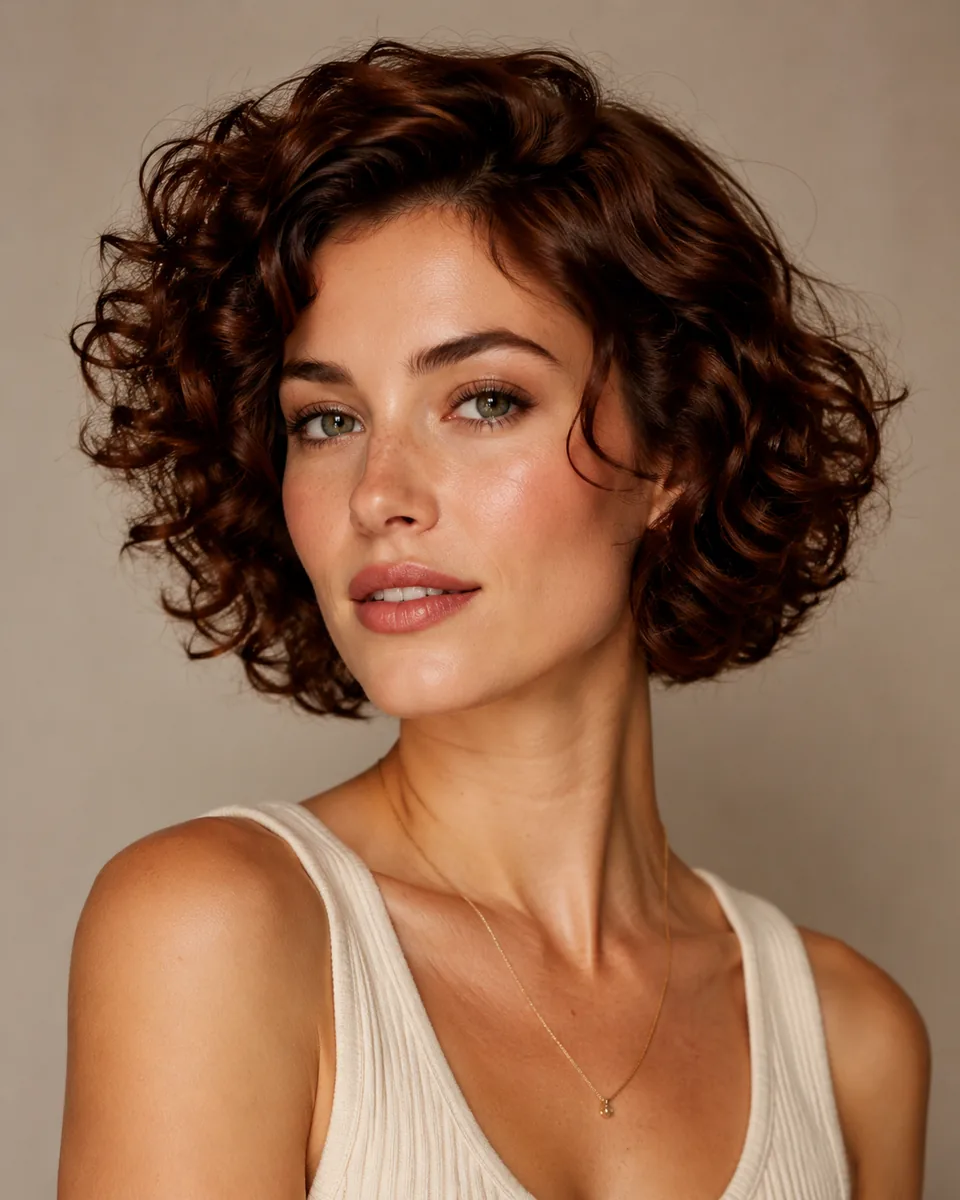
Look 10
Curly bob with side volume
A shorter curly shape that puts the volume exactly beside the jaw.
- Best for
- A defined change of shape rather than a change of length only.
- Why it works
- Shorter length plus curl concentrates width at the jaw line, the most effective single place to widen an oblong face.
A curly bob needs regular shaping as it grows; without it the outline turns triangular.
Try this lookPreview a curly bob with side volume on your photo.
What to avoid with an oblong face
The styles that work against a long face are the ones that either add height or remove width. A tall, lifted centre part with smooth hair exposes the full length of the forehead. Very long, one-length hair with no layers hangs in a single column and keeps every horizontal line out of the silhouette. Blunt, straight-across cuts that sit below the jaw cover the cheekbones — the exact point where extra width would help — while doing nothing at the top.
Two things are worth ignoring too. First, the idea that an oblong face must avoid long hair: it does not, as long as the layers start above the jaw. Second, the assumption that more volume always helps: volume at the crown adds height, which is the opposite of what this face shape usually wants.
How to preview these styles on your own photo
Upload one front-facing portrait with the hairline visible, then work through the shortlist with the color and part kept steady so the only change is the shape. For each style, look at two things: how wide the hair sits beside your cheekbones, and whether the outline still reads as a long column or has gained a horizontal step. Those two observations tell you more than any face-shape rule.
If you would rather start from a shortlist built for your own features, the recommendation flow asks about length, texture and upkeep and returns directions to preview — which is usually faster than testing ten styles one at a time.
Get a shortlist for your own face
Answer a few questions about the length and upkeep you want, and start from a shortlist instead of from ten separate previews.
Find my best hairstyleFAQ
What hairstyles suit an oblong face best?
Styles that add width at the cheekbones: curtain bangs, a layered lob between chin and collarbone, rounded bobs, and waves or curls that sit beside the face. Long hair works too when the layers start above the jaw rather than at the ends.
Is an oblong face the same as a rectangular face?
The two terms are used interchangeably in most styling advice: both describe a face that is longer than it is wide with the forehead, cheekbones and jaw at similar widths. Anything written for a rectangular face applies here, and the same styles are the ones to preview.
Should I avoid long hair with an oblong face?
No — long hair is fine if the layers start above the jaw or you add bangs. The issue is not the length itself but a long, flat, one-length shape that gives the eye no horizontal line to stop at.
Does a centre part make an oblong face look longer?
A tall, lifted centre part with smooth hair can, because it draws the eye straight down the middle of the forehead. A centre part with curtain bangs or soft face-framing pieces is a different result: the part stays but the fringe crosses the forehead and adds the horizontal line.
Can I preview these styles before cutting my hair?
Yes. Upload one front-facing portrait and preview each style on your own face with the color and part kept steady. The first three try-ons are free, additional previews may require credits, and the original selfie is deleted within 24 hours.
How do I know which of these ten actually suits me?
Compare two at a time on the same photo and watch how wide the hair sits beside your cheekbones and whether the outline still reads as a long column. The style that adds a visible horizontal step near the eyes or jaw is usually the one to take to a stylist.