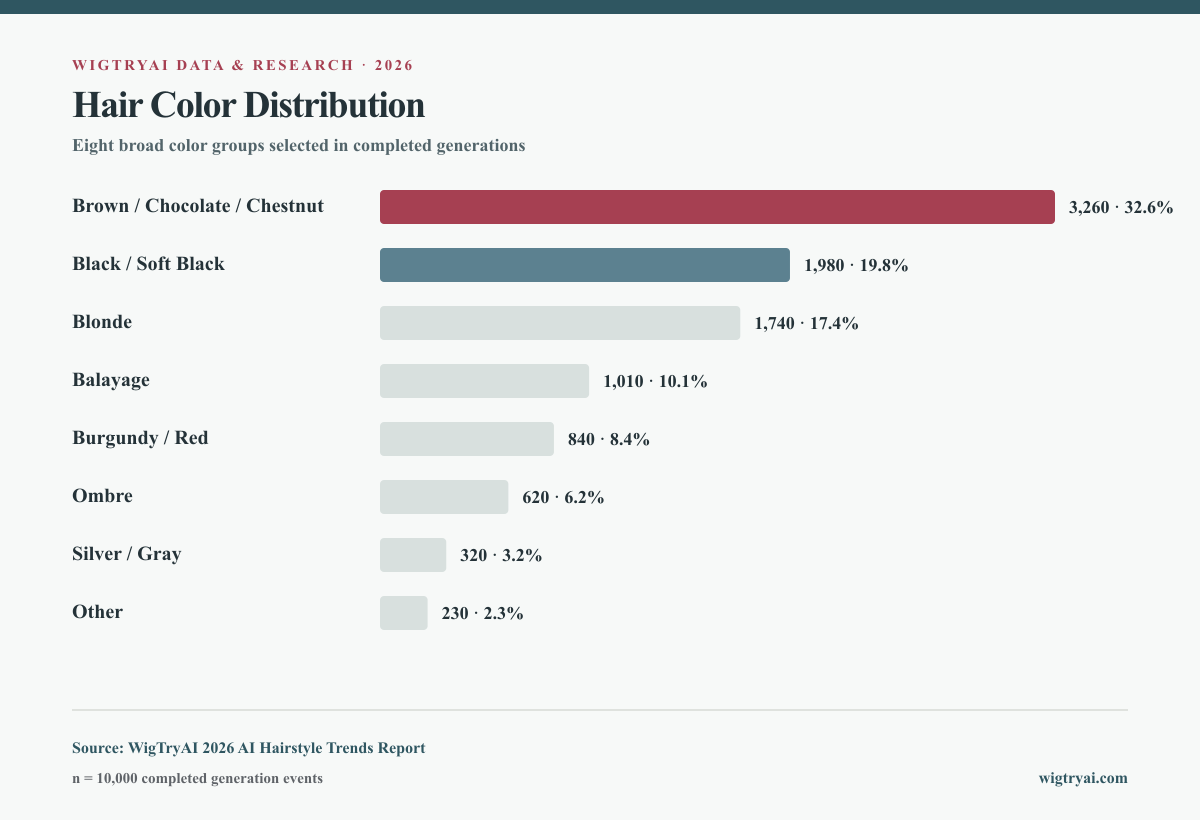
Changing hair color is the cheapest possible experiment in a virtual try-on app. No dye, no grow-out, no awkward month. If any dimension should reveal raw curiosity, it is color. The 10,000-generation dataset says the opposite: the safer the color, the more it was tried.
The Three-Tier Color Pattern
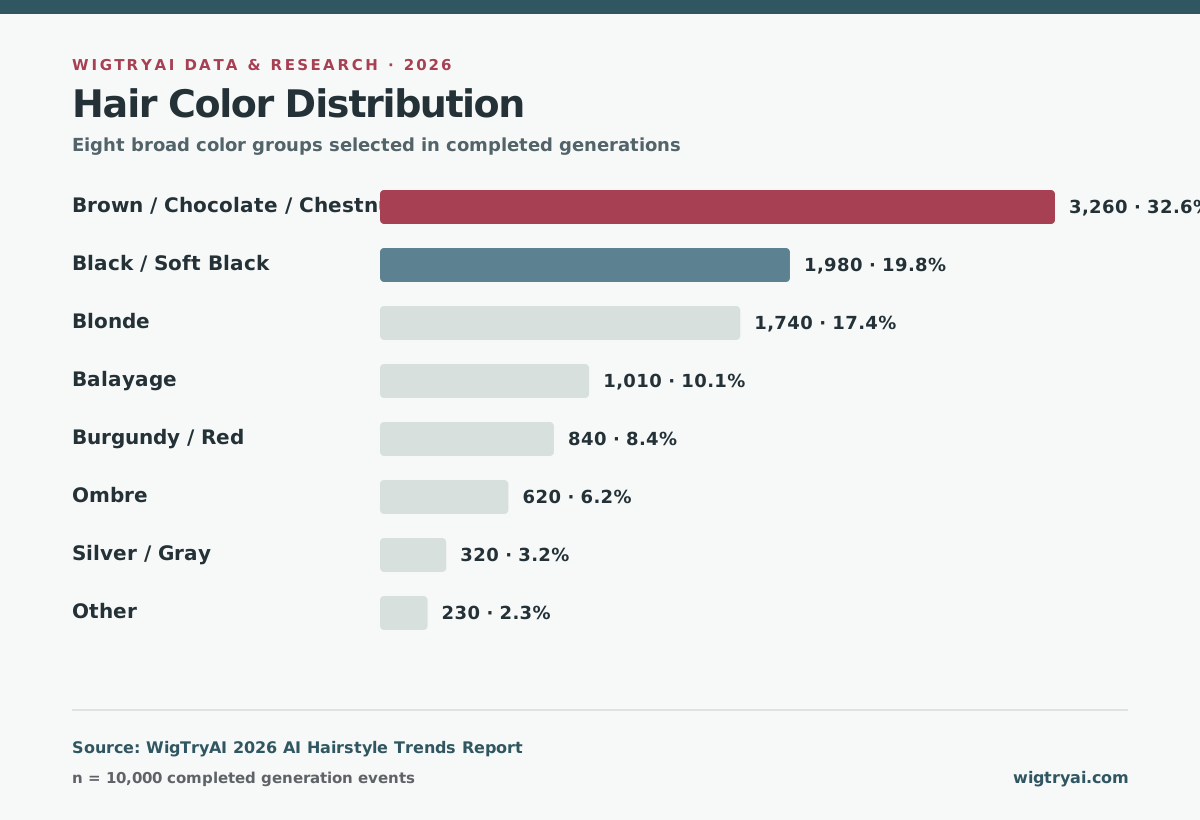
The 2026 AI Hairstyle Trends Report recorded eight broad color groups across 10,000 completed generation events:
| Color category | Generations | Share |
|---|---|---|
| Brown / Chocolate / Chestnut | 3,260 | 32.6% |
| Black / Soft Black | 1,980 | 19.8% |
| Blonde | 1,740 | 17.4% |
| Balayage | 1,010 | 10.1% |
| Burgundy / Red | 840 | 8.4% |
| Ombre | 620 | 6.2% |
| Silver / Gray | 320 | 3.2% |
| Other | 230 | 2.3% |
Group these into a ladder and the pattern is unmistakable:
- Tier 1 — natural darks (52.4%): brown, chocolate, chestnut, black, and soft black. These shades change tone and depth while keeping the person recognizable. Over half of all try-ons stayed here.
- Tier 2 — light or dimensional naturals (27.5%): blonde and balayage. Blonde is still a recognizable color family; balayage changes light placement rather than the base tone. This tier sits between safe and bold — and it is where the actual color-curiosity budget went.
- Tier 3 — transformative colors (17.8%): burgundy and red, ombre, and silver or gray. These are the shades that change how a face reads. They were tried, but at roughly a third of the rate of natural darks.
The remaining 2.3% of events (230 generations) were recorded in the Other color category, so the three tiers plus Other account for every one of the 10,000 records.
The Dimensional Color Outperformed the Bold Color
One detail is worth a headline of its own: Balayage (10.1%) ranked fourth as a color category — and still above every transformative shade. Balayage is not a new color; it is a new dimension inside a familiar one. The same pattern appeared in the style dimension, where Body Wave — a texture change inside a familiar length — beat every dramatic cut.
People experimenting online are looking for more interesting versions of themselves — not for a different person.
Why Zero Risk Did Not Produce Bold Color
As always, the dataset measures what was generated, not why. Three interpretations are consistent with the numbers, and only the numbers are measured:
- Color changes identity, not just wardrobe. A purple streak changes how the face is read. That visual risk survived even when the practical risk — dye, cost, grow-out — dropped to zero.
- Dimensional changes are a safe way to feel experimental. Balayage, blonde, and ombre (the last, notably, at 6.2%) each stay inside a plausible "natural next step" conversation.
- Curiosity shows up in smaller ways. The transformative tier is not empty — 17.8% is real experimentation. But it is the minority.
What This Does Not Prove
The breakdown describes recorded exploration inside WigTryAI during the dataset snapshot. It is not a survey, not a statement about dye decisions, and not evidence about what colors suit anyone. A generation is one event, not one person, and repeat generations can inflate familiar choices. See the methodology and limitations in the source report.