
How to put on a wig
How to Put On a Wig: A Beginner-Friendly Step-by-Step Guide
Prepare a flat, comfortable base, place the wig evenly at the front and ears, secure only as much as you need, then check the fit from every side. Beginners can learn the placement with a glueless setup before deciding whether tape or adhesive belongs in their routine.
How to put on a wigWig applicationGlueless wigLace front wig
7 min read
Quick answer
Put on a wig in four decisions
First, arrange your natural hair into a flat base that feels comfortable. Second, place the wig from front to back and center the ear tabs. Third, use the wig's built-in adjustment or a wig grip before considering tape or adhesive. Finally, check the hairline, ears, nape, and comfort from more than one angle.
- Best beginner starting point
- Learn the placement with a glueless setup
- Alignment check
- Front edge centered, ear tabs even, nape seated
- Stop and reset when
- The wig shifts, pinches, pulls, or feels increasingly uncomfortable
How to put on a wig depends on the cap construction in your hands. A ready-to-wear glueless wig, a hard-front wig, and an untrimmed lace-front wig do not use exactly the same steps. Read the wig maker's instructions first, identify the straps, clips, combs, ear tabs, lace, and any removable parts, and do not assume every feature must be used.
See the Four Steps
A glueless-first application sequence
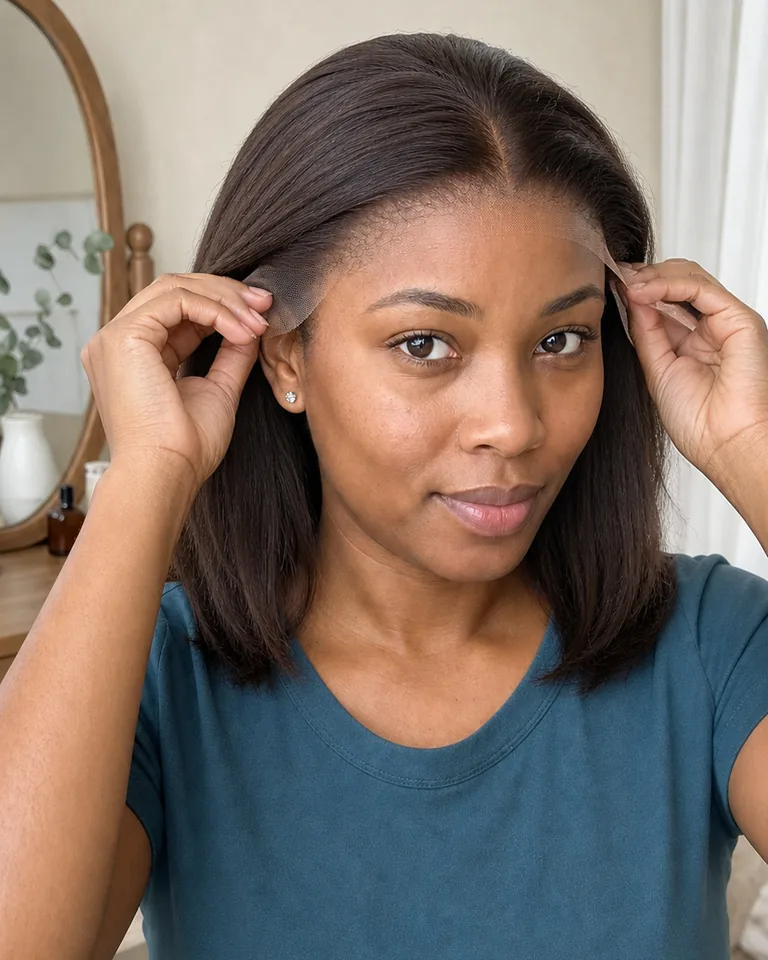
The same person and setting make the hand position, hairline, ear tabs, and final check easier to follow.

1. Prepare a flat base
Arrange the natural hair so it is contained without tight ridges or pressure points.
2. Position the wig
Bring the wig on from front to back, then center the front edge and both ear tabs.

3. Secure it without glue
Set the straps or grip, then check that both sides sit evenly without pinching.
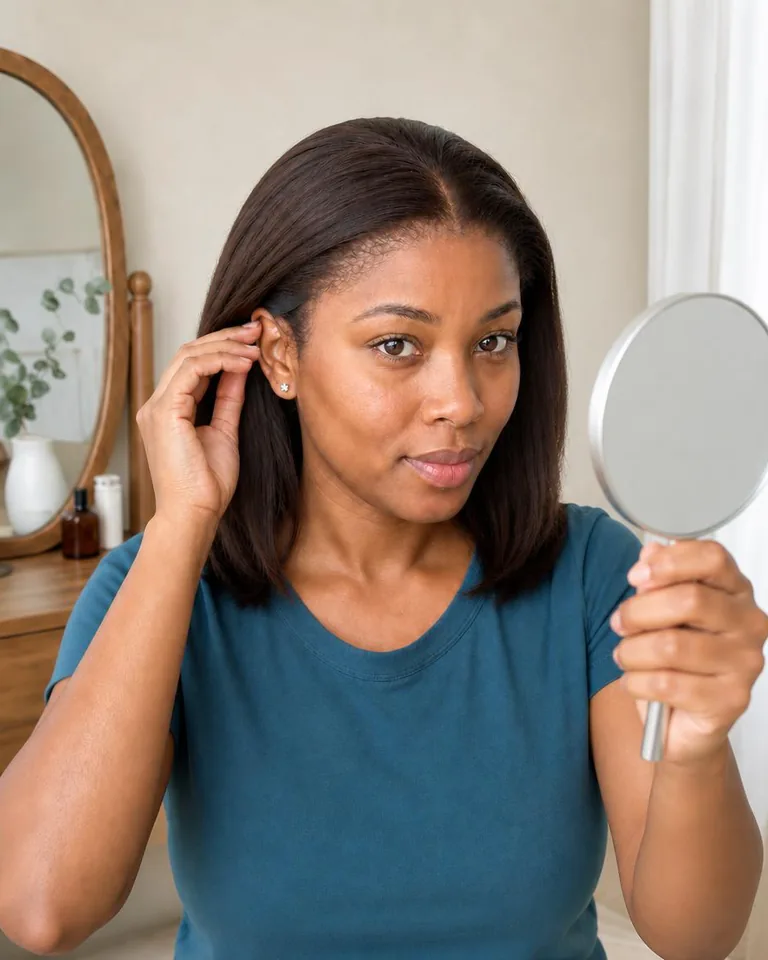
4. Check the finished fit
Inspect the hairline, ears, nape, part, and overall balance before styling.
The images are positioning guides, not a universal installation formula. Your cap may place its adjustment points differently, and a custom or professionally installed unit may require instructions that are specific to that piece.
Before You Start, Read the Cap
Turn the wig inside out on a clean surface. Find the front, the nape, and the two ear tabs. Check whether the cap has adjustable straps, an elastic band, combs, clips, silicone areas, pre-cut lace, or lace that still needs finishing. If the wig has a product label or instruction card, use that as the authority for which parts touch skin and how they are meant to be handled.
Set out only what your chosen method needs. For a basic glueless application, that may be the wig, a wig cap if you use one, a wig grip, a wide-tooth comb or wig brush appropriate for the fiber, and a mirror that lets you inspect the sides and back. Tape, liquid adhesive, solvent, tweezers, and scissors are not default beginner supplies.
Adjust removable straps to a neutral starting position before putting the wig on. You can refine the setting after the cap is seated. Pulling the straps to their tightest setting first can hide a size or placement problem and make it harder to tell where the pressure comes from.
Step 1: Prepare Your Natural Hair
The goal is a low-profile base, not the tightest possible base. Short hair can be smoothed in its natural direction. Longer hair can be divided into low braids, flat twists, pin curls, or another arrangement that distributes the hair without one large bundle at the nape. Feel around the head for pins, braid ends, or ridges that may press through the cap.
A wig cap is optional, not a rule. It can help contain loose hair and create a consistent surface, but the cap should not roll, pinch, or force the wig into the wrong size. If it shifts the hairline or creates pressure, reset it or compare the fit without it. Our separate wig cap types guide explains common cap options without treating one as mandatory.
Do not apply alcohol, astringent, glue, or solvent as part of general preparation. Those products belong only to a specific adhesive system, used exactly where and how its instructions permit. A glueless practice run lets you learn the cap position without adding a skin-contact product.
Step 2: Position the Wig Before Securing It
Hold the wig at sturdy cap edges rather than tugging the lace or hair. Set the front edge near your intended hairline, guide the cap over the crown, and bring the nape into place. Some people find front-to-back placement easiest; follow a different direction if the wig maker specifies one for that construction.
Center the part or crown first, then compare the ear tabs. They should sit at matching heights and should not be folded under the cap. The front edge should follow a believable line for you, but there is no universal finger-width measurement. Use your own hairline, the wig's cap shape, and the intended lace position instead of moving the unit forward or back to satisfy a generic rule.
Before tightening anything, look down, turn your head gently, and check the nape in a second mirror. If the cap slides immediately, sits behind one ear, bunches at the crown, or exposes more of one side, remove it and start the placement again. Securing a crooked wig only locks in the problem.
Step 3: Choose the Least Complicated Secure Method That Works
Start with the features already built into the wig. Adjust the nape straps or elastic band in small increments, then move your head normally. Secure should mean stable and comfortable, not immovable at any cost.
Decision guide
Compare wig securing options
Construction, skin contact, natural hair, and the product instructions matter more than a universal strength ranking.
| Method | What it does | Useful when | Check before using |
|---|---|---|---|
| Cap straps or elastic | Refines the cap circumference | The wig is designed to be glueless | The setting stays comfortable and the cap does not bunch |
| Wig grip | Adds a separate friction layer beneath the wig | You want a removable, adhesive-free setup | The band lies flat and does not create pressure |
| Built-in combs or clips | Anchors designated cap points | The construction and your hair can support them | Nothing pulls, snags, or presses into the scalp |
| Wig tape | Attaches approved lace or cap areas to approved skin areas | The product and wig instructions explicitly support it | You have the matching removal instructions and products |
| Liquid adhesive | Uses a product-specific bonding system | You understand that exact system and its removal process | The label permits the use, surface, and application you plan |
Tape and adhesive are optional techniques, not the next level every wig wearer must reach. Do not combine brands, improvise with household products, or copy another person's wear time. Skin condition, formulation, climate, activity, lace, and application all change the result. If the label calls for a patch test or other preparation, follow the exact label; if the directions are missing or unclear, do not guess.
Lace-Front Details Need Their Own Pause
A pre-cut lace front may be ready for positioning after the basic cap check. Untrimmed lace is a different task. Confirm that the wig is returnable or finalized before altering it, and follow the seller's cutting instructions. Cutting lace while it is pulled tightly against skin leaves little margin for an accidental slip; remove and stabilize the unit when the instructions allow that safer approach.
Do not automatically pluck the hairline, cut baby hairs, add makeup, or apply heat. Each action permanently changes or stresses some part of the wig, and fiber-specific limits matter. First decide whether the untouched hairline and part already look balanced. The lace front wig guide is the better next read when lace finishing, rather than basic placement, is the main question.
Step 4: Finish With a Fit Check, Not More Product
Inspect the front in direct, even light. Then check each ear, the nape, the crown, and the part. Move your head left and right, look down, and make a normal facial expression. The cap should remain in position without a new pinch, pull, or lifted area appearing.
Comb or separate the hair using tools and temperatures approved for that fiber. Keep the first styling pass light so you can still remove and reset the wig if the position is wrong. A finished look can hide an uneven cap in a front-facing photo, so use a side view and a back view before deciding the application is complete.
Choose the visible style before application day
Preview length, texture, color, and part on your photo first. The result can narrow the look, while the physical wig still determines cap fit, lace, comfort, and securing method.
Open Virtual Wig Try-OnHow to Remove and Store the Wig
For a glueless wig, release combs or clips before lifting the cap. Loosen adjustable parts if they catch the natural hair. Support the lace or front edge instead of pulling from the hair, and check that pins, clips, and braid ends are free as you remove the unit.
For tape or liquid adhesive, use the removal process and compatible remover named by that product system. Do not pull bonded lace away from skin, and do not substitute an unlisted solvent because it is convenient. If the skin becomes painful or develops a concerning reaction, stop the application and seek advice from an appropriate health professional rather than adding more products.
After removal, clear product residue according to the wig and adhesive instructions. Let the unit dry as directed, keep the lace from folding into a hard crease, and store the wig in a clean shape that supports its construction. Our wig care and maintenance guide covers washing, detangling, and storage in more detail.
Safety Sources and Realistic Limits
The U.S. Food and Drug Administration's cosmetics safety guidance explains that cosmetic products and ingredients, other than color additives, generally do not receive FDA premarket approval. That is one reason this guide does not treat marketing terms such as "strong hold" or "scalp safe" as universal instructions. The product label, the manufacturer, and your own reaction to the product still matter.
The NHS overview of contact dermatitis describes skin becoming itchy, blistered, dry, or cracked after contact with a substance. This page cannot diagnose a reaction. It can only recommend the conservative choice: stop using a product that causes a concerning response, remove it according to its directions, and get qualified medical advice when symptoms are severe, persistent, or worsening.
WigTryAI is a visual preview, not a fit or safety test. It cannot measure cap size, show whether lace lies flat in person, predict grip or adhesive performance, assess scalp condition, or tell you how long a setup will remain comfortable. Use the virtual wig try-on to choose the look; use the physical wig, its instructions, and professional help when needed to choose the application.
FAQ
How do I put on a wig for the first time?
Prepare a flat, comfortable base, identify the wig's front and ear tabs, place it evenly from front to back, and begin with the built-in adjustment or a glueless grip. Check the front, both ears, crown, and nape before styling. If the fit is uneven or uncomfortable, remove it and reset the placement.
Do I need a wig cap under a wig?
No. A wig cap can contain natural hair and create a consistent surface, but it is optional. Use one only if it stays flat, comfortable, and compatible with the wig's fit.
How do I put on a wig without glue?
Use a wig designed for glueless wear, adjust its straps or elastic band, and add a wig grip if needed. Built-in combs or clips may help when the construction and your natural hair can support them without pulling. Recheck comfort after moving your head normally.
Is a wig grip better for beginners than adhesive?
A wig grip is often the simpler learning tool because you can reposition the wig without working against a bonding product. It is not automatically right for every head or cap. The band still needs to lie flat and feel comfortable.
Where should the ear tabs sit?
The two ear tabs should sit at matching heights near the temples, following the wig's construction without folding under the cap. They are alignment markers, not parts to force into one universal spot. If one side sits differently, recenter the wig before securing it.
Can I use tape or adhesive on a lace-front wig?
Only use a product when both the wig instructions and the tape or adhesive label support the intended application. Follow that system's preparation, skin-contact, application, and removal directions. Do not invent a wear time or substitute household glue or an unrelated solvent.
How do I take off a wig without damaging the lace?
Release glueless clips, combs, and straps before lifting the cap, and support the lace instead of pulling the hair. If tape or adhesive is present, use the named removal method and compatible product, allowing the bond to release rather than peeling the lace away by force.
Can AI show whether a wig will fit correctly?
No. AI can preview the visible style direction on your photo, but it cannot measure your head, inspect cap construction, predict comfort, or test a securing method. Confirm those details with the physical wig.